Rick Owens SS27 Avant Garde Menswear Collection STONE
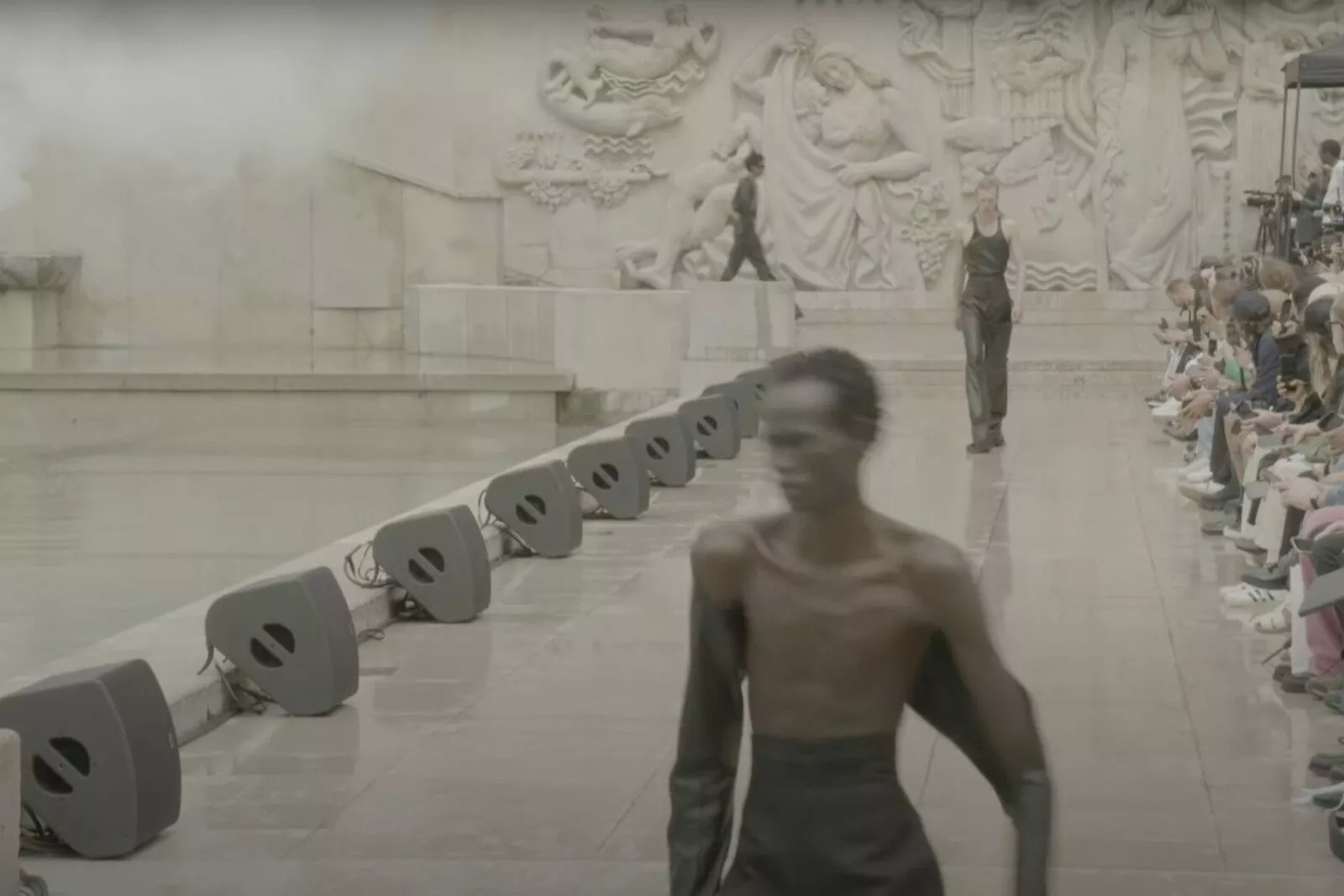
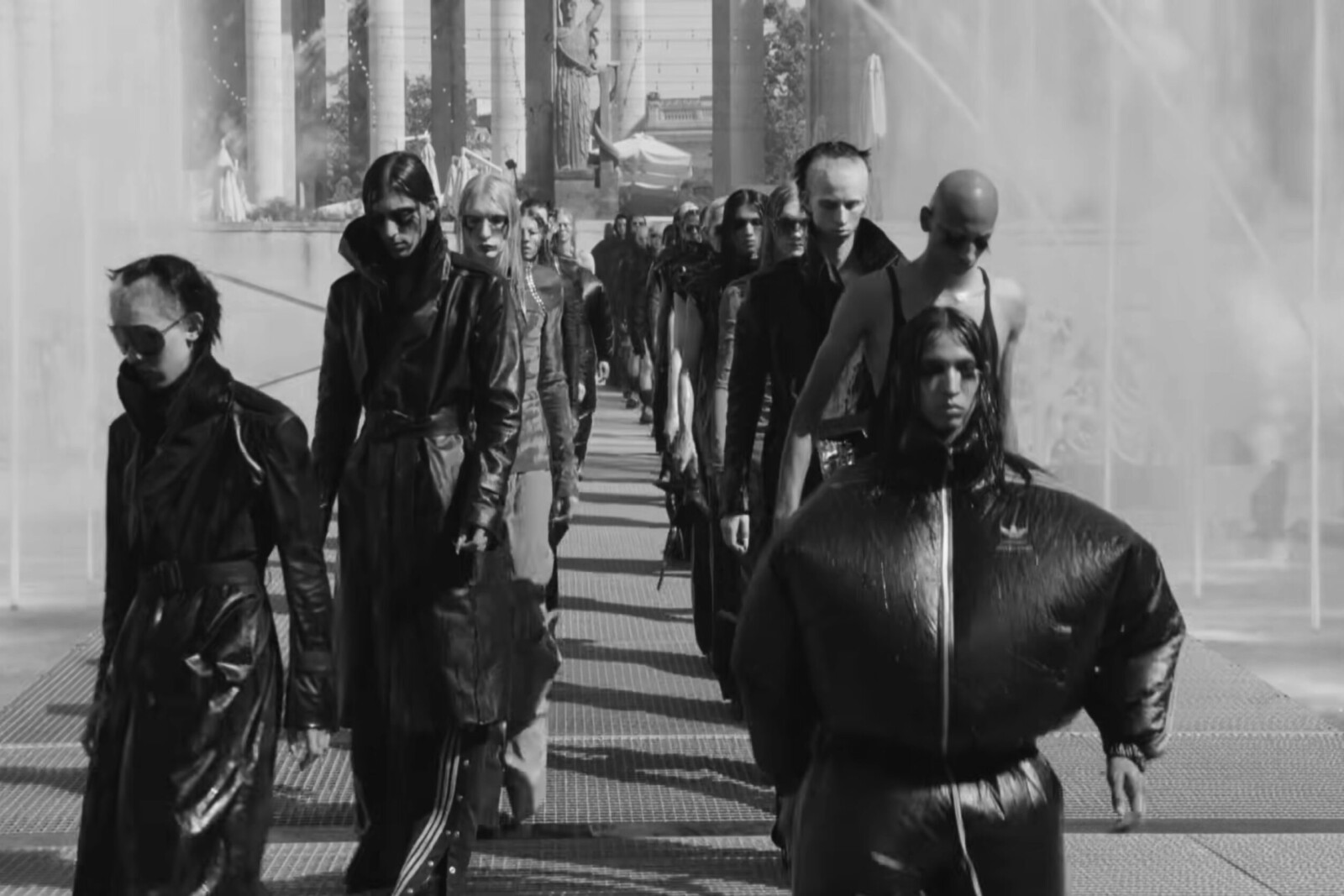
In almost 40 degrees Celsius heat, the Rick Owens Spring/Summer 2027 menswear show at the Palais de Tokyo felt less like a runway presentation than a dispatch from the climate future. Paris Fashion Week had already turned into an endurance sport, with guests navigating the city’s heatwave, outdoor venues, and famously limited air conditioning. Rick Owens fashion enthusiasts, as always mainly dressed in all-black, were literally overheating while watching clothes built around cooling systems, inflated silhouettes, and survivalist glamour.
Rick Owens x adidas
The collection introduced a new adidas x Rick Owens technical running shoe, planned for release in 2027. Owens and adidas together is not a casual pairing and certainly not for the first time. After a decade since the last collaboration in 2017 the two brands return together: adidas brings performance, engineering, and mass accessibility. Owens brings distortion, ritual, and a very particular kind of glamour that usually looks – as we all know and cherish – like it has walked out of a ruin, a nightclub, or a sci-fi temple.
Owens asked adidas to bring in its Climacool technology, which appeared in inflated jackets and shorts fitted with interior fans. Combined with an ice vest, the pieces worked almost like a personal air-conditioning system, designed to cool a runner’s torso before a race and bringing serious Michelin-Man Vibes to the runway that turned climate anxiety into a new version of oversized silhouette.

Rick Owens SS27 – more than Sportswear
The show was full of that tension between function and the usual Rick Owens Avant-Garde Fetish Vibe. Trim jogging suits came in technical poly-cotton jersey, but also in black and flesh-toned leather, or nude girdle fabric made from recycled nylon.
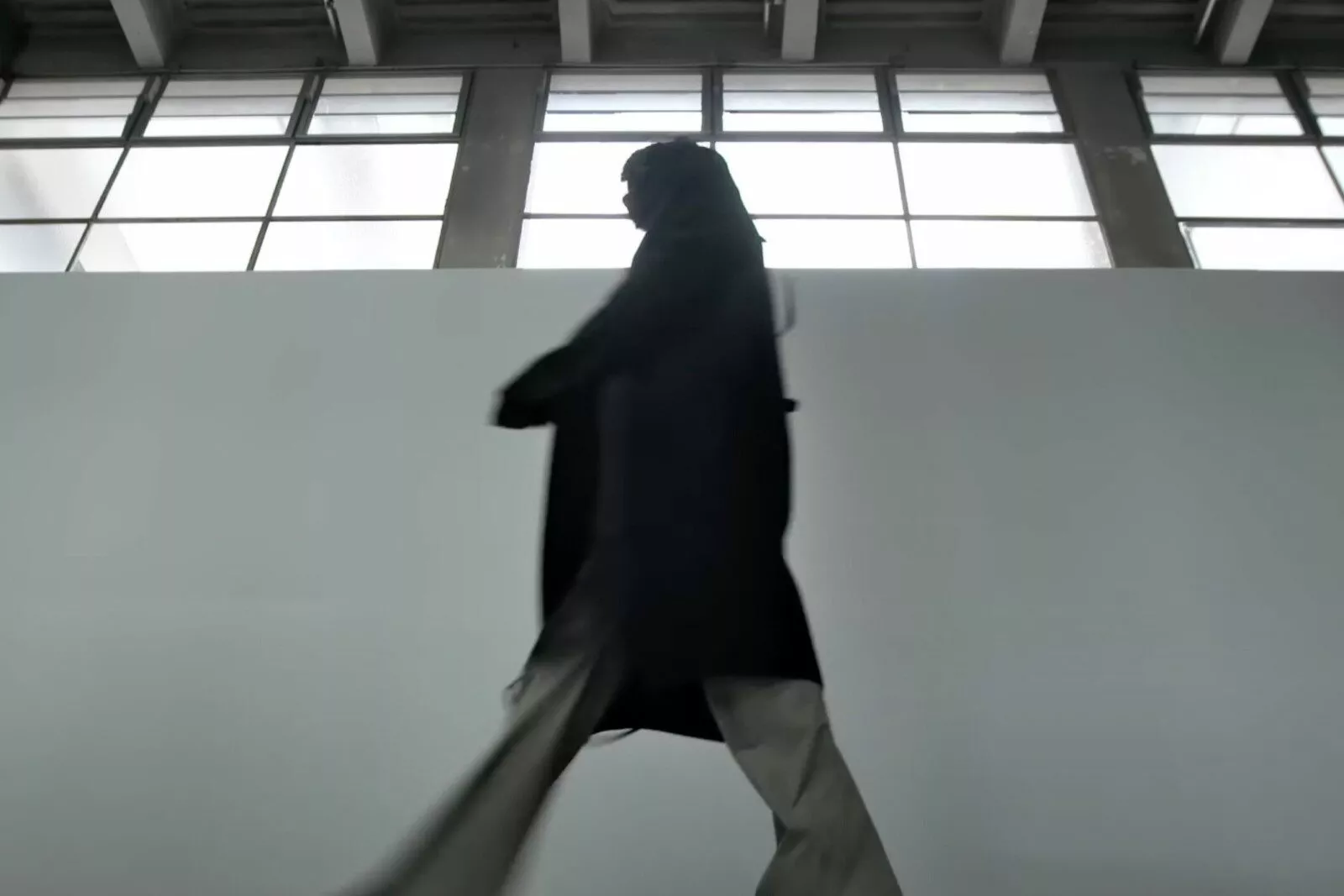
There was also a strong military and authoritarian thread running through the collection as Owens brought back epaulets, describing them as symbols of authority and trust. The kind you might associate with an emperor, an airline pilot, or a cruise ship captain. That mix of references is very Rick Owens: grand, slightly absurd, and uncomfortably precise. The epaulets gave coats and jackets a strange official quality, as if these were uniforms for some future order that has not fully explained itself yet.
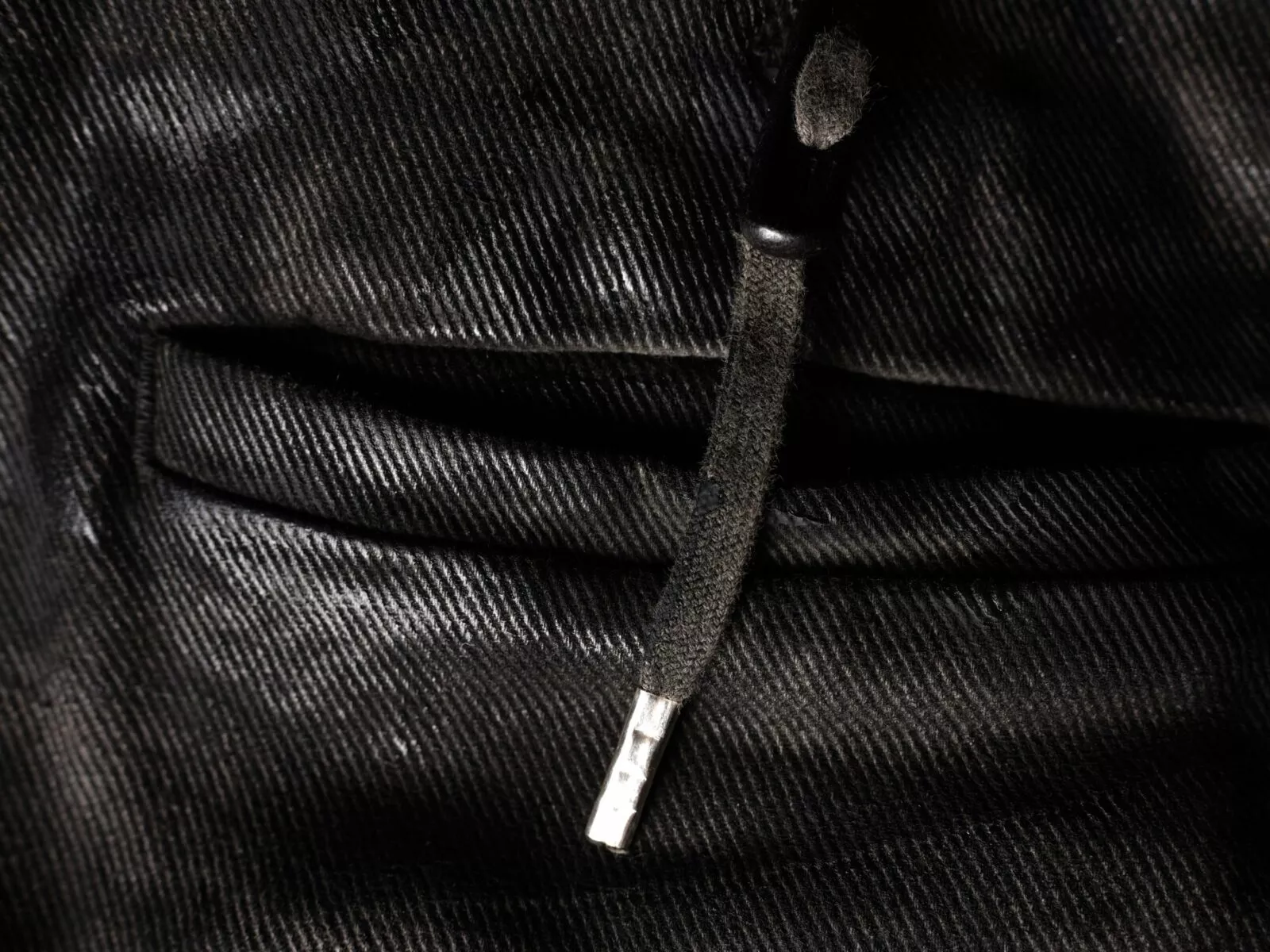
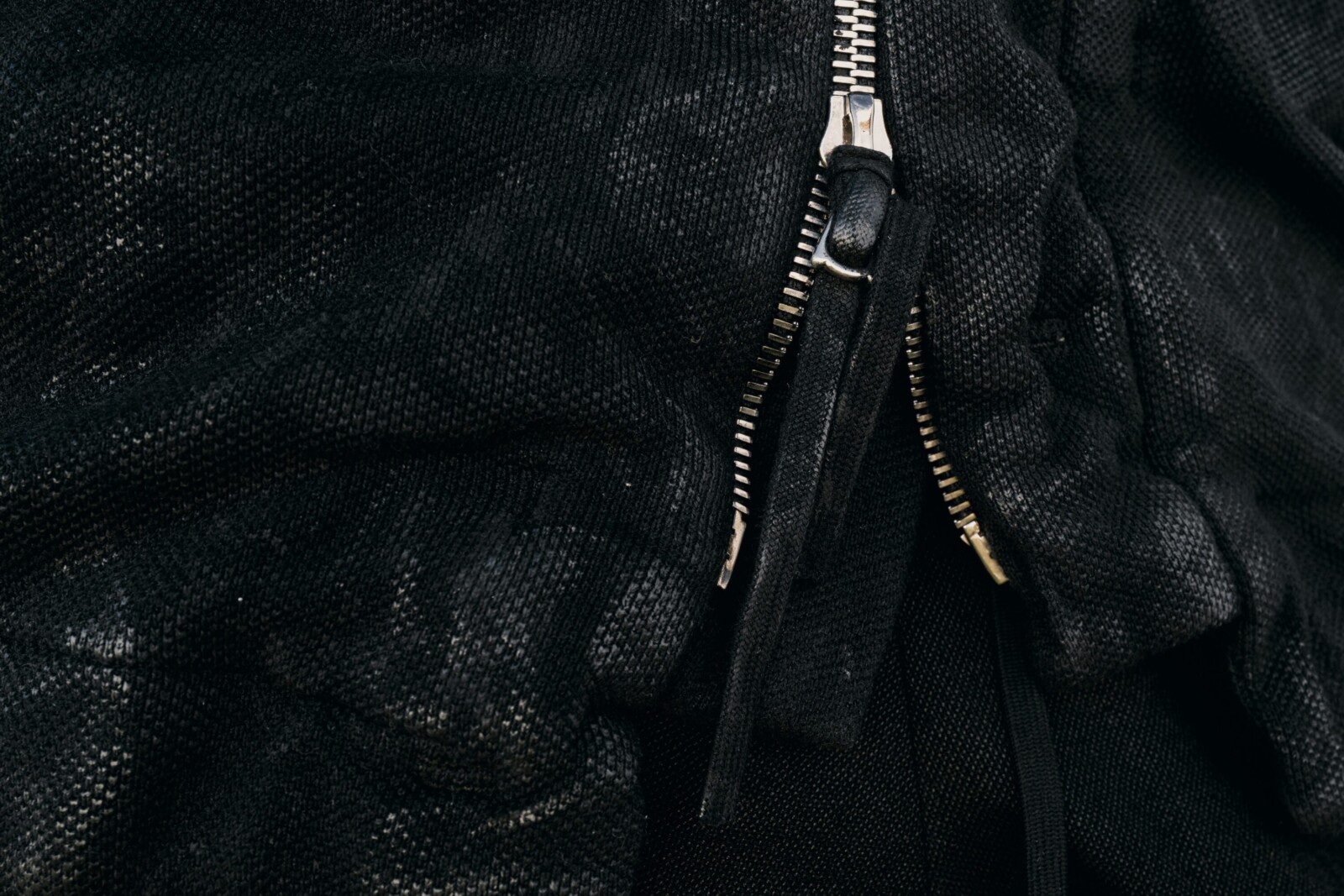
The materials made the whole thing feel richer and more considered than a simple “sportswear meets dystopia” idea. Lightweight silk-cotton poplin from the Como region in Italy appeared in coats and jackets with removable leather epaulets. Sharp-shouldered tailoring came in compact silk crepe woven by Bonotto, the historic textile mill in Veneto. There were swollen cabans in recycled polyester duchesse and crisp silk duchesse, fabrics so complex they require slow weaving on vintage looms.
That level of craft matters. Owens can make clothes look brutal, bloated, severe, or alien, but underneath the drama there is always a deep respect for construction. The silhouettes may look extreme, but they are built with the seriousness of couture and the obsessiveness of performance design.
Some of the most beautiful details came from the labor-intense handmade, almost obsessive pieces: Sheer tank tops that looked like 1920s beaded lingerie were made in hand-piped latex by Paris rubber artist Matisse Di Maggio, with each garment taking more than 35 hours and four hands to complete. Latex capes came from Florence Druart of Torture Garden Latex in London. These pieces added a softer, stranger sensuality to the show adding a nice contrast to the inflated jackets and hard-shouldered tailoring.
Then there were the tensegrity chaps, made in foam and latex by Straytukay. The idea of tensegrity, borrowed from Buckminster Fuller, refers to structures held together through a balance of compression and tension. It is an architectural concept. But Owens connected it back to the body: bones held in compression, connective tissue held in tension.
Rick Owens’ current Take on Sustainability
Environmental stress. Physical stress. Political stress. The stress of performance, of survival, of keeping the body cool in a warming world. Owens even pointed to adidas’ environmental goals, including its CDP Climate A List recognition, while admitting that there is still much more to do. That balance of admiration without pretending the problem is solved made the sustainability note feel less like marketing and more like a realistic acknowledgement of the moment.