Punk, DIY and the Destruction of Fashion Conventions
In mid-1970s London, punk erupted as a violent semiotic revolt against economic stagnation, rock-and-roll complacency, and bourgeois consumerism. Orchestrated through Vivienne Westwood and Malcolm McLaren’s Chelsea boutique at 430 King’s Road—progressively christened SEX and Seditionaries—punk fashion did not seek to improve clothing; it set out to mutilate, deconstruct, and weaponize it. By elevating the safety pin, the razor slash, the hardware store padlock, and the bondage strap into high-concept subversive art, punk dismantled the sanctified rules of Western tailoring. In doing so, it established the raw “Do-It-Yourself” (DIY) and bricolage methodology that directly laid the groundwork for Japanese deconstruction, Belgian anti-fashion, and contemporary artisanal avant-garde design.
The semiotic rupture: Britain in decline and the politics of disgust
Between 1974 and 1977, Britain was engulfed in severe socioeconomic stagnation: three-day working weeks, rolling power blackouts, rampant inflation, urban decay, and catastrophic youth unemployment. Against this grim backdrop, the prevailing pop-cultural landscape felt utterly suffocating. Hippie utopianism had decayed into commercialized nostalgia; stadium rock bands were distant, bloated millionaires; and the fashion industry continued to churn out anodyne flared denim and polite floral coordinates designed for an obedient consumer class.
Punk exploded as an incandescent refusal of this pacified order. Influenced by the anti-bourgeois radicalism of the Situationist International and the nihilistic cabaret of earlier Dada anti-art, young working-class and art-school rebels rejected the very premise of consensus culture. They did not demand economic inclusion or social respectability; they demanded disruption, confrontation, and the freedom to express visceral disgust.
In his seminal 1979 study Subculture: The Meaning of Style, cultural theorist Dick Hebdige diagnosed punk as a systematic act of semiotic warfare. Rather than inventing an entirely novel design vocabulary from scratch, punks took the sanctified emblems of postwar British society—school uniforms, the Union Jack, queenly portraits, respectable wool suiting, domestic utility goods—and violently distorted their context. By tearing, re-stitching, pinning, and defacing these garments, punk turned clothing into a weapon of ideological exposure.
430 King’s Road: Vivienne Westwood, Malcolm McLaren, and Seditionaries
While punk flourished as a decentralized street impulse, its primary theoretical and aesthetic laboratory was concentrated at 430 King’s Road in Chelsea, London. Operated by Vivienne Westwood and Malcolm McLaren, the boutique underwent continuous ideological mutations: starting as Let It Rock (1971), morphing into Too Fast to Live, Too Young to Die (1972), re-emerging as the notorious rubber-and-fetish emporium SEX (1974), and finally crystallizing in late 1976 as Seditionaries: Clothes for Heroes.
Westwood was the tailoring virtuoso of the movement. Combining an autodidactic mastery of historic 18th-century cutting techniques with an uncompromising subversive impulse, she dissected the physical anatomy of clothing:
- The Anarchy Shirt (1976): Vintage 19th-century deadstock business shirts bleached in uneven stripes, overprinted with Marxist slogans, fitted with inverted Nazi eagle patches juxtaposed against portraits of Karl Marx, and hand-stitched with silk swatches. The garment physically enacted the collision of taboo political signifiers.
- Bondage Trousers (1976): Tailored from military tartan or black cotton drill, Westwood’s bondage trousers featured a zip-fly running through the crotch from front to back and a detachable restraint strap connecting both knees. By physically hobbling the wearer’s stride into an awkward shuffle, the trousers turned sadomasochistic constraint into a walking metaphor for societal subjugation.
- Destroy T-Shirts: Ragged, inside-out muslin tees screen-printed with swastikas, upside-down crucifixes, and Sex Pistols lyrics, held together across tears by rusted safety pins.
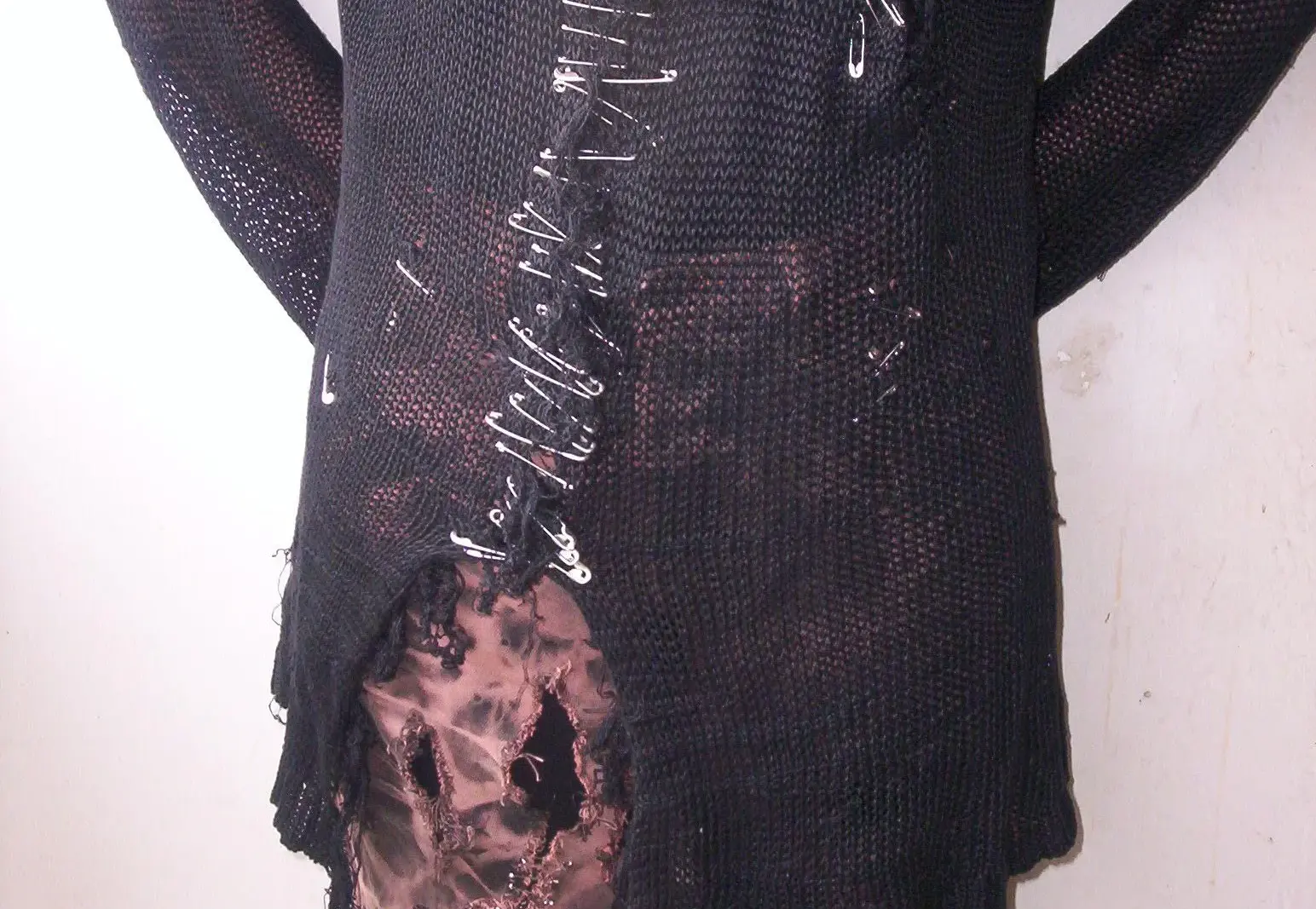
- Loose-Knit Mohair Jumpers: Hand-knitted on giant needles with open, sagging stitches that resembled unraveling cobwebs or moldering skin, completely rejecting the pristine luxury traditionally associated with British knitwear.
Westwood and McLaren did not merely dress the Sex Pistols; they created a unified visual manifesto that proved fashion could function as critical philosophy and public agitprop.

Bricolage and hardware: safety pins, razor blades, and bondage straps
At the center of the punk aesthetic stood the anthropological method of bricolage—the practice of taking ordinary industrial, domestic, or medical objects and reassembling them into urgent new forms of meaning. Punks scavenged the debris of an industrial society in decline to construct an uncompromising visual armor:
- The Safety Pin: Originally patented as a domestic fastener to be hidden beneath linings, the safety pin was thrust into plain sight. It pinned together shredded hems, formed decorative spine lines down jacket sleeves, cinched loose garments into skin-tight silhouettes, and pierced earlobes and cheeks. It served as both a practical structural hinge and an aggressive announcement of physical vulnerability and self-inflicted violence.
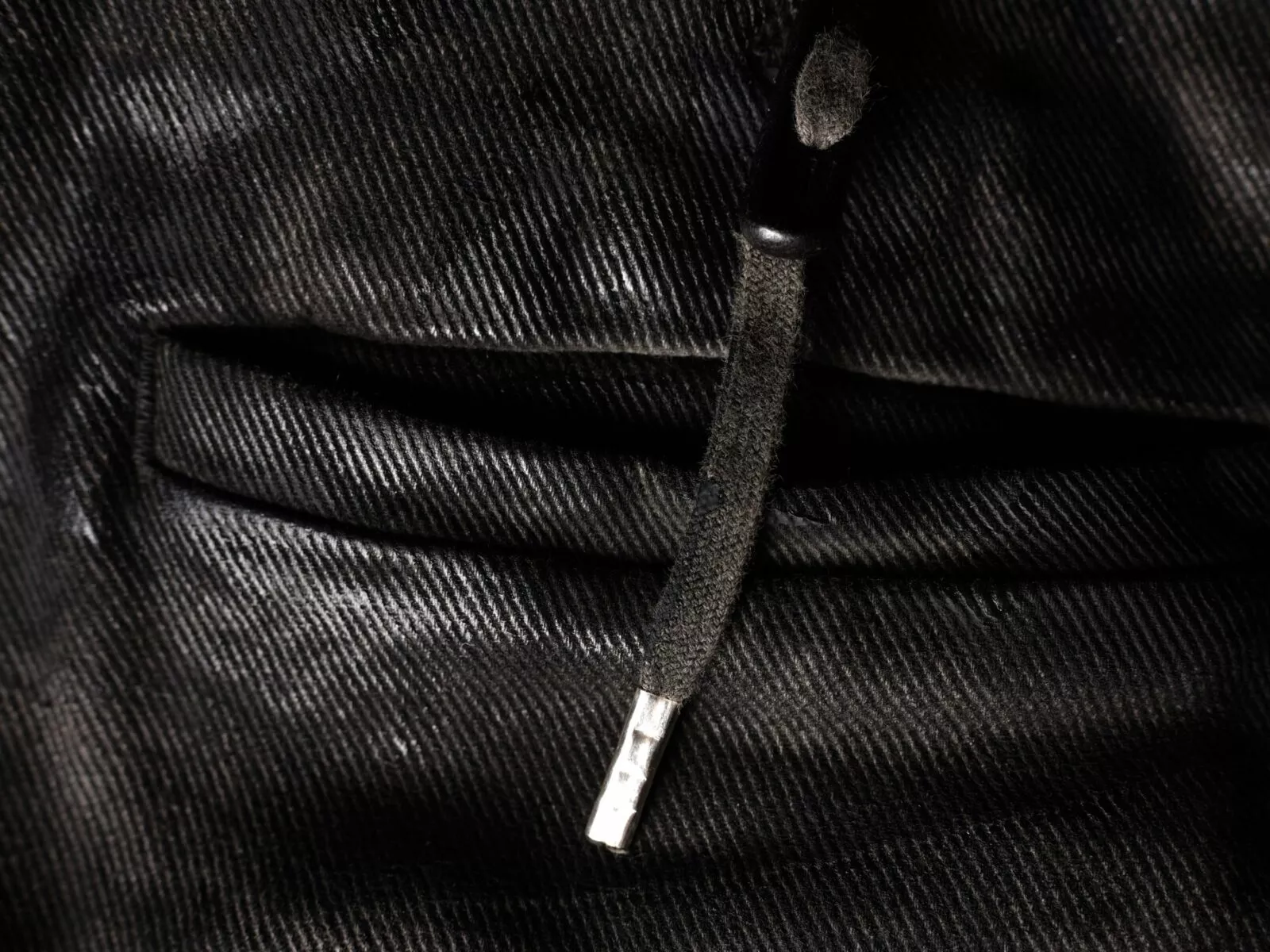
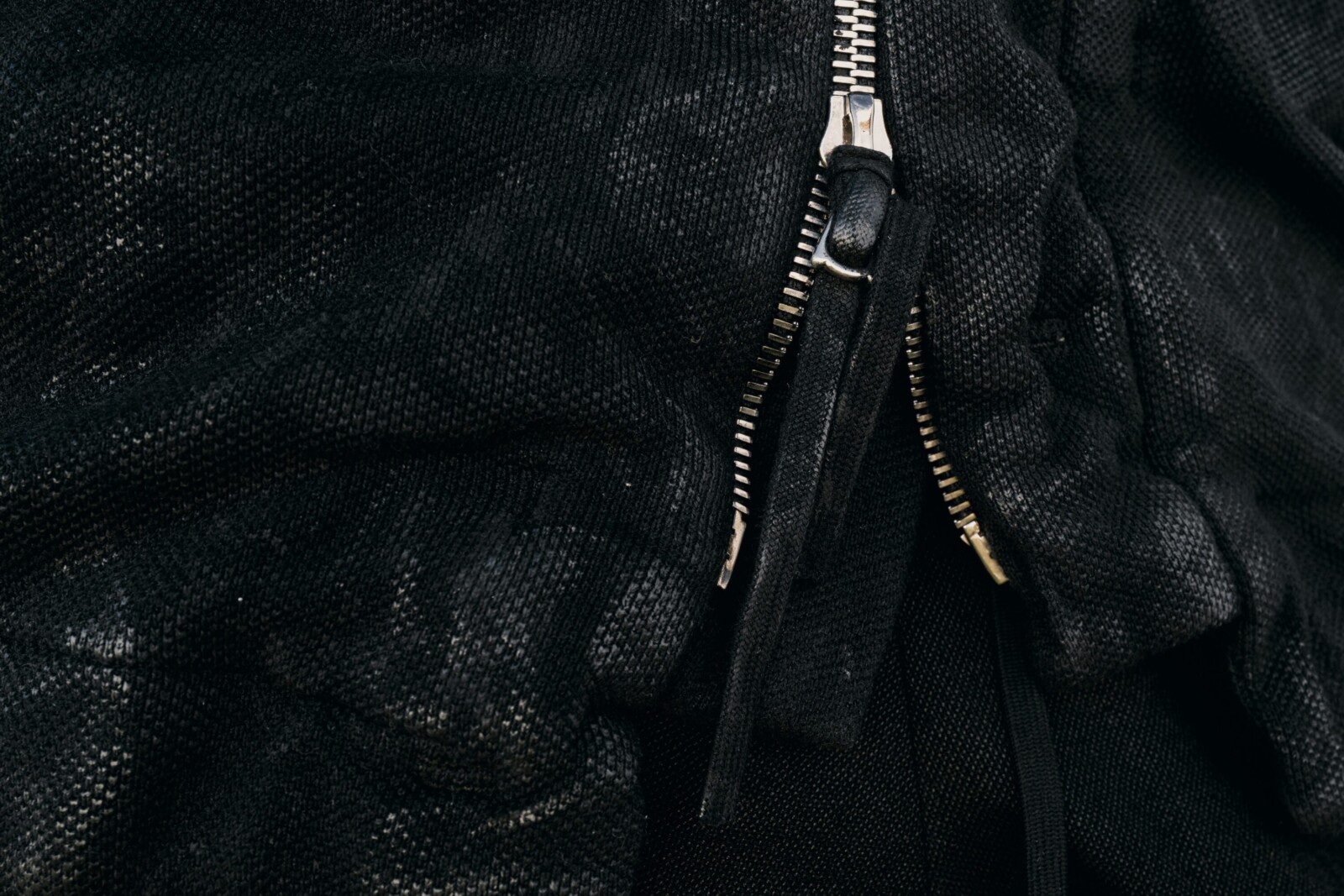
- Industrial Hardware: Padlocks, dog collars, toilet chain necklaces, chrome razor blades, and heavy zippers were stripped of their utilitarian functions and worn as talismanic jewelry and functional garment fasteners.
- Trash Bags and Rubber: Designers and street practitioners embraced black plastic bin liners as dresses, translucent latex macs, and industrial rubber sheeting, creating a hyper-sexualized, sterile barrier that repelled bourgeois touch.
- Graphic Vandalism and Agitprop: Garments were rarely left plain. Punks used stencil spray-paint, permanent markers, bleach splatters, and screen-printed news clippings to deface their own clothing with anti-monarchical, anti-capitalist, and nihilistic slogans.
Through bricolage, punk dismantled the capitalist illusion of pristine, untouchable commodity perfection. A punk garment was never finished; it was continuously accumulated, torn, repaired, and personalized in direct response to the wearer’s immediate reality.
The DIY imperative: zines, customization, and anti-commodity production
The defining ethos of punk was “Do-It-Yourself” (DIY). Snarls of disdain greeted anyone who purchased an expensive, pre-assembled punk outfit from a commercial department store. To possess subcultural authenticity, a garment had to be found, stolen, thrifted, and transformed by the wearer’s own hands.
Fanzines like Sniffin’ Glue famously published crude diagrams depicting three guitar chords alongside the instruction: “This is a chord. This is another. This is a third. Now form a band.” The exact same philosophy dictated punk dress: This is a thrifted blazer. This is a pair of scissors. This is a box of safety pins. Now invent a look.
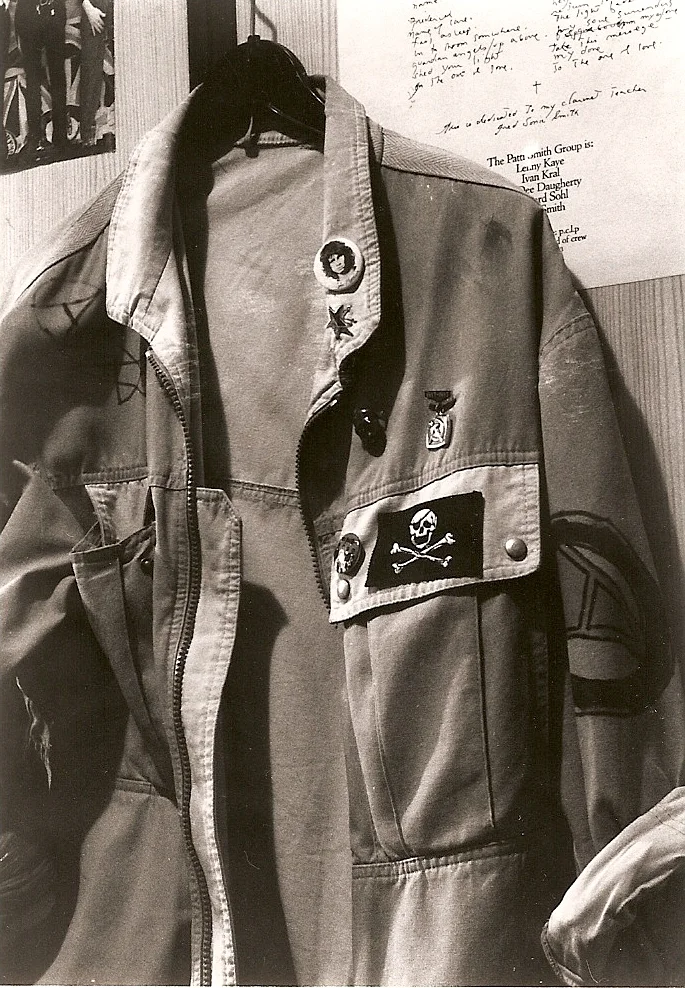
Second-hand military surplus jackets, school blazers, and thrift-store cardigans were slashed with razor blades, dipped in bleach baths, studded with pirated hardware, and covered in hand-sewn band patches. This DIY imperative dissolved the traditional capitalist division between passive consumer and professional designer. Every teenager walking the King’s Road or Kingsway became an active practitioner of experimental garment customization.
From street chaos to the runway: how couture absorbed punk
The explosive energy of punk was too potent for the fashion establishment to ignore. By the late 1970s and throughout the 1980s, the high-fashion apparatus began absorbing, sanitizing, and monetizing the very visual codes that had been engineered to destroy it.
Zandra Rhodes was among the first high-fashion designers to translate punk into luxury, presenting her 1977 “Conceptual Chic” collection featuring elegant silk jersey dresses deliberately torn and reassembled with jeweled safety pins and decorative metal chains. In 1994, Gianni Versace achieved worldwide notoriety with his iconic black silk crepe gown worn by Elizabeth Hurley, held together along open side slits by oversized gold Medusa-head safety pins—transforming punk’s symbol of poverty and revolt into an emblem of unabashed billionaire glamour.
This institutionalization culminated in 2013 with The Costume Institute’s landmark exhibition at The Metropolitan Museum of Art, PUNK: Chaos to Couture. Curated by Andrew Bolton, the exhibition traced how punk’s four DIY techniques—Hardware, Bricolage, Graffiti, and Destroy—had become the foundational grammar of contemporary luxury runway production.
The punk DNA in contemporary avant-garde, deconstruction, and artisanal fashion
While commercial couture frequently reduced punk to decorative hardware and pre-distressed denim, the deeper conceptual and structural lessons of punk became the essential lifeblood of modern avant-garde fashion.
When Rei Kawakubo and Yohji Yamamoto shocked Paris in 1981 with their asymmetrical, monochromatic collections, critics immediately recognized an affinity with punk’s destructive ethos. Kawakubo’s famous loose-knit sweaters punctuated by deliberate holes—her “lace of the 20th century”—directly echoed Westwood’s unraveled Seditionaries mohairs, proving that structural imperfection could communicate radical philosophical gravity.
In the late 1980s and 1990s, the Antwerp Six and Maison Margiela radicalized this lineage into full-fledged Deconstruction. Margiela’s Artisanal line—constructed from recycled vintage opera gloves, broken porcelain plates, wire, and thrifted trench coats—was pure Situationist bricolage elevated to haute couture status. Similarly, Ann Demeulemeester channeled the dark, romantic androgyny of Patti Smith, weaving raw selvages, exposed hanging threads, and disheveled poetic tailoring into a signature house aesthetic.
Contemporary artisanal masters continuously return to punk’s material ethos. Junya Watanabe routinely deconstructs surplus army fatigues, technical tartans, and biker jackets into intricate architectural collages. In darkwear and post-industrial tailoring, Boris Bidjan Saberi, Rick Owens, and Carol Christian Poell deploy distressing, raw edges, anatomical hardware, and heavy washed leathers that treat clothing not as passive luxury status, but as battle-tested somatic armor.
Punk permanently smashed the fiction that clothing must be tidy, symmetrical, and polite. By proving that destruction is a profound form of creation, punk established the aesthetic principle that still defines the avant-garde: the most powerful garments are those that expose the fractures of the world they inhabit.
Continue exploring the history of radical ruptures in Space-Age Fashion of the 1960s, investigate the philosophical origins of anti-art in Dada, Absurdity and Anti-Fashion, and examine foundational movement definitions in What Is Avant-Garde Fashion?.
References and further reading
- Dick Hebdige / Routledge — Subculture: The Meaning of Style
- Andrew Bolton, Richard Hell, Jon Savage / The Metropolitan Museum of Art / Yale University Press — PUNK: Chaos to Couture
- Victoria and Albert Museum Research Department — Vivienne Westwood: 1941–2022
- Jon Savage / Faber and Faber — England's Dreaming: Sex Pistols and Punk Rock
- Museum of London Cultural Collections — Seditionaries: Clothes for Heroes (1976–1979)
- The Metropolitan Museum of Art — PUNK: Chaos to Couture