What Is Avant-Garde Fashion? Concept, History, Designers.
Avant-garde fashion is clothing that challenges the accepted boundaries of dress. It treats the garment not only as a product or decoration, but as a way to investigate the body, identity, materials, craft, technology and the culture that decides what looks “right.” The result can be severe or exuberant, handmade or technological, wearable or deliberately difficult. What matters is not strangeness for its own sake, but the presence of a serious proposition.
A working definition of avant-garde fashion
The phrase is often reduced to a retail taxonomy: black fabrics, asymmetrical hemlines, exaggerated volumes, and severe footwear. While these silhouettes populate its history, they do not define its premise. Avant-garde denotes an advanced critical stance at the frontier of creative practice. In dress, it identifies work that interrogates what clothing can signify, how garments are engineered, what bodily forms they envision, and which societal codes they validate or dismantle.
Dress is among culture’s most intimate and contested mediums. Where commercial fashion exists to drive seasonal consumption, enforce social conformity, and offer lifestyle flattery, avant-garde design functions as an open laboratory of form, material, and ideology. It approaches the clothed body not as a passive mannequin for luxury commodities, but as an active terrain of spatial and cultural inquiry. An avant-garde garment may lay bare its internal structural mechanics, subvert established gendered tailoring, transform a runway into architectural or psychological theatre, or invite the wearer into a tactile process of reconfiguration. Mere novelty is never the objective: fashion cycles endlessly through superficial variations, but only avant-garde interventions genuinely expand and reorganize the design vocabulary available to contemporary culture.
For this reason, avant-garde fashion is best defined as an experimental, intellectual, and critical discipline rather than a uniform aesthetic. Rather than chasing transient trends, it exposes the unexamined assumptions beneath the global wardrobe: the mandate of anatomical flattery, the illusion of industrial perfection, the rigid division between masculine and feminine construction, the boundary between luxury and waste, and the premise that a garment must be visually conventional before it can communicate meaning.
Where the term “avant-garde” comes from: Art, Politics, and Early Stirrings
The phrase traces back to the French military vocabulary for the “advance guard”—the reconnaissance contingent that pushes ahead of the main army into uncharted territory. In the early nineteenth century, French political philosopher Henri de Saint-Simon brought the concept into cultural theory, proposing that artists, working alongside scientists and industrial innovators, should spearhead the ethical and social modernization of society. By the 1850s, this vanguard ethos drove the Realist revolt led by Gustave Courbet, who abandoned academic mythology and classical polish in favor of raw, politically unsparing depictions of everyday labor.
Throughout the early twentieth century, the avant-garde designation expanded across movements that dismantled classical representation: Cubism fractured perspective into multiple geometric facets; Futurism celebrated mechanical acceleration and urban velocity; Constructivism united fine art with utilitarian industrial manufacture; and Dada deployed collage and absurdity to subvert bourgeois cultural complacency. Fashion actively participated in these cross-currents:
- 1920s Japanese Modernism (Moga): Decades prior to the international emergence of Japanese designers in Paris, 1920s Japan witnessed the rise of the Moga (“Modern Girl”). Embracing cropped hair, Western tailoring, and experimental kimono adaptations, this generation favored either sharp planar geometry or deliberately tubular, non-anatomical silhouettes. Their work initiated an early cross-cultural dialogue between the flat, planar drape of traditional Japanese dress and the sculpted tailoring of the West.
- Elsa Schiaparelli’s Surrealist Couture: In 1930s Paris, Italian couturière Elsa Schiaparelli forged an unprecedented synthesis between haute couture and fine art through close creative alliances with Surrealists Salvador Dalí and Jean Cocteau. Designs like the Lobster Dress (1937), the Shoe Hat (chapeau-chaussure), and the trompe-l’œil Skeleton Dress were neither ornamental whims nor marketing stunts; they were incisive investigations into desire, psychological transference, and bodily illusion. Schiaparelli famously observed that clothing could blur the boundary between reality and artifice, laying the conceptual groundwork for fashion as performative art.
Importantly, avant-garde fashion is never mere “art applied to cloth.” A sculpture occupies static exhibition space, but a garment must withstand dynamic physical realities: gravitational pull, thermal protection, kinetic movement, tactile wear, production economics, and the complex social legible context of a moving human being. The most vital avant-garde garments emerge precisely where conceptual audacity confronts, survives, and masters these material constraints.
Core values forged in the 1980s: The counter-cultural resistance
Every significant artistic development is forged in critical tension with its socio-economic climate. The conceptual foundations of contemporary avant-garde dress coalesced with particular force during the 1980s—a decade dominated in Western capitals by financial deregulation, corporate power dressing, aggressive status branding, and hyper-sexualized glamour. The avant-garde emerged as a rigorous intellectual and formal counterweight to this prevailing culture of ostentation.
Five structural principles crystallized during this watershed period:
- Resistance to Commercial Seduction: Where luxury fashion traded in overt sexuality and conspicuous polish, designers like Rei Kawakubo and Yohji Yamamoto systematically withdrew from easy consumption. Their voluminous, dark garments enveloped the wearer in unadorned wool and raw cotton, demonstrating that clothing could invite intellectual contemplation rather than serve as an instrument of status display.
- Dismantling of Gendered Codes: Mainstream fashion in the 1980s operated on rigid gender polarization. Avant-garde practitioners dissolved these boundaries: Kawakubo disrupted conventional feminine curves through asymmetrical draping; Yamamoto adapted protective masculine tailoring to shelter the female body from objectification; and Martin Margiela subsequently rejected the cult of designer celebrity by remaining completely anonymous behind unbranded white cloth labels.
- Post-Structuralist Deconstruction: Echoing the contemporary literary and philosophical investigations of Jacques Derrida and Michel Foucault, designers treated garments as open cultural texts. Unpicking seams, inverting linings, and repurposing discarded textiles became tangible methods of questioning authorship, authority, and historical continuity.
- Embrace of Imperfection (Wabi-Sabi): Drawing from classical Japanese aesthetics of transience and organic asymmetry, ateliers celebrated the integrity of irregular hand-loomed fibers, uneven dye baths, and visible mending, rejecting the sterile, machine-driven uniformity of mass luxury production.
- Psychological Tension and Emotional Gravity: Mainstream fashion shows functioned as celebratory sales spectacles. The avant-garde transformed the runway into a forum for emotional complexity, staging silence, melancholy, tension, and visceral reflection as valid modes of expression.
Avant-garde fashion is not one look
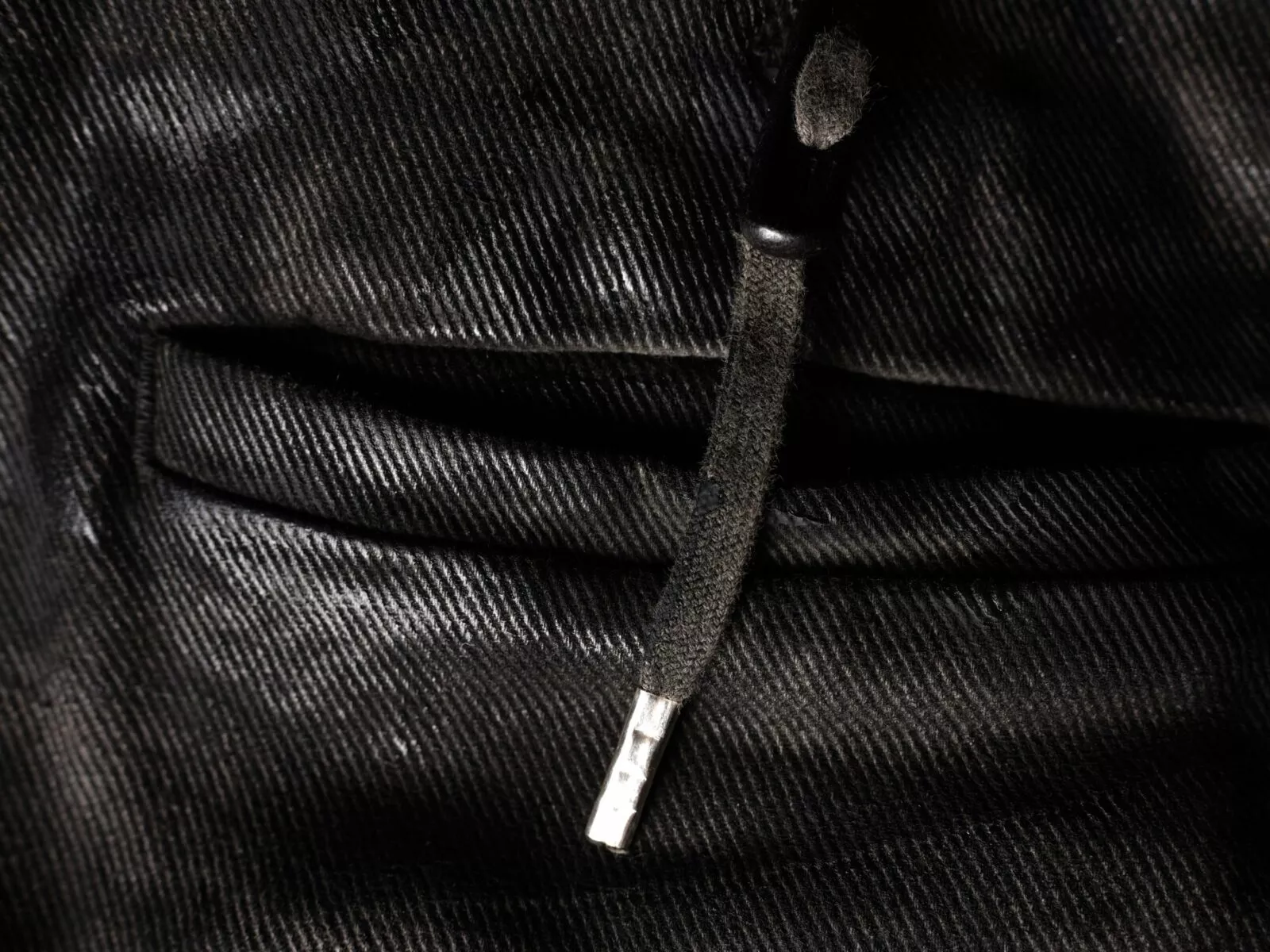
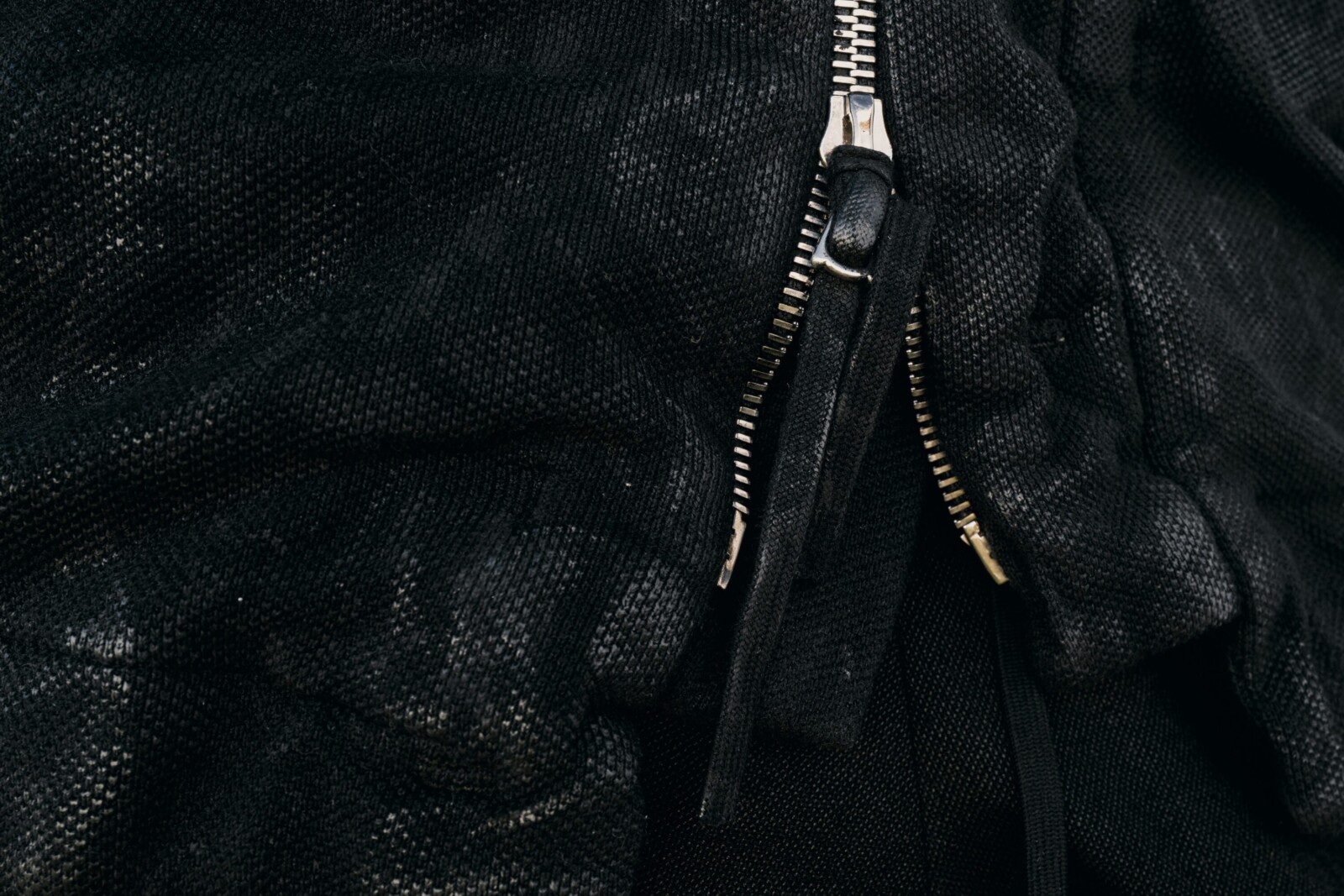
Black is frequently linked to avant-garde clothing because it strips away superficial distraction, directing attention entirely toward silhouette, cut, tactile density, and movement. It carries a potent cultural lineage: monastic discipline, existential resistance, subcultural rebellion, and modernist reduction. Yet monochromatic austerity is neither an exclusive requirement nor automatic proof of conceptual rigor. Elsa Schiaparelli’s shocking pink, Walter Van Beirendonck’s polymorphous technicolor graphics, Iris van Herpen’s translucent structural lattices, and Rei Kawakubo’s collisions of dense tartans and floral sculptural volumes occupy equally radical territory.
A similar caution applies to widely recognized design tropes like asymmetry, distressing, oversized silhouettes, and dropped crotches. Once a disruptive innovation is codified into a commercial trend, it can be replicated endlessly without the critical question that originally generated it. A distressed dark garment from a commercial mass-market chain is simply trend merchandise; a carefully tailored piece whose pattern drafting actively reconfigures posture and movement remains avant-garde regardless of hue. Disciplinary intention, patternmaking precision, and cultural impact distinguish substantial inquiry from surface styling.
Historical turning points
While the history of experimental clothing is multifaceted, several pivotal developments established the structural vocabulary that designers and wearers draw upon today.
Early twentieth-century art and radical dress
The historical avant-gardes recognized that daily clothing was central to cultural transformation. Italian Futurists published manifestos calling for dynamic, asymmetric suits adapted to urban velocity; Russian Constructivists such as Varvara Stepanova and Lyubov Popova engineered geometric production clothing (prozodezhda) built for physical utility and egalitarian labor; and Elsa Schiaparelli brought Surrealist provocation into Parisian couture. These diverse experiments established that dress could articulate a coherent intellectual program as effectively as architecture or literature.
Postwar counterculture, space-age design, and punk
During the 1960s, synthetic polymers, aerospace exploration, and youth culture led designers such as André Courrèges and Paco Rabanne to envision clothing in dialogue with modern technology. By the mid-1970s, punk dismantled this optimistic modernism. Operating from 430 King’s Road in London, Vivienne Westwood and Malcolm McLaren used safety pins, torn muslin, bondage straps, and confrontational typography to convert clothing into an anarchic critique of British economic and social stagnation, permanently altering the interplay between subculture and luxury design.
The Japanese intervention in Paris
In 1981, Rei Kawakubo (Comme des Garçons) and Yohji Yamamoto presented their debut collections in Paris, generating what historians recognize as the most significant paradigm shift in modern fashion. Their presentations were dominated by black, unhemmed edges, radical asymmetry, and billowing volumes that completely confounded Western expectations, prompting bewildered critics to coin dismissive labels such as “Hiroshima chic.” Yet this disruption was carefully calibrated: Kawakubo and Yamamoto dismantled the Western canon of body-hugging tailoring and decorative embellishment.
In subsequent collections, Kawakubo deepened her structural investigation with garments that hung independently from the anatomical frame, famously establishing her core tenet that beauty does not require conventional flattery. This exploration culminated in her Spring/Summer 1997 collection, Body Meets Dress, Dress Meets Body, where asymmetric down-filled pads were sewn into stretch gingham dresses along the spine, hips, and shoulders, forcing audiences to confront unfamiliar anatomical contours. This rigorous ethos subsequently carried forward into her protégé Junya Watanabe, whose complex origami manipulations and techno-industrial textiles pushed garment architecture into new mathematical dimensions.
Belgian fashion and deconstruction
In 1986, six graduates of Antwerp’s Royal Academy of Fine Arts—Ann Demeulemeester, Dries Van Noten, Dirk Bikkembergs, Walter Van Beirendonck, Dirk Van Saene, and Marina Yee (the Antwerp Six)—staged a collective presentation at London Fashion Week, introducing a rigorous, non-conformist perspective to international fashion. Closely aligned with this cohort was Martin Margiela, who established his maison in 1988. Margiela pioneered a systematic deconstructive methodology: inverting tailored garments, exposing internal linings, recutting vintage flea-market garments into bespoke couture, and maintaining strict personal anonymity to redirect all public attention toward the artifact itself.
Theatrical narrative and psychological catharsis: Alexander McQueen
While Margiela deconstructed clothing through understated archival intervention, Alexander McQueen combined peerless Savile Row tailoring with cinematic scale to transform the fashion show into psychological and political theatre. McQueen rejected the runway as a passive sales floor, deploying it instead as a medium for emotional catharsis.
His Spring/Summer 2001 collection, VOSS, represents a high watermark in conceptual runway production. The audience was seated around an immense two-way mirrored glass enclosure, forced to gaze at their own reflections for over an hour before interior illumination revealed a clinical psychiatric ward. Models encased in bandages, razor-clam shells, and taxidermied headpieces moved with erratic, claustrophobic intensity. In the production’s climax, an inner mirrored cube collapsed, releasing live giant moths and revealing author Michelle Olley reclining naked with a respirator mask—a direct homage to Joel-Peter Witkin’s 1983 photograph Sanitarium. McQueen’s presentation reclaimed fashion as protective armor for the emotionally vulnerable, demonstrating that dress can stage profound confrontations with mortality, beauty, and control.
Computational design, science, and haute couture: Iris van Herpen
In the twenty-first century, avant-garde methodology expanded into digital fabrication, materials science, and synthetic biology. Dutch designer Iris van Herpen pioneered the integration of multidisciplinary science and multi-material 3D printing into haute couture. Her 2010 collection, Crystallization, captured the dynamic kinetics of splashing water using 3D-printed synthetic polymers. Van Herpen’s practice treats garment design as a fusion of biological architecture and engineering, establishing wearable structures that operate simultaneously as scientific prototypes and sculptural couture.
Where the avant-garde lives today
Today, avant-garde practices inform both high couture ateliers and global subcultural movements. Designers like Robert Wun construct razor-sharp pleated gowns engineered as protective armor against emotional fragility, while contemporary creators continue to dismantle rigid gender binaries through fluid draping and structural hardware. Concurrently, brutalist architecture and primal volume find enduring expression through Rick Owens, whose monolithic silhouettes and ritualistic runway presentations have created a loyal global subculture. The absorption of these techniques into broader cultural aesthetics confirms that the avant-garde remains fashion’s primary engine of structural and conceptual research.
Important designers and what they changed
A comprehensive lineage of the avant-garde is impossible to confine to a single list, but several benchmark creators illustrate the distinct structural problems each practice addressed:
- Elsa Schiaparelli: Pioneer of Surrealist couture who embedded psychoanalytic themes, trompe-l’œil illusion, and artistic collaboration into Parisian haute couture.
- Rei Kawakubo / Comme des Garçons: Dismantled Western symmetry, challenged the anatomical body through Body Meets Dress, and demonstrated that conceptual abstraction and deep emotion can coexist in tailoring.
- Yohji Yamamoto: Mastered the Japanese concept of ma (the spatial interval between fabric and skin), crafting protective, fluid tailoring in black wool that honors the body in motion.
- Issey Miyake: Pioneered a fusion of polymer technology, industrial pleating (Pleats Please), and monolithic single-piece weaving (A-POC), uniting technical engineering with everyday ergonomic utility.
- Martin Margiela / Maison Margiela: Spearheaded deconstruction, unpicked vintage garments to reveal hidden tailoring mechanics, and subverted commercial celebrity through absolute anonymity.
- Ann Demeulemeester: Developed a poetic androgynous language of elongated monochrome tailoring, fluid waistcoats, and literary romanticism.
- Alexander McQueen: Fused Savile Row precision with raw theatrical performance, exploring themes of mortality, power, and empowerment through landmark productions like VOSS.
- Iris van Herpen: Unified traditional couture craftsmanship with algorithmic computation and 3D printing, exploring biomimicry and the intersection of fashion with natural science.
- Hussein Chalayan: Investigated displacement, architectural space, and wearable technology, engineering metamorphic garments that transform between furniture and dress.
- Rick Owens: Established an enduring architectural grammar of elongated dark proportions, brutalist leatherwork, and primal subcultural performance.
Avant-garde, experimental, anti-fashion and haute couture
These terms overlap frequently in fashion criticism, but they represent distinct conceptual operations:
Experimental fashion is a broad designation for testing novel materials, manufacturing techniques, or unfamiliar cuts. An experiment can be technically inventive without adopting a sustained critical position, and it may never be intended for ongoing wear or commercial life.
Anti-fashion directly refuses the commercial fashion system: planned obsolescence, seasonal hype, prescribed glamour, and luxury status displays. While it frequently informs designer ateliers, it belongs equally to subcultures (punk, grunge, goth) that operate entirely outside the runway. When commercial fashion assimilates its codes, anti-fashion can paradoxically re-enter the luxury market.
Haute couture is a legally protected designation in France denoting made-to-measure, hand-crafted garments produced under strict institutional criteria. Couture is a standard of manufacture and craftsmanship, not an aesthetic position; it can be deeply conservative or aggressively avant-garde, as evidenced by Schiaparelli’s surrealism or Van Herpen’s computational polymers.
Conceptual fashion privileges an overarching theoretical inquiry over decorative styling. The most rigorous avant-garde work is conceptual, but it never uses an abstract premise to excuse unresolved patternmaking. Thought becomes persuasive only when resolved through cut, textile behavior, and movement.
Can avant-garde fashion be wearable?
Yes—wearability is not an absolute threshold; it exists along an evolving spectrum of engagement. Many of fashion’s most influential ideas begin as extreme runway prototypes before migrating into daily wardrobes. An exaggerated sculptural coat may introduce a dropped shoulder that later informs an everyday winter overcoat; an unconventional trouser pattern may offer superior comfort because its curved seams follow natural stride kinetics. Issey Miyake’s permanent pleating is formally radical precisely because it is exceptionally functional: it washes easily, packs without wrinkling, and accommodates dynamic movement.
Adopting an avant-garde approach to personal style does not require wearing an intimidating runway look head-to-toe. An intentional wardrobe often begins with a single deliberate element: trousers that recalibrate bodily proportions, an unlined jacket that displays its internal canvas, or a modular garment capable of being draped in various configurations. The wearer completes the proposition through daily movement, habit, and physical wear.
Why avant-garde fashion endures: Expanding the language of dress
In an accelerated visual landscape dominated by algorithmic micro-trends and disposable production cycles, avant-garde fashion provides an indispensable counterweight. It does not operate on the anxiety of staying on-trend; it is anchored in curiosity, structural discipline, and intellectual risk.
Clothing is among the most intimate artistic forms known to culture: architecture shelters the body from a distance, but clothing touches human skin. Every garment negotiates identity and conformity, protection and vulnerability, labor and value. Avant-garde fashion matters because it refuses to let those negotiations remain invisible or dictated solely by commercial convenience.
By challenging established norms, avant-garde practitioners create independent creative spaces within the broader cultural landscape. They invite both designers and wearers to pause, question habit, and imagine alternative ways of inhabiting the world through dress. The fundamental question is never merely “Does this look unconventional?” but “What assumption does this garment expose, and what new possibility does it make real?”
References and further reading
- Tate — Avant-garde — Art Term
- The Metropolitan Museum of Art — Rei Kawakubo/Comme des Garçons: Art of the In-Between
- The New Yorker (Judith Thurman) — The Misfit: How Rei Kawakubo transformed the way we see fashion
- The Metropolitan Museum of Art — Elsa Schiaparelli (1890–1973)
- The Metropolitan Museum of Art — Alexander McQueen: Savage Beauty (Voss SS01)
- Dezeen — Interview with Iris van Herpen on Crystallization & 3D Printing
- Victoria and Albert Museum — Fashion in Motion: Yohji Yamamoto
- Victoria and Albert Museum — Vivienne Westwood: punk, new romantic and beyond
- The Museum at FIT — Japan Fashion Now
- MoMu Fashion Museum Antwerp — Martin Margiela — Collection Story
- MoMu Fashion Museum Antwerp — The Antwerp Six
- Design Museum — Hussein Chalayan
- The Metropolitan Museum of Art — Pleats Please ensemble, ca. 1994