Carol Christian Poell
The Radical Tailor of Avant-Garde Fashion
About Carol Christian Poell
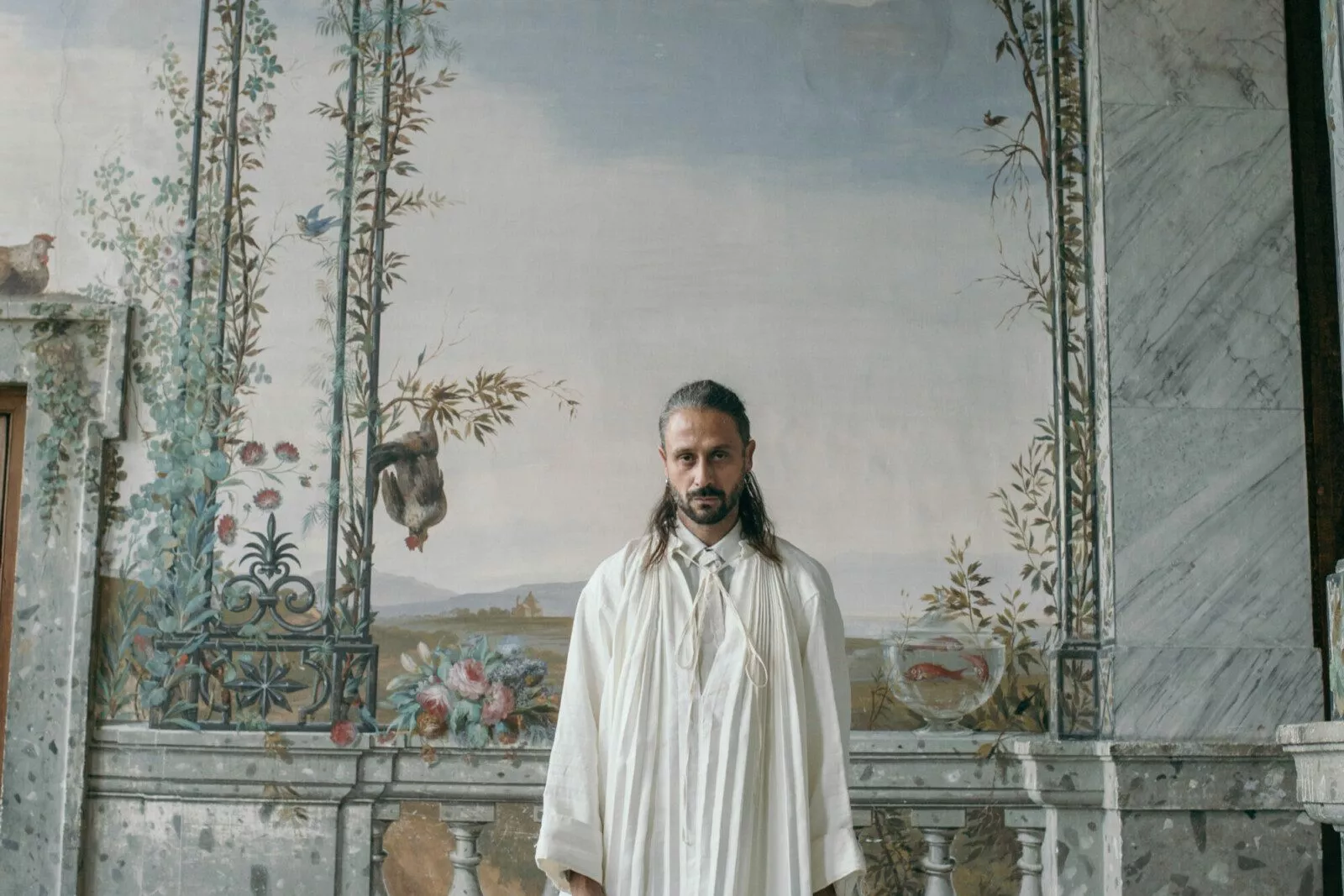
Carol Christian Poell occupies a singular position within avant-garde fashion. The Austrian-born designer has built one of contemporary fashion’s most elusive and uncompromising labels from his studio in Milan, developing garments that sit somewhere between traditional tailoring, material experimentation and conceptual art.
Often abbreviated simply as CCP, Carol Christian Poell has become a cult name among collectors of avant-garde clothing, particularly for his experimental leather jackets, anatomical trousers, object-dyed garments and unmistakable footwear. His famous Drip sneakers and boots, scar-stitched leather pieces and radically engineered constructions have become some of the most recognizable objects in artisanal fashion.
Yet reducing Poell to a collection of iconic products misses what makes his work important. At the heart of Carol Christian Poell is an investigation into the relationship between material, garment and human body. Leather is stretched, dyed, scarred and transformed. Seams migrate away from their conventional positions. Clothing can restrict movement rather than facilitate it. Footwear appears to have been submerged in liquid rubber. Traditional tailoring remains visible beneath all of this experimentation, but its familiar rules are deliberately disrupted.
It is this tension, between tailoring and experimentation, control and deterioration, elegance and discomfort, that has made Carol Christian Poell one of the defining figures of modern avant-garde fashion.
Carol Christian Poell Biography: From Linz to Milan
Carol Christian Poell was born in Linz, Austria, in 1966 and grew up with a close connection to leather craftsmanship. Members of his family worked with tanning and leather, exposing him from an early age to a material that would eventually become fundamental to his own work.
Before becoming known for radical experimentation, Poell developed a foundation in traditional garment construction. He studied tailoring in Vienna, including men’s and women’s tailoring, before moving to Italy and studying fashion design at the Domus Academy in Milan.
The combination is important to understanding CCP. Poell’s work may appear destructive, industrial or deliberately unfinished, but beneath its surface sits an extensive knowledge of classical tailoring and construction. The experimentation works precisely because the designer understands the conventions he is manipulating.
Milan eventually became both his home and the base of his label. Together with business partner Sergio Simone, Poell established C.C.P. Srl, the company responsible for the production and distribution of Carol Christian Poell.
Rather than entering the conventional Italian fashion system, however, Poell gradually constructed an alternative world around his work: one governed by his own schedule, production methods and ideas.
The Unintended Collection
Poell’s earliest collection already established his resistance to the traditional fashion system.
His first menswear offering in 1994–95, subsequently known as the Unintended Collection, consisted of only four fundamental garments: trousers, a jacket, a shirt and a T-shirt.
Instead of attempting to create a complete seasonal wardrobe, these archetypal pieces provided a foundation through which Poell could explore construction and manufacturing. The approach anticipated something that would characterize his career for decades: reducing fashion to its essential components and then reconsidering how those components could be constructed, worn and experienced.
C.C.P. Srl was established in Milan in 1995, and Poell subsequently developed the label without adopting the conventional rhythm expected of an international fashion house.
Womenswear followed during the late 1990s, but the distinction between Carol Christian Poell menswear and womenswear has often been less important than the underlying construction of the garment itself. Classical tailoring, anatomical structures and experimental materials move across conventional gender categories.
An Alternative to the Fashion System
Carol Christian Poell’s reputation is inseparable from his refusal to behave like a conventional fashion brand.
While much of the industry depends upon seasonal collections, runway calendars, advertising campaigns, celebrity visibility and constant digital communication, Poell has historically maintained an unusually private presence.
Collections and individual pieces appear according to the internal development of the work rather than a relentless marketing calendar. Interviews are rare. Branding is restrained. Distribution remains highly selective.
This absence has paradoxically strengthened the mythology surrounding CCP.
But the label’s importance should not be explained by mystery alone. Poell’s withdrawal from mainstream fashion allows the garments themselves — their construction, materials, surfaces and physical relationship with the wearer — to remain the central subject.
In an industry increasingly driven by visibility, Carol Christian Poell represents an almost opposite proposition: the object comes before the image of the designer.
Radical Materials and Experimental Construction
Material experimentation is perhaps the most recognizable characteristic of Carol Christian Poell clothing.
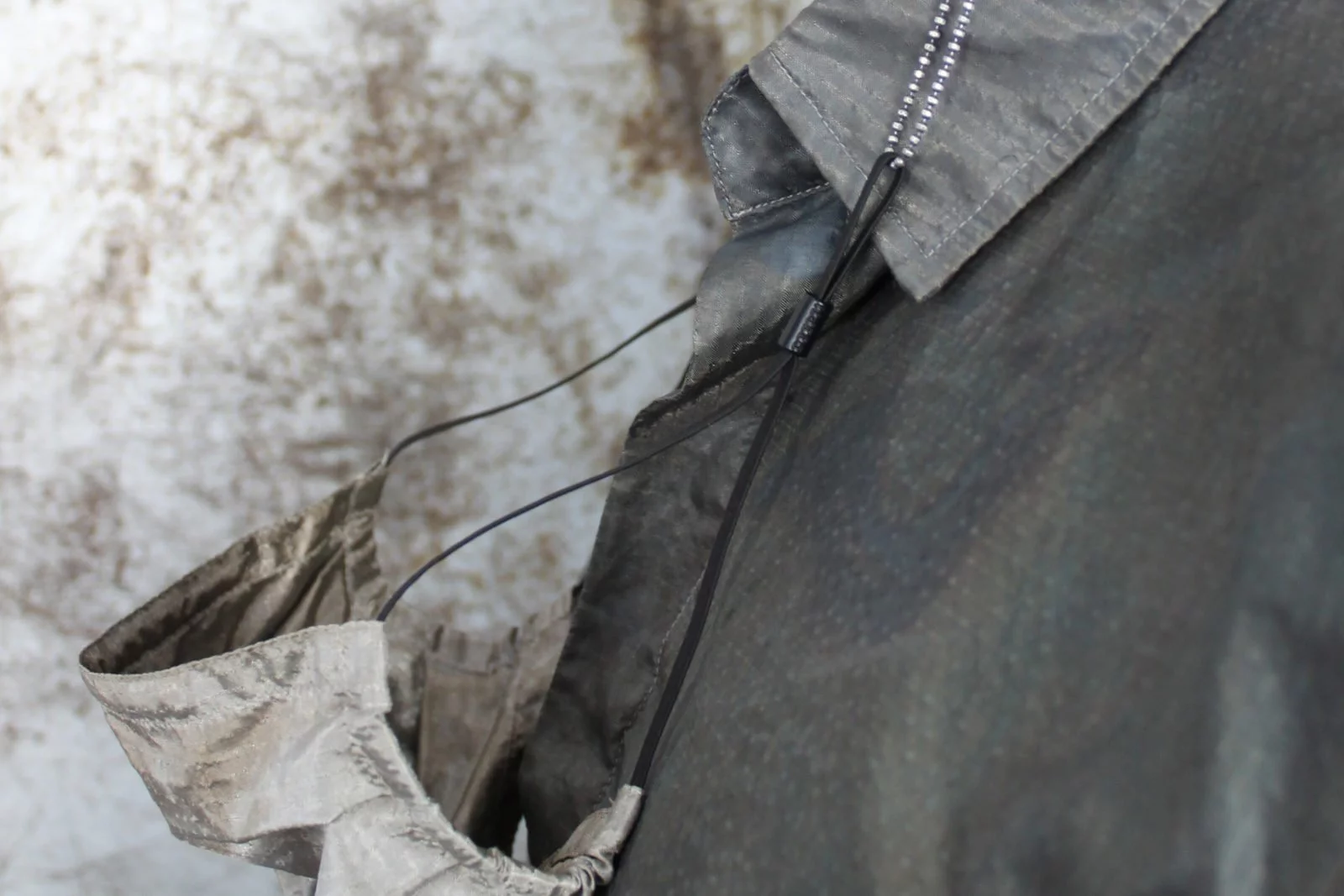
Poell approaches fabric and leather less as fixed materials than as substances that can be manipulated. Garments can be object-dyed after construction, leather surfaces altered, seams exposed or displaced and conventional manufacturing processes deliberately reversed.
Among the techniques and characteristics associated with CCP are object dyeing, scar stitching, bonded construction, anatomical and twisted seams, seamless leather construction, rubber treatments and unconventional garment finishing.
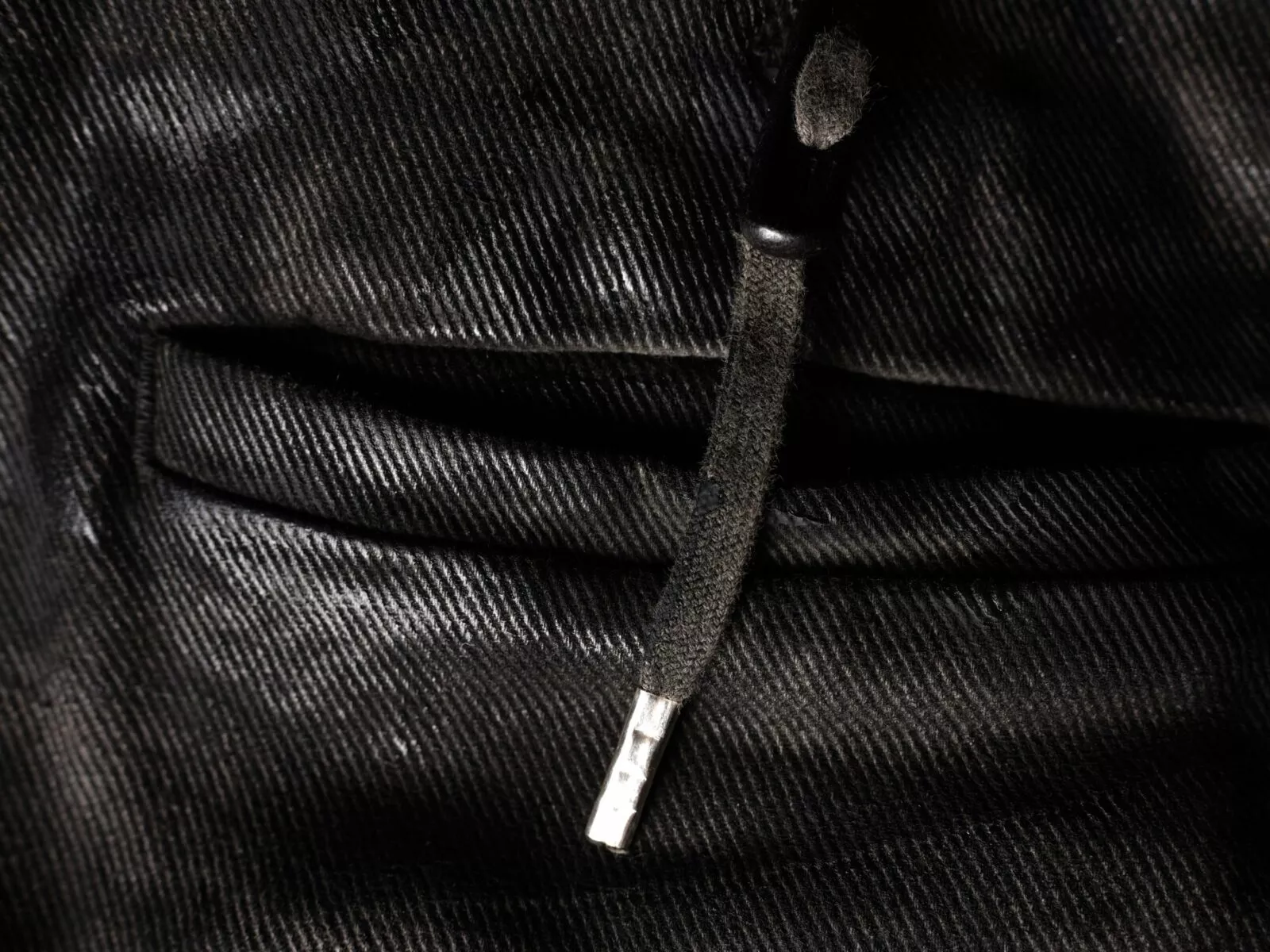
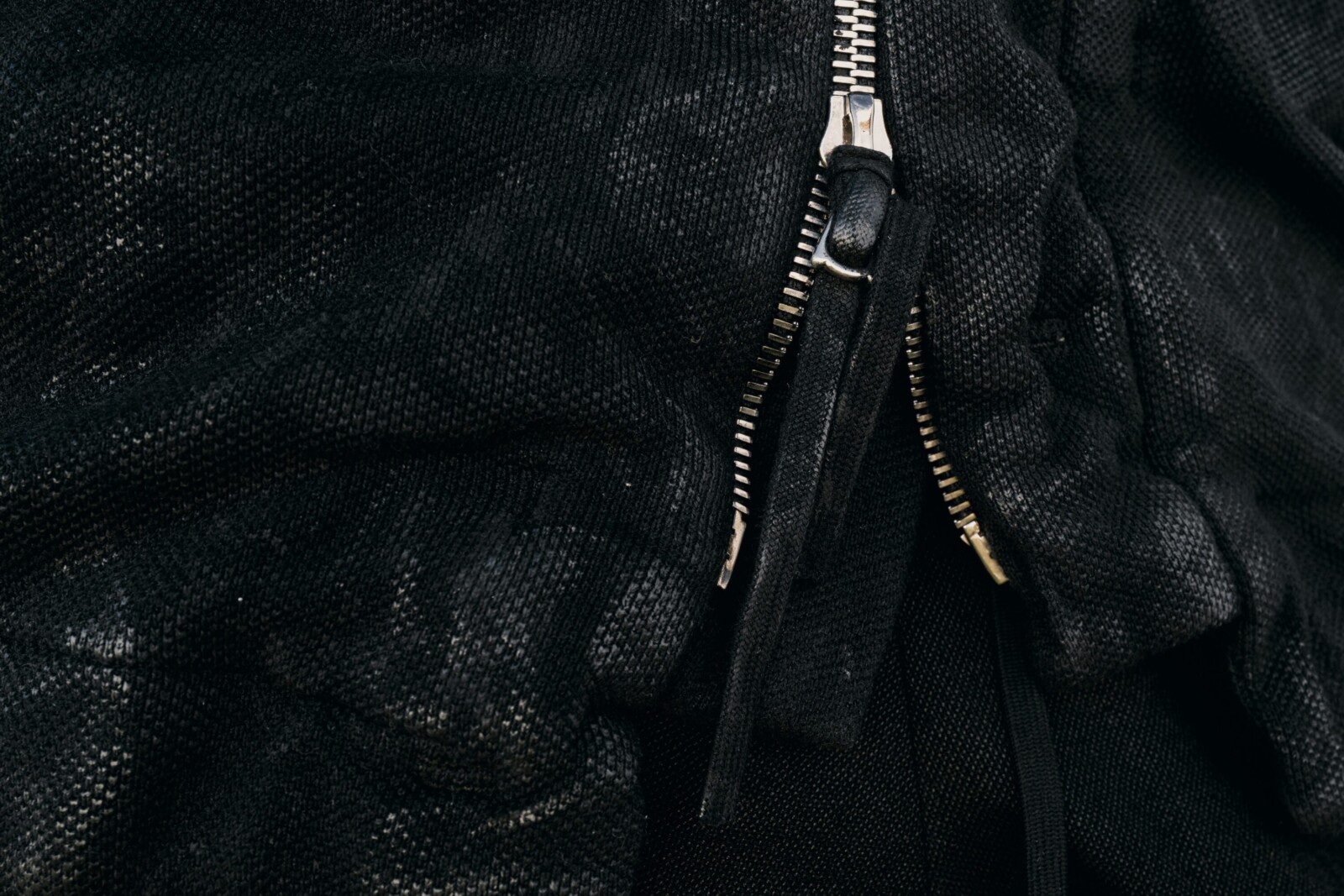
Object dyeing is particularly significant. Rather than simply constructing a garment from material dyed beforehand, the completed object can undergo the dyeing process as a whole. The result creates tonal irregularities across the garment and emphasizes its identity as an individual object rather than a perfectly standardized industrial product.
Poell has experimented extensively with leather, including kangaroo leather and other specialist hides and treatments. His background and fascination with tanning are reflected in an approach where leather is allowed to display variation, deformation and evidence of the processes applied to it.
This philosophy extends beyond leather. Across his career, Poell has explored unconventional textiles, coatings, rubber, transparent materials and other treatments that challenge expectations of how luxury clothing should look or feel.
The Body as Part of the Garment
One of the most important ideas in Carol Christian Poell’s work is the relationship between clothing and anatomy.
Conventional clothing is generally designed to accommodate the body. Poell frequently reverses this relationship.
Jackets, trousers and footwear can impose their own structure upon the wearer. Sleeves extend into gloves. Seams twist around limbs. Trouser construction alters the expected line of the leg. Rigid leather can influence posture and movement.
Rather than disappearing comfortably around the wearer, the garment makes its presence known.
This creates the characteristic tension found throughout CCP clothing. A piece can be beautifully tailored while simultaneously appearing restrictive, distressed or anatomically unfamiliar. Comfort is not necessarily the primary objective. The physical experience of wearing the garment becomes part of its meaning.
Poell consequently approaches clothing almost as an extension, or modification of the human body.
Carol Christian Poell Leather Jackets
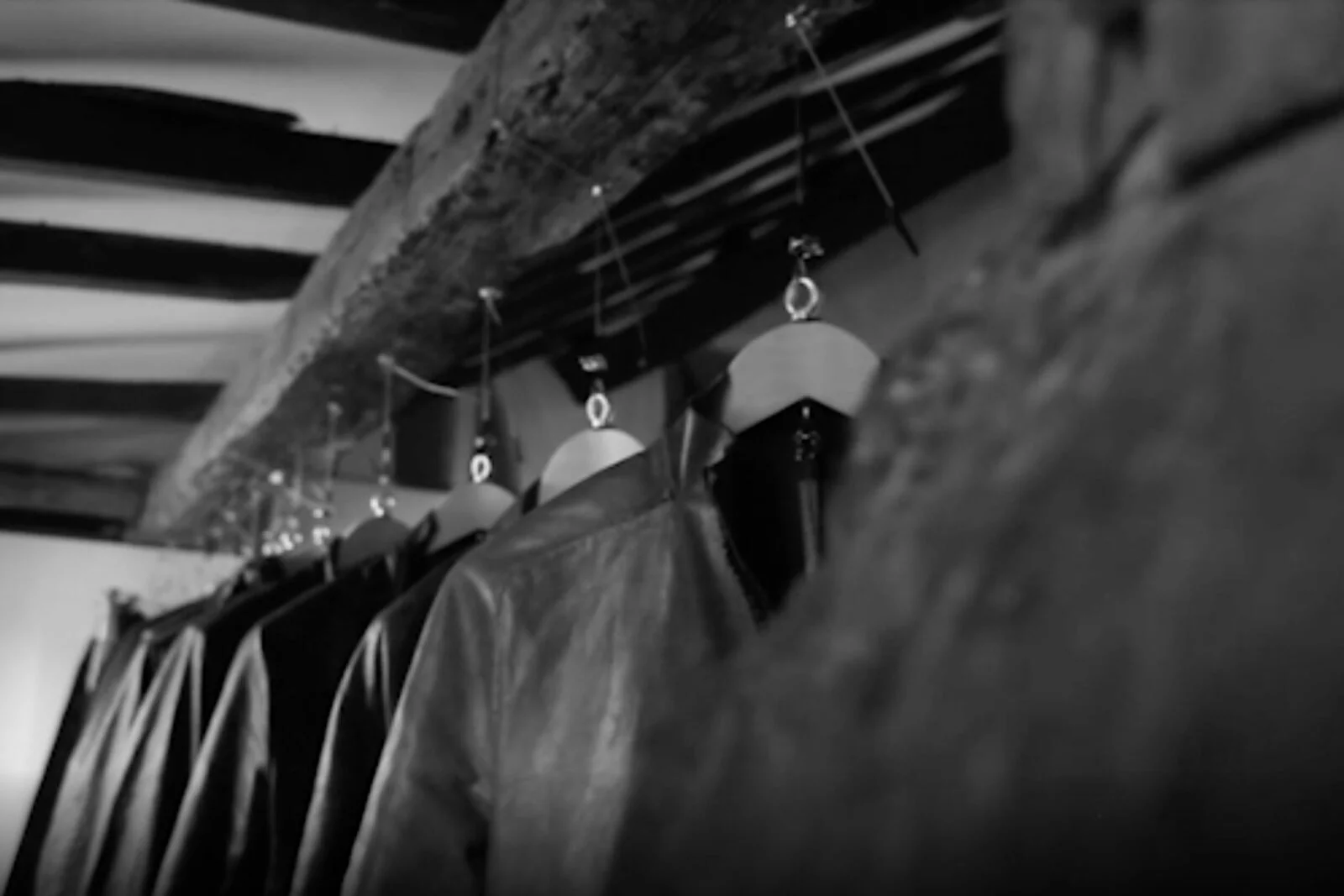
The Carol Christian Poell leather jacket has become one of the label’s most sought-after categories.
Instead of treating leather merely as a luxury surface, Poell makes its physical properties central to the design. Leather can appear dense and almost armored or unusually thin and responsive. Dyeing and finishing produce irregular surfaces that evolve further through wear.
His well-known scar-stitching technique reinforces the anatomical quality of these pieces. Seams can resemble wounds or surgical closures, making construction itself visible and not hiding it inside the garment.
Other designs extend sleeves toward or into the hand, further dissolving the boundary between jacket and body.
For collectors, these pieces represent much of what defines Carol Christian Poell: extraordinary material development combined with highly precise tailoring and an intentionally unsettling approach to conventional luxury.
Carol Christian Poell Drip Sneakers and Footwear
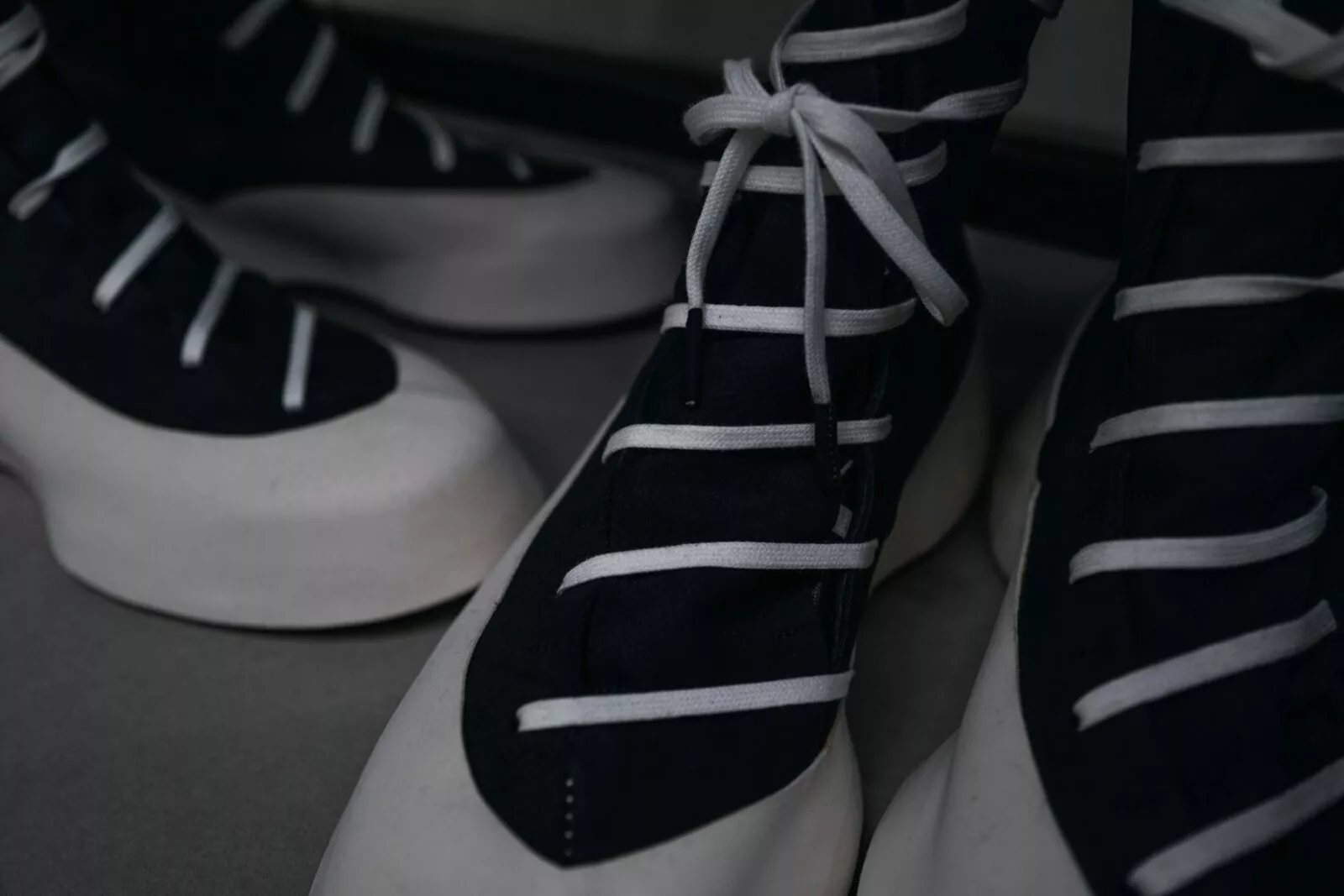
Perhaps no individual CCP design has achieved greater recognition than the Carol Christian Poell Drip sneaker.
The technique produces footwear whose soles appear to melt beyond the conventional boundaries of the shoe. Liquid rubber or polyurethane forms an irregular layer around the sole, creating the characteristic dripping appearance.
Rather than hiding the manufacturing process, the construction becomes the visual identity of the object.
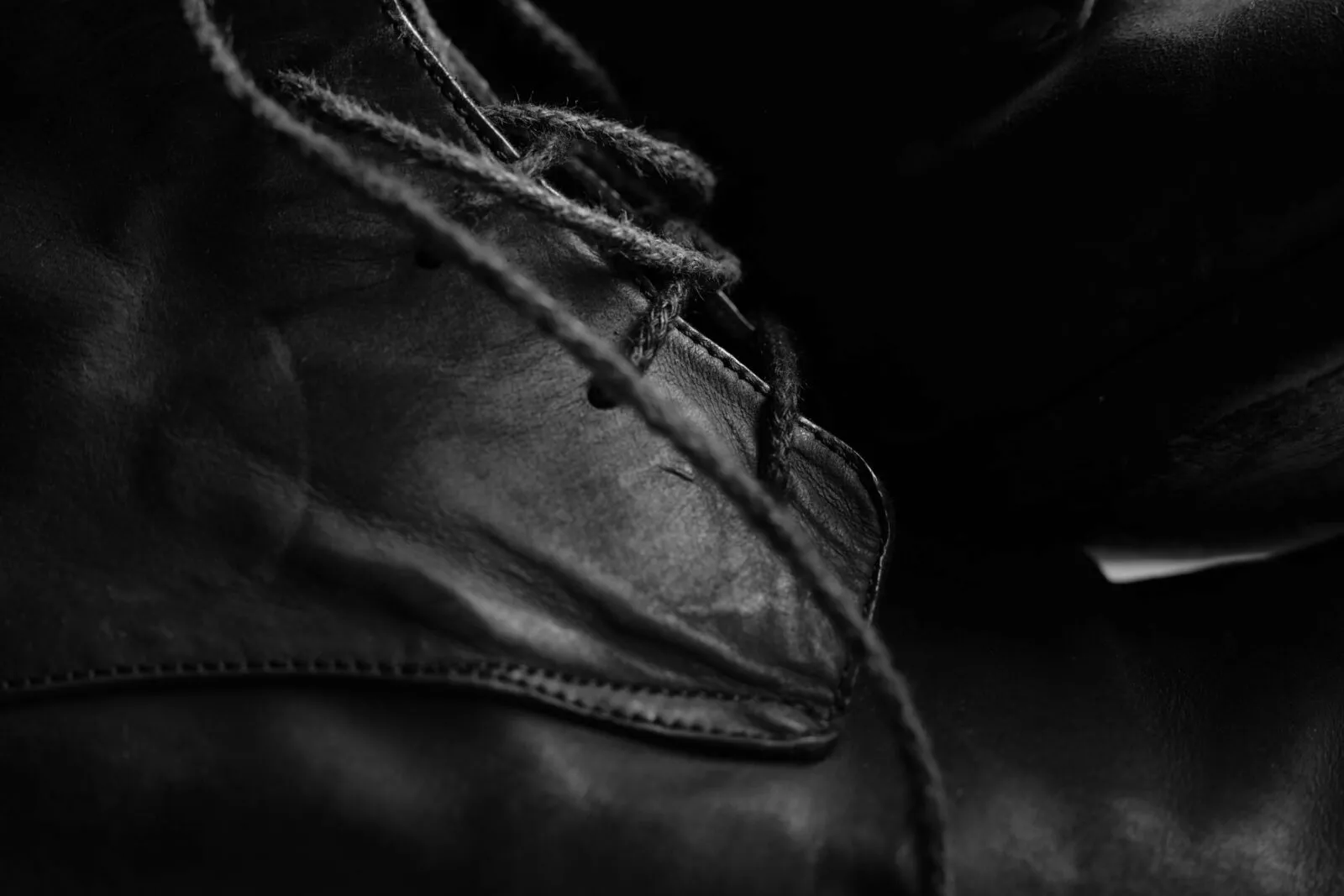
Poell’s footwear experimentation extends beyond the Drip sneaker. Carol Christian Poell boots, derbies and sneakers have incorporated object-dyed leather, unusual sole constructions, whole-cut or no-seam uppers and unconventional treatments.
Kangaroo leather is frequently encountered in CCP footwear because its combination of strength and relatively low weight lends itself to Poell’s experimental constructions.
The result is footwear that remains functional while appearing almost like an artifact from an industrial process.
Mainstream Downstream: Carol Christian Poell’s Legendary SS04 Presentation
No history of Carol Christian Poell is complete without Mainstream Downstream, the presentation for his Spring/Summer 2004 collection and one of the defining moments of early-2000s avant-garde fashion.
Instead of presenting the collection on a conventional runway, Poell staged the event on Milan’s Naviglio Grande canal.
Garments and models floated along the water, their bodies supported as they drifted past spectators. Against the dirty water of the canal, the carefully constructed clothes appeared detached from the pristine environment normally associated with luxury fashion.
The title itself encapsulated Poell’s relationship with the industry.
“Mainstream” evokes the dominant current, fashion’s collective movement through seasons, trends and commercial cycles. “Downstream” simultaneously describes the literal movement of the presentation through the canal.
Models relinquished the controlled movement of a runway and instead became subject to the current.
The resulting imagery remains some of the most recognizable in Carol Christian Poell’s history: motionless bodies floating through Milan while wearing precisely constructed clothing, somewhere between fashion presentation, installation and performance, transforming the runway into a conceptual statement about the mechanisms of fashion itself.
Fashion Presentation as Performance
Mainstream Downstream was not an isolated experiment.
Around the turn of the millennium, Carol Christian Poell developed a series of presentations that deliberately disrupted expectations of what a fashion show should be.
For Spring/Summer 2001, Best Before, models appeared on stretchers in an environment recalling a morgue, with dramatically extended trousers contributing to the impression of covered bodies.
Another presentation placed models inside a dog kennel while barking and the physical environment became part of the audience’s experience.
These presentations were uncomfortable by design. Rather than providing the polished spectacle associated with luxury fashion, Poell confronted viewers with mortality, confinement, vulnerability and the physical reality of the body.
Clothing became only one element within a larger sensory environment.
This approach places Carol Christian Poell within an important lineage of designers who expanded the fashion presentation beyond commerce and into performance, installation and conceptual art.
Mortality, Transformation and Decay
Recurring themes in Poell’s work include mortality, transformation, restriction, deterioration and the changing human body.
They appear not simply as visual references but through the physical construction of the clothes.
A scar-stitched seam resembles repaired tissue. Object dyeing records chemical transformation directly onto a completed garment. Leather changes through wear and gradually adapts to the body. Rubber solidifies around footwear in irregular forms. Anatomical pattern cutting redirects familiar lines around human limbs.
Poell does not attempt to make these processes invisible.
Instead, the process becomes the aesthetic.
This is one reason older Carol Christian Poell garments often remain particularly compelling. Wear, patina and material evolution do not necessarily contradict the original design; they can become another stage in the life of the object.
Craftsmanship Over Logos
Despite the extreme appearance of certain CCP pieces, Carol Christian Poell’s work is fundamentally grounded in craftsmanship.
His designs rarely depend upon conspicuous logos or easily reproduced graphic signatures. Recognition instead comes through silhouette, construction and material treatment.
A knowledgeable observer may recognize a pair of CCP Drip sneakers, twisted-seam trousers or a scar-stitched leather jacket without seeing a brand name at all.
This approach has helped establish Poell as a central figure within the broader movement of artisanal avant-garde fashion that developed between Italy and other European and Japanese fashion communities from the 1990s onward.
Within this world, the value of clothing is located primarily in material, construction, experimentation and the knowledge embedded in its production.
The Cult of Carol Christian Poell
Carol Christian Poell has developed an unusually dedicated international following despite — or perhaps partly because of — his limited public presence.
CCP garments are distributed through a carefully selected group of avant-garde fashion stores, while discontinued and archival pieces circulate extensively among collectors.
Certain leather jackets, trousers, boots and sneakers have become particularly sought after on the secondary market.
Scarcity contributes to this desirability, but it does not fully explain it. Carol Christian Poell pieces are difficult to substitute. The highly specific combination of tailoring, material research and construction means that even garments produced many years ago continue to appear distinctive.
For many collectors, CCP therefore exists outside the normal logic of seasonal fashion. A garment does not necessarily become obsolete when a new collection appears.
It becomes part of an expanding archive.
Carol Christian Poell’s Influence on Avant-Garde Fashion
Carol Christian Poell’s influence extends considerably beyond the relatively small scale of his own label.
His work helped establish a language of post-industrial, artisanal avant-garde menswear centered around anatomical cutting, experimental leather, object dyeing, irregular finishing and highly specialized footwear.
These ideas can subsequently be recognized across a broader generation of independent avant-garde designers and labels.
But Poell’s significance lies less in any individual technique than in the uncompromising system surrounding them.
He demonstrated that a designer could remain deliberately niche, reject the conventional fashion calendar, avoid mass-market visibility and nevertheless build an internationally influential body of work.
In that sense, Carol Christian Poell represents something increasingly rare: a fashion label whose identity has been constructed primarily through the objects themselves.
Why Carol Christian Poell Still Matters
More than three decades after his earliest collections, Carol Christian Poell remains a reference point for anyone exploring avant-garde fashion, artisanal clothing and experimental menswear.
His work sits at an unusual intersection. It is traditional tailoring pushed toward anatomical distortion. Luxury leather subjected to aggressive experimentation. Functional footwear transformed into sculptural objects. Clothing designed around the human body while simultaneously resisting it.
Most importantly, Poell demonstrates that innovation in fashion does not always require constant reinvention through trends. Sometimes it comes from repeatedly investigating the same fundamental questions: What is a garment? How should it relate to the body? How far can a material be transformed before it becomes something else?
Carol Christian Poell has spent his career exploring those questions without providing easy answers. That uncompromising approach is precisely why CCP clothing and footwear continue to occupy such an important place within avant-garde fashion.
Carol Christian Poell Knowledge Base
-
Who is Carol Christian Poell?
Carol Christian Poell is an Austrian-born avant-garde fashion designer who holes up in a studio in Milan’s Naviglio district where he quietly designs an ultra-niche, cult label that he only shows to the public when he feels like it.
-
Why is Carol Christian Poell so expensive?
The high cost of Carol Christian Poell clothing and footwear comes from his uncompromising production methods. Every garment is meticulously handcrafted using experimental techniques such as object-dyeing, bonded seams, and rare leathers. His limited output and cult following also increase demand, making CCP pieces as much art objects as wearable garments.
-
What is Carol Christian Poell known for?
Carol Christian Poell is best known as an avant-garde fashion designer who pushes the boundaries of clothing design. His iconic works include twisted-seam trousers, scar-stitched leather jackets, and the famous drip sole footwear, which appears to melt into the ground. His work often explores existential themes like mortality, decay, and transformation.
-
Is Carol Christian Poell still designing?
Yes, Carol Christian Poell continues to live and work in Milan, Italy, where he quietly produces new collections. However, unlike mainstream designers, he does not follow seasonal calendars and only releases work when he chooses. This unpredictability is part of what keeps his cult following engaged.
-
Where to buy Carol Christian Poell clothing?
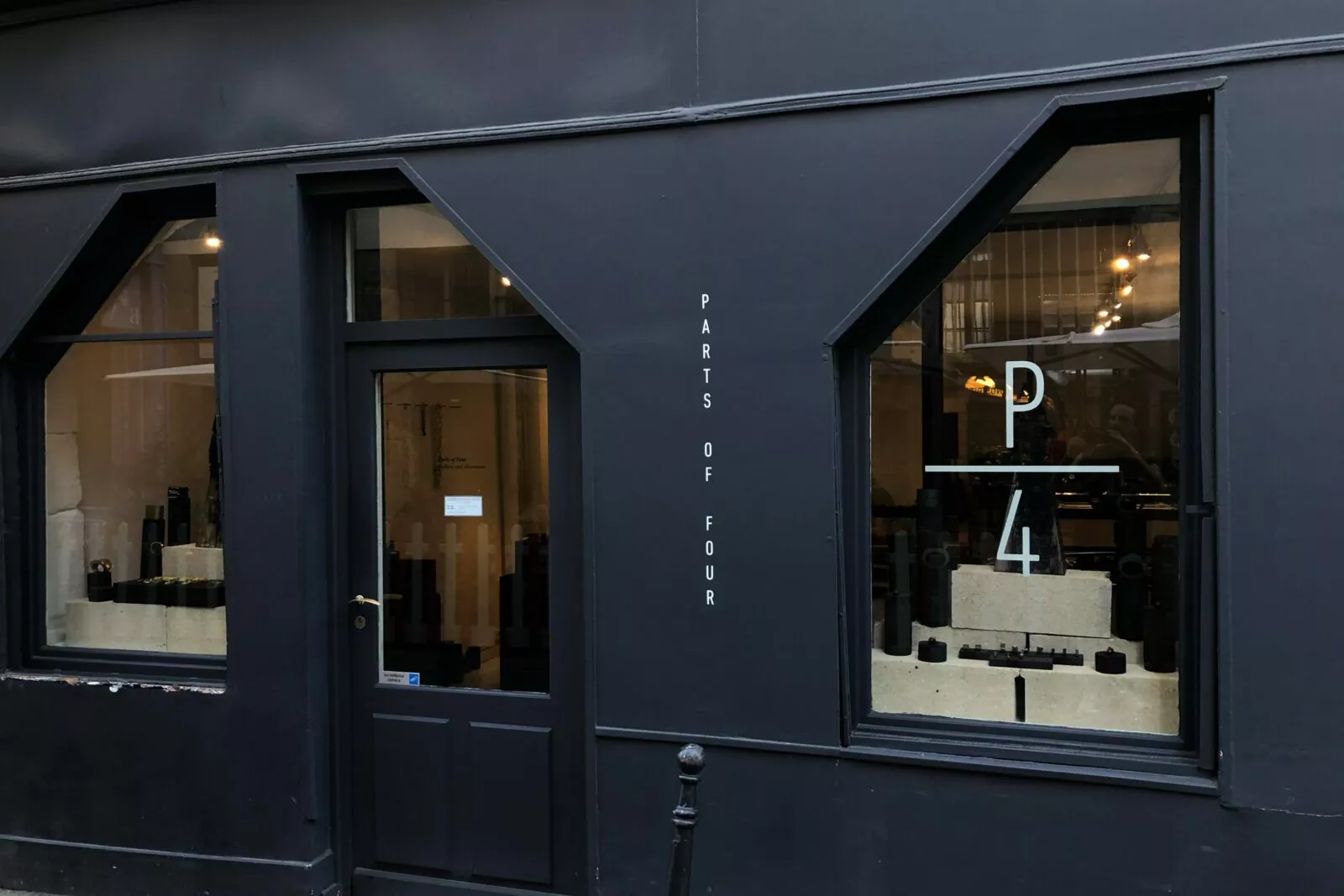
Carol Christian Poell’s designs are sold through a select network of boutiques worldwide, with fewer than 50 authorized retailers. His label, CCP clothing, is intentionally distributed in limited quantities, making pieces rare and highly collectible. Many fans turn to trusted avant-garde boutiques in cities like Tokyo, Paris, Milan, and New York. These are some of the world’s best CCP Stockists.