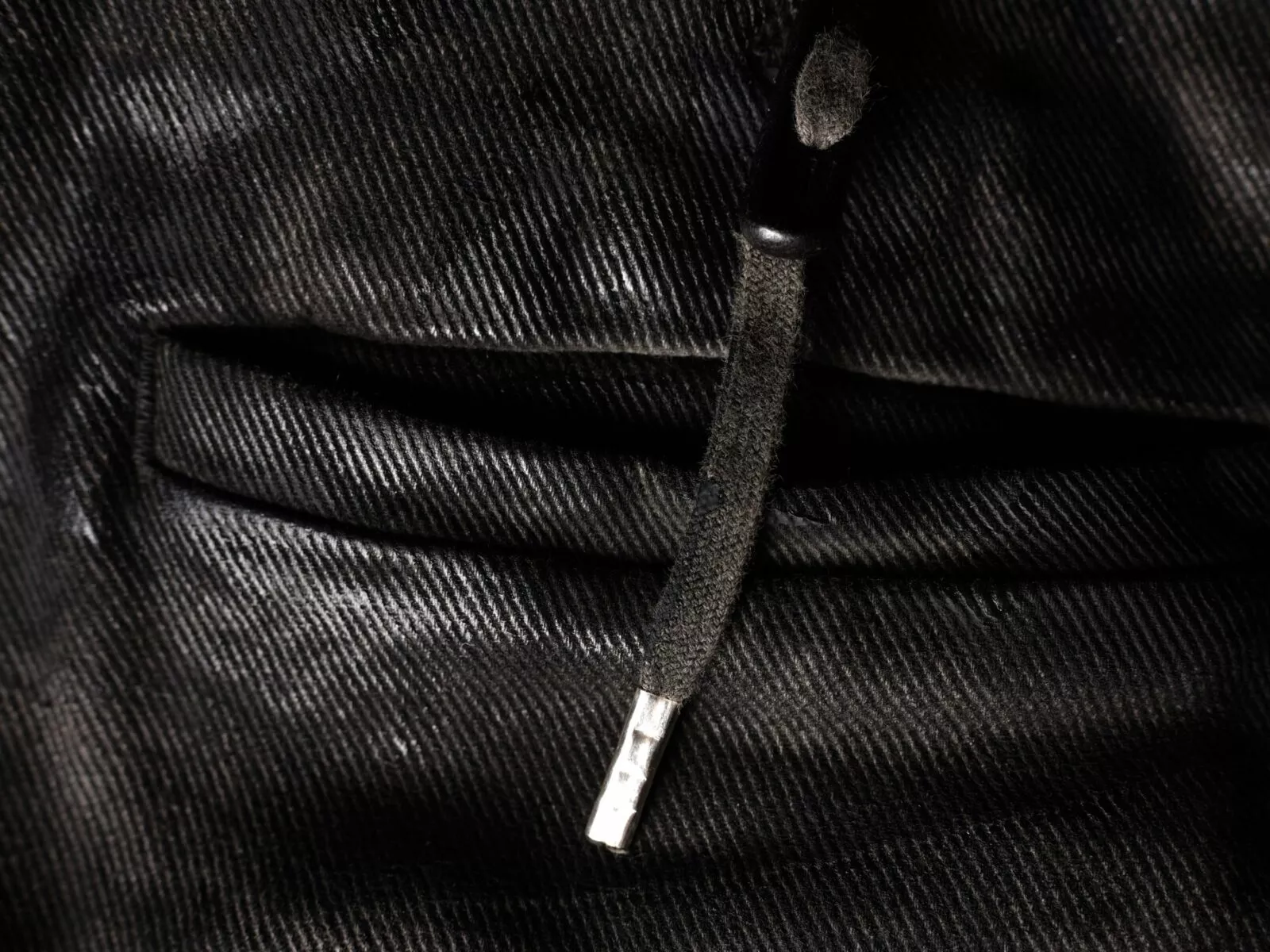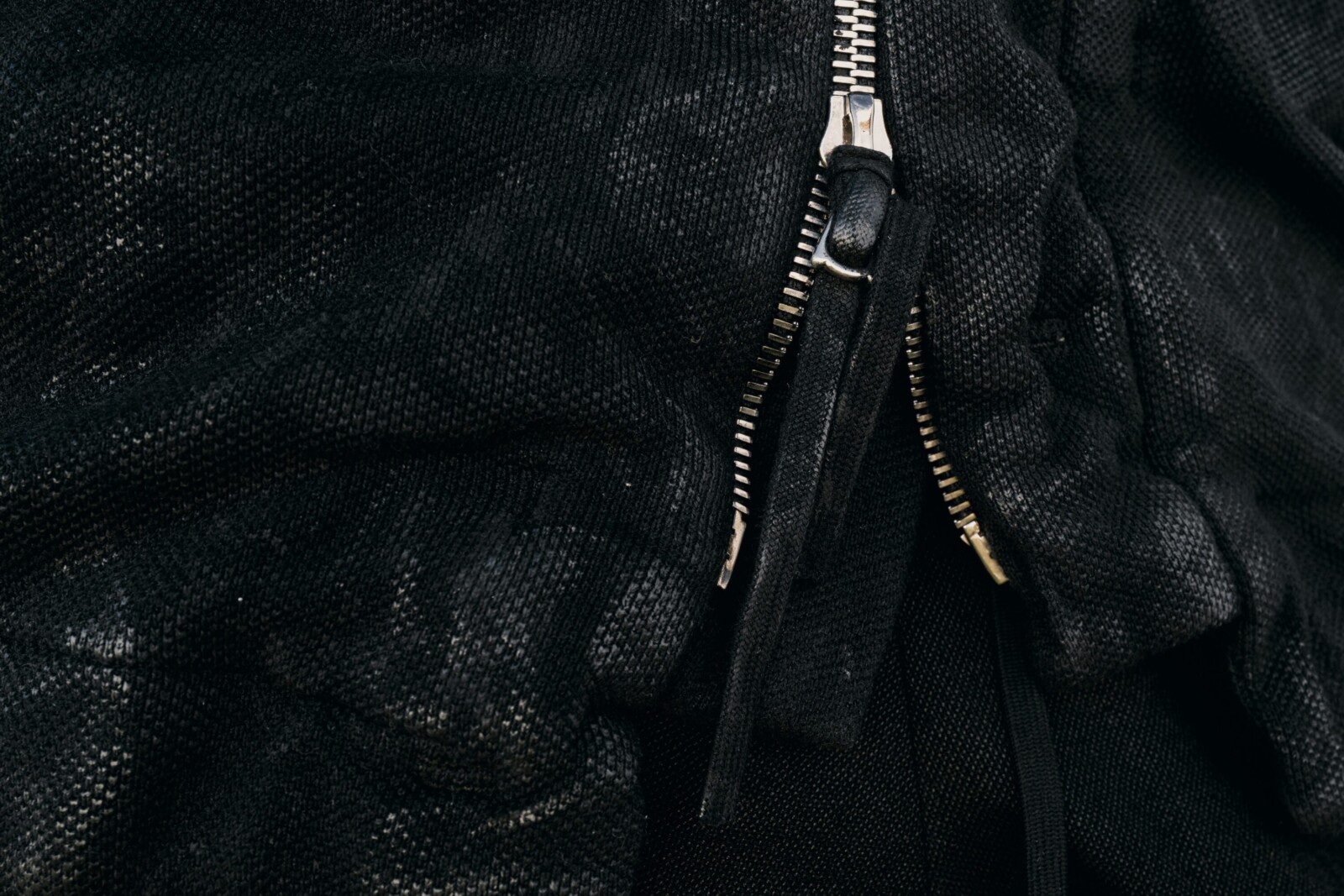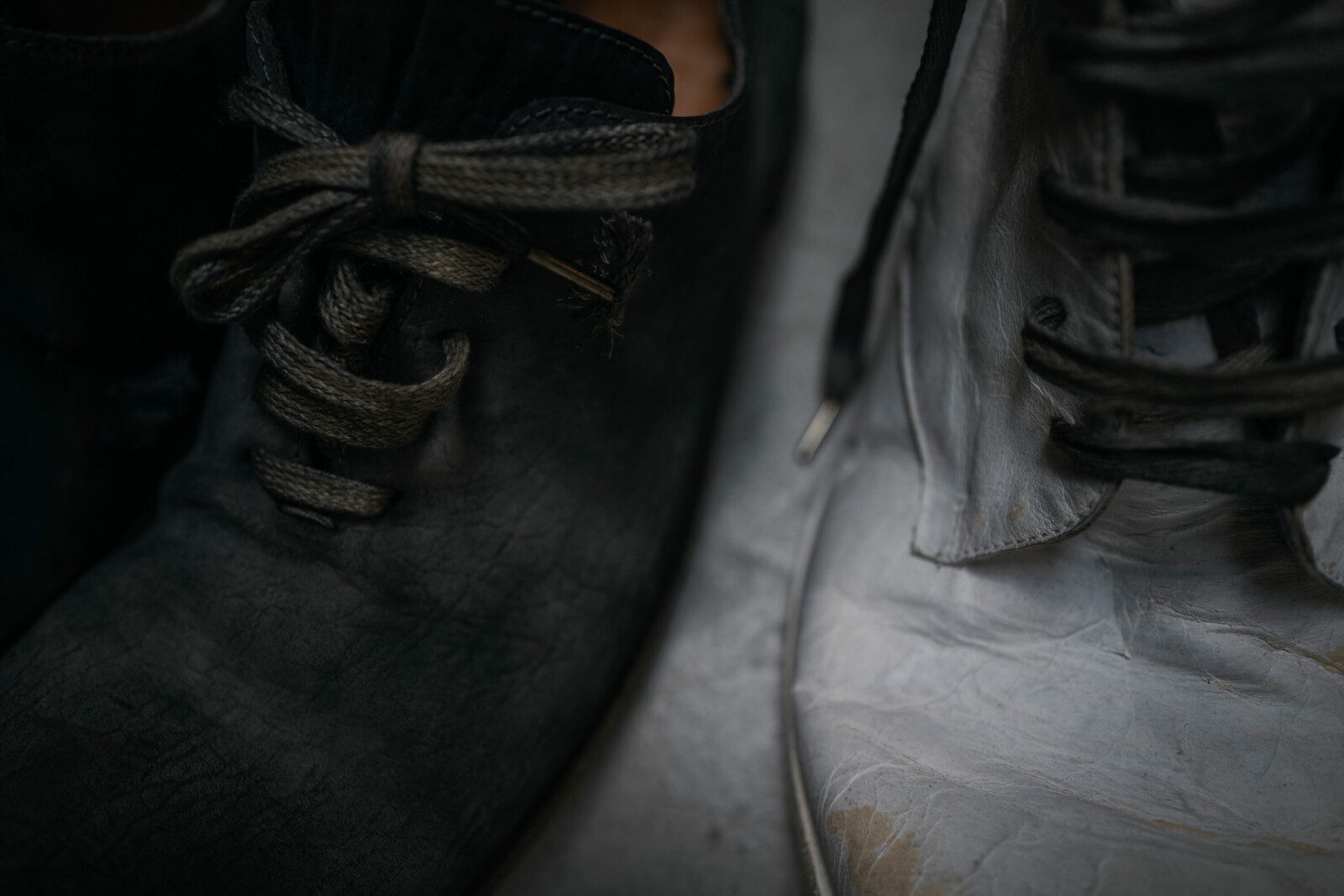
Carpe Diem and the Birth of a New Artisanal Language
Between 1994 and 2006, inside a secluded workshop in Ponte San Giovanni outside Perugia, Maurizio Altieri dismantled the industrial logic of modern menswear. Operating under the name Carpe Diem (frequently designated as C-Diem), Altieri rejected runway calendars, marketing departments, and seasonal fashion cycles to treat clothing as an archaeological medium. Through radical material interventions—burying finished horsehide garments in Umbrian soil to trigger microbial patination, lasting boots with an exaggerated upward toe spring, and assembling unlined jackets devoid of fusible canvas—Carpe Diem established the grammar of contemporary artisanal fashion. Its systematic division into four specialized branches (Carpe Diem, LMaltieri, Linea, and Sartoria) and the subsequent emergence of its key studio collaborators—Maurizio Amadei of m.a+, Luca Laurini of Label Under Construction, Simone Cecchetto of A1923, and Alessio Zero of Layer-0—formed the foundation of what fashion historians term the Carpe Diem Diaspora.
The Perugia workshop: Altieri’s nomadic research and anti-fashion posture
Prior to establishing Carpe Diem in 1994, Maurizio Altieri spent nearly a decade living as an itinerant traveler across North and Central America, the Mediterranean basin, and Southeast Asia. Free from traditional design school dogmas, Altieri immersed himself in indigenous material cultures, observing how nomadic peoples cured skins, how rural cobblers built lasting footwear with minimal hand tools, and how garments absorbed the physical biography of their wearers. Returning to Italy in the early 1990s, he settled in Ponte San Giovanni on the outskirts of Perugia, Umbria, choosing provincial seclusion over the commercial fashion machinery of Milan.
Carpe Diem began as an unannounced laboratory producing footwear and small leather objects. Altieri rejected every convention of the luxury apparel industry:
- No Promotional Collateral: The brand issued no lookbooks, no press kits, and no advertising campaigns. Altieri refused personal interviews, insisting that garments must communicate purely through their material weight, structural tension, and spatial presence.
- A Communal Production Guild: Rather than contracting production to third-party mass factories, Altieri organized the Perugia studio as a collaborative guild. Pattern cutters, cordwainers, and tailors lived and worked in close proximity, sharing communal meals and continuously cross-pollinating techniques across leatherworking, knitting, and bespoke tailoring.
- Controlled Cultural Distribution: Rather than exhibiting at runway fashion weeks, Altieri presented pieces in private appointments, often packaging garments in unvarnished wooden crates wrapped in hand-stamped paper. Stockists were restricted to an international vanguard of independent conceptual boutiques, including Armand Hadida’s L’Éclaireur in Paris, Tsuneyuki Ito’s Lift in Tokyo, and Karlo Steel’s Atelier in New York.
Through this deliberate austerity, Carpe Diem established a counter-cultural mystique that repositioned clothing from seasonal merchandise to collectible material artifact, directly catalyzing the broader Italian Artisanal Fashion Movement.
The four conceptual branches: Carpe Diem, LMaltieri, Linea, and Sartoria
As Altieri’s technical inquiries broadened between 1998 and 2003, he realized that treating leather, tailoring, and knitwear under a single conventional label compromised material purity. He restructured the atelier’s output into four distinct conceptual lines, each assigned a numerical and material territory:
- Carpe Diem (Footwear and Heavy Leather Outerwear): The foundational line focused exclusively on vegetable-tanned equus hides (horse, donkey, and culatta). It produced the brand’s most celebrated silhouettes: the forward-curving lace-up boot, the back-zip boot, unlined wholecut derbies, and rigid leather shirts. Pieces were often waxed by hand with animal tallow or paraffin, yielding garments that stood upright unsupported until body warmth softened the hide.
- LMaltieri (Knitwear and Fluid Textiles): Established in 1999 and named in tribute to Altieri’s grandmother and mother, Linea Maltieri concentrated on yarn engineering. Rejecting synthetic stretch fibers, the line pioneered tubular, seamless circular knitting using unwashed raw cashmere, antique hemp, dense linen, and heavy unspun wool. Hallmarks included raw-edged rolled cuffs, thumb-slit sleeves, and reversible double-face jerseys that naturally contoured to joints through organic tension.
- Linea (Architectural Tailoring and Minimal Construction): Launched in 2001, Linea represented Altieri’s purist assault on classical menswear. Linea garments stripped away all interior architecture: no synthetic shoulder pads, no chest haircloth fusing, no plastic buttons, and no acetate linings. Construction relied entirely on geometric darting, anatomical curved seams, and closures reduced to hidden iron hook-and-eyes or self-fabric ties.
- Sartoria (Pure Handcrafted Bespoke): The ultimate realization of Altieri’s philosophy, debuting in 2003. Produced in strictly limited quantities for private clients, every Sartoria garment was hand-cut and sewn stitch-by-stitch by Altieri and his master tailors. Finished pieces were accompanied by handwritten provenance documents on heavy parchment detailing the exact fiber sources, working hours, and client measurements.
This four-part taxonomy isolated each material discipline, proving that authentic sartorial form emerges from the intrinsic physics of the chosen fiber rather than decorative styling.
Material chemistry: vegetable equus hides, soil aging, and object dyeing
The distinctive character of Carpe Diem leather stems from pre-industrial tanning methods developed in close collaboration with Guidi 1896, the historic tannery located in Pescia, Tuscany. While modern commercial fashion relies on chromium sulfate salts to tan bovine leather quickly and uniformly, Altieri insisted on slow, vegetable pit tanning utilizing natural plant tannins from mimosa, chestnut, and quebracho tree bark over periods of up to six months.
Altieri prioritized dense, irregular hides from work horses and pack animals rather than uniform cattle:
- Equus and Culatta: The culatta cut encompasses the horse’s lower back and rump, where high-density shell cordovan smoothly transitions into open, fibrous flank. Rather than splitting or buffing the hide to create synthetic uniformity, Altieri cut garments across this boundary, exposing dramatic texture shifts from glassy polish to textured suede across a single continuous panel.
- Subterranean Soil Aging: In one of his most radical material experiments, Altieri buried assembled horsehide boots and outerwear underground in the damp, mineral-dense topsoil of the Umbrian countryside. Left undisturbed for weeks or months, the hides reacted with soil microbes, humic acids, and subterranean moisture. The natural microflora gently digested surface collagen fibers and oxidized metal fastenings, producing an organic weathering that mechanical tumbling or artificial chemical washes could never simulate.
- Saline Contraction: Altieri subjected raw crust leathers to concentrated saltwater baths, followed by natural sun drying. As the moisture evaporated, saline crystals bonded within the fiber matrix, contracting the hide into a rigid, sculptural shell that softened selectively over months of human wear, conforming intimately to the wearer’s movement.
- Object Dyeing (Tinto in Capo): Footwear, bags, and outerwear were assembled entirely in raw, untreated vegetable-tanned crust leather, including unbleached cotton threads and unlacquered hardware. The completed object was submerged into heated dye drums with natural fats and wooden paddles. The heat shock caused thread, leather, and metal to shrink at different ratios, creating the puckered seams, irregular color pooling, and organic creasing that defined the movement’s visual identity.
Anatomical engineering: the upturned toe spring, spiral seams, and wholecut construction
The visual signature of Carpe Diem was not merely a consequence of surface distressing; it was grounded in radical pattern geometry that challenged the Euclidean assumptions of Western tailoring.
In footwear, Altieri rejected the flat lasting boards common in European shoemaking. He developed the famous upturned toe spring (frequently nicknamed the “banana last”). By pre-curving the toe sharply upward off the ground plane, Altieri designed the shoe to anticipate the forward biomechanical roll of the human gait. Because 3mm to 4mm vegetable-tanned horsehide is initially unyielding, this pre-angled toe allowed the wearer to walk naturally without the rigid vamp creasing destructively into the dorsal tendons of the foot.
In garment patternmaking, the atelier executed three fundamental technical innovations:
- One-Piece (Wholecut) Pattern Drafting: Altieri and chief patternmaker Maurizio Amadei sought to construct three-dimensional volumes from single, unbroken sheets of material. Wholecut oxfords and boots were cut from a single piece of horsehide folded around the last and joined by a single vertical seam at the heel, maximizing tensile strength and eliminating abrasive interior seams.
- Helical Spiral Sleeves and Trousers: Traditional sleeves join along a straight inseam under the arm, which restricts rotational movement. Carpe Diem sleeves and trouser legs were drafted as continuous helical spirals that coiled organically around the arm or leg. This eliminated the underarm seam cross, distributing stress along a bias line that accommodated dynamic muscular flexion without requiring underarm gussets.
- Elimination of Structural Hardware: Altieri treated zippers, rivets, and plastic buttons as industrial crutches. Where fasteners were unavoidable, the studio utilized cold-rolled iron hooks, hand-carved horn toggles, waxed linen cord lacing, or engineered fabric overlaps. Cut edges were left unhemmed and unlined, relying on the high density of vegetable-tanned leather and boiled wool to prevent fraying while displaying the cross-sectional anatomy of the textile.
While sharing the destructive ethos of the Franco-Belgian vanguard (analyzed in Deconstruction in Fashion), Carpe Diem’s approach was grounded not in conceptual irony, but in ergonomic reductionism and an obsession with physical material integrity.
The Carpe Diem diaspora: m.a+, Label Under Construction, A1923, and Layer-0
By 2006, after twelve years of intensive experimentation, Altieri concluded that the conceptual inquiries of Carpe Diem had reached their logical conclusion. Refusing to scale into a commercial luxury brand or compromise production standards to service rising global demand, Altieri closed the Perugia atelier. Far from ending the artisanal movement, the dissolution dispersed its master craftsmen across Italy, initiating the Carpe Diem Diaspora.
Each principal alumnus founded an independent studio, isolating and advancing a specific technical thread developed within the Perugia crucible:
- Maurizio Amadei (m.a+): Altieri’s chief patternmaker founded m.a+ in 2006 in an antique watermill near Rome. Amadei perfected continuous wholecut folding, creating accordion bags, spiral trousers, and tailored jackets folded from single expansive hides or bolt-ends of hand-woven fabric, accented by his signature hand-hammered sterling silver cross (+) insignia.
- Luca Laurini (Label Under Construction): The knitwear specialist of LMaltieri launched LUC in 2003, operating from his family’s knitting facilities in Prato, Tuscany. Laurini fused Carpe Diem’s material purity with industrial technology, pioneering laser-perforated knitwear, thermo-bonded seams, carbon silk-screens, and reversible double-face cashmere coats.
- Simone Cecchetto (A1923 / A Diciannoveventitre): Cecchetto pushed footwear cordwaining to its rawest, most visceral limits. Working with heavy Guidi cordovan and donkey hides, A1923 subjected boots and derbies to scorched wax finishes, blackened nail-pegged leather soles, and extreme garment-dyeing procedures that turned footwear into sculpture.
- Alessio Zero (Layer-0): Establishing his workshop in Perugia, Zero integrated heavy cordwaining with canvas-structured tailoring. Layer-0 is celebrated for its surgical attention to internal anatomy, hand-waxed hemp threads, anatomical sleeve pitches, and hand-hammered iron buttons.
- Yoko Ito (Individual Sentiments): Having trained directly under Altieri in Perugia, Ito launched her label in 2009, synthesizing Italian three-dimensional pattern drafting with refined Japanese tailoring and monochromatic minimalism.
Downstream ripples of this diaspora extended across Europe and Asia, shaping the design vocabularies of Carol Christian Poell in Milan, Boris Bidjan Saberi in Barcelona, Taichi Murakami in Tokyo (who apprenticed under Amadei at m.a+), and Tomoaki Oki’s Incarnation in Florence.
Dissolution, m_moriabc, and the legacy of the artisanal movement
Following the 2006 closure of Carpe Diem, Maurizio Altieri entered an extended period of deliberate withdrawal, punctuated by cryptic, hyper-limited projects such as Continuo and Sartoria Altieri. In 2012, Altieri returned to public view with m_moriabc (often rendered as m_moria)—a conceptual cordwaining project dedicated to discovering the “primary shoe.”
Rather than releasing seasonal collections, m_moriabc presented three definitive shoe lasts designated simply as A, B, and C, representing distinct anatomical stances from sharp to rounded volumes. The project introduced Altieri’s iconic infinite-loop lace—a continuous, fused leather cord without loose ends that loops through eyelets in an unbroken circuit, symbolizing cyclical renewal and the refusal of commercial beginning and end points.
The enduring historical significance of Carpe Diem lies in its wholesale reimagination of fashion’s value system. Before mainstream luxury conglomerates co-opted terms like “slow fashion,” “heritage craft,” and “garment distressing,” Maurizio Altieri proved that ultimate sartorial luxury resides in the physical integrity of the raw material, the ergonomic intelligence of the pattern cut, and the authentic, biological dialogue between human skin, animal hide, and temporal decay.
Editorial Companion
For a deeper editorial exploration of Maurizio Altieri’s work, the evolution of Carpe Diem and its lasting influence on avant-garde fashion, visit our magazine feature Carpe Diem: A Pioneering Force in Avant-Garde Fashion.