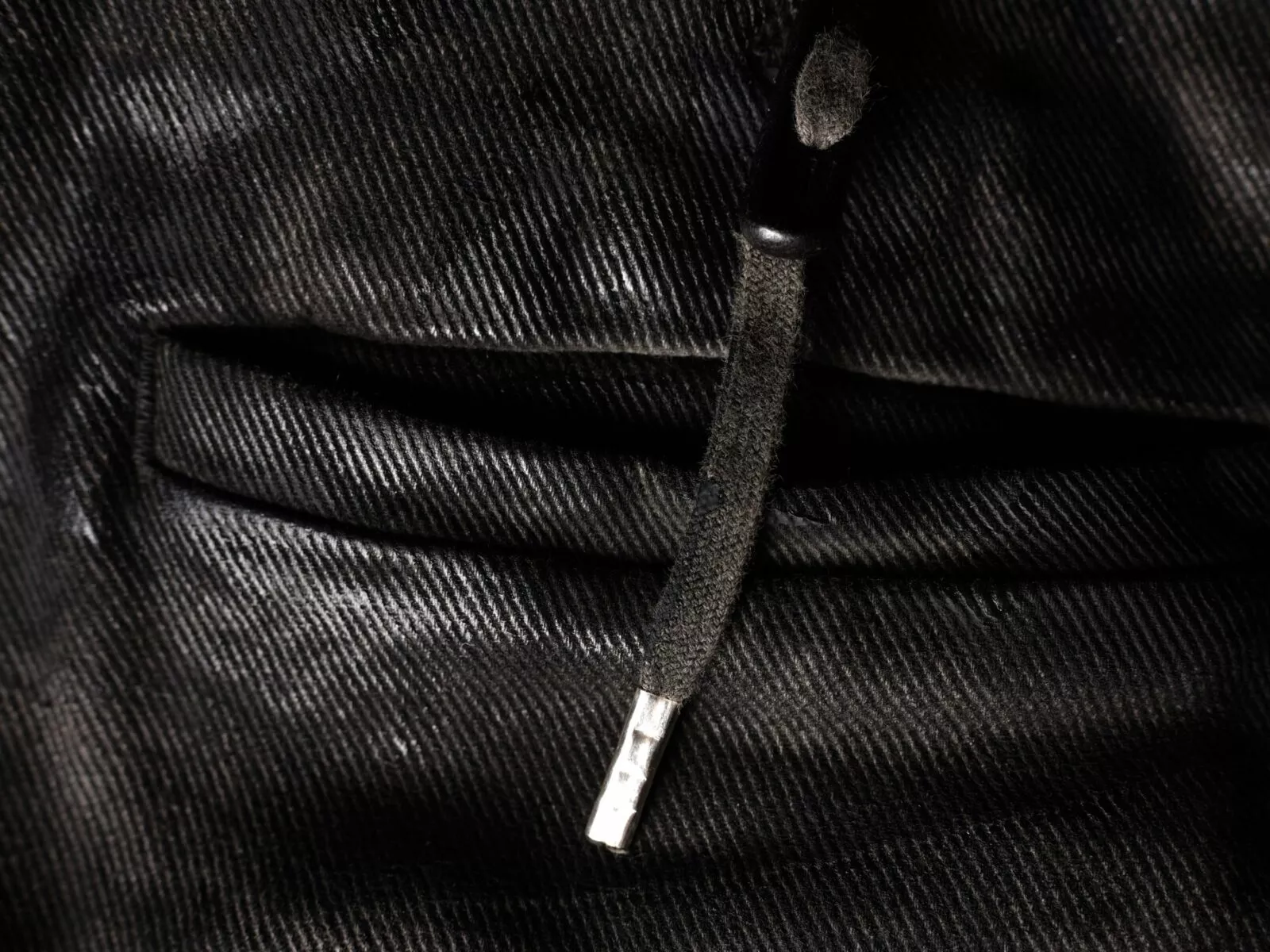
아방가르드 패션과 테크웨어
아방가르드 패션과 테크웨어의 융합은 현대 의복에서 가장 지적으로 엄격하고 물질적으로 변혁적인 발전 중 하나를 나타낸다. 일시적인 하위문화 트렌드나 미용 스타일링 연습과는 거리가 먼 이 교차점은 아방가르드 디자인의 철학적 반정통성과 항공우주, 군사, 극한 환경 공학의 타협 없는 성능 요구를 결합한다. 이는 마시모 오스티의 산업 섬유 실험실에서 시작되었다. C.P. 컴퍼니 그리고 헬무트 랑, 의 미니멀리스트 실용주의를 통해, 이 분야는 에롤슨 휴의 운동 건축을 통해 급진적인 실현에 도달했다. ACRONYM. 지난 30년 동안, 이 기능적 전위는 의복과 착용자 간의 관계를 지속적으로 재정의해왔다—타츠로 호리카와의 조각적이고 포스트 아포칼립틱한 실루엣, 다이스케 니시다의 해부학적 생체역학, 그리고 Julius, 의 물질 연금술과 DEVOA, 의 하이퍼 엔지니어링 멤브레인을 통합하여 타협 없는 의류 생태계를 만들어냈다. Boris Bidjan Saberi, 기능적 전환: 구성주의, 군사 잉여, 그리고 산업적 기원 Ten C 그리고 마시모 오스티와 이탈리아 물질 실험실: C.P. 컴퍼니, 스톤 아일랜드, 그리고 산업적 멤브레인 비교 분류학: 진정한 기술적 아방가르드 vs 미용 테크웨어.
아방가르드 패션의 관점에서 테크웨어를 살펴보려면 예술적 실험과 순수한 유틸리티 간의 잘못된 이분법을 해체해야 한다. 의복 역사 전반에 걸쳐, 고급 패션은 종종 장식적 전시, 상징적 위계, 그리고 귀족적 여가를 신체적 효능보다 우선시했다. 그러나 20세기 초의 가장 초기 아방가르드 운동은 진정한 급진주의가 절대적 실용주의에 있다는 것을 인식했다.
패션의 바우하우스 원칙.
20세기 초의 예술가들인 바르바라 스테파노바와 리유보프 포포바는 부르주아 장식의 과잉을 거부했다. 그들의 (생산 의복) 프로젝트에서 의복은 기계적 도구로 구상되었다: 모듈형 기하학적 패널, 두꺼운 탈색되지 않은 면 트윌, 그리고 산업 노동을 위해 특별히 조정된 포켓으로 설계되었다. 동시에 이탈리아 미래주의자들은 그리고 미래주의와 급진적 의복의 탄생, 에서 기계 속도, 합성 산업 섬유, 그리고 고전 재단보다 동적인 움직임을 옹호했다. 프로조데즈다 제2차 세계대전 이후, 전투 항공, 알프스 전쟁, 그리고 항공우주 생존을 위한 빠른 기술 발전이 민간 의식으로 스며들었다. 잉여 군사 시장은 예술가들, 반체제 인사들, 그리고 하위문화들에게 촘촘히 짜인 벤타일 면, 리프스톱 나일론, 그리고 복잡한 거싯, 폭풍 플랩, 다중 포인트 하네스 웨빙이 특징인 의복을 제공했다. 전후 패션 하우스는 주로 모래시계 형태의 재단이나 칵테일 실루엣을 고수했지만, 비행 재킷, 피쉬테일 파카, 그리고 낙하산 점프수트의 기능적 어휘는 수십 년 후 기술적 아방가르드 의복으로 등장할 기술적 기초를 마련했다. 기능적 작업복과 군사 잉여의 전환이 일관된 럭셔리 디자인 언어로 발전한 것은 파리가 아닌 이탈리아 에밀리아-로마냐 지역에서 그래픽 디자이너에서 의류 혁신가로 변신한 마시모 오스티에 의해 선도되었다. 1971년에 체스터 페리를 설립하고(1978년에로 재브랜딩됨) 1982년에 스톤 아일랜드를 설립한 오스티는 전통적인 패션 아틀리에가 아닌 산업 실험실을 운영했다.
오스티는 군사 의복을 체계적으로 해체하며 유럽 군대에서 수만 개의 빈티지 기능적 조각을 조달하여 그들의 기계적 논리를 추출했다. 그의 기여는 현대 패션의 물질 어휘를 세 가지 기본 벡터를 통해 변화시켰다:.
우리의 기초 연구에서 문서화된 바와 같이
의류 염색 ( C.P. 컴퍼니 틴토 인 카포.
오스티 이전에는 의복이 색상 일관성을 유지하기 위해 미리 염색된 원단으로 꿰매어졌다. 오스티는 나일론, 면, 폴리우레탄 등 여러 가지 다른 섬유로 구성된 무색 의복을 설계하고 완전히 조립된 조각을 고압 화학 염색 욕조에 담갔다. 각 섬유가 염료를 흡수하는 속도가 다르기 때문에 의복은 풍부한 색조의 그라데이션, 미리 부드럽게 된 드레이프, 그리고 산업 대량 생산과 장인 개성을 연결하는 뚜렷한 장인적인 파티나를 지니게 되었다.
- 산업 코팅 및 고무화:1982년, 오스티는 '텔라 스텔라'를 발견했다—대조되는 색소가 양면에 함유된 두껍고 단단한 트럭 방수포 원단. 이 산업 섬유를 공격적인 효소 스톤 세탁에 노출시킴으로써 그는 노화된 가죽의 부드러운 질감을 가진 날씨 저항성, 방풍 원단을 만들었다. 이후 그는 고무 코팅된 새틴, 주변 온도에 따라 색조가 변하는 열 반응성 액체 결정 섬유(아이스 재킷, 1989), 그리고 수천 개의 미세한 유리 구슬이 내장된 반사 나일론 재킷을 설계했다.): 통합 보호 건축:.
- 오스티의 상징적인 1988 고글 재킷—원래 밀레 밀리아 빈티지 자동차 내구 레이스를 위해 개발됨—은 드로우스트링 후드에 아세테이트 보호 렌즈를 통합하고 왼쪽 손목에 투명 볼록 렌즈(“시계 뷰어”)를 장착하여 운전자가 눈부신 비와 먼지 속에서도 고속으로 자신의 크로노그래프를 검사할 수 있도록 했다. 오스티의 철저한 기록 방법론은 고급 남성복이 장식적인 트림이 아닌 하이퍼 기능적 물질 화학에서 숭고한 아름다움을 끌어낼 수 있음을 보여주었다. 이 물질 혁신은 이후 이탈리아의 마스터 장인들에게 깊은 영향을 미쳤으며, 그들 중에는.
- 에서 폴 하비와 알레산드로 푼제티, 그리고 에서 레오나르도 파솔로가 포함되어 있으며, 이들은 산업적 디프 염색과 기술적 라미네이트의 경계를 계속해서 확장하고 있다.
오스티가 기술적 스포츠웨어의 섬유 화학을 확립한 반면, 1990년대에는 기술적 하드웨어와 하이 패션 재단을 결합한 지적이고 미니멀한 간소함이 도입되었다. 이 변혁의 최전선에는 오스트리아 디자이너가 있었다. Ten C, 랑의 1994년에서 2004년 사이의 작업은 현대 도시 테크웨어의 시각적 및 개념적 문법을 확립했다. 임상적이고 법의학적인 시각으로 운영하며, 랑은 장식적인 부르주아 재단을 제거하고 벨벳 라펠과 뿔 단추를 산업적 발리스트 나일론, 방탄 스타일의 전술 조끼, 반사 안전 스트립, 그리고 숨겨진 내부 바인딩 하네스로 대체했다: 마시모 오스티와 이탈리아 물질 실험실: C.P. 컴퍼니, 스톤 아일랜드, 그리고 산업적 멤브레인, 내부 수납 시스템:.
1990년대 미니멀리스트 전위: 헬무트 랑, 프라다 스포츠, 그리고 산업적 단색주의
랑은 무거운 겨울 파카와 기술적 비행 재킷에 신축성 있는 내부 웨빙 하네스를 도입했다. 착용자는 실내에서 재킷을 벗고 어깨에 매고 다닐 수 있었으며, 이는 현대 테크웨어 서스펜션 시스템을 직접적으로 예견한 기능적 세부 사항이다. 헬무트 랑.
홀스터 인체공학:
- 군사 전술 장비와 법 집행 하네스에서 영감을 받아 랑은 고강도 블랙 나일론과 고무화된 캔버스로 제작된 가슴 장비, 모듈형 허리 유틸리티 홀스터, 그리고 비대칭 다리 주머니를 설계하여 전술적 유틸리티를 럭셔리 런웨이 컬렉션에 통합했다. 정장 복장의 전복:.
- 물에 저항하는 기술적 마이크로화이버로 클래식한 두 조각 수트를 재단하고 이를 하이 칼라 유틸리티 파카와 투명 고무 셔츠와 짝지음으로써 랑은 실용적 작업복과 럭셔리 재단을 분리하는 경계를 해체하고 의 철학에 직접적으로 작용했다.
- 랑과 평행하게, 미우치아 프라다는 1997년에 프라다 스포츠(리네아 로사)를 출시하여 하이 패션 밀라노 미니멀리즘과 경쟁 세일링의 극단적인 요구를 융합했다(루나 로사 아메리카스 컵 캠페인). 봉합된 이음새, 숨겨진 지퍼 클로저, 고어텍스 방풍 멤브레인, 그리고 상징적인 빨간 고무 탭을 특징으로 하는 프라다 스포츠는 럭셔리 신의 하이 성능 합성 재료를 정당화했다. By cutting classic two-piece suits from water-resistant technical microfibers and pairing them with high-collar utility parkas and transparent rubber shirts, Lang dismantled the boundary separating utilitarian workwear from luxury tailoring, operating directly within the philosophy of 안티 패션.
Parallel to Lang, Miuccia Prada launched Prada Sport (Linea Rossa) in 1997, fusing high-fashion Milanese minimalism with the extreme demands of competitive sailing (the Luna Rossa America’s Cup campaign). Featuring seamless bonded seams, concealed zip closures, Gore-Tex windproof membranes, and the iconic red rubber tab, Prada Sport legitimized high-performance synthetic materials within the luxury pantheon.
In Tokyo, 야마모토 요지 embraced high-performance sportswear through the 2002 launch of Y-3 in partnership with adidas. Having already transformed global fashion through the Japanese fashion revolution in Paris, Yamamoto brought his sweeping, voluminous drape to technical neoprene, bonded elastanes, and advanced cushioning systems, demonstrating that technical sportswear could possess monumental avant-garde silhouettes.
사이버네틱 지평선: 에롤슨 휴, ACRONYM, 그리고 운동 건축
If Helmut Lang and Massimo Osti provided the blueprints, Canadian-born designer Errolson Hugh and Michaela Sachenbacher revolutionized the entire medium by founding ACRONYM in Munich in 1994 (debuting their revolutionary first commercial capsule, ACR KIT-001, in 2002). ACRONYM was conceived not as an apparel collection, but as an integrated kinetic hardware platform designed to optimize human agency in complex urban environments.
Trained in martial arts and industrial design, Hugh approached clothing as kinetic architecture. ACRONYM rejected the seasonal fashion calendar entirely, developing garments over multi-year research and development cycles. Hugh engineered proprietary, patented mechanical systems that solved tangible physical problems encountered by modern urban inhabitants:
- Gravity Pocket: A patented bi-directional sleeve pocket engineered with precision geometric angles and snap closures. By flicking the forearm forward and depressing the outer cuff snap, the wearer allows a stored smartphone or compact device to slide instantly into the palm via gravity, eliminating the friction of unzipping or digging into pockets.
- EscapeZip: A specialized breakaway front zipper that can be unzipped traditionally or instantly released in a single fluid upward tug on the collar, allowing the wearer to shed heavy weatherproof shells in emergency tactical scenarios or rapid transit transitions.
- JacketSling: An external or internal load-bearing webbing strap that anchors across the torso, enabling the wearer to dismount their jacket without holding it in hand or packing it away, balancing garment weight symmetrically across the thoracic spine.
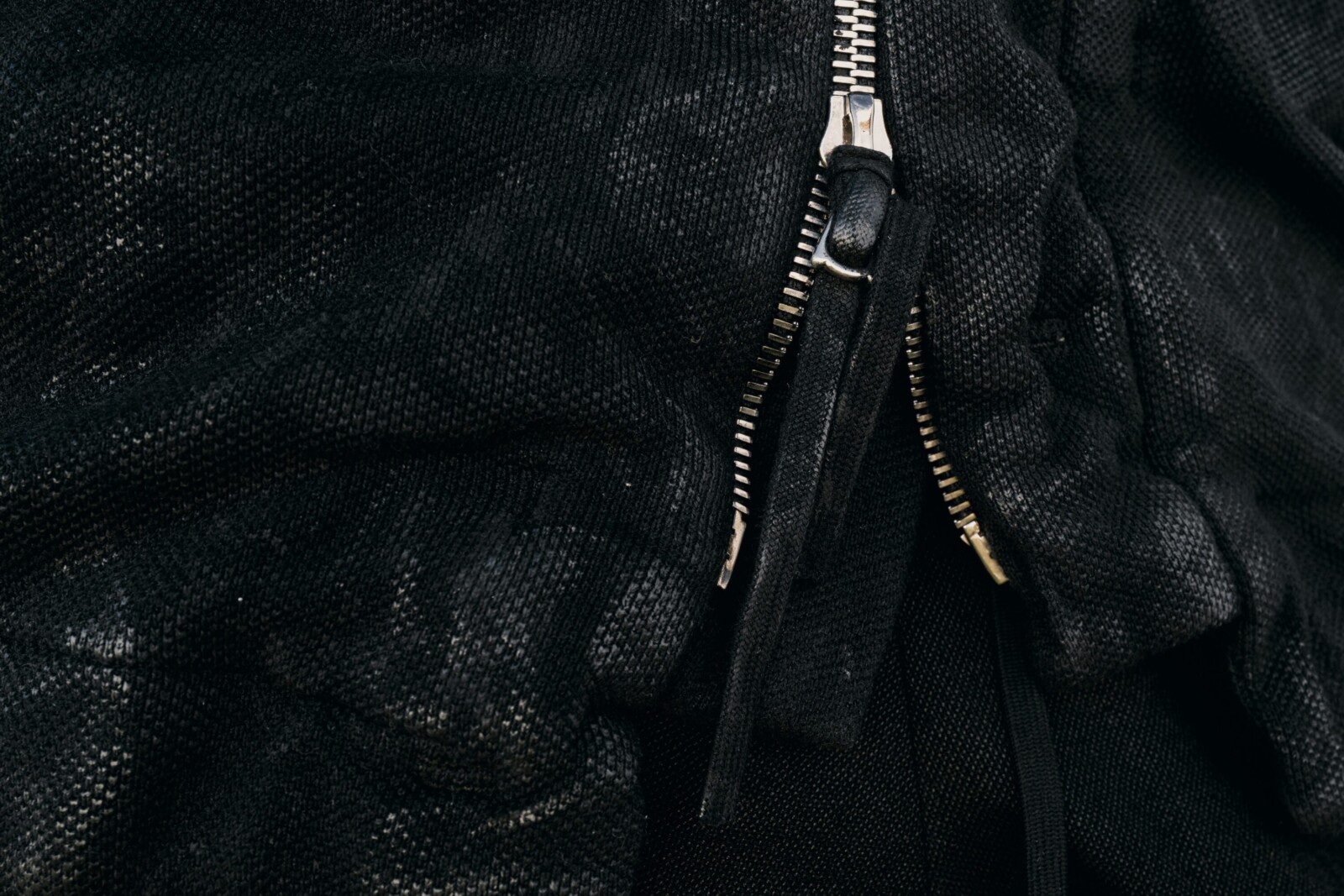
- Interops System: A precision-engineered diagonal or side-vent zipper that allows the wearer to interact seamlessly with an underlying messenger bag or 3rd Arm sling pack without unzipping the outer weather-protective shell, maintaining complete water-tightness in extreme downpours.
- Sound Force / TEC SYS: Integrated neodymium magnets located within the collar to dock earphone cables when not in use, paired with laser-cut PALS/MOLLE-compatible webbing grids that permit modular attachment of pouches and accessories.
ACRONYM’s technical radicalism caught the attention of global athletic giants and high-luxury houses. Hugh was recruited to design the inaugural collections of Arc’teryx Veilance in 2009, bringing minimalist taped-seam 3L GORE-TEX Pro construction to architectural menswear. Between 2014 and 2018, Hugh spearheaded the revitalization of NikeLab ACG (All Conditions Gear), introducing articulated drop-crotch cargo pants, deployable hoods, and modular shell systems to a global audience, while simultaneously collaborating with Carlo Rivetti on Stone Island Shadow Project (2008–2021).
장인 정신의 테크웨어와 어두운 아방가르드의 공생: 줄리우스, DEVOA, 그리고 보리스 비드잔 사베리
While ACRONYM approached techwear through the prism of cyberpunk functionalism and aerospace textiles, designers within the dark avant-garde ecosystem integrated technical performance into artisanal, subterranean aesthetics—an evolution explored in our study of dark avant-garde fashion origins and aesthetics 과 2000s darkwear scene.
In Tokyo, Tatsuro Horikawa debuted runway presentations for Julius beginning in 2004, centering collections on industrial techno, post-apocalyptic literature, and dystopian urban warfare. Horikawa synthesized high-performance military webbing with severe gothic brutalism. The signature Julius “gas mask” cargo trousers featured monumental three-dimensional bellows pockets anchored by heavy nylon load-bearing straps, articulated spiral knees, and distressed oil-washed surfaces. Julius proved that technical functionality could convey visceral emotional dread and cinematic drama.
Simultaneously, former wrestling instructor and medical athletic trainer Daisuke Nishida launched DEVOA in 2008. Rather than drafting garments flat on paper or relying on standard dressmaker mannequins, Nishida sculpted patterns derived from kinesiology and human muscular anatomy:
- 해부학적 관절: Nishida drafted multi-panel trousers and jackets that followed the natural curvature of the femur, biceps, and spinal column. Panels curved along muscle bellies, enabling the wearer to sprint, crouch, or extend their limbs without the garment riding up or binding at the joints.
- Organic-Technical Hybrids: DEVOA pioneered the combination of traditional Japanese artisanal textiles—such as washi paper yarns and ultra-dense wool gabardines—with Swiss Schoeller stretch membranes, waterproof seam tapes, and ceramic coatings. The result was garments that possessed the tactile soul of natural fibers with the performance metrics of high-altitude alpine shells.
- Kinetic Ergonomics: Alongside DEVOA, Tomoaki Okaniwa’s The Viridi-anne merged Japanese wabi-sabi aesthetics with seamless down bonding, water-repellent zippers, and articulated knee darting.
In Europe, German-Persian designer Boris Bidjan Saberi bridged the divide between skate culture, hip-hop, Middle Eastern nomadic drapery, and alpine climbing gear from his Barcelona atelier. Saberi introduced “Object Dyecord”—high-tenacity climbing cords integrated directly into garment hems and sleeves that allow the wearer to cinch and alter the garment’s silhouette while suspended. Saberi’s garments featured thermo-welded waterproof seam tapes on vegetal-tanned horsehide, vinyl treatments, and thumbhole-articulated cuffs, creating an aesthetic that felt simultaneously prehistoric and interplanetary.
This artisanal technical lineage extends into contemporary studios such as enfin levé (specializing in bespoke artisanal garments utilizing Schoeller Dryskin and Stotz Etaproof), HAMCUS (engineering sci-fi post-apocalyptic tactical systems with modular magnetic accessories), and Carol Christian Poell, whose taped-seam “drip” rubber sneakers and titanium-inserted prosthetics pushed the boundaries of material durability to sculptural extremes.
물질 과학과 인체 공학적 분류학: 비유클리드 패턴 제작, ePTFE 멤브레인, 그리고 고성능 섬유
What distinguishes authentic avant-garde techwear from superficial streetwear is an unyielding commitment to material science and ergonomic geometry. Rather than applying decorative buckles or superfluous webbing straps to conventional flat patterns, technical avant-garde garments are constructed around three core disciplines:
1. Non-Euclidean and Kinetic Pattern Drafting
Traditional Western tailoring relies on flat, rectilinear pattern blocks that pinch or contour the torso through darts. In contrast, technical avant-garde patternmakers employ non-Euclidean geometries:
- Diamond Underarm Gussets: A seamless, rhomboid insert connecting the thoracic lateral seam to the inner sleeve, eliminating armhole drag and allowing full 360-degree shoulder rotation without pulling the hem of the jacket out of position.
- Articulated Knee and Elbow Darts: Anatomical seams cut with pre-curved bias shaping that mimics the resting 15-to-20-degree flexion of human joints, preventing fabric bunching behind the knee while eliminating tension across the patella during movement.
- Spiral Seam Architecture: Legs drafted as a single continuous spiral panel that wraps around the limb from the pelvic basin down to the ankle hem. This distributes structural strain obliquely across the leg rather than concentrating wear on a single linear outseam.
2. Advanced Textile Membranes and Polymers
Technical avant-garde designers operate at the bleeding edge of industrial textile synthesis, utilizing materials originally developed for aerospace, maritime, and specialized military defense:
- Expanded Polytetrafluoroethylene (ePTFE): The micro-porous membrane at the core of GORE-TEX Pro. The membrane contains over 9 billion microscopic pores per square inch. Each pore is 20,000 times smaller than a water droplet—preventing rain penetration—yet 700 times larger than a water vapor molecule, allowing perspiration to evaporate outward under physical exertion.
- High-Density Polyamide/Polyester Composites: Pioneered by Ten C with their proprietary OJJ (Original Japanese Jersey)—a non-woven microfiber knitted in Japan and compressed under extreme thermal pressure in Italy. OJJ is completely water-repellent, windproof, and develops individual burnishing and creases over decades of wear like heavy raw denim.
- Schoeller Dryskin and NanoSphere: A Swiss double-faced bi-elastic weave engineered with synthetic polyamides on the exterior face and functional moisture-wicking microfibers against the skin. The fabric incorporates NanoSphere nanotechnology, mimicking the microscopic surface structure of the lotus leaf to shed mud, oil, and liquid contaminants effortlessly.
- Ultra-High-Molecular-Weight Polyethylene (UHMWPE / Dyneema): Known as composite fabric or Cuben Fiber, UHMWPE offers a strength-to-weight ratio fifteen times greater than high-grade steel. Utilized by avant-garde cordwainers and outerwear ateliers, Dyneema provides extreme cut-resistance and absolute hydrostatic water resistance at negligible fabric weight.
- Stotz Etaproof / Ventile: Developed during World War II for British Royal Air Force fighter pilots, this textile uses 100% extra-long-staple un-waxed cotton spun into dense yarns. When exposed to rain, the cotton fibers swell shut, creating a natural hydrostatic barrier that remains completely quiet, breathable, and biodegradable.
구성주의와 기능적 의복
The sudden internet popularity of the “techwear aesthetic” in the late 2010s led to widespread commodification. A critical scholarly taxonomy must distinguish between authentic avant-garde engineering and cosmetic “mall-ninja” styling:
| Design Dimension | Cosmetic “Techwear” Streetwear | Authentic Avant-Garde Technical Design |
|---|---|---|
| Pattern Drafting | Standard fast-fashion cylindrical cut with added decorative nylon tape | Non-Euclidean kinetic drafting; spiral cuts, articulated joints, diamond gussets |
| Fabric Substrate | Cheap 100% non-breathable polyester or treated cotton; fails under rain | High-grade ePTFE (GORE-TEX Pro), Schoeller Dryskin, Stotz Etaproof, OJJ microfibers |
| Hardware & Fasteners | Generic plastic clips, unbranded non-waterproof zips, non-functional D-rings | Fidlock magnetic locks, German Cobra buckles, YKK Aquaguard, riri high-tensile zips |
| Seam Construction | Standard overlock stitching; raw needle puncture holes admit water | Ultrasonic welding, laser cutting, 3-layer thermo-polyurethane micro-taped seams |
| Ergonomic Purpose | Purely visual cosplay mimicking anime or dystopian tactical aesthetics | Kinetic optimization; weight distribution, rapid access, thermoregulation, complete mobility |
| Production Philosophy | Mass-manufactured fast fashion with rapid obsolescence | Limited-run artisanal laboratory production, multi-year R&D cycles, decades of repairability |
Avant-garde techwear represents the absolute antithesis of superficial ornamentation. By harnessing advanced polymer chemistry, ergonomic kinesiologic drafting, and radical structural philosophy, designers from Massimo Osti and Helmut Lang to Errolson Hugh, Tatsuro Horikawa, and Daisuke Nishida have constructed a new sartorial paradigm: clothing engineered not as social theater, but as an autonomous, protective technological sanctuary for the human body.
Further reading: Luxury avant-garde techwear brands
While this academic treatise examines the historical evolution, material science, and kinetic architecture uniting avant-garde design with high-performance utility, the contemporary sartorial landscape is driven by an active vanguard of independent ateliers and luxury performance houses. For an essential curation of the foundational labels, technical signatures, and iconic silhouettes defining the modern movement, read our dedicated guide: Luxury Avant-Garde Techwear Brands You Must Know.
참고 문헌 및 추가 읽기
- Wikimedia Foundation — Massimo Osti: Textile Engineering and Industrial Garment Design
- Wikimedia Foundation — C.P. Company: History, Fabric Innovation, and Functional Outerwear
- Wikimedia Foundation — Gore-Tex Membrane Science and Waterproof Breathable Textiles
- Kyoto Costume Institute (KCI) — Kyoto Costume Institute Digital Archives: Japanese Avant-Garde and Technical Fashion
- Wikimedia Foundation — Functional Clothing: Protective, Thermal, and Ergonomic Apparel Systems