다크 아방가르드 패션: 기원, 디자이너와 미학
어두운 아방가르드 패션은 단순히 검은색에 대한 친화력이 아니라 상업 패션 정통에 대한 깊은 철학적이고 건축적인 반동이다. 19세기 빅토리아 시대의 애도 의식과 낭만적이고 상징적인 문학의 존재론적 우울에 뿌리를 두고, 이 운동은 1981년 파리의 단절을 통해 혁신적인 현대 형태를 달성했다. Comme des Garçons 그리고 야마모토 요지. 그 후 수십 년 동안 어두운 아방가르드 패션은 여러 지리적이고 개념적인 중심지에서 발전했다: 앤트워프의 시적이고 바이로닉한 해체, 런던의 알렉산더 맥퀸의 육체적이고 섬뜩한 낭만주의, 타츠로 호리카와의 조각적 브루탈리즘, 그리고 이탈리아 장인 구두 제작자들의 타협 없는 물질적 급진주의. Ann Demeulemeester 이 다양한 계보를 통해 어둠은 확장된 색채 캔버스로 작용한다—부르주아 장식 대신 내성적인 물질성, 해부학적 왜곡, 조각적 영속성을 대체하는 구조적 방패. 릭 오웬스 그림자의 기원: 빅토리아 애도, 상징주의, 낭만적 우울 Julius; 벨기에의 시적이고 섬뜩한 낭만주의: 앤 드뫼를레미스터와 알렉산더 맥퀸 Carol Christian Poell 장인적 성소: 캐롤 크리스찬 포엘, 카르페 디엠, 그리고 지하 구두 제작.
어두운 아방가르드 패션을 일관된 학문으로 이해하기 위해서는 검은색의 색채적 존재를 그 개념적이고 사회적 역사와 분리해야 한다. 서양의 의복 역사에서 검은색은 모순된 극 사이에서 진동해왔다: 부르고뉴 궁정의 왕족적인 위엄, 스페인 수도원의 엄격한 경건, 19세기 부르주아 신사의 외투의 엄숙한 균일성, 그리고 빅토리아 애도 예절의 규정된 슬픔.
동시에, 19세기 후반의 퇴폐적이고 상징적인 문학 운동—샤를 보들레르, 조리스-카를 위이즈망, 에드거 앨런 포가 주도—은 섬뜩함, 인공성, 그리고 우울함을 최고의 예술적 미덕으로 끌어올렸다. 보들레르는 현대의 검은 정장을 영원한 영적 위기를 겪고 있는 시대의 유니폼으로 찬양하며, 현대의 복장이 끝없는 장례 행렬과 닮았다고 썼다. 수십 년 후, 1970년대 후반의 원초적이고 DIY적인 분노를 겪은 후, 1980년대의 포스트펑크와 배트케이브 서브컬처는 이러한 19세기 기억의 모티프를 되살렸다. 그러나 고딕 서브컬처가 검은 벨벳, 찢어진 레이스, 은색 십자가를 서브컬처의 부족적 표식으로 사용한 반면, 하이 패션 아틀리에 내에서 훨씬 더 급진적인 변형이 일어날 준비가 되어 있었다.
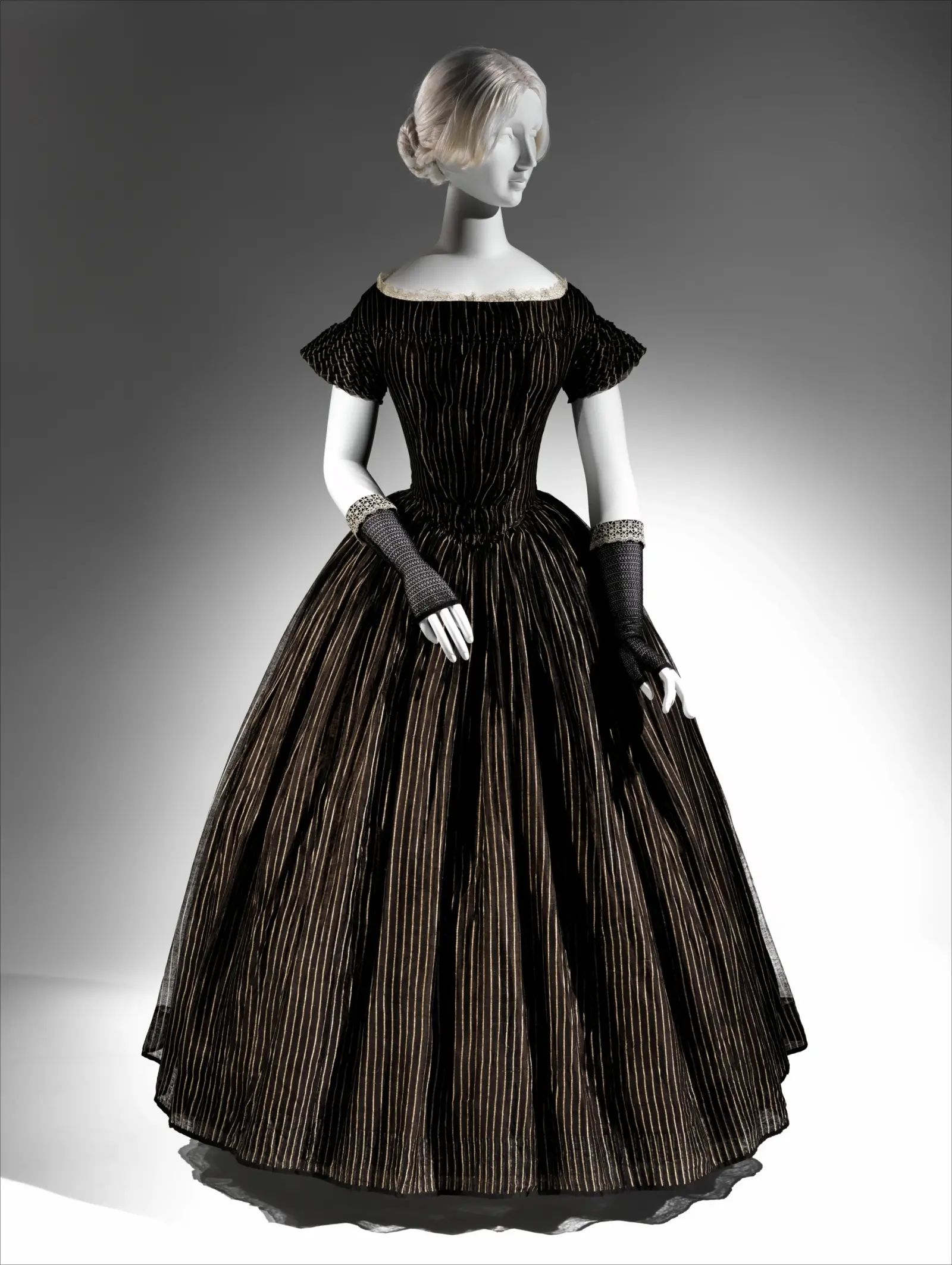
미국의 애도 의복, 블랙 실크 크레이프와 파일 (1870-1872년경). 뉴욕 메트로폴리탄 미술관 소장, 접근 번호 43.72.1a, b, CC0 1.0 유니버설 퍼블릭 도메인 헌정. 빅토리아 애도 실크 크레이프의 비반사 매트 표면은 슬픔, 기억의 모티프, 그리고 우울한 낭만주의의 지속적인 시각적 어휘를 확립했으며, 현대의 아방가르드 디자이너들은 이를 체계적으로 뒤집고 급진화시켰다.
어둠이 서브컬처의 기호에서 하이 패션의 선두주자로 변모한 결정적인 순간은 1981년 4월에 발생했다. 파리 패션 위크 동안, 두 명의 일본 비전가—레이 카와쿠보와 요지 야마모토—가 서양 하우트 꾸뛰르 감각을 산산조각 내는 프레젠테이션을 진행했다. 프랑스 언론은 공포로 반응하며, 이 미학을 "히로시마 시크"라고 유명하게 명명하고 의복을 포스트-핵의 누더기로 조롱했다. 그러나 이 단절은 "파리의 일본 패션 혁명"으로 철저히 기록되었고, 세계적인 복장을 영원히 변화시켰다. 안티 패션 카와쿠보와 야마모토는 검은색을 고딕 우울의 낭만적 상징으로 사용하지 않았다. 오히려 그들의 비색 철학은 고전 일본 미학과 선 존재론에 뿌리를 두고 있었다: "공간의 공허 (Ma)". 고전 일본의 공간 이론에서 공간은 채워지기를 기다리는 빈 진공이 아니라, 능동적이고 임신한 공허이다. 서양의 재단이 역사적으로 생물학적 몸의 곡선을 조각하고, 조여주고, 강조하려고 했던 반면—이상화된 3차원 기하학을 육체에 부과하려 했던 반면—카와쿠보는 형태 주위에 독립적으로 떠다니는 의복을 설계했다. 몸과 직물 사이의 공간은 사색의 능동적인 장소가 되었다.
불완전함의 와비사비: 카와쿠보는 산업 직기의 나사를 의도적으로 풀어 비대칭으로 떨어진 스티치와 커다란 구멍이 뚫린 니트웨어를 생산했으며, 이는 그녀의 전설적인 1982년 "파괴" 컬렉션에서 잘 드러난다. 그렇게 하여 그녀는 고급 사치에 일시성, 소박함, 그리고 부패의 철학적 수용을 도입했다. 무한한 깊이로서의 검은색: 야마모토에게 검은색은 보호적 독립의 최고의 색이었다. 그는 유명하게 관찰했다: "그의 모든 작품을 검은색 울 가바딘, 무거운 트윌, 그리고 세탁된 면으로 제작함으로써, 야마모토는 관찰자가 컷의 미세한 차이, 드레이프의 움직임, 그리고 의복의 부피와 주변 공기 간의 상호작용에 완전히 집중하도록 강요했다., 도쿄에서, 꼼데가르송과 요지 야마모토의 팬들은 머리부터 발끝까지 단색의 복장 때문에 "카라스-조쿠"("까마귀 부족")라는 별명을 얻었다. 이것은 단순한 스타일적 표현이 아니었다; 그것은 일본의 호황 경제의 색깔 있는 소비주의와 가부장적 시선에 참여하지 않겠다는 이념적 거부였다. 까마귀 부족은 어둠 속에서 옷을 입는 것이 지적 자율성의 행위라는 것을 확립했다.
일본의 존재론적 단절: 레이 카와쿠보와 요지 야마모토
벨기에에서, ""의 출현은 지적 엄격성과 감정적 취약성의 전례 없는 균형을 도입했다. 이 운동의 중심에는 ""가 있었다. 1981년 왕립 미술 아카데미를 졸업한 드뫼를레미스터는 록 시인 패티 스미스, 로드 바이런, 그리고 19세기 보헤미안 재단에 빚진 시그니처 어두운 낭만주의를 확립했다. Comme des Garçons 그리고 야마모토 요지유동적 안드로지니: 드뫼를레미스터는 남성복과 여성복 사이의 경직된 경계를 지웠다. 그녀의 맞춤형 외투, 실크 리본이 달린 조끼, 그리고 길게 늘어진 팝린 셔츠는 남성과 여성 모두 동일하게 착용되어 유연하고 시적인 실루엣을 만들어냈다. “역동적 비대칭:” and deriding the garments as post-nuclear rags. Yet this rupture, exhaustively documented as 파리에서의 일본 패션 혁명을 통해 글로벌 패션을 변화시킨 후, 야마모토는 기술 네오프렌, 접합된 엘라스탄, 그리고 고급 쿠셔닝 시스템에 그의 광범위하고 부풀어 오른 드레이프를 가져왔어. 기술 스포츠웨어가 기념비적인 아방가르드 실루엣을 가질 수 있음을 보여줬지., forever altered global dress.
Kawakubo and Yamamoto did not employ black as a romantic symbol of gothic melancholy. Rather, their non-color philosophy was grounded in classical Japanese aesthetics and Zen ontology:
- The Spatial Void (Ma): In classical Japanese spatial theory, space is not an empty vacuum waiting to be filled, but an active, pregnant void. Whereas Western tailoring historically sought to sculpt, pinch, and accentuate the biological curves of the torso—imposing an idealized three-dimensional geometry upon flesh—Kawakubo engineered garments that floated independently around the form. The space between the body and the fabric became an active site of contemplation.
- The Wabi-Sabi of Imperfection: Kawakubo intentionally loosened the screws of industrial looms to produce knitwear riddled with asymmetrical dropped stitches and gaping holes, exemplified by her legendary 1982 “Destroy” collection. In doing so, she introduced (불완전한 아름다움)—서구의 의복 규범을 영구적으로 분산시켰다.—the philosophical acceptance of transience, rusticity, and decay—into high luxury.
- Black as Infinite Depth: For Yamamoto, black was the supreme color of protective independence. He famously observed: “와비사비” By casting his entire output in black wool gabardine, heavy twills, and washed cottons, Yamamoto forced the observer to focus entirely on the subtleties of the cut, the movement of the drape, and the interaction between garment volume and ambient air.
In Tokyo, fans of Comme des Garçons and Yohji Yamamoto were nicknamed the karasu-zoku (“crow tribe”) due to their head-to-toe monochromatic attire. This was not merely a stylistic statement; it was an ideological refusal to participate in the patriarchal gaze and the colorful consumerism of Japan’s booming bubble economy. The crow tribe established that dressing in darkness was an act of intellectual autonomy.
빅토리아 시대의 경직된 사회적 틀 안에서 검은색은 강하게 전문화된 신체 문법을 얻었다. 1861년 앨버트 왕자의 죽음 이후, 빅토리아 여왕은 영국 제국을 수십 년간의 의례적인 애도 속으로 몰아넣었다. "첫 번째 애도", "두 번째 애도", "반 애도"를 거치는 과정은 엄격한 규칙에 의해 지배되었다. 주요 애도 기간 동안 여성들은 반사광이 없는 흐릿한, 빛을 흡수하는 섬유를 착용해야 했다. 그 중에서 가장 중요한 것은 실크 크레이프였다—무거운 금속 롤러로 의도적으로 주름이 잡히고 부식성 용액에 삶아져 표면이 죽어 빛의 반짝임을 방지했다.
As the Japanese revolution demonstrated that black could dismantle Western tailoring, designers in Antwerp and London took the movement into poetic and theatrical territories during the late 1980s and 1990s.
In Belgium, the emergence of 앤트워프 식스 중 한 명은 아니다. introduced an unprecedented balance of intellectual rigor and emotional vulnerability. At the center of this movement stood Ann Demeulemeester. Graduating from the Royal Academy of Fine Arts in 1981, Demeulemeester established a signature dark romanticism indebted to the rock poet Patti Smith, Lord Byron, and nineteenth-century bohemian tailoring:
- Fluid Androgyny: Demeulemeester erased rigid demarcations between menswear and womenswear. Her tailored frock coats, waistcoats with dangling silk ribbons, and elongated poplin shirts were worn identically by men and women, creating a languid, poetic silhouette.
- Dynamic Asymmetry: Rather than drafting symmetrical panels, Demeulemeester cut on the bias, allowing hems to dip irregularly and collars to tumble forward across the clavicle. Her use of monochromatic black was frequently tempered by solitary feathers, bone buttons, and ecru cords that trailed behind the walking body.
- Deconstructive Precision: Alongside contemporaries like Maison Margiela, Demeulemeester participated in the broader movement of 패션의 해체, exposing raw linings, omitting shoulder pads, and leaving canvas stays visible to demystify garment construction.
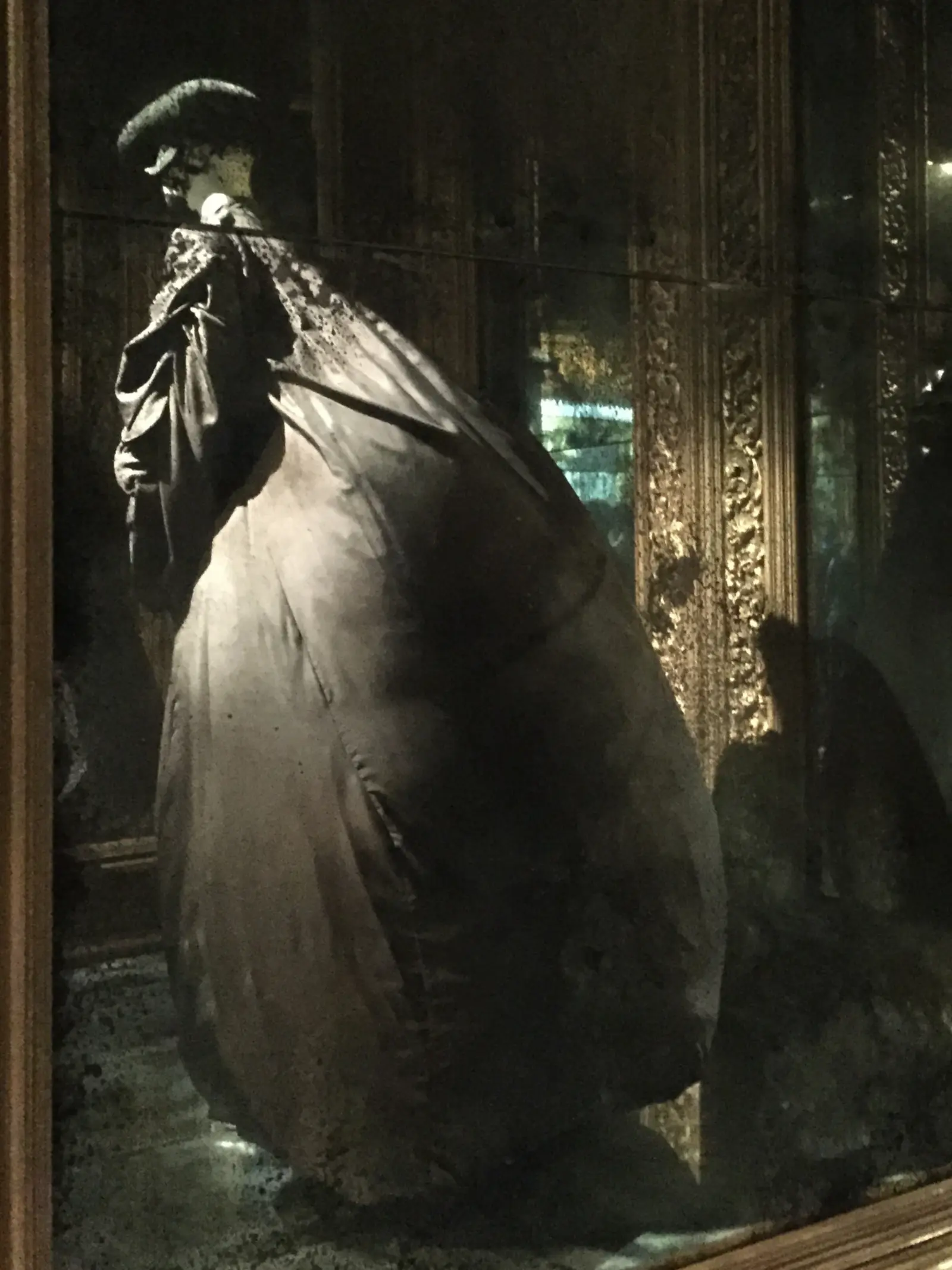
In London, Alexander McQueen approached dark fashion through the lens of visceral, historical trauma. Trained on Savile Row at Gieves & Hawkes and Anderson & Sheppard before completing his master’s at Central Saint Martins, McQueen possessed an unmatched command of structural pattern drafting. He harnessed this technical mastery to stage runway presentations that resembled dark opera, tackling themes of execution, madness, avian metamorphosis, and imperial violence.
In collections like “Highland Rape” (Autumn/Winter 1995–1996), “The Widows of Culloden” (Autumn/Winter 2006–2007), and “The Horn of Plenty” (Autumn/Winter 2009–2010), McQueen synthesized gothic romanticism with radical avant-garde forms. His garments utilized molded leather bodices, raven and duck feathers, distressed black silk crepes, and voluminous parachute drapery. McQueen demonstrated that the dark avant-garde could operate simultaneously as museum-grade sculpture and gut-wrenching emotional catharsis.
브루탈리즘 건축과 사이버네틱스: 릭 오웬스와 타츠로 호리카와의 율리우스
By the turn of the millennium, dark avant-garde fashion evolved away from historical romanticism toward brutalist architecture, industrial music, and futuristic dystopia. This evolutionary stage, previously explored in the analysis of darkwear and the 2000s scene, was defined by two parallel creative forces: Southern California-born designer 릭 오웬스 in Paris and Tatsuro Horikawa of Julius in Tokyo.
Rick Owens revolutionized contemporary menswear and womenswear by merging classical Hollywood drapery with raw punk nihilism and monumental brutalist geometry—a combination he termed “glunge.” Operating from his five-story compound in Paris, Owens deconstructed traditional tailoring proportions:
- Elongated Verticality: Owens extended torso lengths through sheer, micro-rib jersey tunics cut well past the hips, breaking the classical torso-to-leg proportions of Western dress.
- The Drop-Crotch Silhouette: By lowering the rise of trousers into volumetric “pod shorts” and dropped-crotch sweatpants worn over ribbed leggings, Owens created a grounded, monastic posture.
- 촉각 외투: 부풀려진 양가죽, 기름진 송아지 가죽, 세탁된 말가죽을 활용하여, 오웬스는 비대칭 지퍼와 모듈형 후드가 있는 높은 목의 가죽 재킷을 도시의 갑옷처럼 설계했어.
- 신발을 받침대로: 아이코닉한 2006년 “던크” 스니커에서 조각 같은 지오바스켓과 플랫폼 키스 부츠에 이르기까지, 오웬스는 몸의 하단을 건축물의 받침대처럼 고정시키는 과장되고 무거운 신발을 디자인했어.
동시에 도쿄에서, 다츠로 호리카와는 2001년에 줄리우스를 다학제 예술 프로젝트로 시작한 후, 산업 테크노, 사이버펑크 문학, 그리고 티베트 신비주의를 중심으로 한 런웨이 컬렉션을 선보였어. 오웬스가 편안하고 브루탈리스트였다면, 호리카와는 포식자적이고 사이버네틱했어.
시그니처 줄리우스 의상인 다중 포켓 “가스 마스크” 카고 팬츠는 거대한 3차원 주머니, 무거운 나일론 하중 지지 스트랩, 그리고 관절이 있는 나선형 다리 구조를 특징으로 했어. 찢어진 양가죽 라이더 재킷, 무거운 전투용 신발, 그리고 카울 넥 니트와 함께 착용했을 때, 줄리우스는 도쿄, 베를린, 파리 전역의 아방가르드 복장자들에게 영향을 준 포스트 아포칼립틱, 지하 미학을 정립했어.
Julius와 함께 일본의 동시대 작가인 Tomoaki Okaniwa의 은 일본의 와비-사비 미학과 매끄러운 다운 본딩, 방수 지퍼, 그리고 아티큘레이트 무릎 다트를 결합했어., 다이스케 니시다의 DEVOA, 그리고 나중에 유럽의 개척자들인 Boris Bidjan Saberi 산업 재단과 운동 기능 사이의 간극을 메웠어. 바르셀로나 아틀리에에서 작업한 사베리는 어두운 스트리트웨어와 중동 유목 드레이핑, 해부학적 이음새 테이프, 그리고 비닐 의류 처리 기법을 융합하여 어두운 아방가르드 디자인이 복잡한 기능성 장비로 발전할 수 있음을 증명했어.
이러한 의도적인 광택 억제는 몸을 건축적 공허로 변형시켰다. 애도 베일과 매트 크리놀린은 착용자를 장식하지 않았다; 오히려, 그것들은 내부의 정신적 상태를 대중의 소비로부터 보호했다. 패션 역사학자들이 지적했듯이, 이 빅토리아 시대의 규정은 검은 의복, 죽음, 그리고 감정적 철수 사이에 지울 수 없는 미적 연결고리를 만들었다—후에 20세기 운동들이 이를 잡아 변형할 개념적 청사진이었다.
런웨이 패션과 평행하여, 어두운 아방가르드의 타협 없는 한 갈래는 상업 패션 사이클에서 완전히 물러나 장인 아틀리에로 들어갔어. 이탈리아와 오스트리아를 중심으로 한 이 운동은 이탈리아 장인 패션 운동—의류를 소비자 상품이 아닌, 강렬한 물리적 실험에서 태어난 고대 유물로 취급했어.
이 장인 전위의 정점에는 오스트리아 디자이너가 서 있어. Carol Christian Poell. 밀라노에서 완전한 고립 속에서 작업하는 포엘은 패션 캘린더 밖에서 운영하며, 기술적 돌파구가 이루어질 때만 컬렉션을 선보여:
- 생체의학 및 외과적 구조: 포엘은 맞춤 재단에 티타늄 의수 관절 경첩, 외과용 스테이플, 그리고 성형된 플라스틱 구조를 직접 통합했어. 그의 의류는 인간 해부학의 한계를 자주 탐구하며, 착용자를 뻣뻣하고 위엄 있는 자세로 강요해.
- 재료 극단주의: 포엘은 가공된 돼지 장에서 만든 투명한 가죽 재킷, 금속 조각이 박힌 캥거루 가죽, 그리고 흐르는 운하 물에 잠긴 상태에서 염색된 의류를 개발했어 (“메인스트림-다운스트림,” 2004).
- 물체 염색 및 드립 고무 신발 제작: 포엘은 미리 염색된 가죽으로 신발을 만드는 대신, 물체 염색 (tinto in capo)을 지지했어—완전히 조립된 신발과 재킷을 끓는 색소의 통에 담가 가죽, 실, 안감, 금속 하드웨어가 함께 줄어들고 변색되도록 했어. 그의 아이코닉한 “드립” 신발은 액체 폴리우레탄에 담갔다가 고무의 매달린 고드름으로 마른 바닥을 특징으로 하며, 개념적 신발 디자인의 걸작으로 남아 있어.
동시에 움브리아에서, 마우리치오 알티에리는 1990년대 중반에 현재를 즐겨라 를 설립했어. 알티에리는 고고학 가죽 공예와 역사적 패턴 제작에 전념하는 수도원 워크숍을 세웠어. 카르페 디엠은 2006년에 문을 닫았지만, 그 졸업생들은 현대 어두운 장인 패션의 중추를 형성했어: 마우리치오 아마데이 m.a+ (무봉제 원피스 나선형 가죽 재킷과 .925 스털링 실버 십자가 인장으로 유명), 루카 라우리니 라벨 공사 중, 루카 라우리니의 A1923, 시몬 체케토의 레이어-0.
역사적인 토스카나 태닝 공장과 친밀하게 협력하며 Guidi (1896년 페시아에 설립됨), 이 장인들은 식물성 태닝된 말가죽, 리버스 코르도반, 그리고 아기 송아지를 신성한 재료로 끌어올렸어. 결과적으로 만들어진 의류는 유기적이고 고대의 파티나를 가지고 있으며, 시간이 지남에 따라 깊어지고, 순수한 재료의 영속성을 통해 계절적 쓸모없음에 저항해.
미적 분류학과 물질 문법: 비유클리드 패턴 제작, 질감, 와비사비
40년의 진화에 걸쳐, 어두운 아방가르드 패션은 엄격한 형식적 어휘를 정립했어. 이 분야는 무작위의 기이함이 아니라, 구조적, 물질적, 해부학적 원칙의 응집된 집합으로 정의돼:
| 디자인 차원 | 전통적인 서구 패션 | 어두운 아방가르드 운동 |
|---|---|---|
| 색채 철학 | 계절적 트렌드 팔레트; 장식적인 프린트, 패턴, 그리고 기업 로고 | 절대적인 비색; 음조의 미세 변형 (음, 재, 먼지, 분필, 차가운 회색, 철) |
| 패턴 드래프팅 | 유클리드 평면 패턴; 허리 모양 또는 운동 이상에 맞춰 대칭을 맞춘 다트 | 비유클리드 기하학; 나선형 절단, 원피스 패턴, 해부학적 다트, 구조적 비대칭 |
| 직물 계층 | 부드럽고 균일한 합성 혼합물; 눌린, 흠 없는 고급 양모 | 거친 유기 섬유 (삶은 양모, 슬럽된 라미, 와시 종이, 무거운 리넨, 흠 있는 말가죽) |
| 마감 및 가장자리 | 숨겨진 오버록 스티칭, 깔끔한 기계 헴, 깨끗한 접착 안감 | 거친 풀린 가장자리, 노출된 손바느질 셀비지, 보이는 캔버스 인터라이닝, 외과용 스테이플 |
| 하드웨어 및 잠금장치 | 숨겨진 플라스틱 나일론 지퍼, 균일한 성형 플라스틱 또는 뿔 버튼 | 무거운 산화된 은 (.925), 녹슨 철 훅, 노출된 산업 리리/엑셀라 지퍼, 가죽 끈 |
| 염색 방법론 | 미리 짜여진 화학 통 염색으로 균일하고 색상 유지가 가능한 색조 일관성 | 물체 염색 (tinto in capo), cold overdyes, tea/mineral washes, subterranean soil aging |
The silhouette in dark avant-garde design systematically rejects the decorative conventions of bourgeois display. By lengthening hem lines, dropping crotches, wrapping torsos in cocoon-like volumes, and anchoring the body with heavy cordwaining sabatons, designers construct an exoskeleton for the wearer. In a hyper-mediated culture dominated by rapid digital churn and superficial flash, dark avant-garde fashion remains an enduring sanctuary: an uncompromising pursuit of physical permanence, architectural contemplation, and existential freedom.
참고 문헌 및 추가 읽기
- Yale University Press / The Museum at FIT — Gothic: Dark Glamour
- The Metropolitan Museum of Art — Alexander McQueen: Savage Beauty Exhibition Archive
- The Metropolitan Museum of Art — Rei Kawakubo / Comme des Garçons: Art of the In-Between
- Berg Publishers — The Japanese Revolution in Paris Fashion
- Kyoto Costume Institute (KCI) — Kyoto Costume Institute Digital Archives: Japanese Avant-Garde and 20th Century Black Dress
이미지 크레딧
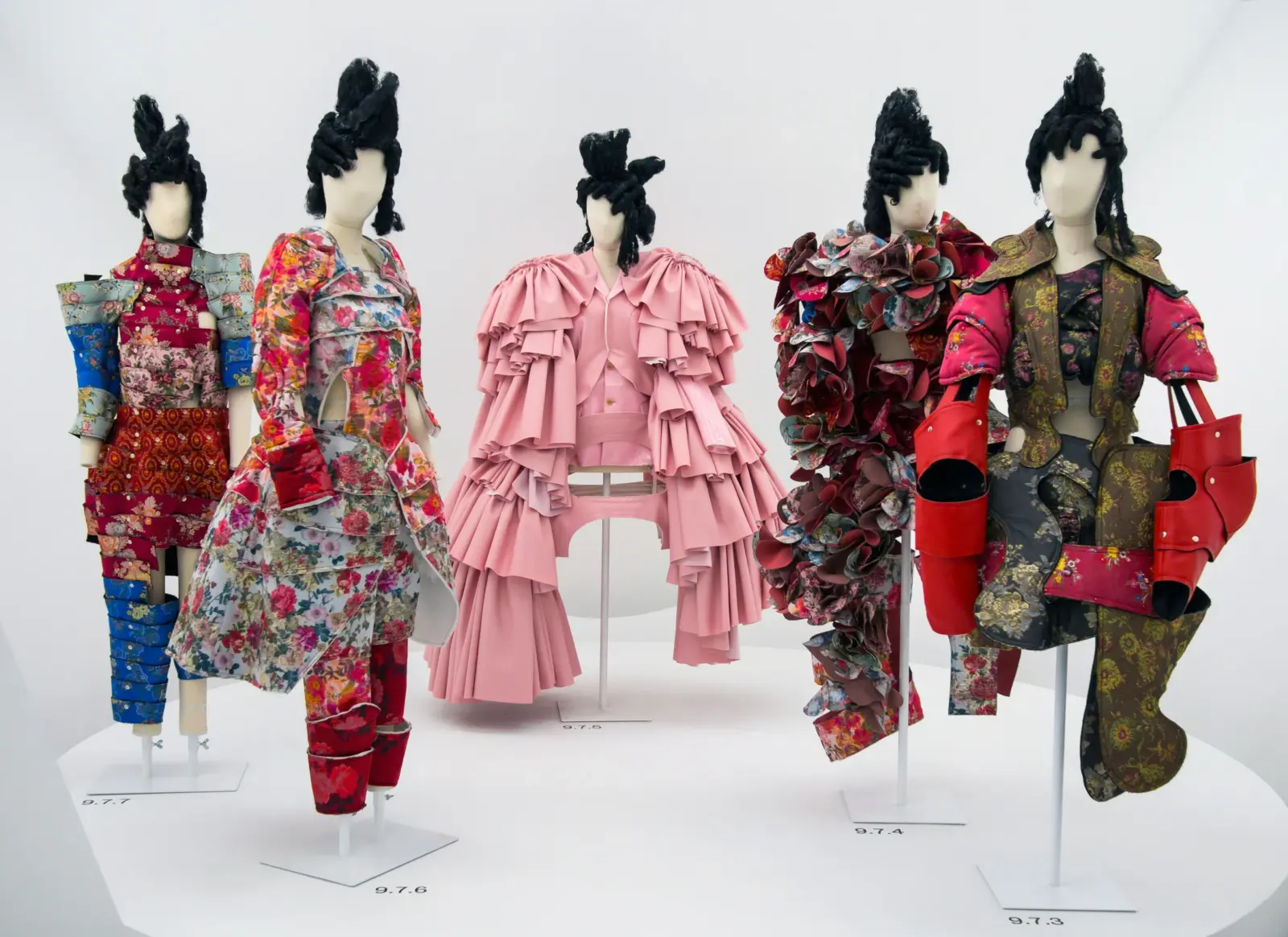
- Installation view of Rei Kawakubo / Comme des Garçons: Art of the In-Between at The Metropolitan Museum of Art (2017). Photograph by Rhododendrites, Wikimedia Commons, CC BY-SA 4.0.
- American mourning dress in black silk crepe and faille (circa 1870–1872). Collection of The Metropolitan Museum of Art, New York, Accession No. 43.72.1a, b, CC0 1.0 Universal Public Domain Dedication.
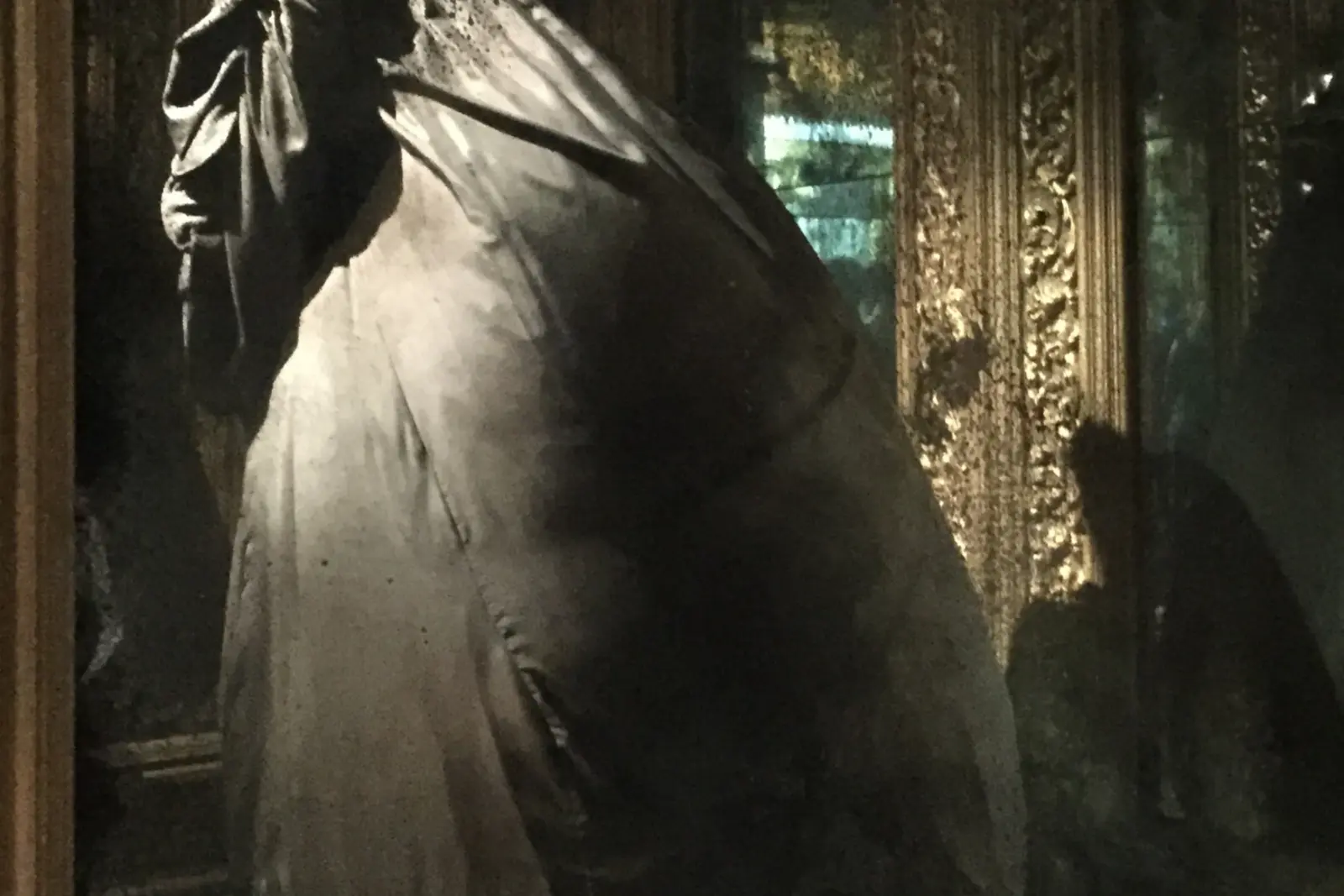
- Alexander McQueen, Look 50 Parachute Cape in black silk from Autumn/Winter 2002–2003 "Supercalifragilisticexpialidocious," exhibited at the Victoria and Albert Museum Savage Beauty retrospective. Photograph by Isabell Schulz, Wikimedia Commons, CC BY-SA 2.0.