0
enfin levé - 具备技术解决方案的先锋技术服饰
动作

前卫时尚与科技服装

发布 9 月 30, 2026 最后审查 9 月 30, 2026

先锋时尚与科技服装的融合代表了现代服装中最具知识性和物质转型的发展之一。. 远非短暂的亚文化潮流或表面造型练习,这一交集将先锋设计的哲学反正统性与航空航天、军事和极端环境工程的无情性能需求结合在一起。起源于Massimo Osti的工业纺织实验室, C.P. 公司 以及 海尔穆特·朗, 的极简主义实用主义,这一学科通过Errolson Hugh的动感建筑达到了激进的实现。 ACRONYM. 在过去的三十年里,这一功能先锋不断重新定义服装与穿着者之间的关系——综合了Tatsuro Horikawa的雕塑般的后末日轮廓、Daisuke Nishida的解剖生物力学、 Julius, 的材料炼金术,以及 DEVOA, 的超工程膜,形成了一个无情的裁缝生态系统。 Boris Bidjan Saberi, 功能转向:构成主义、军事剩余和工业起源 Ten C 和 Massimo Osti和意大利材料实验室:C.P. Company、Stone Island和工业膜 比较分类:真实的技术先锋与表面科技服装.

通过先锋时尚的视角审视科技服装需要解构艺术实验与纯实用之间的虚假二分法。在服装历史中,高级时尚常常优先考虑装饰性展示、象征性等级和贵族休闲,而非物理效能。然而,20世纪早期的先锋运动认识到,真正的激进主义在于绝对的实用理性化。

的基础研究中所记录的那样,20世纪早期的艺术家如Varvara Stepanova和Lyubov Popova拒绝了资产阶级的装饰性过剩。在他们的.

(生产服装)项目中,服装被构思为机械工具:采用模块化几何面板、重型未漂白的棉斜纹布和专为工业劳动精确调校的位置口袋。同时,意大利未来主义者——在 未来主义与激进服装的诞生 和 中分析——倡导机器速度、合成工业纤维和动态运动,超越经典裁剪。, 二战后,为战斗航空、阿尔卑斯战争和航空生存而进行的快速技术进步逐渐渗透到平民意识中。剩余的军事市场为艺术家、异议人士和亚文化提供了由紧密编织的Ventile棉、抗撕裂尼龙和重型帆布外壳制成的服装,具有复杂的插片、风暴翻盖和多点安全带织带。尽管战后时尚界大多遵循沙漏型裁剪或鸡尾酒轮廓,但飞行夹克、鱼尾风衣和伞兵跳伞服的功能词汇为数十年后出现的技术先锋服装奠定了技术基础。 prozodezhda 功能工作服和军事剩余向一致的奢侈设计语言的转变并不是在巴黎,而是在意大利的艾米利亚-罗马涅地区,由平面设计师转变为服装创新者的Massimo Osti首创。1971年创立Chester Perry(1978年更名为 )并于1982年随后创立Stone Island,Osti经营的是一个工业实验室,而不是传统的时尚工作室。Osti系统地解构了军事服装——从欧洲武装部队采购了数万件复古功能性服装,以提取它们的机械逻辑。他的贡献在三个基本向量上改变了现代时尚的材料词汇:.

服装染色(.

正如我们在关于

Tinto in Capo C.P. 公司 在Osti之前,服装是用预染面料缝制的,以保持色彩一致性。Osti设计了由多种不同纤维(如尼龙、棉和聚氨酯)组成的无色服装,并将完全组装的服装浸入高压化学染色浴中。由于每种纤维吸收染料的速度不同,服装呈现出丰富的色调渐变、预软化的垂坠感,以及一种不可否认的手工艺质感,架起了工业大规模生产与手工个性之间的桥梁。.

工业涂层与橡胶化:

  • 1982年,Osti发现了“Tela Stella”——一种重型、刚性的卡车防水布,双面浸渍了对比色素。通过对这种工业纺织品进行强力酶石洗,他创造了一种防风、防水的面料,具有老化皮革的柔软质感。随后,他设计了橡胶涂层的缎面、根据环境温度变化色调的热反应液晶纺织品(冰夹克,1989年),以及嵌入数千个微小玻璃球的反光尼龙夹克。集成保护建筑:): Osti标志性的1988年护目镜夹克——最初为Mille Miglia复古汽车耐力赛开发——将醋酸保护镜片集成到抽绳帽子中,并在左手腕上加装了透明凸透镜(“手表观察器”),使驾驶员能够在狂风暴雨中高速检查他们的计时器。.
  • Osti严格的档案方法论表明,高端男装的崇高美感可以源于超功能性材料化学,而非装饰性修饰。这一材料创新深刻影响了后来的意大利大师工匠,包括 的Paul Harvey和Alessandro Pungetti,以及.
  • 的Leonardo Fasolo,他们继续推动工业浸染和技术层压的边界。 虽然Osti奠定了技术运动服的纺织化学基础,但1990年代引入了一种知识性、极简的严谨性,将技术硬件与高级时尚裁剪结合在一起。这一转变的先锋是奥地利设计师.


Lang在1994年至2004年间的作品确立了现代城市科技服装的视觉和概念语法。Lang以临床、法医的眼光剥离了装饰性的资产阶级裁剪,用工业弹道尼龙、子弹proof风格的战术背心、反光安全条和隐藏的内部束缚带替代了天鹅绒翻领和角钮: Ten C, 内部携带系统: Massimo Osti和意大利材料实验室:C.P. Company、Stone Island和工业膜, Lang将弹性内部织带束带引入重型冬季外套和技术飞行夹克。穿着者可以在室内脱下夹克而无需携带,将服装像背包一样搭在肩上——这一功能细节直接预示了现代科技服装悬挂系统。.

1990年代的极简先锋:Helmut Lang、Prada Sport和工业单色主义

枪套人体工学: 海尔穆特·朗.

Lang借鉴军事战术装备和执法束带,设计了胸部装备、模块化腰部实用枪套和不对称腿袋,采用高强度黑色尼龙和橡胶化帆布,将战术实用性融入奢侈的时装秀系列。

  1. 正式服装的颠覆: 通过用防水技术微纤维裁剪经典的两件套西装,并将其与高领实用风衣和透明橡胶衬衫搭配,Lang拆除了实用工作服与奢侈裁剪之间的界限,直接运作于.
  2. 与Lang平行,Miuccia Prada于1997年推出Prada Sport(Linea Rossa),将米兰的高级时尚极简主义与竞争帆船的极端需求(Luna Rossa美洲杯活动)融合在一起。Prada Sport以无缝粘合缝、隐藏拉链闭合、Gore-Tex防风膜和标志性的红色橡胶标签为特色,使高性能合成材料在奢侈品殿堂中合法化。 Drawing from military tactical gear and law enforcement harnesses, Lang designed chest rigs, modular waist utility holsters, and asymmetric leg pouches executed in high-tensile black nylon and rubberized canvas, integrating tactical utility into luxury runway collections.
  3. Subversion of Formal Dress: By cutting classic two-piece suits from water-resistant technical microfibers and pairing them with high-collar utility parkas and transparent rubber shirts, Lang dismantled the boundary separating utilitarian workwear from luxury tailoring, operating directly within the philosophy of 反时尚.

Parallel to Lang, Miuccia Prada launched Prada Sport (Linea Rossa) in 1997, fusing high-fashion Milanese minimalism with the extreme demands of competitive sailing (the Luna Rossa America’s Cup campaign). Featuring seamless bonded seams, concealed zip closures, Gore-Tex windproof membranes, and the iconic red rubber tab, Prada Sport legitimized high-performance synthetic materials within the luxury pantheon.

In Tokyo, Yohji Yamamoto embraced high-performance sportswear through the 2002 launch of Y-3 in partnership with adidas. Having already transformed global fashion through the Japanese fashion revolution in Paris, Yamamoto brought his sweeping, voluminous drape to technical neoprene, bonded elastanes, and advanced cushioning systems, demonstrating that technical sportswear could possess monumental avant-garde silhouettes.

网络化的视野:Errolson Hugh、ACRONYM和动感建筑

If Helmut Lang and Massimo Osti provided the blueprints, Canadian-born designer Errolson Hugh and Michaela Sachenbacher revolutionized the entire medium by founding ACRONYM in Munich in 1994 (debuting their revolutionary first commercial capsule, ACR KIT-001, in 2002). ACRONYM was conceived not as an apparel collection, but as an integrated kinetic hardware platform designed to optimize human agency in complex urban environments.

Trained in martial arts and industrial design, Hugh approached clothing as kinetic architecture. ACRONYM rejected the seasonal fashion calendar entirely, developing garments over multi-year research and development cycles. Hugh engineered proprietary, patented mechanical systems that solved tangible physical problems encountered by modern urban inhabitants:

  • Gravity Pocket: A patented bi-directional sleeve pocket engineered with precision geometric angles and snap closures. By flicking the forearm forward and depressing the outer cuff snap, the wearer allows a stored smartphone or compact device to slide instantly into the palm via gravity, eliminating the friction of unzipping or digging into pockets.
  • EscapeZip: A specialized breakaway front zipper that can be unzipped traditionally or instantly released in a single fluid upward tug on the collar, allowing the wearer to shed heavy weatherproof shells in emergency tactical scenarios or rapid transit transitions.
  • JacketSling: An external or internal load-bearing webbing strap that anchors across the torso, enabling the wearer to dismount their jacket without holding it in hand or packing it away, balancing garment weight symmetrically across the thoracic spine.
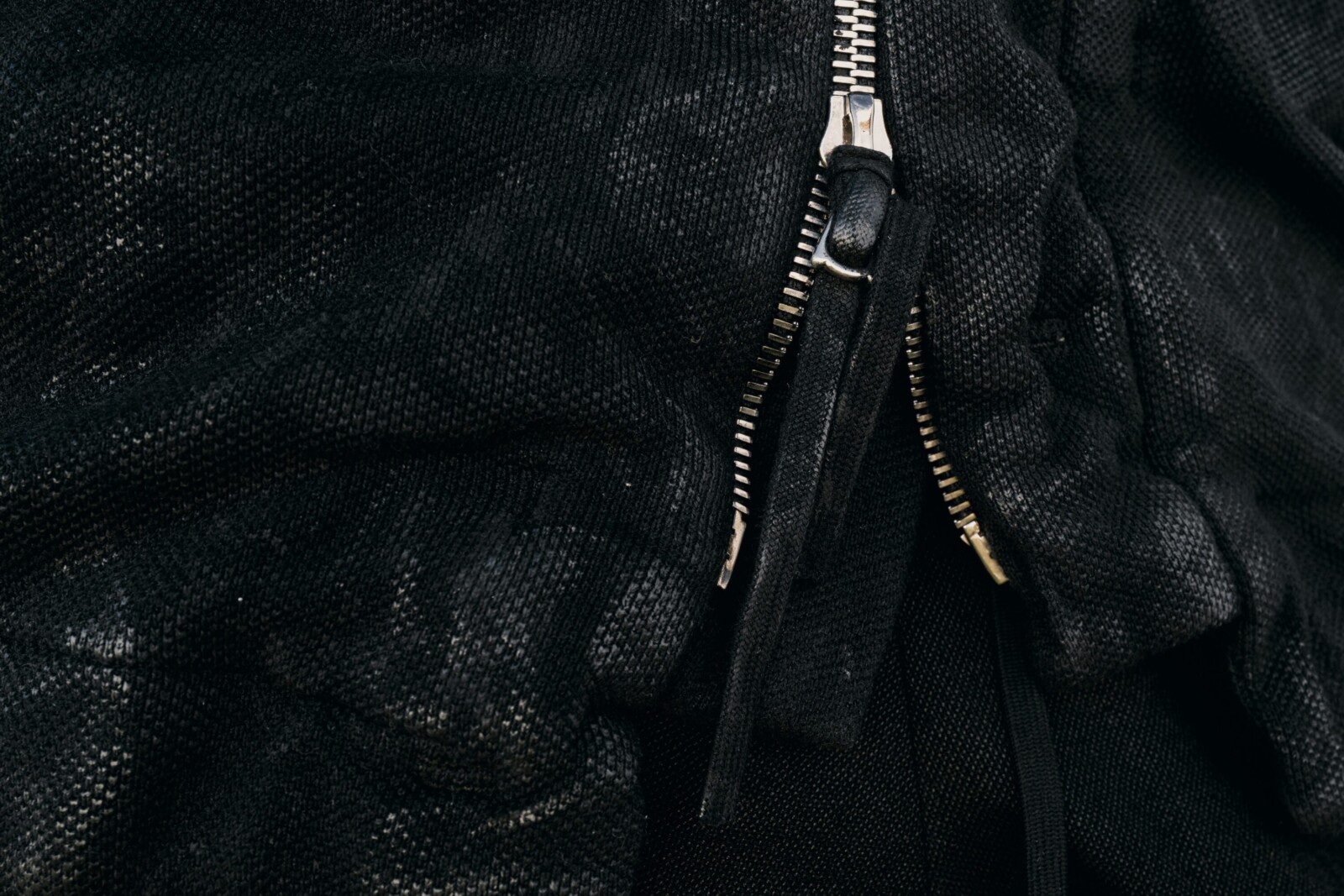
  • Interops System: A precision-engineered diagonal or side-vent zipper that allows the wearer to interact seamlessly with an underlying messenger bag or 3rd Arm sling pack without unzipping the outer weather-protective shell, maintaining complete water-tightness in extreme downpours.
  • Sound Force / TEC SYS: Integrated neodymium magnets located within the collar to dock earphone cables when not in use, paired with laser-cut PALS/MOLLE-compatible webbing grids that permit modular attachment of pouches and accessories.

ACRONYM’s technical radicalism caught the attention of global athletic giants and high-luxury houses. Hugh was recruited to design the inaugural collections of Arc’teryx Veilance in 2009, bringing minimalist taped-seam 3L GORE-TEX Pro construction to architectural menswear. Between 2014 and 2018, Hugh spearheaded the revitalization of NikeLab ACG (All Conditions Gear), introducing articulated drop-crotch cargo pants, deployable hoods, and modular shell systems to a global audience, while simultaneously collaborating with Carlo Rivetti on Stone Island Shadow Project (2008–2021).

手工科技服装与黑暗先锋的共生:Julius、DEVOA和Boris Bidjan Saberi

While ACRONYM approached techwear through the prism of cyberpunk functionalism and aerospace textiles, designers within the dark avant-garde ecosystem integrated technical performance into artisanal, subterranean aesthetics—an evolution explored in our study of dark avant-garde fashion origins and aesthetics 和 2000s darkwear scene.

In Tokyo, Tatsuro Horikawa debuted runway presentations for Julius beginning in 2004, centering collections on industrial techno, post-apocalyptic literature, and dystopian urban warfare. Horikawa synthesized high-performance military webbing with severe gothic brutalism. The signature Julius “gas mask” cargo trousers featured monumental three-dimensional bellows pockets anchored by heavy nylon load-bearing straps, articulated spiral knees, and distressed oil-washed surfaces. Julius proved that technical functionality could convey visceral emotional dread and cinematic drama.

Simultaneously, former wrestling instructor and medical athletic trainer Daisuke Nishida launched DEVOA in 2008. Rather than drafting garments flat on paper or relying on standard dressmaker mannequins, Nishida sculpted patterns derived from kinesiology and human muscular anatomy:

  • 解剖关节: Nishida drafted multi-panel trousers and jackets that followed the natural curvature of the femur, biceps, and spinal column. Panels curved along muscle bellies, enabling the wearer to sprint, crouch, or extend their limbs without the garment riding up or binding at the joints.
  • Organic-Technical Hybrids: DEVOA pioneered the combination of traditional Japanese artisanal textiles—such as washi paper yarns and ultra-dense wool gabardines—with Swiss Schoeller stretch membranes, waterproof seam tapes, and ceramic coatings. The result was garments that possessed the tactile soul of natural fibers with the performance metrics of high-altitude alpine shells.
  • Kinetic Ergonomics: Alongside DEVOA, Tomoaki Okaniwa’s The Viridi-anne merged Japanese wabi-sabi aesthetics with seamless down bonding, water-repellent zippers, and articulated knee darting.

In Europe, German-Persian designer Boris Bidjan Saberi bridged the divide between skate culture, hip-hop, Middle Eastern nomadic drapery, and alpine climbing gear from his Barcelona atelier. Saberi introduced “Object Dyecord”—high-tenacity climbing cords integrated directly into garment hems and sleeves that allow the wearer to cinch and alter the garment’s silhouette while suspended. Saberi’s garments featured thermo-welded waterproof seam tapes on vegetal-tanned horsehide, vinyl treatments, and thumbhole-articulated cuffs, creating an aesthetic that felt simultaneously prehistoric and interplanetary.

This artisanal technical lineage extends into contemporary studios such as enfin levé (specializing in bespoke artisanal garments utilizing Schoeller Dryskin and Stotz Etaproof), HAMCUS (engineering sci-fi post-apocalyptic tactical systems with modular magnetic accessories), and Carol Christian Poell, whose taped-seam “drip” rubber sneakers and titanium-inserted prosthetics pushed the boundaries of material durability to sculptural extremes.

材料科学与人体工程学分类:非欧几里得图案制作、ePTFE膜和高性能纺织品

What distinguishes authentic avant-garde techwear from superficial streetwear is an unyielding commitment to material science and ergonomic geometry. Rather than applying decorative buckles or superfluous webbing straps to conventional flat patterns, technical avant-garde garments are constructed around three core disciplines:

1. Non-Euclidean and Kinetic Pattern Drafting

Traditional Western tailoring relies on flat, rectilinear pattern blocks that pinch or contour the torso through darts. In contrast, technical avant-garde patternmakers employ non-Euclidean geometries:

  • Diamond Underarm Gussets: A seamless, rhomboid insert connecting the thoracic lateral seam to the inner sleeve, eliminating armhole drag and allowing full 360-degree shoulder rotation without pulling the hem of the jacket out of position.
  • Articulated Knee and Elbow Darts: Anatomical seams cut with pre-curved bias shaping that mimics the resting 15-to-20-degree flexion of human joints, preventing fabric bunching behind the knee while eliminating tension across the patella during movement.
  • Spiral Seam Architecture: Legs drafted as a single continuous spiral panel that wraps around the limb from the pelvic basin down to the ankle hem. This distributes structural strain obliquely across the leg rather than concentrating wear on a single linear outseam.

2. Advanced Textile Membranes and Polymers

Technical avant-garde designers operate at the bleeding edge of industrial textile synthesis, utilizing materials originally developed for aerospace, maritime, and specialized military defense:

  • Expanded Polytetrafluoroethylene (ePTFE): The micro-porous membrane at the core of GORE-TEX Pro. The membrane contains over 9 billion microscopic pores per square inch. Each pore is 20,000 times smaller than a water droplet—preventing rain penetration—yet 700 times larger than a water vapor molecule, allowing perspiration to evaporate outward under physical exertion.
  • High-Density Polyamide/Polyester Composites: Pioneered by Ten C with their proprietary OJJ (Original Japanese Jersey)—a non-woven microfiber knitted in Japan and compressed under extreme thermal pressure in Italy. OJJ is completely water-repellent, windproof, and develops individual burnishing and creases over decades of wear like heavy raw denim.
  • Schoeller Dryskin and NanoSphere: A Swiss double-faced bi-elastic weave engineered with synthetic polyamides on the exterior face and functional moisture-wicking microfibers against the skin. The fabric incorporates NanoSphere nanotechnology, mimicking the microscopic surface structure of the lotus leaf to shed mud, oil, and liquid contaminants effortlessly.
  • Ultra-High-Molecular-Weight Polyethylene (UHMWPE / Dyneema): Known as composite fabric or Cuben Fiber, UHMWPE offers a strength-to-weight ratio fifteen times greater than high-grade steel. Utilized by avant-garde cordwainers and outerwear ateliers, Dyneema provides extreme cut-resistance and absolute hydrostatic water resistance at negligible fabric weight.
  • Stotz Etaproof / Ventile: Developed during World War II for British Royal Air Force fighter pilots, this textile uses 100% extra-long-staple un-waxed cotton spun into dense yarns. When exposed to rain, the cotton fibers swell shut, creating a natural hydrostatic barrier that remains completely quiet, breathable, and biodegradable.

构成主义和功能服装

The sudden internet popularity of the “techwear aesthetic” in the late 2010s led to widespread commodification. A critical scholarly taxonomy must distinguish between authentic avant-garde engineering and cosmetic “mall-ninja” styling:

Design Dimension Cosmetic “Techwear” Streetwear Authentic Avant-Garde Technical Design
Pattern Drafting Standard fast-fashion cylindrical cut with added decorative nylon tape Non-Euclidean kinetic drafting; spiral cuts, articulated joints, diamond gussets
Fabric Substrate Cheap 100% non-breathable polyester or treated cotton; fails under rain High-grade ePTFE (GORE-TEX Pro), Schoeller Dryskin, Stotz Etaproof, OJJ microfibers
Hardware & Fasteners Generic plastic clips, unbranded non-waterproof zips, non-functional D-rings Fidlock magnetic locks, German Cobra buckles, YKK Aquaguard, riri high-tensile zips
Seam Construction Standard overlock stitching; raw needle puncture holes admit water Ultrasonic welding, laser cutting, 3-layer thermo-polyurethane micro-taped seams
Ergonomic Purpose Purely visual cosplay mimicking anime or dystopian tactical aesthetics Kinetic optimization; weight distribution, rapid access, thermoregulation, complete mobility
Production Philosophy Mass-manufactured fast fashion with rapid obsolescence Limited-run artisanal laboratory production, multi-year R&D cycles, decades of repairability

Avant-garde techwear represents the absolute antithesis of superficial ornamentation. By harnessing advanced polymer chemistry, ergonomic kinesiologic drafting, and radical structural philosophy, designers from Massimo Osti and Helmut Lang to Errolson Hugh, Tatsuro Horikawa, and Daisuke Nishida have constructed a new sartorial paradigm: clothing engineered not as social theater, but as an autonomous, protective technological sanctuary for the human body.

参考资料和进一步阅读

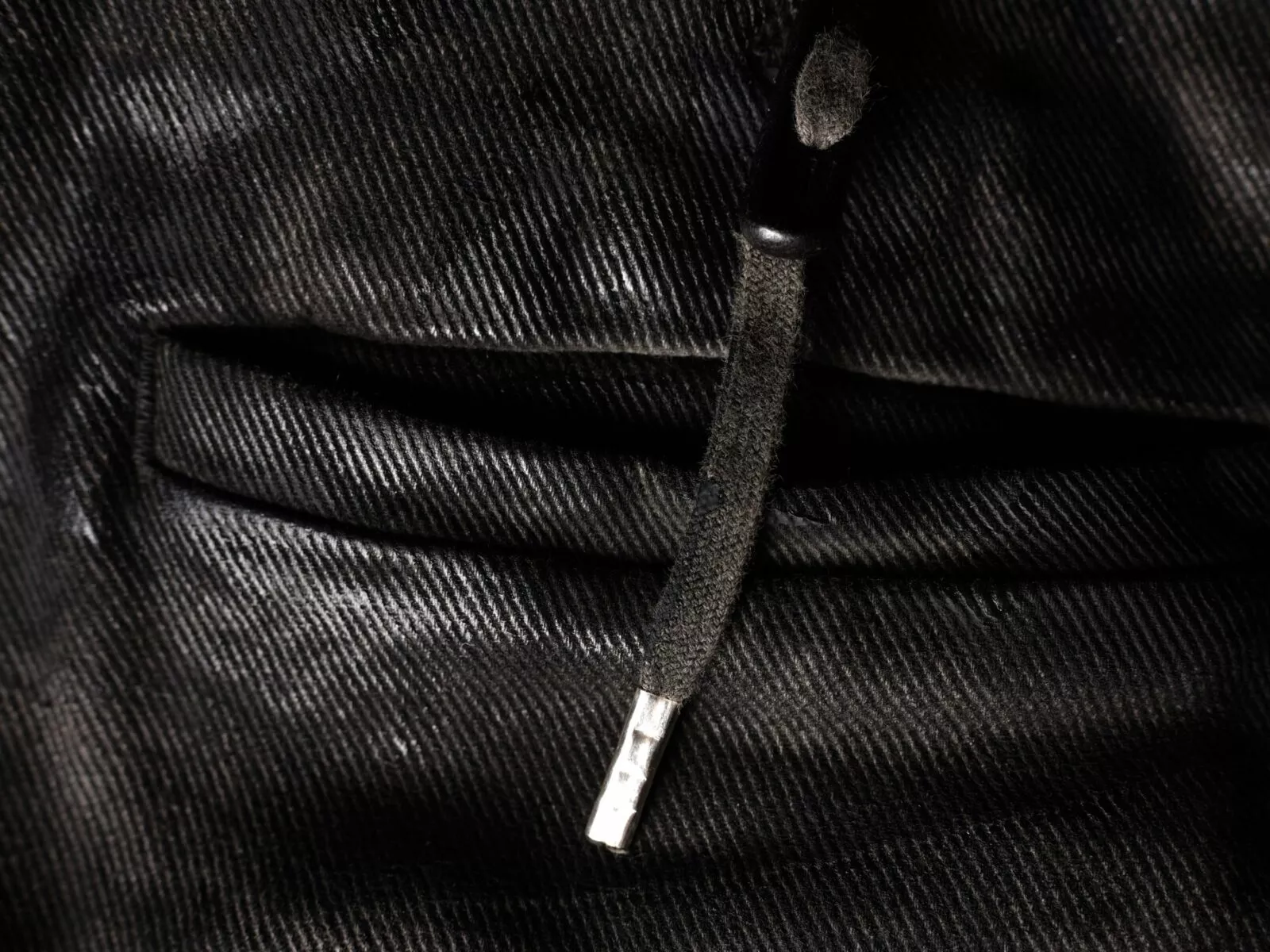
Boris Bidjan Saberi P23 裤子 P34 涂层蜡质细节

注册 - 享受我们的福利

  • 保存你喜欢的品牌和店铺
  • 获取你喜欢品牌的新款和独家产品通知
  • 专享优惠券码和折扣

通讯订阅

订阅我们的独家邮件列表,接收通知 当我们推出新品牌或店铺时获取信息,当我们 发布新的精选产品时, 并接收 独家促销优惠,直接发送到你的邮箱。

品牌

    门店

      文章

        产品

          精选产品

            知识库

              Boris Bidjan Saberi P23 裤子 P34 涂层蜡质细节

              注册 - 享受我们的福利

              • 保存你喜欢的品牌和店铺
              • 获取你喜欢品牌的新款和独家产品通知
              • 专享优惠券码和折扣