Constructivism and Functional Clothing
Russian Constructivism stripped clothing of bourgeois ornament, transforming dress into an active instrument of labor, movement and collective life. Through prozodezhda (production clothing), modular patterns and geometric textiles, artists like Varvara Stepanova, Lyubov Popova and Vladimir Tatlin established the blueprint for functional and architectural clothing that continues to shape contemporary avant-garde design.
The death of easel painting and the birth of production art
In November 1921, twenty-five artists gathered at the Moscow Institute of Artistic Culture (INKhUK) to take a vote that would dismantle centuries of European pictorial tradition. Led by Varvara Stepanova, Alexander Rodchenko, Lyubov Popova and Osip Brik, the group formally renounced easel painting. The canvas was condemned as an obsolete bourgeois luxury: an isolated commodity engineered for private ownership and passive contemplation rather than active collective life. Art was no longer to depict reality through illusion; it had to construct reality through material labor (konstruirovanie).
This ideological rupture propelled artists directly into the factories, printing houses and municipal workshops of post-revolutionary Russia. Clothing stood at the absolute center of this transformation. In capitalist and aristocratic societies, dress served as an overt system of class division, conspicuous consumption and anatomical constraint. The Constructivists sought to abolish fashion as an ephemeral cycle of seasonal novelties, replacing it with clothing conceived as industrial equipment. For Stepanova and her peers, dress was not an embellishment applied to the body, but a kinetic apparatus engineered to facilitate human movement, industrial production and social equality.
The philosophical shift was radical: form would no longer follow aesthetic taste or decorative tradition, but the objective physical requirements of the wearer’s task. Seams, closures, pockets and fabrics were re-examined as tectonic elements, stripping away linings, ornamental collars, corsetry and decorative stitching to reveal the functional anatomy of the garment.
Prozodezhda: clothing as tool and tectonic system
In 1923, Varvara Stepanova published her foundational theoretical treatise on dress, titled “The Task of the Artist in the Textile Industry,” in the constructivist journal LEF (Left Front of the Arts). Stepanova articulated a rigorous three-tiered classification of utilitarian clothing that established the modern vocabulary of functional apparel:
- Prozodezhda (Production Clothing): Everyday working garments tailored precisely to the technical demands of specific industrial professions—machinists, surgeons, laboratory workers, printers and miners. The silhouette was engineered to prevent snagging in machinery, ensure thermal comfort and distribute mechanical stress across reinforced seams.
- Spetsodezhda (Specialized Protective Clothing): Highly specialized technical suits designed for hazardous or extreme working environments, incorporating fireproof coatings, heavy-duty vulcanized treatments, airtight seals or specialized harness attachments.
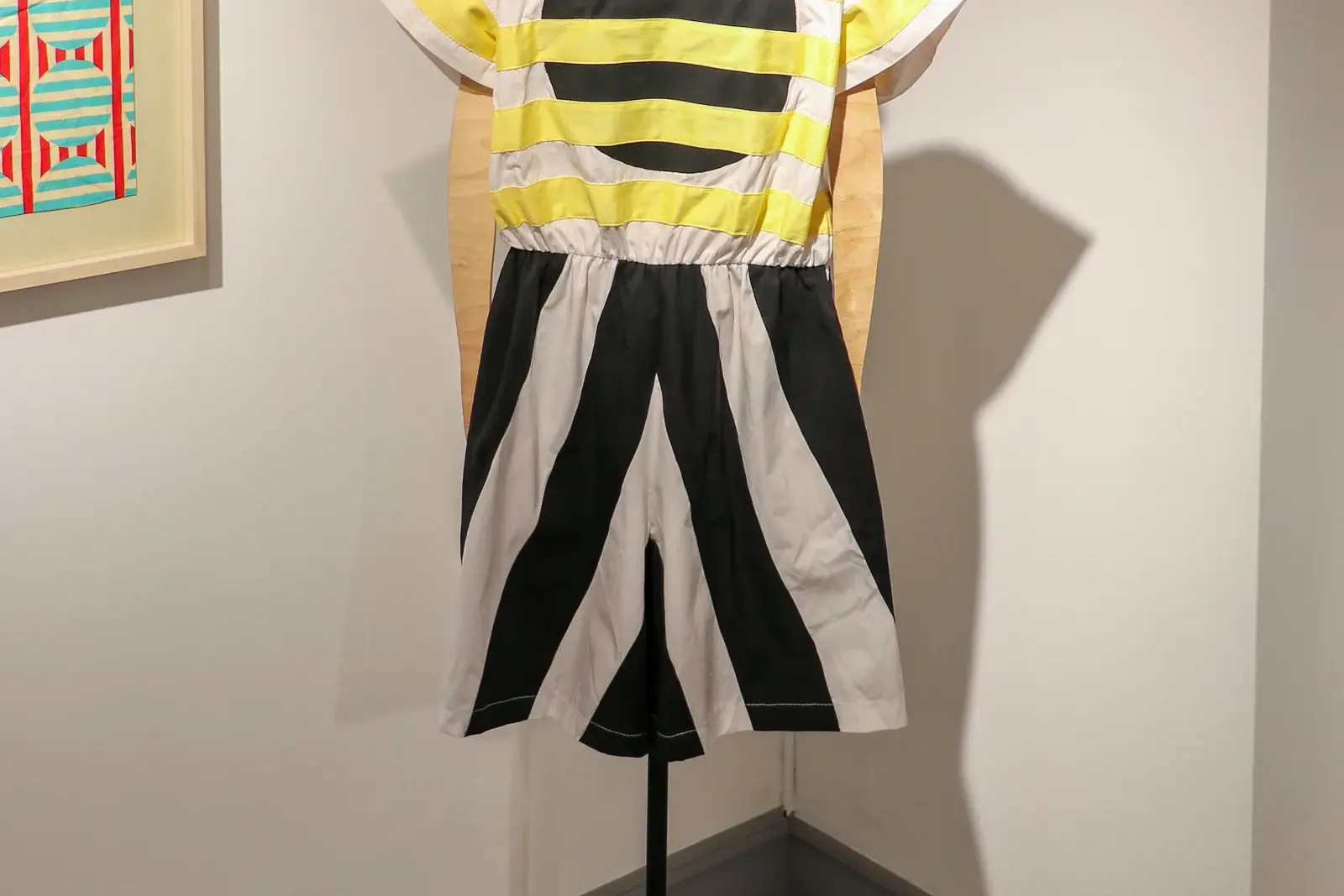
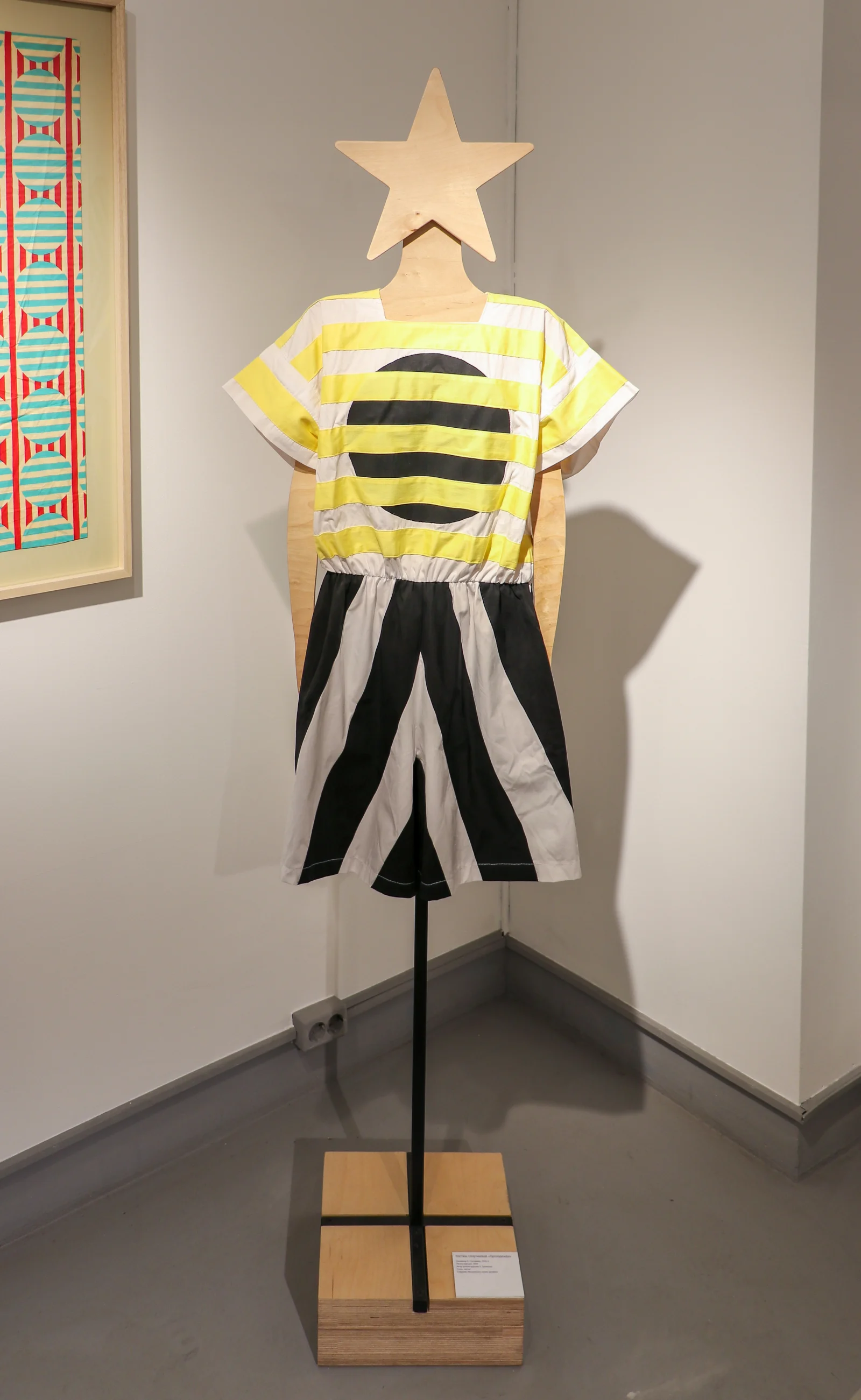
- Sportodezhda (Sports Clothing): Activewear engineered for physical culture and athletic competition. Stepanova designed modular sports suits consisting of shorts, tunics and loose shirts that maximized joint articulation and airflow while employing stark geometric contrast to make the athlete’s movements legible from distant stadium stands.
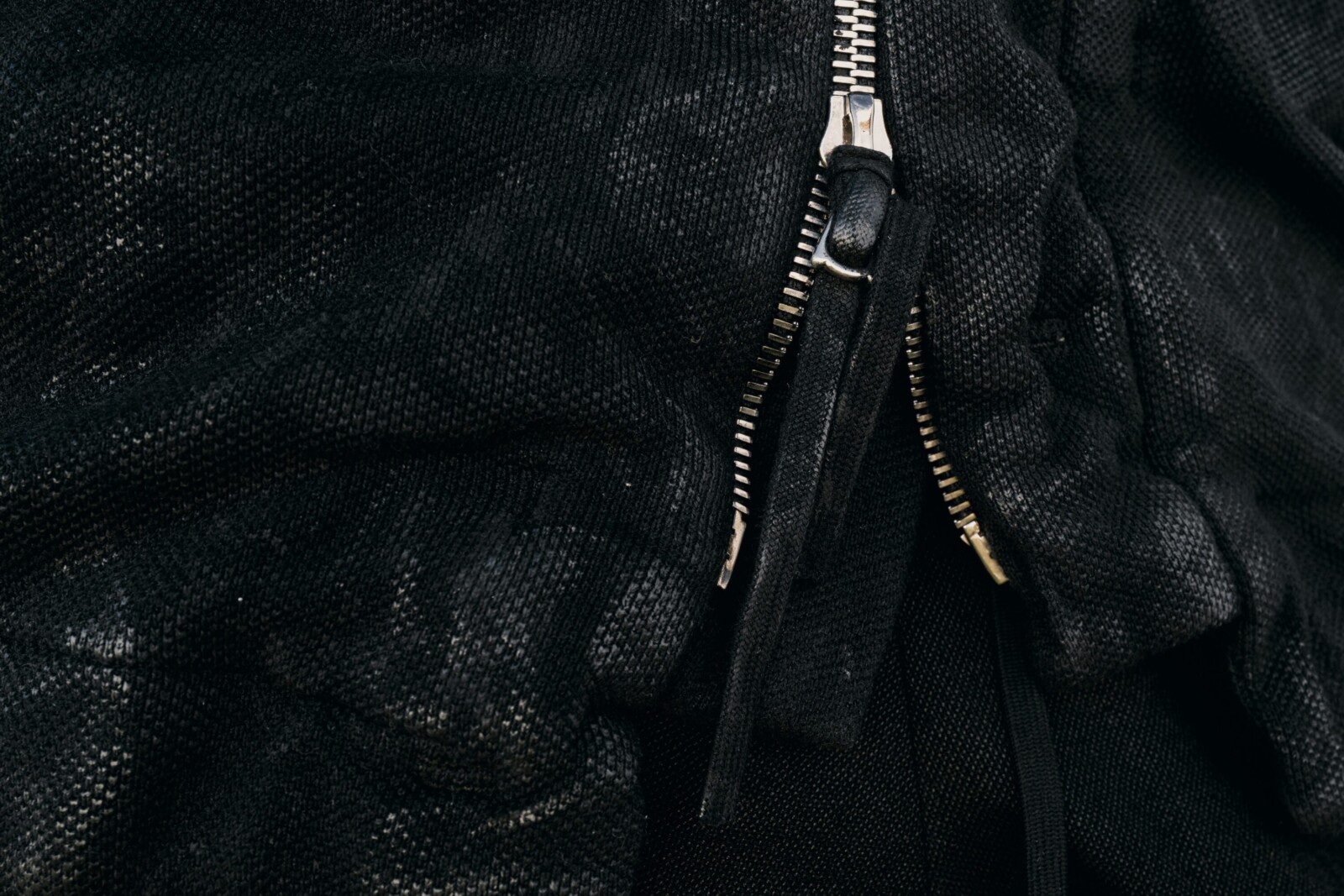
Stepanova insisted that every element of prozodezhda must possess strict utility. Fastenings were brought to the exterior surface as functional components rather than concealed behind decorative plackets. Heavy snap fasteners, industrial zippers, slide buckles and webbing straps were placed where the wearer’s hands naturally reached. Pockets were not recessed into linings but constructed as deep, reinforced external patches whose dimensions, angle and positioning corresponded directly to the specific tools carried by that trade.
Color served an equally structural purpose. Rather than operating as decorative harmony, color-blocking demarcated separate anatomical planes and moving joints. A contrasting stripe along a raglan sleeve or across the shoulder line emphasized kinetic extension when the worker lifted an arm or operated a lever. Clothing ceased to be a static envelope and became a graphic registration of physical velocity.
Popova and Stepanova at the First State Textile Factory
Constructivist theory reached direct industrial execution in late 1923, when Lyubov Popova and Varvara Stepanova entered the First State Textile Print Factory (formerly the Tsindel Works) in Moscow. Both artists had achieved major reputations as non-objective painters; both voluntarily abandoned fine art to spend twelve-hour days alongside factory dye masters, textile chemists and mechanical cylinder engravers.
Their mission was to revolutionize mass-market printed textiles. Traditional Russian printed cottons were dominated by sentimental floral patterns, pseudo-oriental paisley motifs and bourgeois imitation-lace graphics. Popova and Stepanova rejected these figurative illusions as decorative escapism that obscured the flat materiality of the fabric weave. In their place, they introduced rigorous geometric patterns composed exclusively of intersecting grids, concentric circles, stepped diagonals, optical zigzags and alternating color bars.
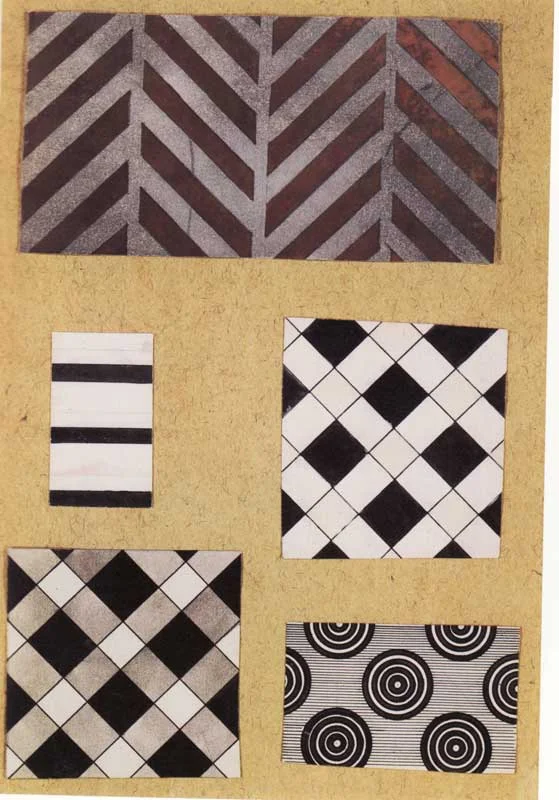
The technical discipline required for mass production sharpened their aesthetic. Operating under acute resource shortages in the young Soviet republic, Popova and Stepanova designed patterns that required only two or three basic printing cylinders and standard, inexpensive mineral pigments. By varying the rhythm, scale and rotational overlap of simple geometric units, Popova generated hundreds of dynamic fabric designs from minimal raw material.
These fabrics were not luxury textiles for museum exhibitions; they were mass-printed on ordinary cotton calico (sitets) and sold across municipal department stores. Popova famously stated that no artistic success in her life had given her as profound a joy as seeing a peasant woman or factory worker in Moscow wearing a dress made from fabric of her design. For Popova, the printed textile was the ultimate democratic medium: a modern geometric language circulating freely through urban streets and rural villages.
Tatlin’s normal-suit and the ethics of material economy
While Stepanova and Popova focused on kinetic sportswear and two-dimensional textile architecture, Vladimir Tatlin approached functional dress through the prism of three-dimensional product design and material economy (kultura materiala). Between 1923 and 1924, working through the Section for Material Culture at INKhUK, Tatlin designed prototypes for an all-season functional suit and an overcoat, known collectively as the normal-suit (normal-odezhda).
Tatlin approached the human body as an active organism requiring hygiene, warmth, durability and unrestricted physical freedom. His coat was cut with broad raglan shoulders and a flared hem that distributed fabric weight away from the collarbones, allowing the wearer to run, climb onto trams or lift heavy loads without fabric pulling at the armpits. To combat extreme seasonal temperature swings without necessitating multiple expensive coats, Tatlin introduced a modular construction: a durable, water-resistant wool shell with interchangeable, button-in flannel linings that could be removed for laundering or adapted to changing weather.
Tatlin’s coat was a philosophical refutation of planned obsolescence. By selecting hard-wearing natural wools, double-stitched stress points and timeless architectural proportions, he designed a garment intended to endure for ten years of daily wear. The normal-suit anticipated the foundational principles of modern functional design: modularity, repairability, thermal adaptation and total rejection of status-driven novelty.
The tension between laboratory idealism and industrial reality
The radical vision of Constructivist dress existed in constant friction with the material limitations of its historical moment. Following years of civil war and economic devastation, early Soviet industry lacked the specialized machinery, precision fasteners and synthetic coatings required to realize technical workwear on a mass scale. Many designs created by Stepanova, Rodchenko and Tatlin remained singular prototypes, documented in studio photographs, theater productions or journal line drawings rather than widespread municipal issue.
Furthermore, the public appetite did not always align with avant-garde austerity. During the New Economic Policy (NEP) in the mid-1920s, ordinary consumers often favored nostalgic florals, soft silhouettes and imported European fashions over stark geometric prozodezhda. By the end of the 1920s, the consolidation of Stalinist cultural policy marked the end of the Constructivist experiment. In 1932, independent artistic factions were dissolved into state-controlled unions, and the Soviet Union embraced Socialist Realism, officially demanding decorative embellishment, classical symmetry and traditional ornamental motifs.
Yet the failure of Constructivism to achieve permanent industrial hegemony does not diminish its historical significance. In the span of less than five years, the movement established an entirely new ontology of clothing: garments evaluated not by their ability to flatter vanity or signal wealth, but by their tectonic clarity, ergonomic efficiency and material honesty.
Constructivism’s enduring imprint on contemporary avant-garde dress
Constructivism’s proposition—that clothing is a wearable structure engineered for kinetic human existence—forms the invisible foundation of the contemporary avant-garde fashion movement. The line connecting Stepanova’s prozodezhda to modern artisanal and technical fashion is direct and profound.
Rick Owens channels Constructivist architectural rigor into monolithic silhouettes. His geometric pattern cutting, dropped proportions, architectural leather panels and functional webbing straps echo the stark angularity and utilitarian gravity pioneered by Tatlin and Rodchenko. Owens treats the body not as a canvas for decorative clothes, but as a tectonic structure surrounded by disciplined spatial planes.
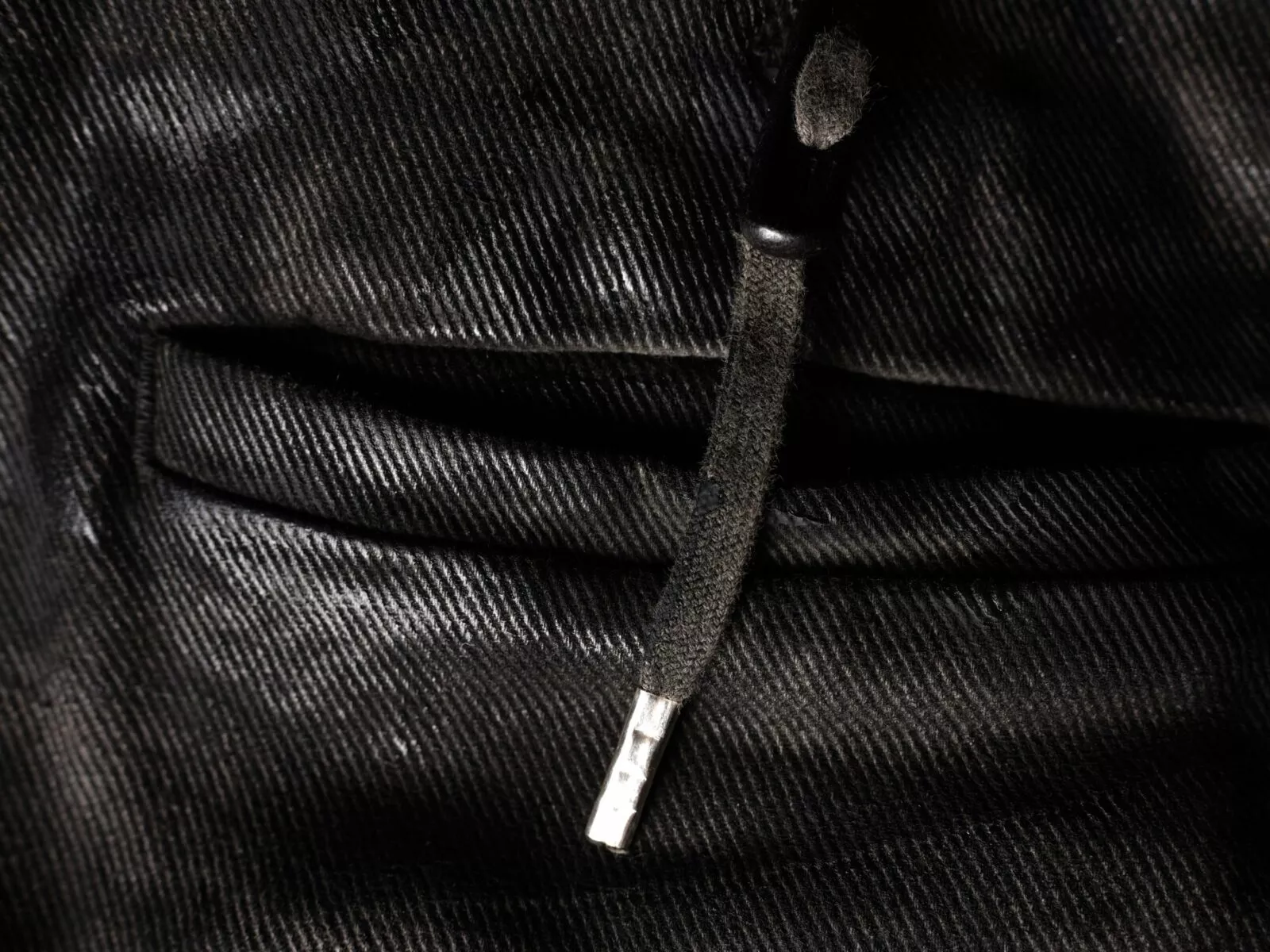
Boris Bidjan Saberi directly embodies the ethos of spetsodezhda. Saberi’s garments are technical protective armor for the post-industrial environment: ergonomic body-molding patterns, thumbhole-cuff extensions, articulated knee gussets, internal shoulder carrying harnesses, and heavy-duty object-dyed cottons engineered to withstand intense physical wear. Saberi’s seam-taping and raw-cut edges elevate the functional mechanics of construction into primary visual signals, exactly as Stepanova proposed in 1923.
Similarly, the asymmetrical workwear deconstructions of Yohji Yamamoto, the utility webbing and modular pocket architectures of Acronym, and the anatomical distortions of Comme des Garçons all operate within the intellectual territory first mapped out by the Soviet avant-garde. Constructivism permanently liberated fashion from decorative triviality, proving that true radicalism in clothing begins in the pattern room, the seam allowance and the factory floor.
Continue exploring the early artistic avant-garde with Futurism and the Birth of Radical Dress, From the Military Avant-Garde to Art and Fashion, and trace the full evolutionary arc in The History of Avant-Garde Fashion.
References and further reading
- Tate Papers, no. 14 / Tate Research — Liubov Popova: From Painting to Textile Design
- LEF Journal / Russian Avant-Garde Archive — The Task of the Artist in the Textile Industry (1923)
- Tate Modern Exhibition Archives — Rodchenko and Popova: Defining Constructivism
- John E. Bowlt / Thames & Hudson — Russian Art of the Avant-Garde: Theory and Criticism 1902–1934
- The Museum of Modern Art (MoMA) — Varvara Stepanova and Lyubov Popova Collections
- Moscow Design Museum / New Tretyakov Gallery — History of Russian Design: Essentials
- Tate — Aleksandr Rodchenko and Liubov Popova | TateShots