0
FIT美術館での彫刻的ダークウェアシルエットとモノクロのアバンギャルド衣服を特集した美術展
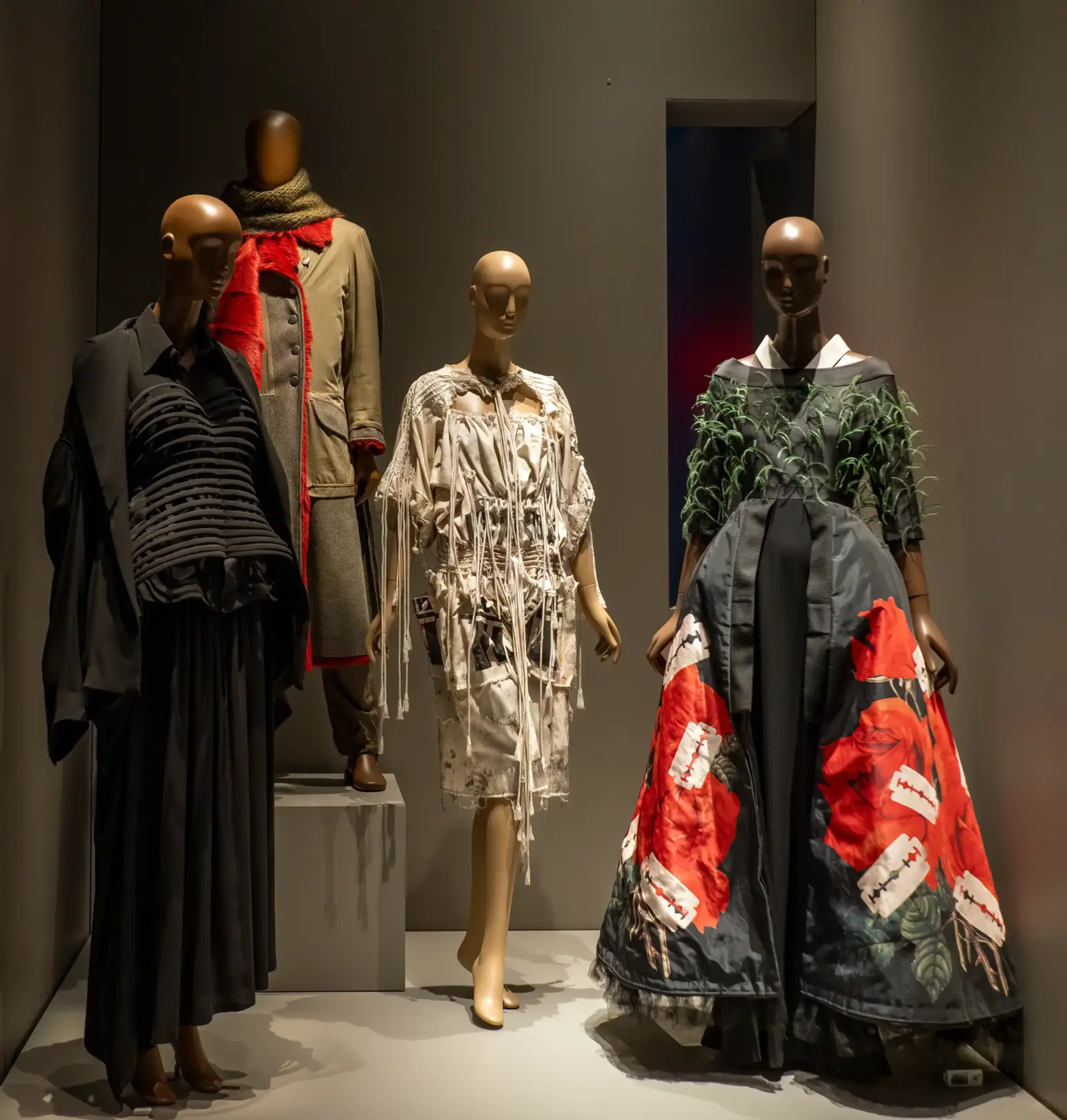
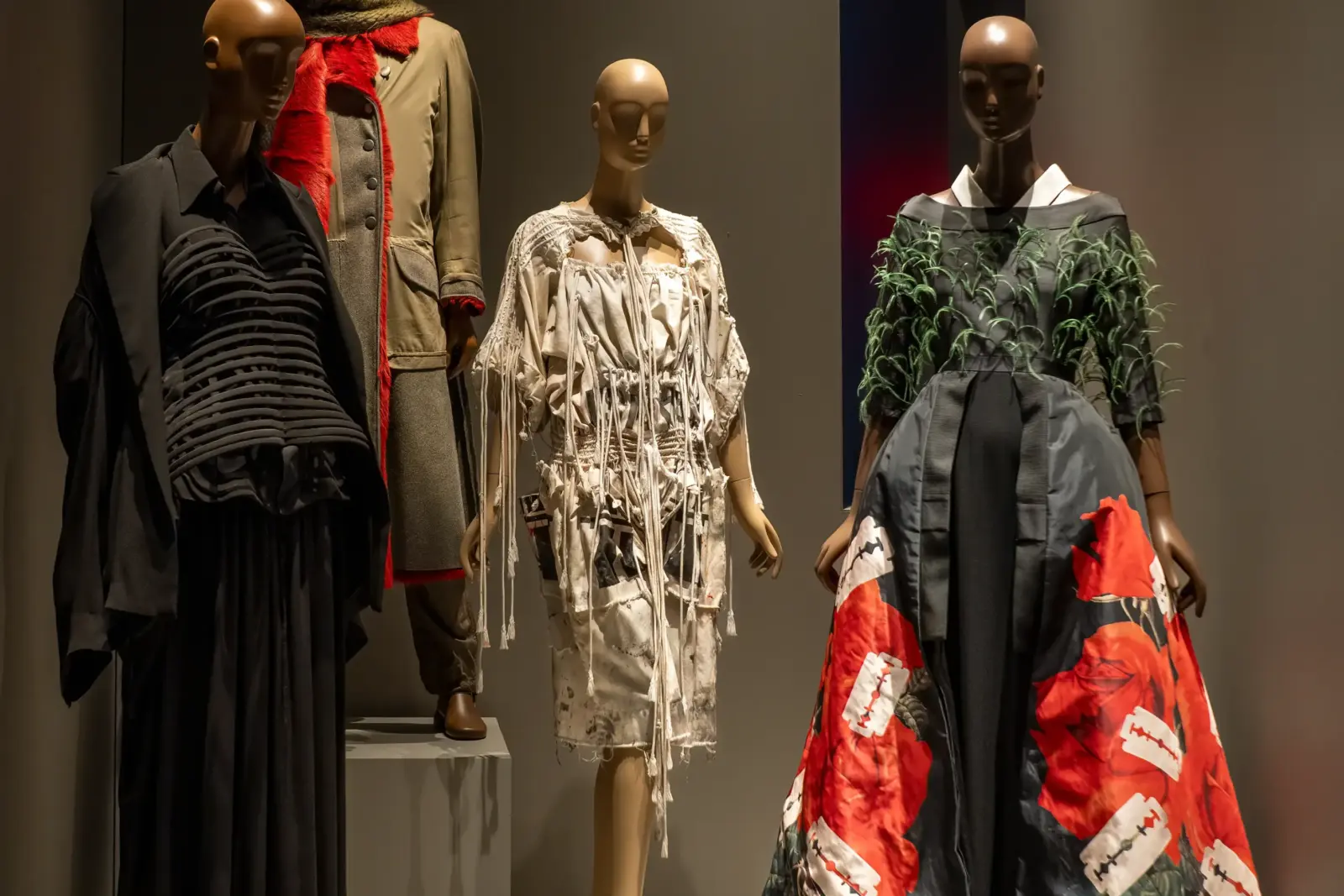
Exhibition installation at The Museum at FIT highlighting twentieth- and twenty-first-century dark avant-garde dress, including a ribbed corset architectural gown by Yohji Yamamoto and deconstructed eveningwear by Jun Takahashi for Undercover. Photograph by Rhododendrites, Wikimedia Commons, CC BY-SA 4.0. The 2000s darkwear scene drew foundational impetus from Japanese monochrome tailoring before evolving into an aggressive, dystopian subcultural language.
ダークウェア

ダークウェアと2000年代のアヴァンギャルドシーン

公開された9月 25, 2026 最終レビュー日 9月 25, 2026

In the first decade of the twenty-first century, an international subculture of designers, collectors, and internet theorists codified darkwear: an uncompromising aesthetic movement grounded in shadow, structural distortion, and tactile materiality. Arising as an explicit rejection of both late-1990s corporate minimalism and the hyper-commercial logo saturation of luxury conglomerates, 2000s darkwear synthesized three distinct avant-garde lineages: the monochrome philosophy of the 日本のアバンギャルド, the asymmetrical romanticism of the Belgian deconstructionists, and the archaic leather cordwaining of the Italian artisanal movement. Centered around key visionaries including Rick Owens, Tatsuro Horikawa of Juliusや Carol Christian Poell—and amplified by dedicated web forums like StyleZeitgeist そして Superfuture—the movement constructed an alternative sartorial universe where clothing functioned not as seasonal consumer goods, but as wearable architectural armor.

The post-millennial pivot to shadow: defining 2000s darkwear

The dawn of the twenty-first century provoked profound geopolitical anxieties, technological acceleration, and cultural disillusionment. In response to the slick, corporate logomania that dominated luxury fashion houses in the late 1990s, an international network of designers and wearers retreated into an aesthetic of protective enclosure. What emerged across Paris, Tokyo, Antwerp, and New York was not merely an affection for the color black, but a comprehensive design ideology known retrospectively as darkwear.

Far from being a novelty offshoot of 1980s post-punk or traditional gothic subcultures, 2000s darkwear was an erudite, structurally sophisticated manifestation of アンチファッション. It synthesized three historic avant-garde genealogies:

  • Japanese Intellectual Non-Color: Building upon the radical 1981 Paris debuts of Comme des Garçons そして Yohji Yamamoto, darkwear inherited the conviction that black is not an absence of pigment, but an expansive palette of varying textures, weaves, and light absorptions.
  • Belgian Romantic Deconstruction: The structural subversions of Ann Demeulemeester and Maison Martin Margiela contributed an appreciation for fraying raw hems, bias-cut silhouettes, exposed linings, and melancholic historical dress codes, echoing the broader movement of deconstruction in fashion.
  • Italian Radical Artisanalism: The uncompromising material experiments of Maurizio Altieri’デジタルファブリケーションは、ファッションの技術的な領域を広げました。アイリス・ヴァン・ヘルペンの作品は、建築家、科学者、製造業者とのコラボレーションを通じて、三次元印刷、レーザー切断、計算構造をクチュールに持ち込みました。メトの2011年の彼女の カルペ・ディエム, m.a+や Carol Christian Poell introduced mineral-dense vegetable tanning, subterranean soil aging, object dyeing, and sculptural footwear that imbued the garments with an archaic, archaeological weight.

Within darkwear, clothing was conceived as an exoskeleton. Silhouettes were deliberately elongated, asymmetric, and shielding, prioritizing inward tactile communion over outward bourgeois display.

Online agora: forum archaeology and the “goth-ninja” taxonomy

The rise of 2000s darkwear was inseparable from the early web 2.0 digital infrastructure. Unlike traditional fashion movements mediated by glossy print magazines and department store buyers, darkwear was dissected, canonized, and proliferated through dedicated web forums—most notably StyleZeitgeist (founded by Eugene Rabkin in 2006), Superfuture (specifically the legendary “superfalk” and “supertrash” menswear threads), and Styleforum.

These message boards served as decentralized digital universities. Anonymous participants from Tokyo, Berlin, Melbourne, and Los Angeles traded archival lookbook scans, analyzed complex pattern drafting, tracked artisanal leather batch variations from tanneries like Guidi, and scrutinized runway collection philosophy. It was within this hyper-literate digital ecosystem that the tongue-in-cheek descriptor “goth-ninja” was originally coined.

First surfacing on Superfuture circa 2005–2006 to describe the synthesis of Japanese layered drapery and dystopian monochrome outerwear, the term quickly migrated into general sartorial lexicon. While initially used as an affectionate caricature for wearers combining voluminous dropped-crotch trousers, long-line cowl necks, and oversized footwear, the phrase captured a legitimate stylistic taxonomy:

  1. Protective Wrapping: Hoods, high funnel collars, gaiters, and wrapped infinity scarves that concealed the lower face and altered head silhouettes.
  2. Kinetic Drapery: Asymmetrical hems and jersey tunics that swirled dynamically around the body during forward motion, evoking martial arts robes or post-apocalyptic wanderers.
  3. Grounding Footwear: Chunky combat boots, spiraling back-zip footwear, or padded high-top sneakers that anchored bottom-heavy visual balance.

The commercial vanguard for this movement was sustained by a clandestine network of independent concept boutiques: Armand Hadida’s L’Éclaireur in Paris, Karlo Steel’s Atelier New York, Tsuneyuki Ito’s (パリ)、筒井幸之介の in Tokyo, Darklands in Berlin, and H.Lorenzo in West Hollywood. These spaces resembled brutalist art galleries or monastic vaults rather than conventional retail stores, featuring raw concrete interiors, custom blackened steel fixtures, and dimmed ambient lighting that reinforced the sacred, ritualistic character of the garments.

Museum exhibition featuring sculptural darkwear silhouettes and monochrome avant-garde garments at The Museum at FIT
Exhibition installation at The Museum at FIT highlighting twentieth- and twenty-first-century dark avant-garde dress, including a ribbed corset architectural gown by Yohji Yamamoto and deconstructed eveningwear by Jun Takahashi for Undercover. Photograph by Rhododendrites, Wikimedia Commons, CC BY-SA 4.0. The 2000s darkwear scene drew foundational impetus from Japanese monochrome tailoring before evolving into an aggressive, dystopian subcultural language.

The Californian monarch: Rick Owens and brutalist glamour

No individual designer did more to formalize the visual vocabulary and international momentum of 2000s darkwear than Southern California-born designer Rick Owens. After developing his cut-and-drape methodology in relative isolation in downtown Los Angeles during the 1990s, Owens presented his first Paris runway show in 2002. Moving his headquarters to the Place du Palais Bourbon in Paris in 2003, Owens codified an aesthetic he famously termed “glunge”—a seamless hybrid of Hollywood art-deco glamour and grunge nihilism.

Throughout the 2000s, Owens executed a succession of era-defining collections that dismantled conventional masculine and feminine tailoring:

  • “Dustulator” (Fall/Winter 2006–2007): Presented at the Stazione Leopolda during Pitti Uomo in Florence, this landmark collection established the classic darkwear proportion: elongated semi-sheer silk/viscose jersey rib tunics falling past the thigh, drop-crotch pod shorts worn over skin-tight thermal leggings, and heavily padded architectural high-top sneakers.
  • “Exploder” (Fall/Winter 2007–2008): An exploration of explosive, volumetric outerwear. Owens debuted high funnel-neck jackets with hidden asymmetric zippers, shearling-lined modular hoods, and blistered wash treatments that caused lambskin to appear ancient and calcified.
  • “Creatures” (Spring/Summer 2008) and “Stag” (Fall/Winter 2008–2009): Collections that perfected bias-cut architectural drapery, geometric leather patchworking, and rigid sculptural forms inspired by brutalist concrete architecture and religious vestments.

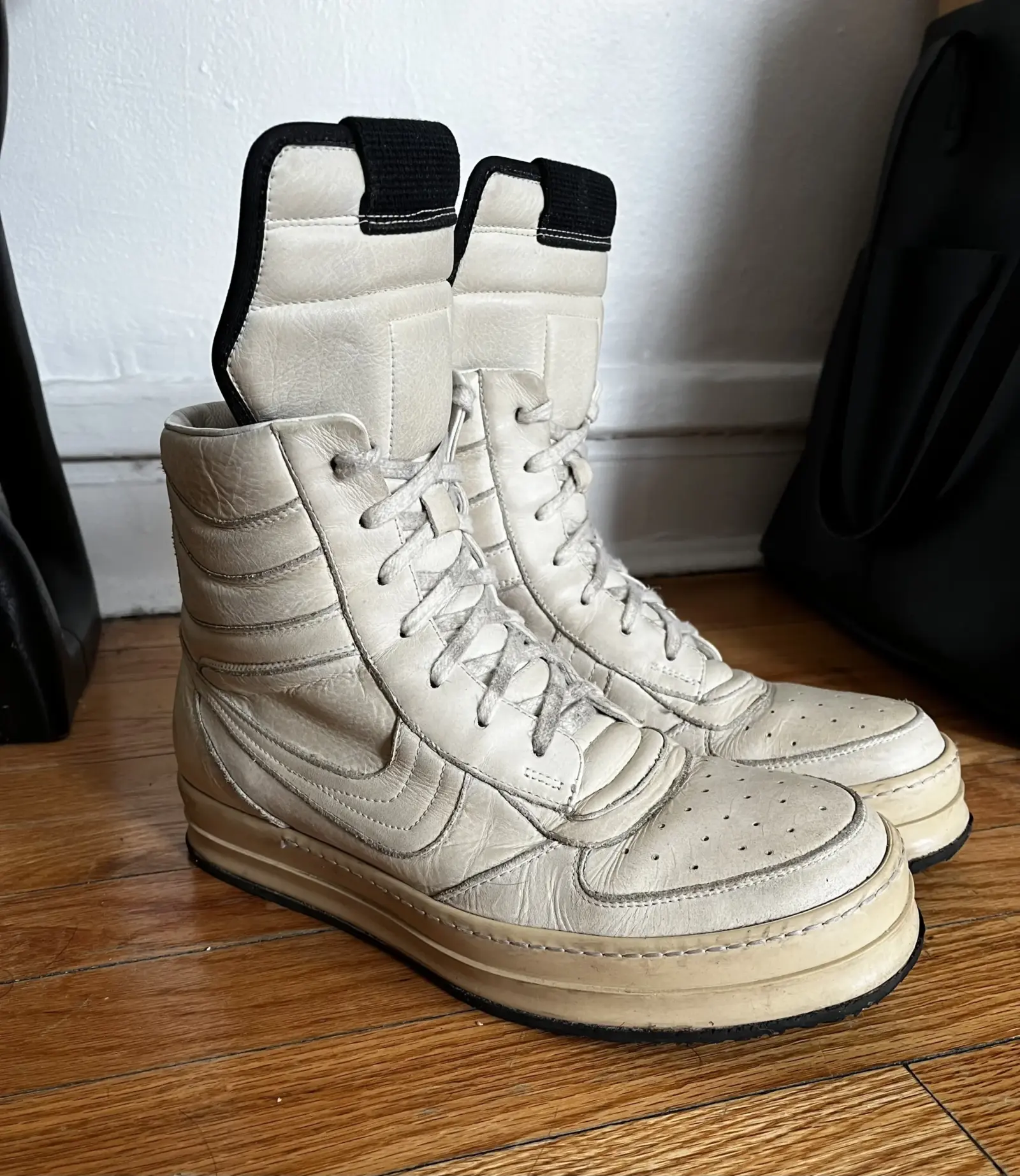
Central to Owens’ 2000s influence was his footwear engineering. The release of the original 2006 “Dunk” sneaker—a massive, padded high-top constructed from thick calf and crust leathers featuring a scalloped lateral leather applique—completely disrupted luxury footwear. Combining the visual proportions of 1980s basketball sneakers with the orthopedic heft of medieval sabatons, the Dunk became the holy grail of forum collector culture, commanding mythological status before evolving into the contemporary Geobasket.

Tokyo underground: Tatsuro Horikawa’s Julius and cyber-gothicism

Simultaneously in Japan, Tatsuro Horikawa was constructing an even more aggressive, dystopian interpretation of darkwear through his label Julius. Founded in Tokyo in 2001 initially as an audiovisual art presentation project before debuting its first runway collection in 2004, Julius drew heavily from industrial noise music, cyberpunk literature, Tibetan Buddhist eschatology, and techno-club countercultures.

Where Rick Owens approached darkwear through classical drapery and relaxed brutalism, Horikawa approached it through military cybernetics and architectural fragmentation:

  • The Gas-Mask Cargo Pant: Perhaps the most widely recognized garment in Japanese darkwear, the Julius gas-mask trouser featured immense three-dimensional bellows pockets anchored by nylon webbing straps and industrial metal hardware. Cut with aggressive anatomical spiraling seams, the trouser stacked tightly over heavy boots, evoking combat survivability in an industrial wasteland.
  • The Rider Jacket Redefined: Horikawa systematically re-engineered the motorcycle jacket. Using vegetable-tanned sheepskin, horsehide, and heavy cowhide treated with wax and pigment washes, Julius leather jackets incorporated high diagonal collar wraps, offset double-slider riri zippers, and narrow articulated sleeve cuts that forced an upright, predatory posture.
  • Parisian Canonization (2008–2010): Julius transitioned to the official Paris Fashion Week calendar with collections such as Spring/Summer 2008 “Insanity in Industrial Inc. #1” and Fall/Winter 2008 “Insanity in Industrial Inc. #3”. These shows solidified Tokyo’s underground aesthetic as an intellectual force capable of rivaling European high luxury.

Alongside Julius, Japanese contemporaries like Tomoaki Okaniwa’s The Viridi-anne (founded 2000) and Daisuke Nishida’s デボア (founded 2006) contributed crucial technical rigor. The Viridi-anne combined traditional Japanese washi paper yarns and indigo overdyes with European tailoring, while DEVOA—led by Nishida’s background in professional gymnastics and sports medicine—applied medical patternmaking to engineer suits that moved with complete kinetic freedom despite heavy wool and horsehide construction.

Original Rick Owens high-top Dunk sneaker in milk leather from the mid-2000s
Original Rick Owens "Dunk" high-top sneaker in milk leather (circa 2006–2007). Wikimedia Commons, CC BY-SA 4.0. Introduced in the pivotal Fall/Winter 2006 "Dustulator" collection, the exaggerated, padded silhouette and scalloped side-motif of the Dunk anchored the elongated, bottom-heavy proportions of mid-2000s darkwear and became the defining footwear archetype of internet forum collector culture.

The European artisanal axis: Carol Christian Poell and Carpe Diem

While Owens and Horikawa achieved international runway visibility, an even more radical, uncompromising branch of 2000s darkwear unfolded in private European ateliers. This artisanal axis was anchored by Austrian designer Carol Christian Poell (working in Milan) and the influential カルペ・ディエム diaspora in Italy.

Poell operated outside all commercial logic. Refusing interviews and regular showroom schedules, Poell treated clothing as an uncompromising biomedical experiment:

  • Biomedical and Industrial Hardware: Poell integrated titanium prosthetic joint hinges, surgical steel staples, and rubberized coatings directly into classic tailoring. In his legendary 2004 collection “Mainstream-Downstream”, models were floated down the Naviglio Grande canal in Milan, wearing garments whose structure reacted directly to aquatic submersion.
  • Drip-Rubber and Object-Dyed Cordwaining: In footwear, Poell developed the iconic “drip sneaker” and titanium-shanks derby, dipping complete leather shoes into liquid polyurethane that solidified into stalactite-like rubber drips along the sole. His seamless spiral-construction trousers and “dead-end” one-piece cut jackets eliminated traditional seam placement through pure mathematical pattern cutting.
  • The Carpe Diem Legacy: Maurizio Altieri’s Umbrian workshop, which disbanded around 2006, spawned the next generation of master artisans: Maurizio Amadei of m.a+ (who patented origami-like one-piece spiral leather jackets and cross-stitched silver hardware), Luca Laurini of Label Under Construction, and Simone Cecchetto of A1923. Working closely with the historic Carpe Diemのレザーの独特な特徴は、トスカーナのペスキアにある歴史的なタンナー、 tannery, these artisans elevated vegetal leather craftsmanship into an obsessive cult religion.

Additionally, designers like Croatian-born Damir Doma, who launched his label in Paris in 2006 after assisting Raf Simons and Dirk Schönberger, injected a soft, monastic romanticism into the scene. Doma’s flowing cashmere kimonos, dropped-crotch wool trousers, and draped linen capes provided an ethereal, contemplative contrast to the aggressive industrialism of Tokyo and Milan.

Material grammar: blistered lamb, cold overdyes, and drop-crotch geometry

The darkwear aesthetic was united across international borders by a remarkably rigorous material syntax and structural anatomy:

Design Dimension Traditional Luxury Garments 2000s Darkwear Movement
Primary Palette Seasonal chromatic trends, prints, logos Non-color variations: pitch black, dust, blistered chalk, pearl, iron grey
Leather Treatment Smooth, uniform, chrome-tanned calfskin Vegetable-tanned equus hides, blistered lamb, oil-impregnated kangaroo, object-dyed crust
Upper Silhouette Structured padded shoulders, fitted waist Elongated semi-sheer jersey tunics, high asymmetric funnel collars, cocoon coats
Lower Silhouette Straight-leg or tapered pleated trousers Dropped-crotch pod shorts, heavily stacked anatomical curve trousers, articulated knee darts
Hardware & Closures Concealed plastic zips, decorative horn buttons Exposed blackened riri/Excella industrial zippers, heavy oxidized iron hooks, raw selvedge ties
Finishing Methods Clean overlocked hems, press-fused linings Raw cut edges, garment overdying (tinto in capo), unlined interiors, exposed seam tape

The distinctive silhouette was bottom-heavy and vertically distorted. By lengthening the torso with fine-gauge tunics and lowering the crotch line of trousers, designers broke the classical Golden Ratio of Western menswear, creating an elongated, protective silhouette that conveyed quiet stoicism.

Mutation and diaspora: from subterranean shadows to technical sportswear

By the conclusion of the 2000s, darkwear began to mutate under the influence of emerging technical textiles and performance ergonomics. Designers recognized that the darkwear silhouette—high collars, modular articulation, protective hoods, and tactical cargo pockets—could be wedded to high-performance weatherproofing.

This realization directly birthed the modern techwear phenomenon. Errolson Hugh’s ACRONYM, which had quietly pioneered modular tactical apparel since 2002, emerged into international prominence, replacing distressed vegetable-tanned horsehides with multilayer GORE-TEX Pro membranes, Schoeller Dryskin, and magnetic gravity pockets. The aesthetic transitioned from archaic medieval armor to futuristic cyberpunk functionality.

Concurrently, the mainstream luxury industry took note. Major houses began co-opting darkwear’s proportions: Riccardo Tisci at Givenchy incorporated dark gothic iconography and elongated silhouettes, while commercial high-street chains mass-produced drop-crotch harem pants and oversized asymmetric hoodies. Yet, stripped of the biological aging, artisanal tanning, and anatomical pattern engineering that defined the original Perugia, Tokyo, and Paris ateliers, commercial fast-fashion darkwear quickly faded into a stylistic pastiche.

Today, the genuine 2000s darkwear movement stands as one of the most radical chapters in modern fashion history. Through its rejection of seasonal obsolescence, its cultivation of deeply literate online communities, and its uncompromising devotion to material archaeology, darkwear proved that darkness in clothing is not an absence of vision, but an intense, architectural pursuit of permanence.

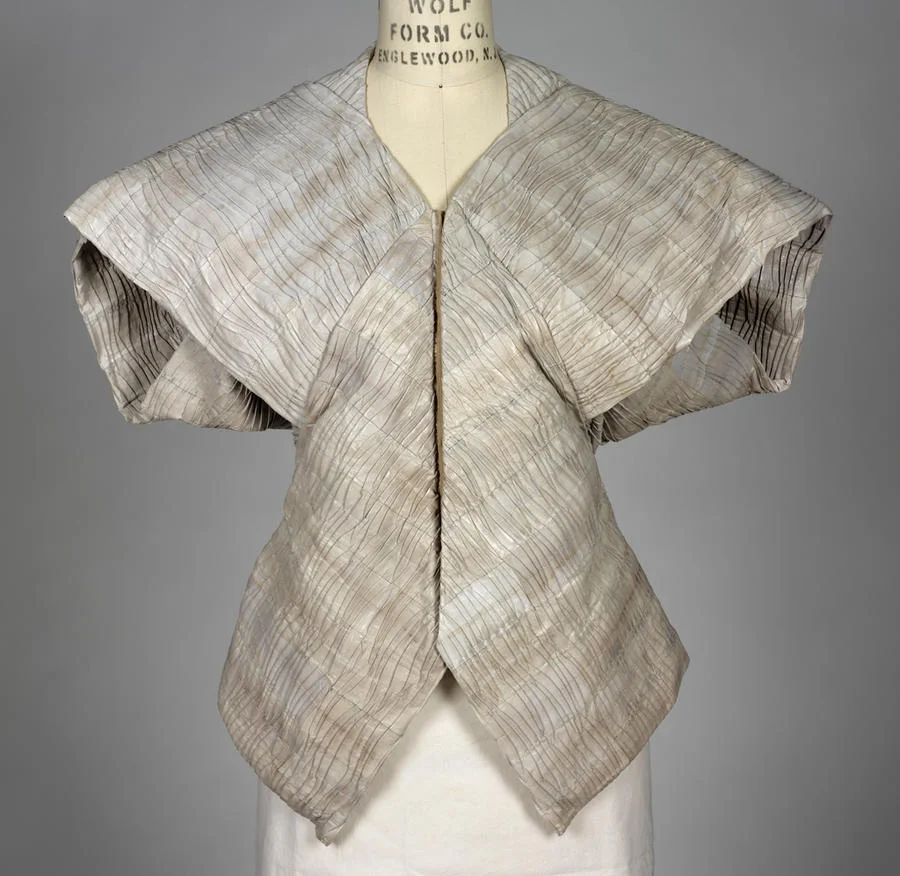
Sculptural blistered leather women jacket by Rick Owens from 2008 exhibited at the RISD Museum
Sculptural draped jacket in blistered leather, cotton, and rayon by Rick Owens (2008). Collection of the Rhode Island School of Design Museum of Art, CC0 1.0 Universal Public Domain Dedication. Owens’ manipulation of washed, treated lambskin and asymmetric funnel necklines established the tactile material grammar of 2000s avant-garde outerwear.

参考文献とさらなる読み物

画像のクレジット

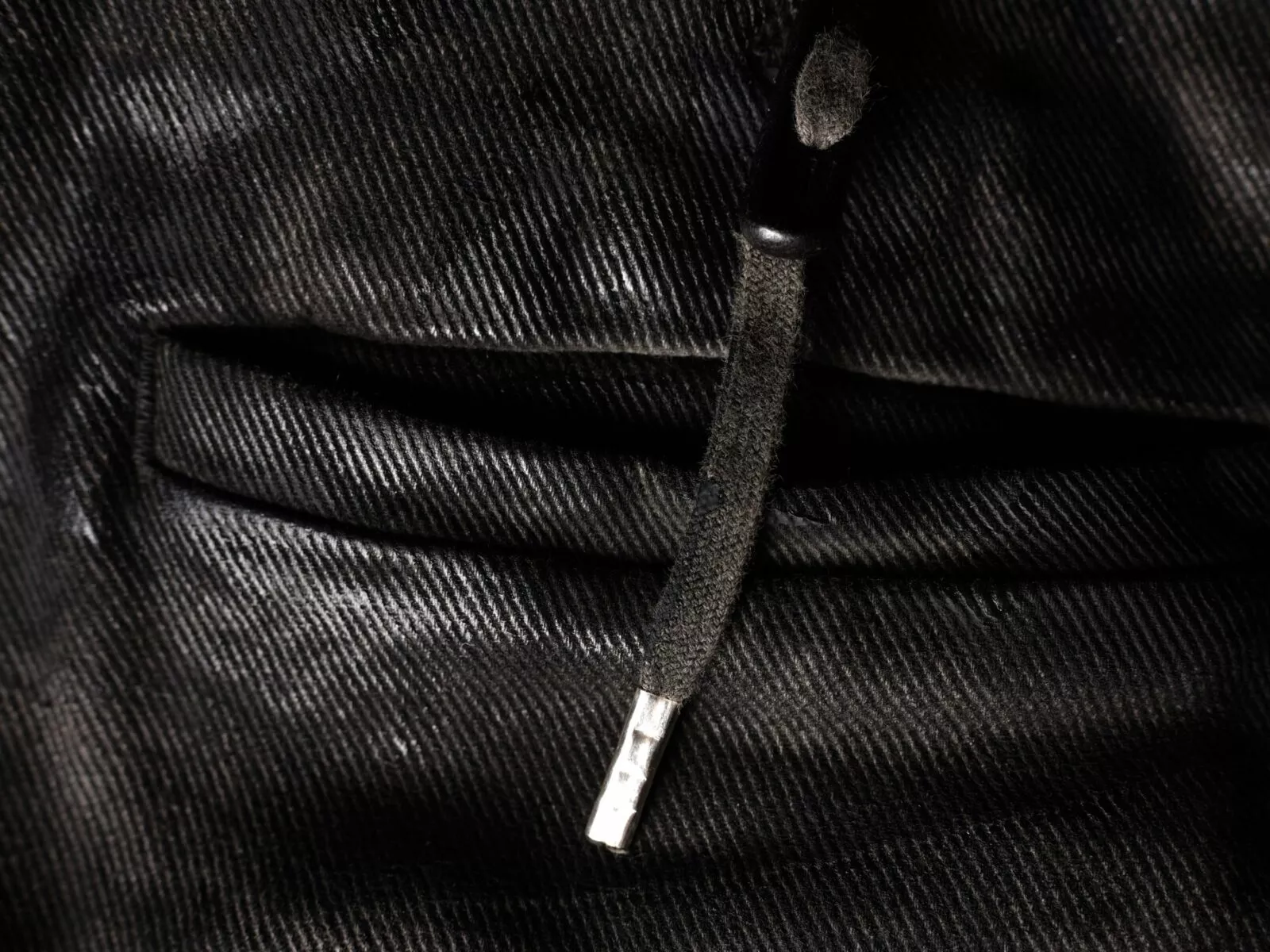
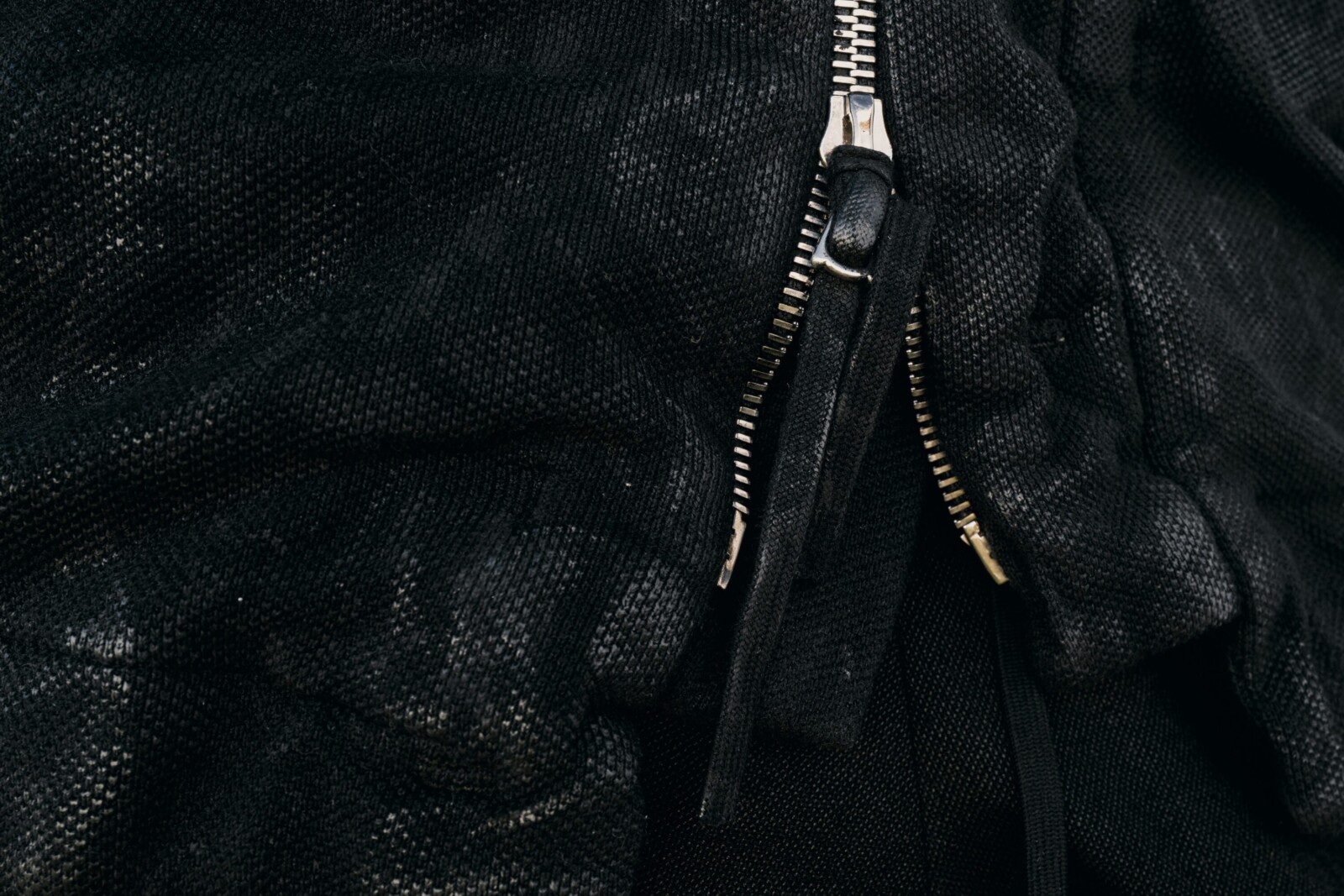
Boris Bidjan Saberi P23パンツ P34ビニールコーティングワックスのクローズアップ

サインアップ - 特典を楽しもう

  • お気に入りのブランド&店舗を保存
  • お気に入りブランドの新商品や限定商品のお知らせを受け取る
  • 限定クーポンコードや割引へのアクセス

ニュースレター

限定メーリングリストに登録して、__PH0__の通知を受け取る 新しいブランドや店舗を特集したときに、__PH0__したときにお知らせを受け取る 厳選した新商品セレクションを公開し、 受け取る 限定プロモーションオファーを直接受信トレイにお届けします。

ブランド

    店舗

      投稿

        商品

          注目の商品

            ナレッジベース

              Boris Bidjan Saberi P23パンツ P34ビニールコーティングワックスのクローズアップ

              サインアップ - 特典を楽しもう

              • お気に入りのブランド&店舗を保存
              • お気に入りブランドの新商品や限定商品のお知らせを受け取る
              • 限定クーポンコードや割引へのアクセス