Darkwear y la escena vanguardista de los 2000
En la primera década del siglo XXI, una subcultura internacional de diseñadores, coleccionistas y teóricos de internet codificó el darkwear: un movimiento estético intransigente basado en la sombra, la distorsión estructural y la materialidad táctil. Naciendo como un rechazo explícito tanto al minimalismo corporativo de finales de los 90 como a la saturación hipercomercial de logotipos de los conglomerados de lujo, el darkwear de los 2000 sintetizó tres linajes vanguardistas distintos: la filosofía monocromática de los Avant-garde japonés, el romanticismo asimétrico de los deconstructivistas belgas, y la antigua cordonería de cuero del movimiento artesanal italiano.. Centrado en visionarios clave como Rick Owens, Tatsuro Horikawa de Julius, y Carol Christian Poell—y amplificado por foros web dedicados como EstiloZeitgeist y Superfuture—el movimiento construyó un universo sartorial alternativo donde la ropa no funcionaba como bienes de consumo estacionales, sino como armadura arquitectónica portátil.
El giro post-milenial hacia la sombra: definiendo el darkwear de los 2000
El amanecer del siglo XXI provocó profundas ansiedades geopolíticas, aceleración tecnológica y desilusión cultural. En respuesta a la logomanía corporativa brillante que dominaba las casas de moda de lujo a finales de los 90, una red internacional de diseñadores y usuarios se retiró a una estética de envoltura protectora. Lo que surgió en París, Tokio, Amberes y Nueva York no fue simplemente una afición por el color negro, sino una ideología de diseño integral conocida retrospectivamente como darkwear.
Lejos de ser una ramificación novedosa de los subculturas post-punk de los 80 o góticas tradicionales, el darkwear de los 2000 fue una manifestación erudita y estructuralmente sofisticada de. anti-moda. Sintetizó tres genealogías vanguardistas históricas:
- No-Color Intelectual Japonés: Construyendo sobre los radicales debuts de París de 1981 de Comme des Garçons y Yohji Yamamoto, el darkwear heredó la convicción de que el negro no es una ausencia de pigmento, sino una paleta expansiva de texturas, tejidos y absorciones de luz variadas.
- Deconstrucción Romántica Belga: Las subversiones estructurales de Ann Demeulemeester y Maison Martin Margiela contribuyeron a una apreciación por los dobladillos crudos deshilachados, siluetas cortadas al sesgo, forros expuestos y códigos de vestimenta históricos melancólicos, resonando con el movimiento más amplio de deconstrucción en la moda.
- Artisanismo Radical Italiano: Los experimentos materiales intransigentes de Maurizio Altieri’y los fabricantes relacionados destacaron el trabajo manual, el corte anatómico, la tinción de objetos y los materiales transformados a través del uso. Esta corriente se convertiría en fundamental para la oscura y materialmente intensa cultura de moda independiente de los años 2000. Carpe Diem, m.a+, y Carol Christian Poell introdujeron el curtido vegetal denso en minerales, el envejecimiento en suelos subterráneos, la tinción de objetos y el calzado escultórico que impregnó las prendas con un peso arcaico y arqueológico.
Dentro del darkwear, la ropa fue concebida como un exoesqueleto. Las siluetas eran deliberadamente alargadas, asimétricas y protectoras, priorizando la comunión táctil interna sobre la exhibición burguesa externa.
Ágora online: arqueología de foros y la taxonomía “goth-ninja”
El auge del darkwear de los 2000 fue inseparable de la infraestructura digital temprana de la web 2.0. A diferencia de los movimientos de moda tradicionales mediados por revistas impresas brillantes y compradores de grandes almacenes, el darkwear fue diseccionado, canonizado y proliferado a través de foros web dedicados—más notablemente EstiloZeitgeist (fundado por Eugene Rabkin en 2006), Superfuture (específicamente los legendarios hilos de menswear “superfalk” y “supertrash”), y Styleforum.
Estos tablones de mensajes sirvieron como universidades digitales descentralizadas. Participantes anónimos de Tokio, Berlín, Melbourne y Los Ángeles intercambiaron escaneos de lookbooks de archivo, analizaron patrones complejos, rastrearon variaciones de lotes de cuero artesanal de curtidurías como Guidi, y examinaron la filosofía de colección de pasarela. Fue dentro de este ecosistema digital hiper-letrado que se acuñó originalmente el descriptor en tono de broma “goth-ninja” Apareciendo por primera vez en.
alrededor de 2005-2006 para describir la síntesis de la drapeada japonesa en capas y la ropa exterior monocromática distópica, el término rápidamente migró al léxico sartorial general. Aunque inicialmente se usó como una caricatura cariñosa para los usuarios que combinaban pantalones de tiro caído voluminosos, cuellos de cowl de línea larga y calzado de gran tamaño, la frase capturó una taxonomía estilística legítima: Superfuture Envoltura Protectora:
- Capuchas, cuellos altos de embudo, polainas y bufandas infinitas envueltas que ocultaban la parte inferior de la cara y alteraban las siluetas de la cabeza. Drapería Cinética:.
- Dobladillos asimétricos y túnicas de jersey que giraban dinámicamente alrededor del cuerpo durante el movimiento hacia adelante, evocando túnicas de artes marciales o vagabundos post-apocalípticos. Calzado de Anclaje:.
- Botas de combate gruesas, calzado con cremallera trasera en espiral, o zapatillas altas acolchadas que anclaban un equilibrio visual pesado en la parte inferior. Botas de combate gruesas, calzado con cremallera trasera en espiral, o zapatillas altas acolchadas que anclaban un equilibrio visual pesado en la parte inferior.
La vanguardia comercial de este movimiento fue sostenida por una red clandestina de boutiques de concepto independientes: Armand Hadida’s L’Éclaireur en París, Karlo Steel’s Atelier New York, Tsuneyuki Ito’s Lift en Tokio, Darklands en Berlín, y H.Lorenzo en West Hollywood. Estos espacios se asemejaban a galerías de arte brutalistas o bóvedas monásticas en lugar de tiendas minoristas convencionales, con interiores de hormigón crudo, accesorios de acero ennegrecido personalizados y una iluminación ambiental tenue que reforzaba el carácter sagrado y ritual de las prendas.
El monarca californiano: Rick Owens y el glamour brutalista
Ningún diseñador individual hizo más para formalizar el vocabulario visual y el impulso internacional del darkwear de los 2000 que el diseñador nacido en el sur de California. Rick Owens. Después de desarrollar su metodología de corte y drapeado en relativa soledad en el centro de Los Ángeles durante los años 90, Owens presentó su primer desfile en París en 2002. Al trasladar su sede a la Place du Palais Bourbon en París en 2003, Owens codificó una estética que él mismo denominó “glunge”—un híbrido perfecto de glamour art-deco de Hollywood y nihilismo grunge.
A lo largo de los 2000, Owens ejecutó una sucesión de colecciones que definieron la era y desmantelaron la sastrería masculina y femenina convencional:
- “Dustulator” (Otoño/Invierno 2006–2007): Presentada en la Stazione Leopolda durante Pitti Uomo en Florencia, esta colección emblemática estableció la proporción clásica del darkwear: túnicas de jersey de seda/viscosa semitransparentes y alargadas que caen más allá del muslo, pantalones cortos de tiro bajo usados sobre leggings térmicos ajustados, y zapatillas arquitectónicas altas y muy acolchadas.
- “Exploder” (Otoño/Invierno 2007–2008): Una exploración de abrigos volumétricos y explosivos. Owens debutó chaquetas de cuello alto con cremalleras asimétricas ocultas, capuchas modulares forradas de piel de oveja, y tratamientos de lavado agrietado que hacían que la piel de cordero pareciera antigua y calcificada.
- “Creatures” (Primavera/Verano 2008) y “Stag” (Otoño/Invierno 2008–2009): Colecciones que perfeccionaron la drapeado arquitectónico cortado al sesgo, el trabajo de parches de cuero geométrico, y formas escultóricas rígidas inspiradas en la arquitectura de hormigón brutalista y vestimentas religiosas.
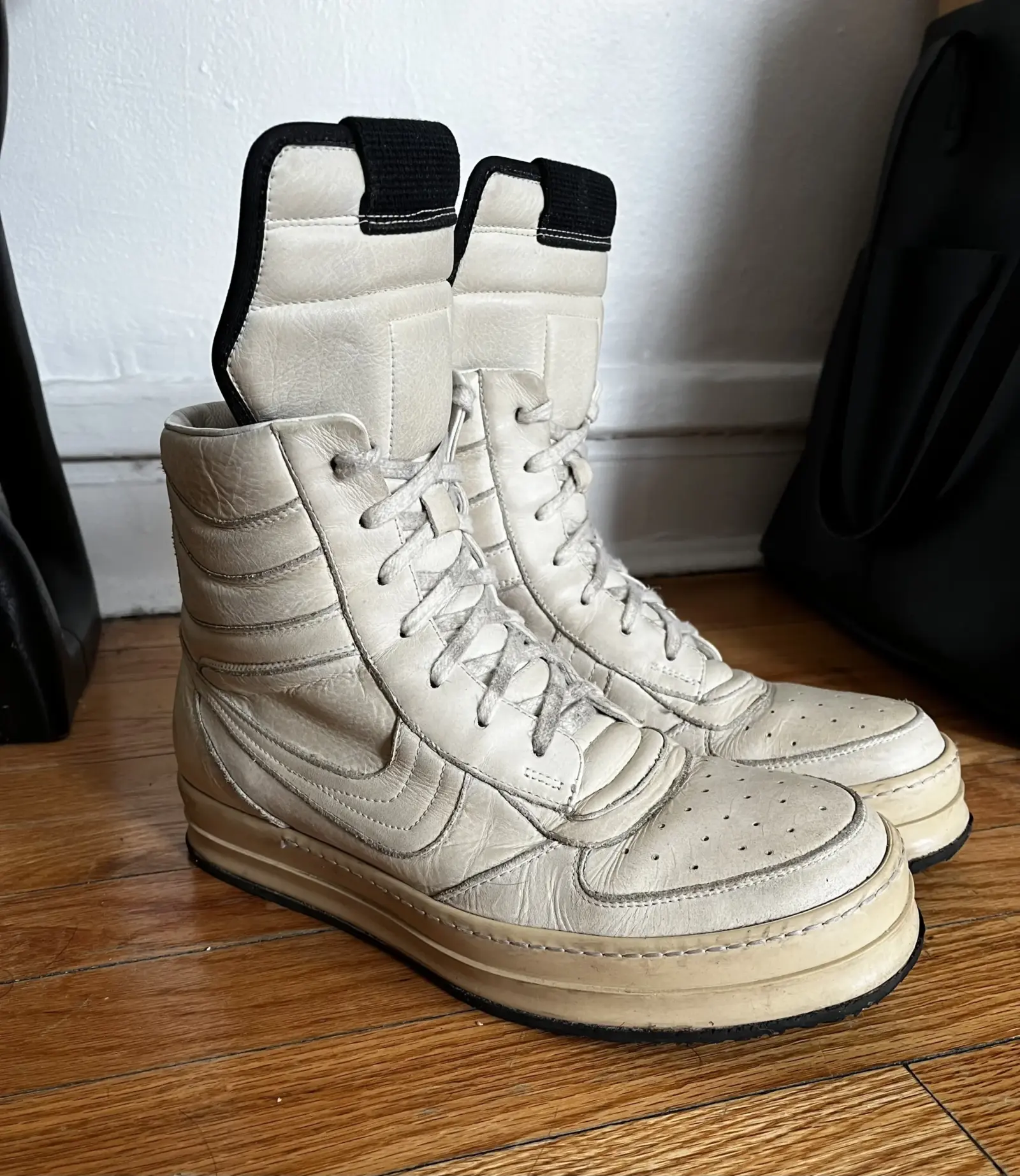
Central a la influencia de Owens en los 2000 fue su ingeniería de calzado. El lanzamiento de la original zapatilla ’Dunk“ de 2006—una enorme bota alta acolchada construida de gruesa piel de ternera y cuero de corte—interrumpió completamente el calzado de lujo. Combinando las proporciones visuales de las zapatillas de baloncesto de los años 80 con el peso ortopédico de los sabatones medievales, la Dunk se convirtió en el santo grial de la cultura de coleccionistas de foros, alcanzando un estatus mítico antes de evolucionar hacia la contemporánea Geobasket.
Subterráneo de Tokio: Julius de Tatsuro Horikawa y el ciber-goticismo
Simultáneamente en Japón, Tatsuro Horikawa estaba construyendo una interpretación aún más agresiva y distópica del darkwear a través de su marca. Julius. Fundada en Tokio en 2001 inicialmente como un proyecto de presentación de arte audiovisual antes de debutar su primera colección en pasarela en 2004, Julius se inspiró fuertemente en la música industrial, la literatura cyberpunk, la escatología budista tibetana, y las contraculturas de clubes techno.
Mientras Rick Owens abordaba el darkwear a través de drapeados clásicos y brutalismo relajado, Horikawa lo abordó a través de cibernética militar y fragmentación arquitectónica:
- El Pantalón Cargo con Máscara de Gas: Quizás la prenda más reconocida en el darkwear japonés, el pantalón con máscara de gas de Julius presentaba enormes bolsillos tridimensionales anclados por correas de nylon y herrajes metálicos industriales. Cortado con costuras espirales anatómicas agresivas, el pantalón se apilaba ajustadamente sobre botas pesadas, evocando la supervivencia en combate en un paisaje industrial.
- La Chaqueta Rider Redefinida: Horikawa reingenió sistemáticamente la chaqueta de motocicleta. Usando piel de oveja curtida con vegetales, piel de caballo, y cuero de vaca pesado tratado con ceras y lavados de pigmento, las chaquetas de cuero de Julius incorporaron envolturas de cuello diagonal alto, cremalleras riri de doble deslizador desfasadas, y cortes de mangas articulados estrechos que forzaban una postura erguida y depredadora.
- Canonización Parisina (2008–2010): Julius pasó al calendario oficial de la Semana de la Moda de París con colecciones como Primavera/Verano 2008 “Insanity in Industrial Inc. #1” y Otoño/Invierno 2008 “Insanity in Industrial Inc. #3”. Estos desfiles solidificaron la estética subterránea de Tokio como una fuerza intelectual capaz de rivalizar con el lujo europeo.
Junto a Julius, contemporáneos japoneses como Tomoaki Okaniwa’s The Viridi-anne (fundada en 2000) y Daisuke Nishida’s DEVOA (fundada en 2006) contribuyeron con un rigor técnico crucial. La Viridi-anne combinó hilos de papel washi japonés tradicional y tintes índigo con sastrería europea, mientras que DEVOA—dirigida por el trasfondo de Nishida en gimnasia profesional y medicina deportiva—aplicó la creación de patrones médicos para diseñar trajes que se movían con completa libertad cinética a pesar de la construcción de lana pesada y piel de caballo.
El eje artesanal europeo: Carol Christian Poell y Carpe Diem
Mientras Owens y Horikawa lograron visibilidad internacional en pasarelas, una rama aún más radical e intransigente del darkwear de los 2000 se desarrolló en ateliers europeos privados. Este eje artesanal fue anclado por el diseñador austriaco Carol Christian Poell (trabajando en Milán) y la influyente Carpe Diem diáspora en Italia.
Poell operó fuera de toda lógica comercial. Rechazando entrevistas y horarios regulares de showroom, Poell trató la ropa como un experimento biomédico intransigente:
- Hardware Biomédico e Industrial: Poell integró bisagras de articulación protésica de titanio, grapas de acero quirúrgico, y recubrimientos de goma directamente en la sastrería clásica. En su legendaria colección de 2004 “Mainstream-Downstream”, los modelos fueron flotados por el canal Naviglio Grande en Milán, llevando prendas cuya estructura reaccionaba directamente a la inmersión acuática.
- Cueros Goteantes y Cordones Teñidos por Objetos: En calzado, Poell desarrolló la icónica “zapatilla goteante” y el derby con espigas de titanio, sumergiendo zapatos de cuero completos en poliuretano líquido que se solidificaba en goteos de goma en forma de estalactita a lo largo de la suela. Sus pantalones de construcción espiral sin costuras y chaquetas de corte de una sola pieza “dead-end” eliminaron la colocación tradicional de costuras a través de un corte de patrones puramente matemático.
- El Legado de Carpe Diem: El taller de Maurizio Altieri en Umbría, que se disolvió alrededor de 2006, dio origen a la próxima generación de maestros artesanos: Maurizio Amadei de m.a+ (quien patentó chaquetas de cuero en espiral de una sola pieza similares al origami y hardware de plata de punto cruz), Luca Laurini de Label Under Construction, y Simone Cecchetto de A1923. Trabajando de cerca con el histórico Guidi 1896 curtiduría, estos artesanos elevaron la artesanía del cuero vegetal a una religión obsesiva.
Además, diseñadores como el croata Damir Doma, que lanzó su marca en París en 2006 tras asistir a Raf Simons y Dirk Schönberger, inyectaron un suave romanticismo monástico en la escena. Los kimonos de cachemira fluidos de Doma, los pantalones de lana de tiro caído y las capas de lino drapeadas ofrecieron un contraste etéreo y contemplativo al agresivo industrialismo de Tokio y Milán.
Gramática material: cordero ampollado, sobreteñidos fríos y geometría de tiro caído
La estética darkwear se unió a través de fronteras internacionales por una sintaxis material y una anatomía estructural notablemente rigurosas:
| Dimensión de Diseño | Prendas de lujo tradicionales | Movimiento darkwear de los 2000 |
|---|---|---|
| Paleta primaria | Tendencias cromáticas estacionales, estampados, logotipos | Variaciones no color: negro profundo, polvo, tiza ampollada, perla, gris hierro |
| Tratamiento del cuero | Piel de ternera lisa, uniforme y curtida al cromo | Pieles de equus curtidas con vegetales, cordero ampollado, canguro impregnado de aceite, crustáceos teñidos de objeto |
| Silhouette superior | Hombros acolchados estructurados, cintura ajustada | Túnicas de jersey semitransparentes alargadas, cuellos de embudo asimétricos altos, abrigos tipo capullo |
| Silhouette inferior | Pantalones de pierna recta o plisados ajustados | Pantalones cortos de tiro caído, pantalones anatómicos con curvas apiladas, dardos articulados en las rodillas |
| Hardware y Cierres | Cremalleras de plástico ocultas, botones decorativos de cuerno | Cremalleras industriales riri/Excella ennegrecidas expuestas, ganchos de hierro oxidado pesados, lazos de orillo crudo |
| Métodos de acabado | Dobladillos limpios sobrehilados, forros fusionados a presión | Bordes cortados en crudo, sobreteñido de prendas (tinto in capo), interiores sin forro, cinta de costura expuesta |
La silueta distintiva era pesada en la parte inferior y verticalmente distorsionada. Al alargar el torso con túnicas de calibre fino y bajar la línea de tiro de los pantalones, los diseñadores rompieron la clásica Proporción Áurea de la moda masculina occidental, creando una silueta alargada y protectora que transmitía un estoicismo silencioso.
Mutación y diáspora: de sombras subterráneas a ropa deportiva técnica
Al final de los 2000, el darkwear comenzó a mutar bajo la influencia de textiles técnicos emergentes y ergonomía de rendimiento. Los diseñadores reconocieron que la silueta darkwear—cuellos altos, articulación modular, capuchas protectoras y bolsillos tácticos—podía unirse a la impermeabilización de alto rendimiento.
Esta realización dio lugar directamente al moderno techwear fenómeno. La marca de Errolson Hugh, que había sido pionera en ropa táctica modular desde 2002, emergió a la prominencia internacional, reemplazando las pieles de caballo curtidas con vegetales por membranas multilayer GORE-TEX Pro, Schoeller Dryskin y bolsillos de gravedad magnética. La estética pasó de una armadura medieval arcaica a una funcionalidad ciberpunk futurista. ACRONYM, Al mismo tiempo, la industria del lujo convencional tomó nota. Las grandes casas comenzaron a apropiarse de las proporciones del darkwear: Riccardo Tisci en Givenchy incorporó iconografía gótica oscura y siluetas alargadas, mientras que cadenas comerciales de alta calle produjeron en masa pantalones harem de tiro caído y sudaderas asimétricas de gran tamaño. Sin embargo, despojados del envejecimiento biológico, el curtido artesanal y la ingeniería de patrones anatómicos que definieron los ateliers originales de Perugia, Tokio y París, el darkwear comercial de moda rápida se desvaneció rápidamente en un pastiche estilístico.
Hoy, el genuino movimiento darkwear de los 2000 se erige como uno de los capítulos más radicales en la historia de la moda moderna. A través de su rechazo a la obsolescencia estacional, su cultivo de comunidades en línea profundamente literarias y su devoción inquebrantable a la arqueología material, el darkwear demostró que la oscuridad en la ropa no es una ausencia de visión, sino una intensa búsqueda arquitectónica de permanencia.
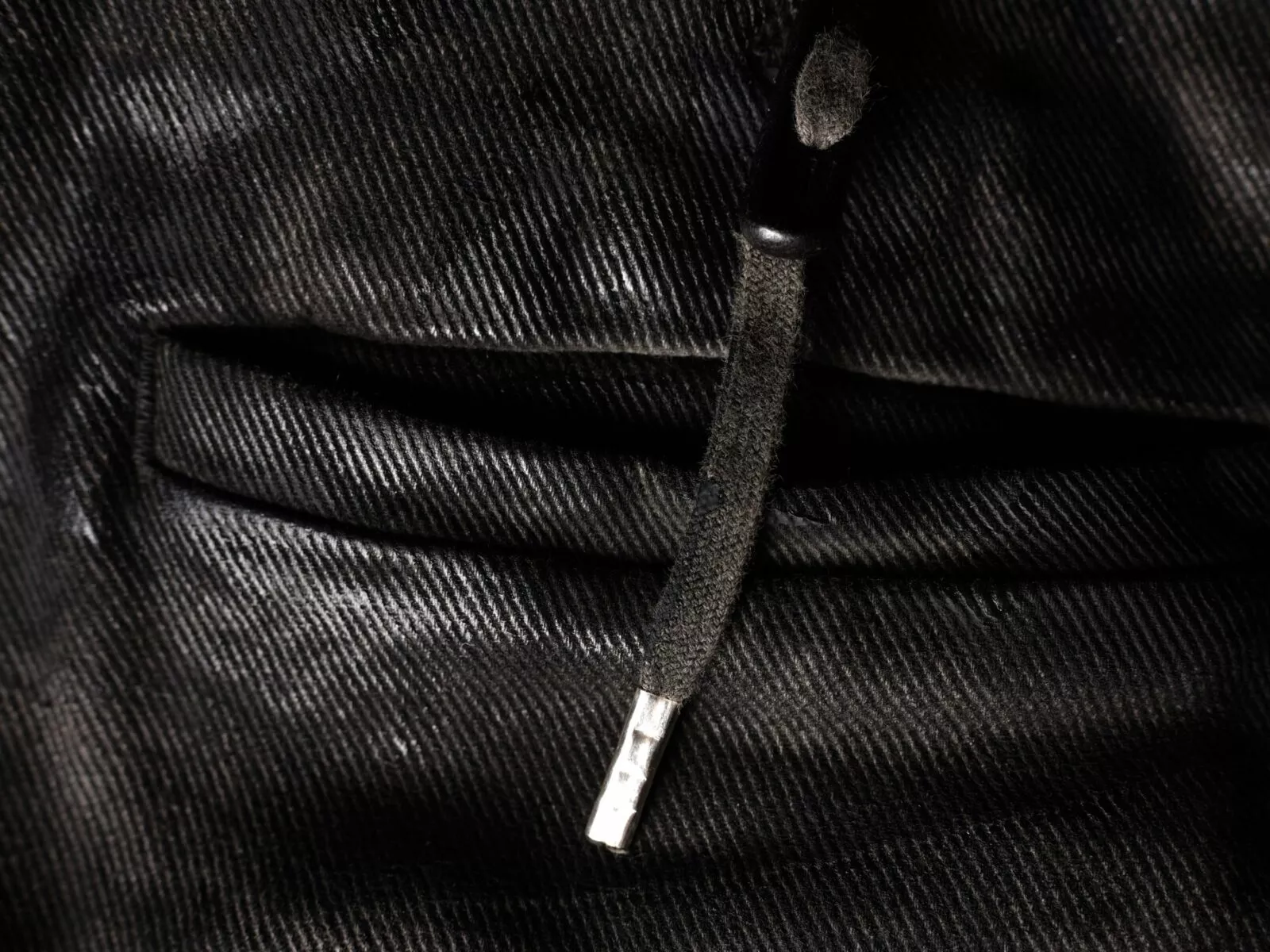
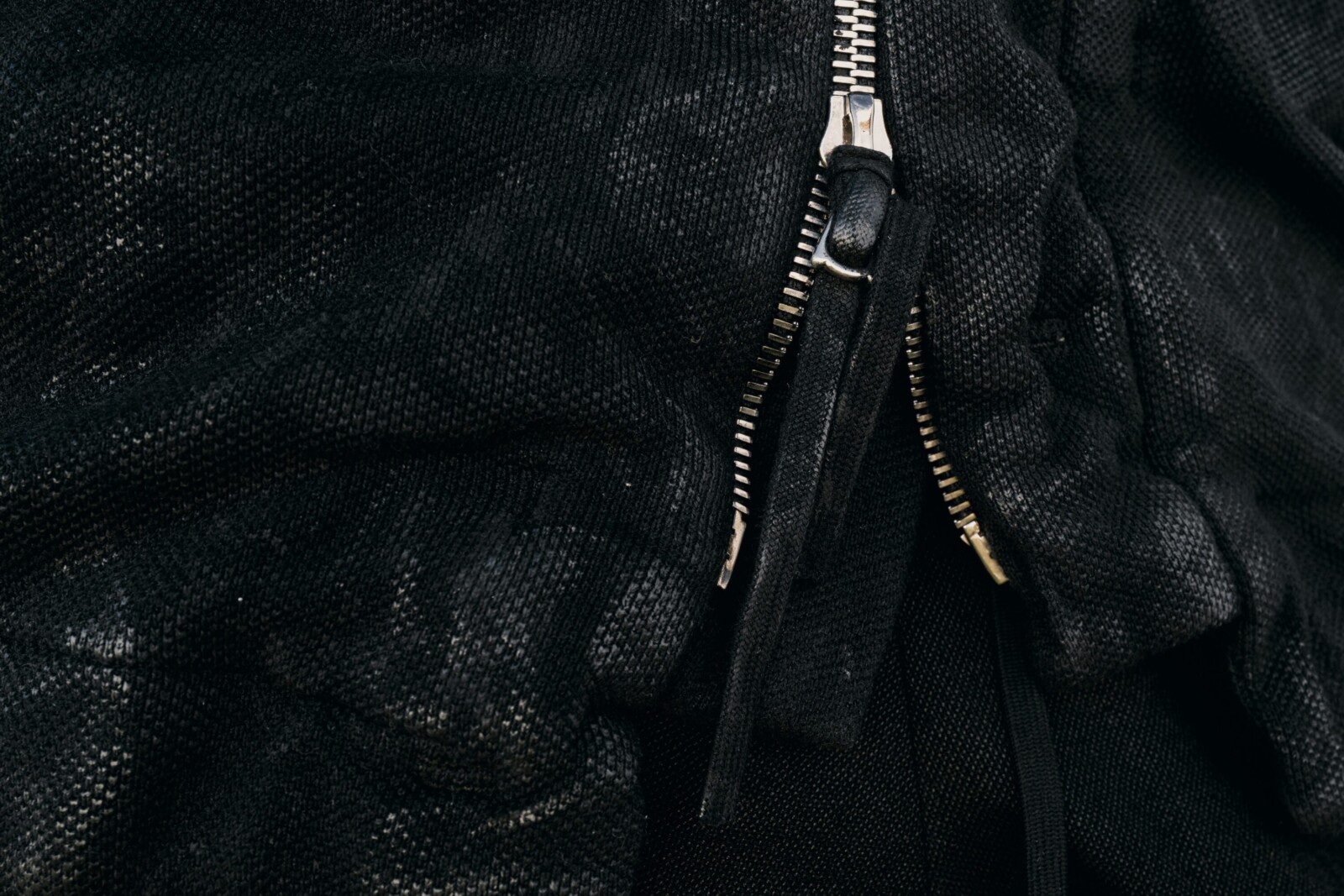
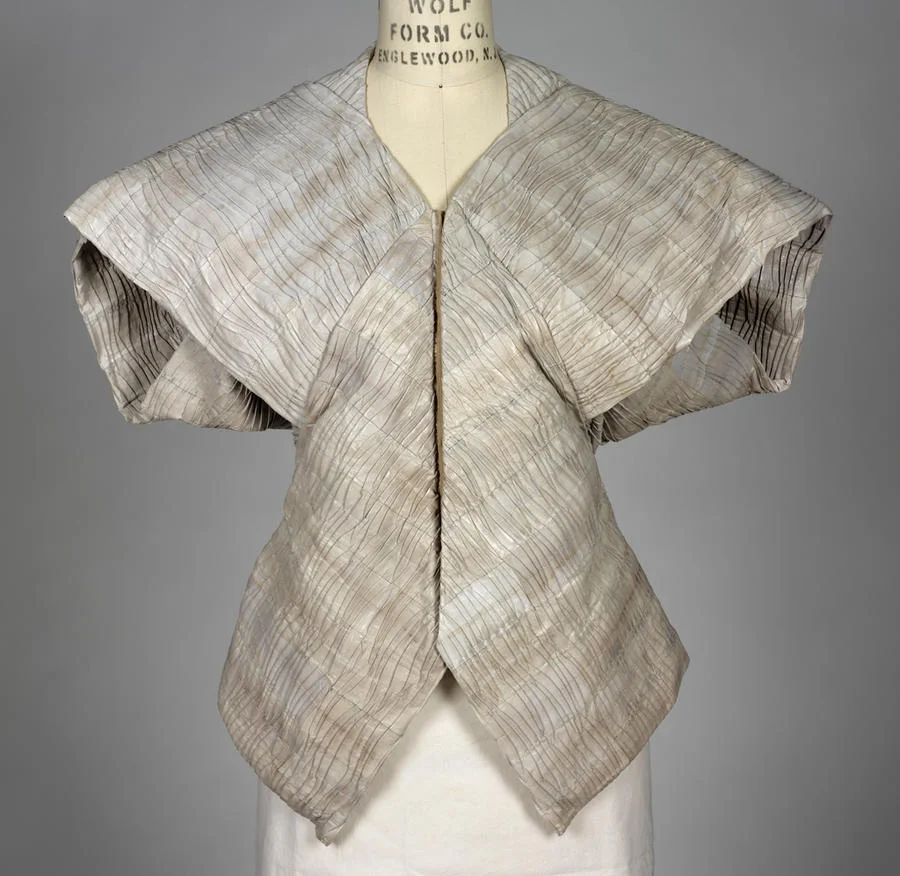
Chaqueta drapeada escultórica en cuero ampollado, algodón y rayón de Rick Owens (2008). Colección del Museo de Arte de la Escuela de Diseño de Rhode Island, CC0 1.0 Dedicación al Dominio Público Universal. La manipulación de Owens de la piel de cordero tratada y lavada y los cuellos de embudo asimétricos estableció la gramática material táctil de la ropa de abrigo de vanguardia de los 2000.
Referencias y lecturas adicionales
- Triennale di Milano — Rick Owens: Subhumano Inhumano Sobrehumano
- Dazed Digital — Rick Owens: Subhumano Inhumano Sobrehumano Análisis Retrospectivo
- Vogue Runway — Archivo de la Colección Ready-to-Wear Otoño 2006 de Rick Owens
- StyleZeitgeist — StyleZeitgeist: La Cultura de la Moda Independiente y de Vanguardia
- Instituto de Vestuario de Kioto (KCI) — Archivos Digitales del Instituto de Vestuario de Kioto: Vestido de Vanguardia del Siglo XX y XXI
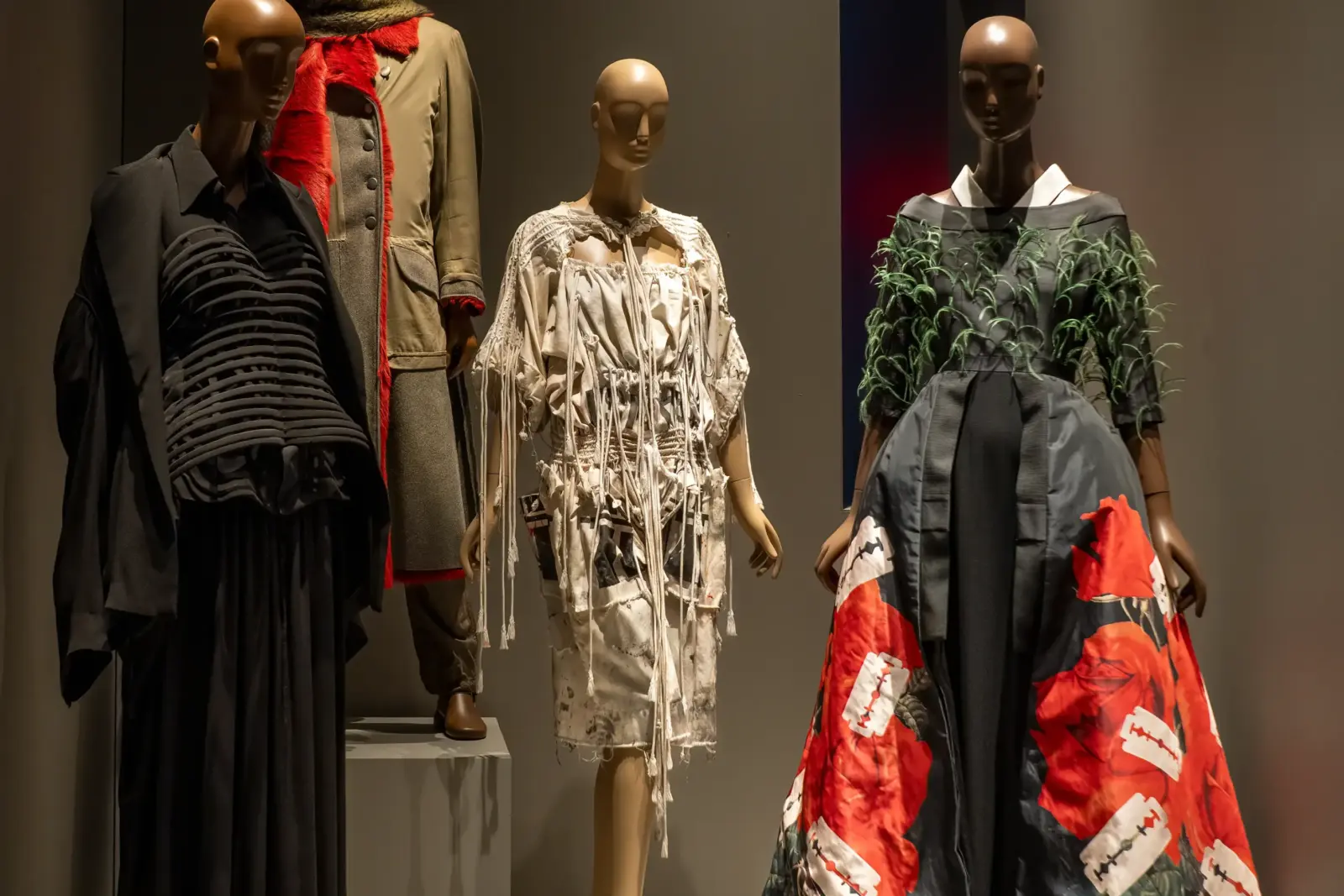
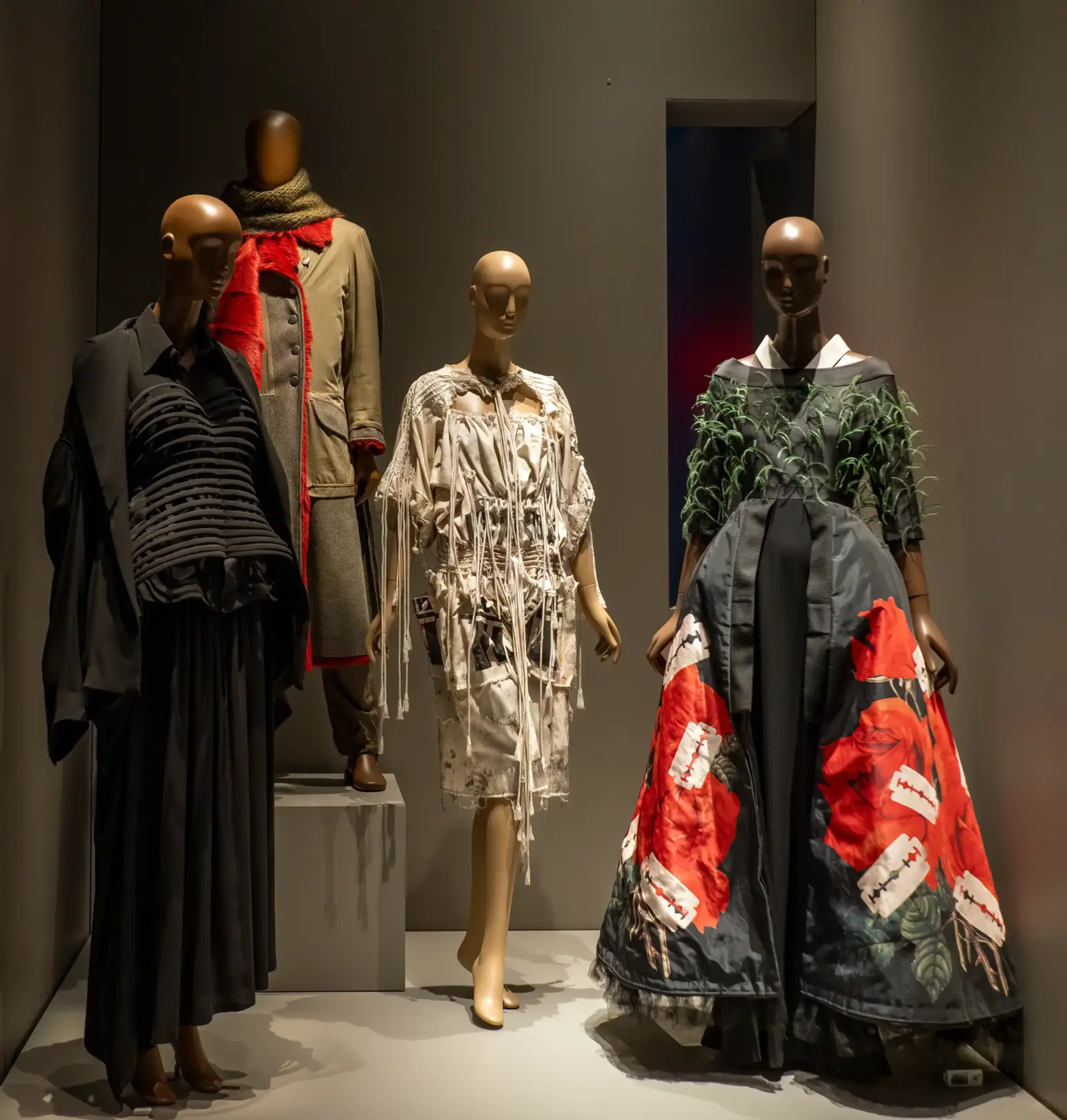
- Fotografía de instalación de la exposición en El Museo en FIT con un conjunto negro de Yohji Yamamoto (Otoño 2006) y un vestido de noche de Jun Takahashi para Undercover. Fotografía de Rhododendrites, Wikimedia Commons, CC BY-SA 4.0.
Créditos de imagen
- Zapatilla original de caña alta "Dunk" de Rick Owens en cuero de leche (circa 2006–2007). Wikimedia Commons, CC BY-SA 4.0.
- Chaqueta escultórica de mujer de Rick Owens en cuero ampollado, algodón y rayón (2008). Museo de Arte de la Escuela de Diseño de Rhode Island. Wikimedia Commons, CC0 1.0 Dedicación al Dominio Público Universal.
- Cómo Rick Owens, Julius, Carol Christian Poell y la cultura de foros en línea forjaron el darkwear de los 2000 en un movimiento de moda arquitectónica duradero.