Darkwear e a cena avant-garde dos anos 2000
Na primeira década do século XXI, uma subcultura internacional de designers, colecionadores e teóricos da internet codificou o darkwear: um movimento estético intransigente fundamentado na sombra, distorção estrutural e materialidade tátil. Surgindo como uma rejeição explícita tanto do minimalismo corporativo do final dos anos 1990 quanto da saturação hipercorporativa de logotipos dos conglomerados de luxo, o darkwear dos anos 2000 sintetizou três linhagens avant-garde distintas: a filosofia monocromática do Avant-garde japonesa, o romantismo assimétrico do desconstrucionistas belgas, e a antiga cordoaria de couro do movimento artesanal italiano. Centrado em visionários-chave, incluindo Rick Owens, Tatsuro Horikawa de Julius, e Carol Christian Poell—e amplificado por fóruns dedicados como StyleZeitgeist e Superfuture—o movimento construiu um universo sartorial alternativo onde as roupas funcionavam não como bens de consumo sazonais, mas como armaduras arquitetônicas vestíveis.
A mudança pós-milenar para a sombra: definindo o darkwear dos anos 2000
O amanhecer do século XXI provocou profundas ansiedades geopolíticas, aceleração tecnológica e desilusão cultural. Em resposta à logomania corporativa e polida que dominava as casas de moda de luxo no final dos anos 1990, uma rede internacional de designers e usuários se retirou para uma estética de proteção. O que surgiu em Paris, Tóquio, Antuérpia e Nova York não foi apenas uma afeição pela cor preta, mas uma ideologia de design abrangente conhecida retrospectivamente como darkwear.
Longe de ser um desdobramento novidade dos subculturas pós-punk dos anos 1980 ou góticas tradicionais, o darkwear dos anos 2000 foi uma manifestação erudita e estruturalmente sofisticada de anti-moda. Ele sintetizou três genealogias avant-garde históricas:
- Não-Cor Intelectual Japonesa: Baseando-se nas estreias radicais de Paris em 1981 de Comme des Garçons e Yohji Yamamoto, o darkwear herdou a convicção de que o preto não é uma ausência de pigmento, mas uma paleta expansiva de texturas, tramas e absorções de luz variadas.
- Desconstrução Romântica Belga: As subversões estruturais de Ann Demeulemeester e Maison Martin Margiela contribuíram para uma apreciação por barras cruas desfiadas, silhuetas cortadas em viés, forros expostos e códigos de vestimenta históricos melancólicos, ecoando o movimento mais amplo de deconstrução na moda.
- Artisanalismo Radical Italiano: Os experimentos materiais intransigentes de Maurizio Altieri’s Carpe Diem, m.a+, e Carol Christian Poell introduziram o curtimento vegetal denso em minerais, envelhecimento em solo subterrâneo, tingimento de objetos e calçados esculturais que imbuíram as roupas com um peso arcaico e arqueológico.
Dentro do darkwear, a roupa foi concebida como um exoesqueleto. As silhuetas eram deliberadamente alongadas, assimétricas e protetoras, priorizando a comunhão tátil interna em vez da exibição burguesa externa.
Ágora online: arqueologia de fóruns e a taxonomia “goth-ninja”
A ascensão do darkwear dos anos 2000 foi inseparável da infraestrutura digital do início da web 2.0. Ao contrário dos movimentos de moda tradicionais mediados por revistas de moda brilhantes e compradores de lojas de departamento, o darkwear foi dissecado, canonizado e proliferado através de fóruns dedicados na web—mais notavelmente StyleZeitgeist (fundado por Eugene Rabkin em 2006), Superfuture (especificamente os lendários tópicos de moda masculina “superfalk” e “supertrash”), e Styleforum.
Esses fóruns serviram como universidades digitais descentralizadas. Participantes anônimos de Tóquio, Berlim, Melbourne e Los Angeles trocaram escaneamentos de lookbooks arquivados, analisaram complexos padrões de modelagem, rastrearam variações de lotes de couro artesanal de curtumes como Guidi, e examinaram a filosofia das coleções de passarela. Foi dentro desse ecossistema digital hiper-letrado que o termo descritivo bem-humorado “goth-ninja” foi originalmente cunhado.
Aparecendo pela primeira vez em Superfuture cerca de 2005–2006 para descrever a síntese da drapeado em camadas japonês e do vestuário monocromático distópico, o termo rapidamente migrou para o léxico sartorial geral. Embora inicialmente usado como uma caricatura afetuosa para usuários que combinavam calças largas de entrepernas caídas, golas longas e calçados oversized, a frase capturou uma taxonomia estilística legítima:
- Embalagem Protetora: Capuzes, colares altos, perneiras e cachecóis envoltos que ocultavam o rosto inferior e alteravam as silhuetas da cabeça.
- Drapeado Cinético: Bordas assimétricas e tunicas de jersey que giravam dinamicamente ao redor do corpo durante o movimento para frente, evocando robes de artes marciais ou andarilhos pós-apocalípticos.
- Calçados de Ancoragem: Botas de combate robustas, calçados com zíper traseiro em espiral ou tênis de cano alto acolchoados que ancoravam o equilíbrio visual pesado na parte inferior.
The vanguarda comercial desse movimento foi sustentada por uma rede clandestina de boutiques de conceito independentes: Armand Hadida’s L’Éclaireur em Paris, Karlo Steel’s Atelier New York, Tsuneyuki Ito’s Lift em Tóquio, Darklands em Berlim, e H.Lorenzo em West Hollywood. Esses espaços se pareciam mais com galerias de arte brutalistas ou vaults monásticos do que com lojas de varejo convencionais, apresentando interiores de concreto cru, acessórios de aço escurecido sob medida e iluminação ambiente suave que reforçava o caráter sagrado e ritualístico das roupas.
O monarca californiano: Rick Owens e o glamour brutalista
Nenhum designer individual fez mais para formalizar o vocabulário visual e o impulso internacional do darkwear dos anos 2000 do que o designer nascido no sul da Califórnia. Rick Owens. Depois de desenvolver sua metodologia de corte e drapeado em relativa isolamento no centro de Los Angeles durante os anos 1990, Owens apresentou seu primeiro desfile na Paris Fashion Week em 2002. Mudando sua sede para a Place du Palais Bourbon em Paris em 2003, Owens codificou uma estética que ele chamou famosamente de “glunge”—um híbrido perfeito do glamour art-deco de Hollywood e do niilismo grunge.
Durante os anos 2000, Owens executou uma sucessão de coleções que definiram a era e desmontaram a alfaiataria masculina e feminina convencional:
- “Dustulator” (Outono/Inverno 2006–2007): Apresentada na Stazione Leopolda durante o Pitti Uomo em Florença, essa coleção marcante estabeleceu a proporção clássica do darkwear: túnicas de jersey de seda/viscose semi-transparentes e alongadas caindo além da coxa, shorts pod de entreperna baixa usados sobre leggings térmicas justas, e tênis arquitetônicos de cano alto pesadamente acolchoados.
- “Exploder” (Outono/Inverno 2007–2008): Uma exploração de roupas externas explosivas e volumétricas. Owens estreou jaquetas de gola alta com zíperes assimétricos ocultos, capuzes modulares forrados de pelagem e tratamentos de lavagem que faziam o couro de cordeiro parecer antigo e calcificado.
- “Creatures” (Primavera/Verão 2008) e “Stag” (Outono/Inverno 2008–2009): Coleções que aperfeiçoaram o drapeado arquitetônico em corte enviesado, o trabalho em couro geométrico e formas esculturais rígidas inspiradas na arquitetura brutalista de concreto e vestimentas religiosas.
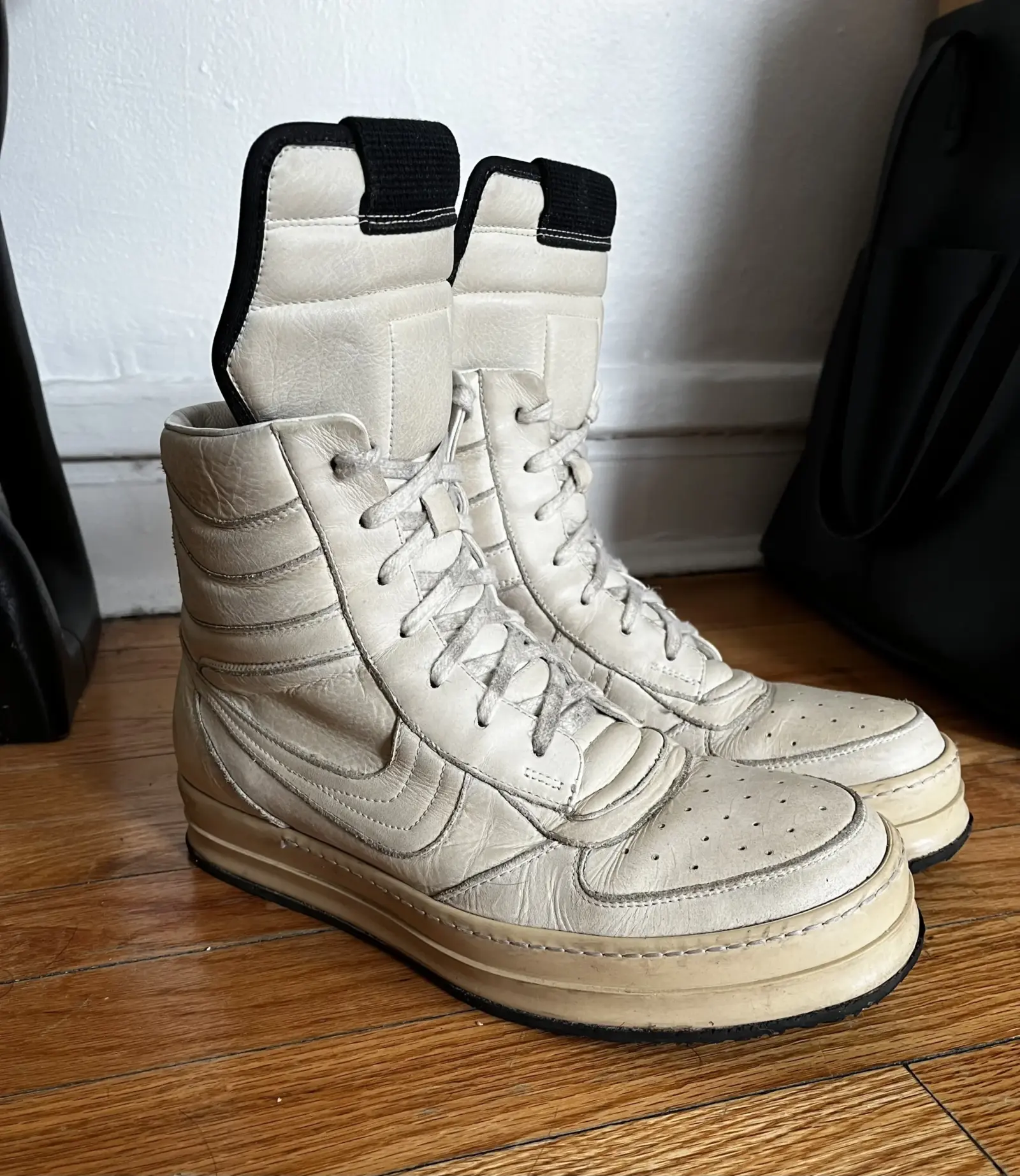
Central para a influência de Owens nos anos 2000 estava sua engenharia de calçados. O lançamento do original tênis ’Dunk“ de 2006—um enorme tênis de cano alto acolchoado construído a partir de couro de bezerro e crustáceo espessos com um aplique lateral de couro em formato de concha—desestabilizou completamente o mercado de calçados de luxo. Combinando as proporções visuais dos tênis de basquete dos anos 1980 com o peso ortopédico dos sabatons medievais, o Dunk se tornou o santo graal da cultura de colecionadores de fóruns, alcançando status mitológico antes de evoluir para o contemporâneo Geobasket.
Underground de Tóquio: Julius de Tatsuro Horikawa e o cyber-gothicismo
Simultaneamente no Japão, Tatsuro Horikawa estava construindo uma interpretação ainda mais agressiva e distópica do darkwear através de sua marca. Julius. Fundada em Tóquio em 2001 inicialmente como um projeto de apresentação de arte audiovisual antes de estrear sua primeira coleção de desfile em 2004, Julius se inspirou fortemente na música industrial, na literatura cyberpunk, na escatologia budista tibetana e nas contraculturas de clubes techno.
Enquanto Rick Owens abordava o darkwear através do drapeado clássico e do brutalismo relaxado, Horikawa o abordou através da cibernética militar e da fragmentação arquitetônica:
- O Calça Cargo com Máscara de Gás: Talvez a peça de roupa mais reconhecida no darkwear japonês, a calça de máscara de gás Julius apresentava enormes bolsos de pregas tridimensionais ancorados por tiras de nylon e hardware metálico industrial. Cortada com costuras espiraladas anatômicas agressivas, a calça se empilhava firmemente sobre botas pesadas, evocando sobrevivência em combate em um deserto industrial.
- A Jaqueta Rider Redefinida: Horikawa reengenharia sistematicamente a jaqueta de motocicleta. Usando couro de ovelha curtido com vegetais, couro de cavalo e couro de vaca pesado tratado com cera e lavagens de pigmento, as jaquetas de couro Julius incorporavam envoltórios de gola diagonal alta, zíperes riri de dupla deslizamento desalinhados e cortes de mangas articulados estreitos que forçavam uma postura ereta e predatória.
- Canonização Parisiense (2008–2010): Julius transitou para o calendário oficial da Paris Fashion Week com coleções como Primavera/Verão 2008 “Insanity in Industrial Inc. #1” e Outono/Inverno 2008 “Insanity in Industrial Inc. #3”. Esses desfiles solidificaram a estética underground de Tóquio como uma força intelectual capaz de rivalizar com o luxo europeu de alta qualidade.
Juntamente com Julius, contemporâneos japoneses como Tomoaki Okaniwa’s The Viridi-anne (fundada em 2000) e Daisuke Nishida’s DEVOA (fundada em 2006) contribuíram com rigor técnico crucial. A Viridi-anne combinou fios de papel washi japonês tradicionais e overdyes de índigo com alfaiataria europeia, enquanto a DEVOA—liderada pela formação de Nishida em ginástica profissional e medicina esportiva—aplicou modelagem médica para criar ternos que se moviam com total liberdade cinética, apesar da construção pesada em lã e couro de cavalo.
O eixo artesanal europeu: Carol Christian Poell e Carpe Diem
Enquanto Owens e Horikawa alcançaram visibilidade internacional nas passarelas, um ramo ainda mais radical e intransigente do darkwear dos anos 2000 se desenrolou em ateliês europeus privados. Este eixo artesanal foi ancorado pelo designer austríaco Carol Christian Poell (trabalhando em Milão) e pela influente Carpe Diem diáspora na Itália.
Poell operou fora de toda lógica comercial. Recusando entrevistas e horários regulares de showroom, Poell tratou a roupa como um experimento biomédico intransigente:
- Hardware Biomédico e Industrial: Poell integrou dobradiças de articulação prostética de titânio, grampos de aço cirúrgico e revestimentos de borracha diretamente na alfaiataria clássica. Em sua lendária coleção de 2004 “Mainstream-Downstream”, modelos foram flutuados pelo canal Naviglio Grande em Milão, vestindo roupas cuja estrutura reagia diretamente à submersão aquática.
- Drip-Rubber e Cordwaining Tingido de Objeto: Em calçados, Poell desenvolveu o icônico “tênis drip” e derby com hastes de titânio, mergulhando sapatos de couro completos em poliuretano líquido que se solidificava em gotejamentos de borracha semelhantes a estalactites ao longo da sola. Suas calças de construção espiral sem emenda e jaquetas de corte em uma peça “dead-end” eliminaram a colocação tradicional de costuras através de um corte de padrão puramente matemático.
- O Legado Carpe Diem: A oficina umbra de Maurizio Altieri, que se desfez por volta de 2006, gerou a próxima geração de mestres artesãos: Maurizio Amadei de m.a+ (que patenteou jaquetas de couro em espiral de uma peça semelhantes a origami e hardware prateado em ponto cruz), Luca Laurini de Label Under Construction, e Simone Cecchetto de A1923. Trabalhando em estreita colaboração com o histórico Guidi 1896 na tannery, esses artesãos elevaram a habilidade de trabalhar com couro vegetal a uma religião cultuosa obsessiva.
Além disso, designers como o croata Damir Doma, que lançou sua marca em Paris em 2006 após ajudar Raf Simons e Dirk Schönberger, injetaram um romantismo suave e monástico na cena. Os kimonos de cashmere fluidos, as calças de lã de entreperna caída e as capas de linho drapeadas proporcionaram um contraste etéreo e contemplativo ao agressivo industrialismo de Tóquio e Milão.
Gramática material: cordeiro bolha, overdyes frios e geometria de entrepernas caídas
A estética darkwear foi unida através de fronteiras internacionais por uma sintaxe material e anatomia estrutural notavelmente rigorosas:
| Dimensão do Design | Roupas de Luxo Tradicional | Movimento Darkwear dos anos 2000 |
|---|---|---|
| Paleta Primária | Tendências cromáticas sazonais, estampas, logotipos | Variações de não-cor: preto profundo, poeira, giz bolhas, pérola, cinza ferro |
| Tratamento de Couro | Couro de bezerro liso, uniforme e curtido em cromo | Peles de equus curtidas com vegetais, cordeiro bolhas, canguru impregnado de óleo, crosta tingida de objeto |
| Silhueta Superior | Ombros estruturados e acolchoados, cintura ajustada | Túnicas de jersey semi-transparentes e alongadas, golas de funil assimétricas altas, casacos tipo casulo |
| Silhueta Inferior | Calças plissadas de perna reta ou afuniladas | Shorts pod de entreperna caída, calças anatômicas pesadamente empilhadas, darts articulados nos joelhos |
| Hardware & Fechos | Zíperes plásticos ocultos, botões decorativos de chifre | Zíperes industriais riri/Excella expostos e escurecidos, ganchos de ferro oxidado pesados, laços de borda crua |
| Métodos de Acabamento | Bordas limpas com overlock, forros fundidos a pressão | Bordas cortadas cruas, tingimento de roupas (tinto in capo), interiores sem forro, fita de costura exposta |
A silhueta distinta era pesada na parte inferior e verticalmente distorcida. Ao alongar o torso com túnicas de malha fina e abaixar a linha da entreperna das calças, os designers quebraram a clássica Proporção Áurea da moda masculina ocidental, criando uma silhueta alongada e protetora que transmitia um estoicismo silencioso.
Mutação e diáspora: das sombras subterrâneas ao vestuário esportivo técnico
Ao final dos anos 2000, o darkwear começou a se transformar sob a influência de têxteis técnicos emergentes e ergonomia de desempenho. Os designers reconheceram que a silhueta darkwear—golas altas, articulação modular, capuzes protetores e bolsos cargo táticos—poderia ser unida a impermeabilização de alto desempenho.
Essa realização deu origem diretamente ao moderno techwear fenômeno. A marca de Errolson Hugh, que havia pioneiramente desenvolvido roupas táticas modulares desde 2002, emergiu para a proeminência internacional, substituindo peles de cavalo curtidas com vegetais desgastadas por membranas GORE-TEX Pro de múltiplas camadas, Schoeller Dryskin e bolsos magnéticos de gravidade. A estética transitou de armaduras medievais arcaicas para funcionalidade futurista cyberpunk. ACRONYM, Simultaneamente, a indústria de luxo mainstream começou a notar. Grandes marcas começaram a cooptar as proporções do darkwear: Riccardo Tisci na Givenchy incorporou iconografia gótica escura e silhuetas alongadas, enquanto cadeias comerciais de fast fashion produziram em massa calças harem de entreperna caída e hoodies oversized assimétricos. No entanto, desprovido do envelhecimento biológico, do curtimento artesanal e da engenharia de padrões anatômicos que definiam os ateliês originais de Perugia, Tóquio e Paris, o darkwear comercial de fast fashion rapidamente se desfez em um pastiche estilístico.
Hoje, o genuíno movimento darkwear dos anos 2000 se destaca como um dos capítulos mais radicais na história da moda moderna. Através de sua rejeição à obsolescência sazonal, seu cultivo de comunidades online profundamente letradas e sua devoção intransigente à arqueologia material, o darkwear provou que a escuridão na roupa não é uma ausência de visão, mas uma intensa busca arquitetônica pela permanência.
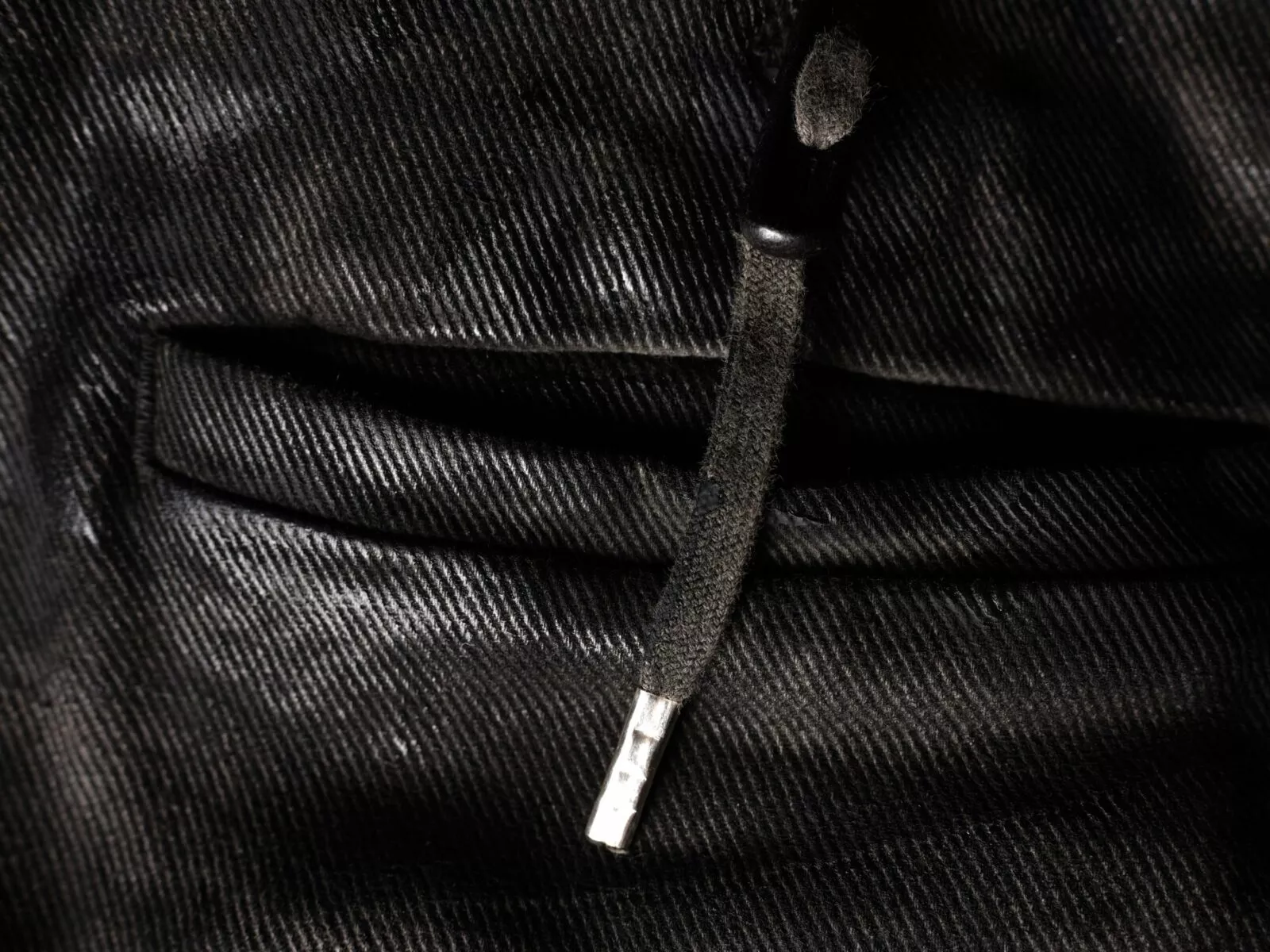
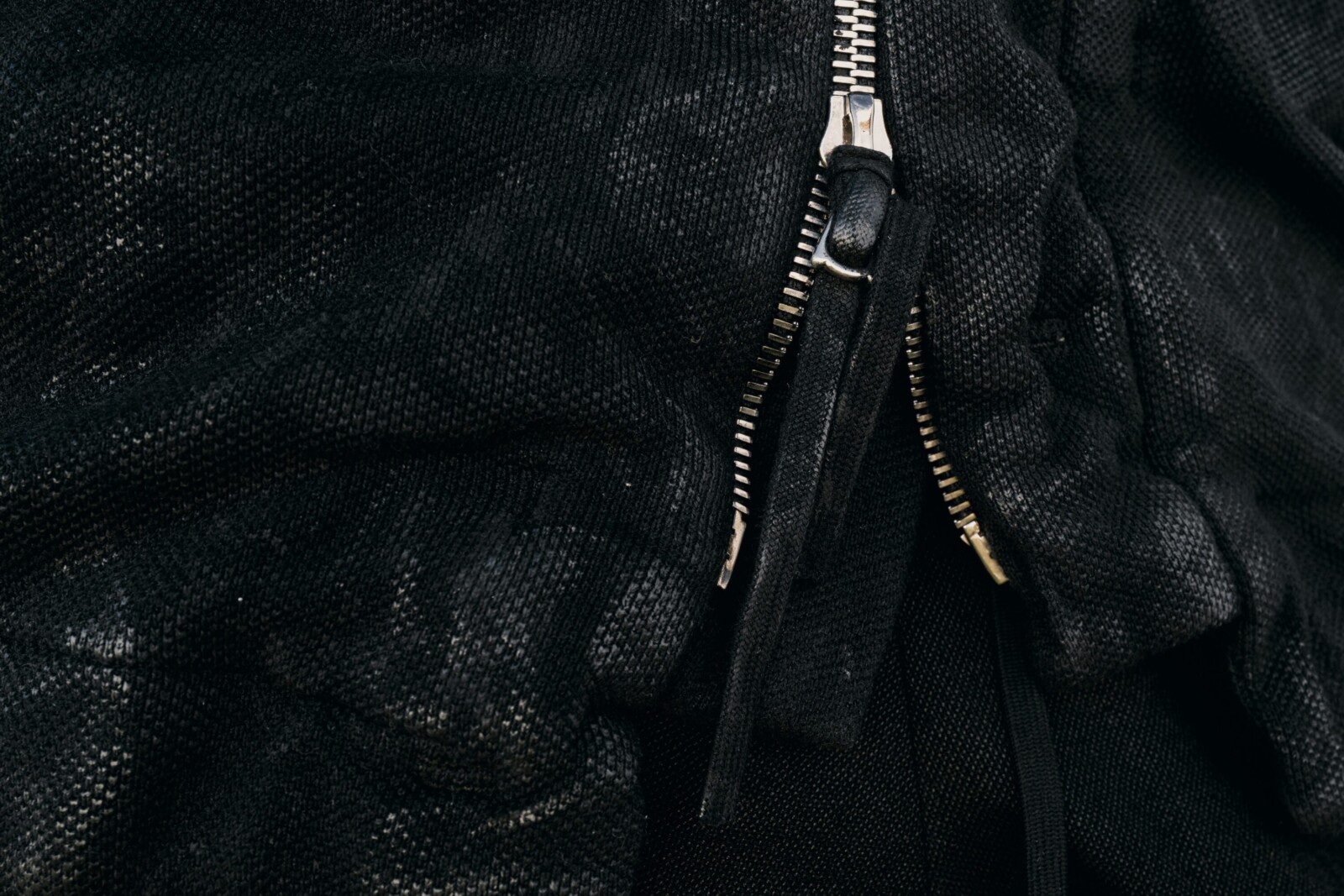
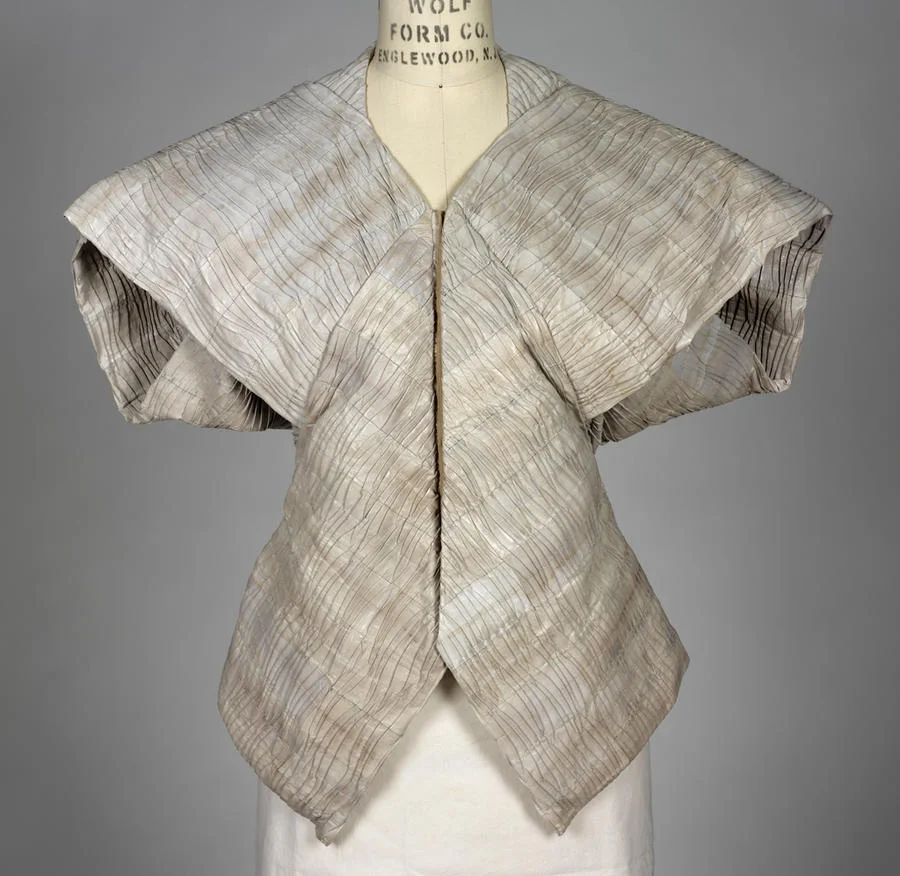
Jaqueta drapeada escultural em couro bolhas, algodão e rayon de Rick Owens (2008). Coleção do Museu de Arte da Rhode Island School of Design, CC0 1.0 Dedicação ao Domínio Público Universal. A manipulação de Owens de pele de cordeiro lavada e tratada e golas assimétricas de funil estabeleceu a gramática material tátil do vestuário de outono avant-garde dos anos 2000.
Referências e leitura adicional
- Triennale di Milano — Rick Owens: Subhumano Inumano Superhumano
- Dazed Digital — Rick Owens: Subhumano Inumano Superhumano Análise Retrospectiva
- Vogue Runway — Arquivo da Coleção Pronta para Vestir Outono 2006 de Rick Owens
- StyleZeitgeist — StyleZeitgeist: A Cultura da Moda Independente e Avant-Garde
- Kyoto Costume Institute (KCI) — Arquivos Digitais do Kyoto Costume Institute: Vestuário Avant-Garde do Século 20 e 21
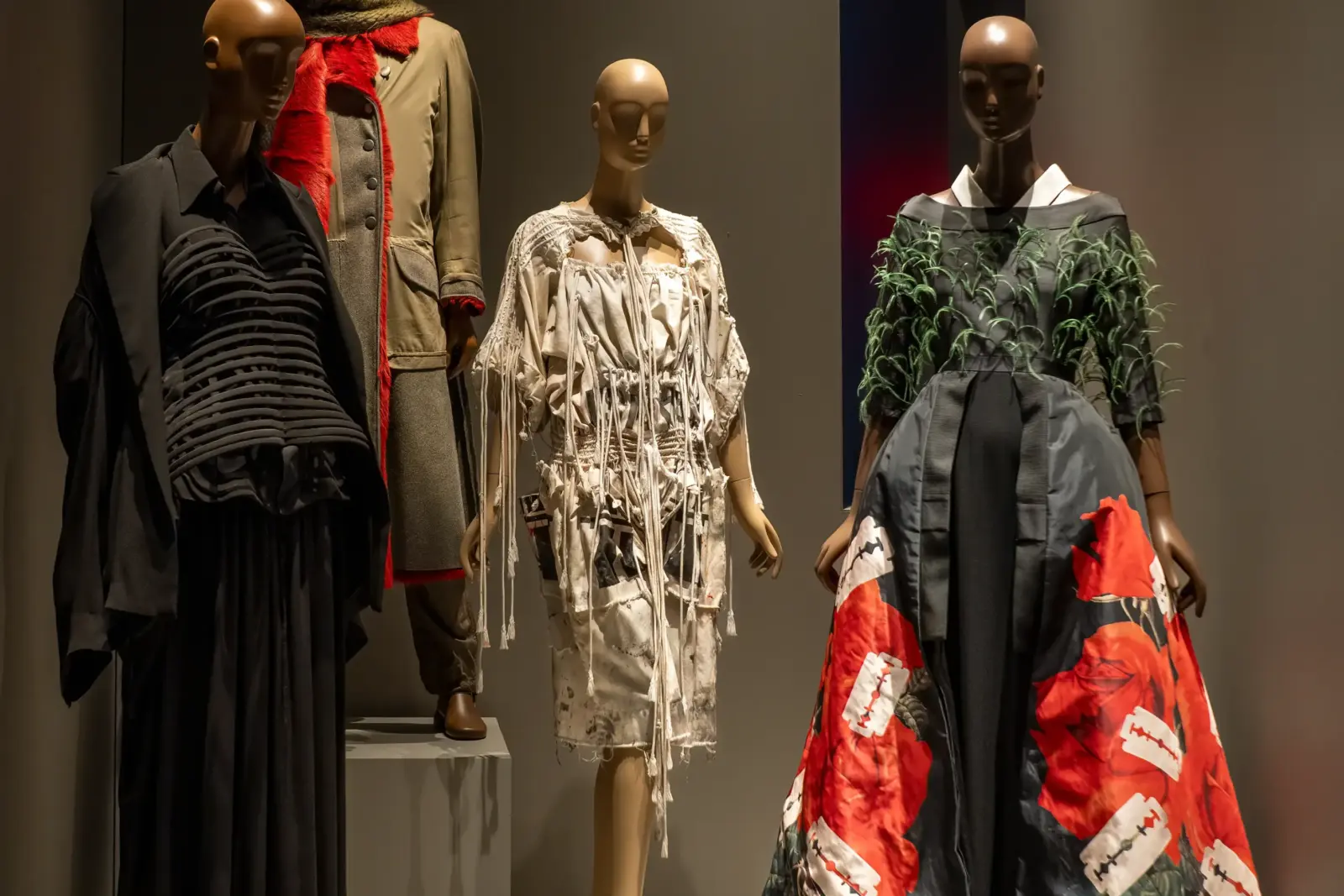
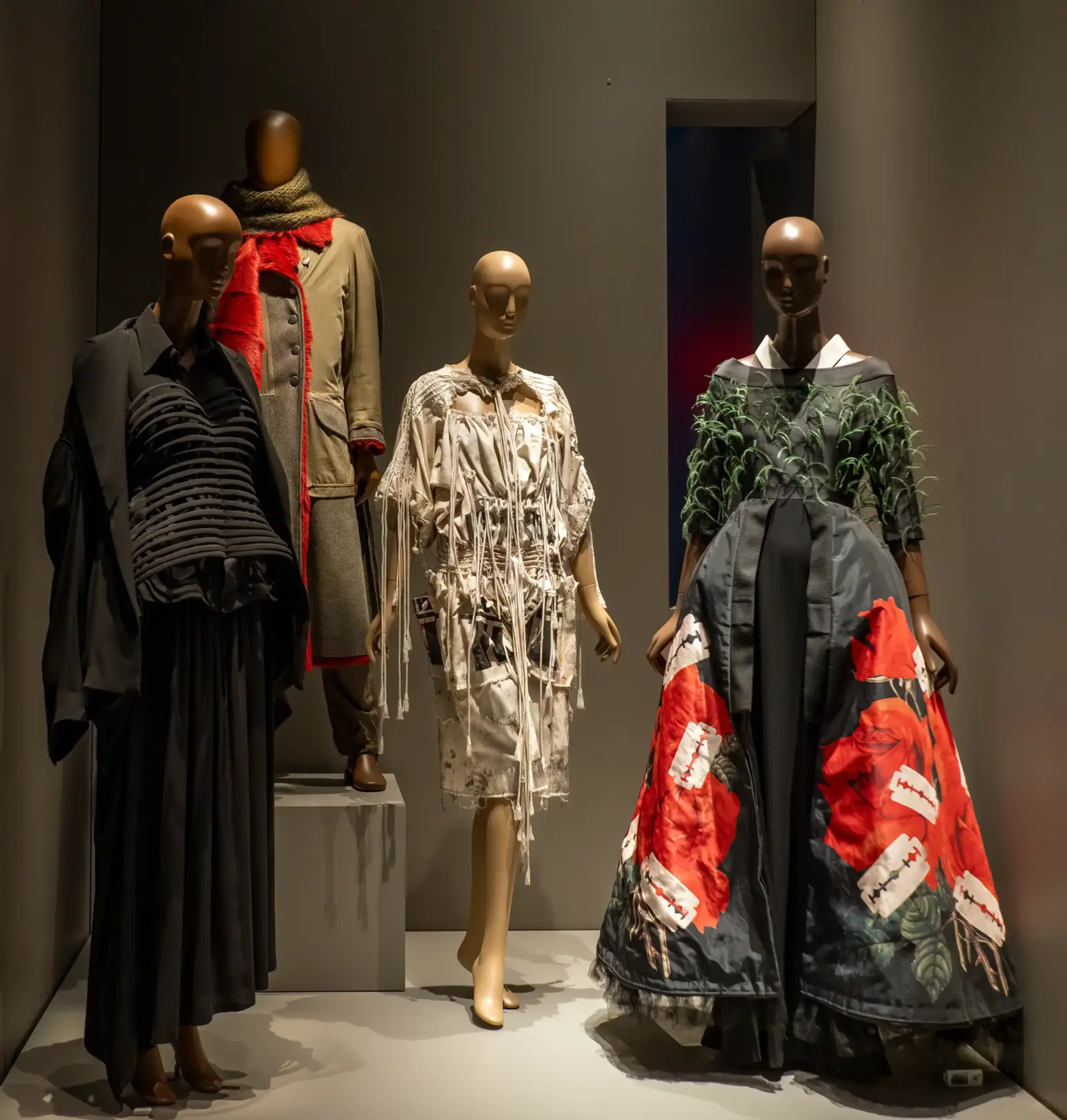
- Fotografia da instalação da exposição no Museu na FIT apresentando um conjunto preto de Yohji Yamamoto (Outono 2006) e vestido de noite de Jun Takahashi para Undercover. Fotografia de Rhododendrites, Wikimedia Commons, CC BY-SA 4.0.
Créditos da imagem
- Tênis original de cano alto "Dunk" de Rick Owens em couro de leite (cerca de 2006–2007). Wikimedia Commons, CC BY-SA 4.0.
- Jaqueta escultural feminina de Rick Owens em couro bolhas, algodão e rayon (2008). Museu de Arte da Rhode Island School of Design. Wikimedia Commons, CC0 1.0 Dedicação ao Domínio Público Universal.
- Como Rick Owens, Julius, Carol Christian Poell e a cultura dos fóruns online moldaram o darkwear dos anos 2000 em um movimento de moda arquitetônica duradouro.