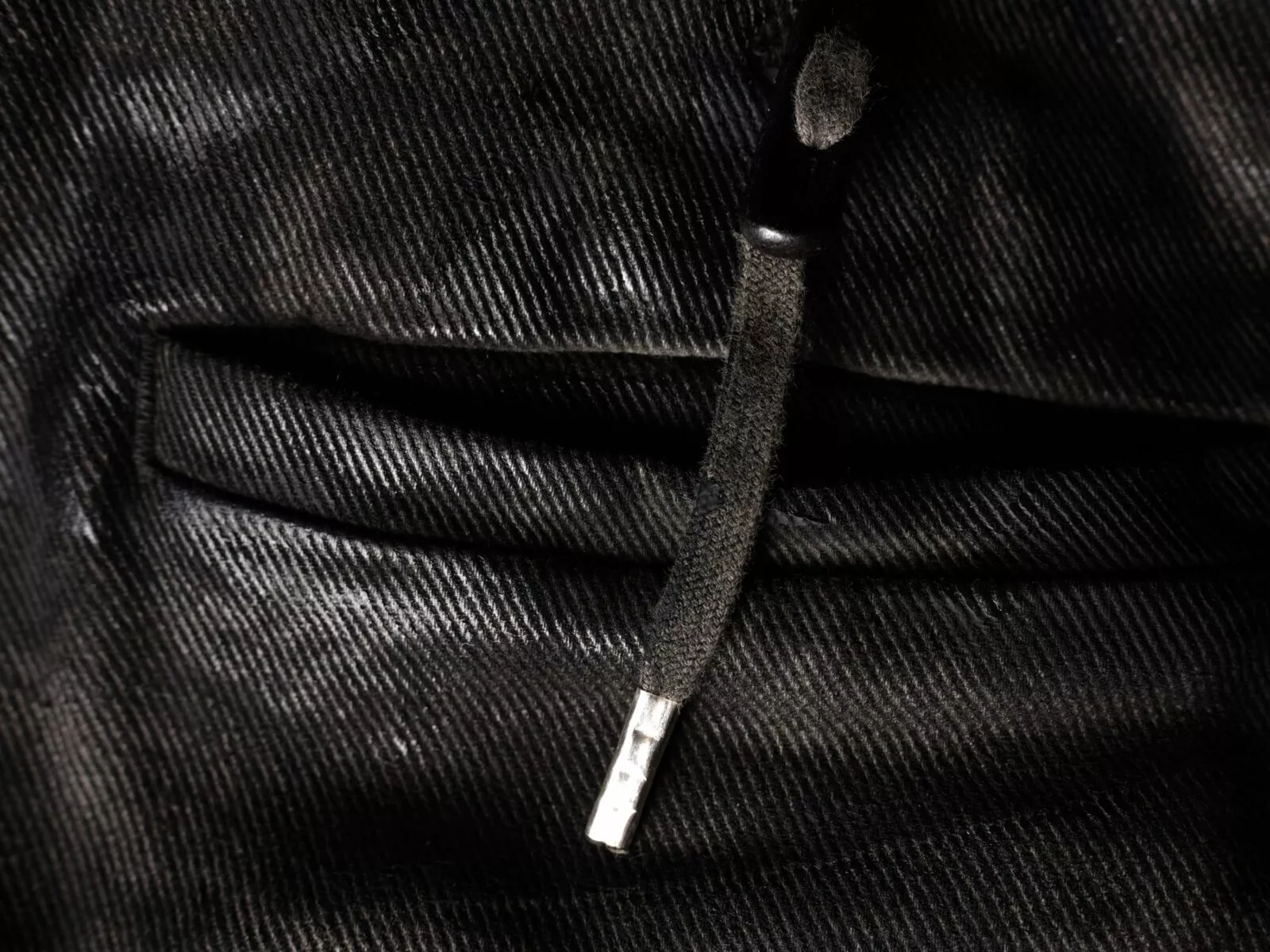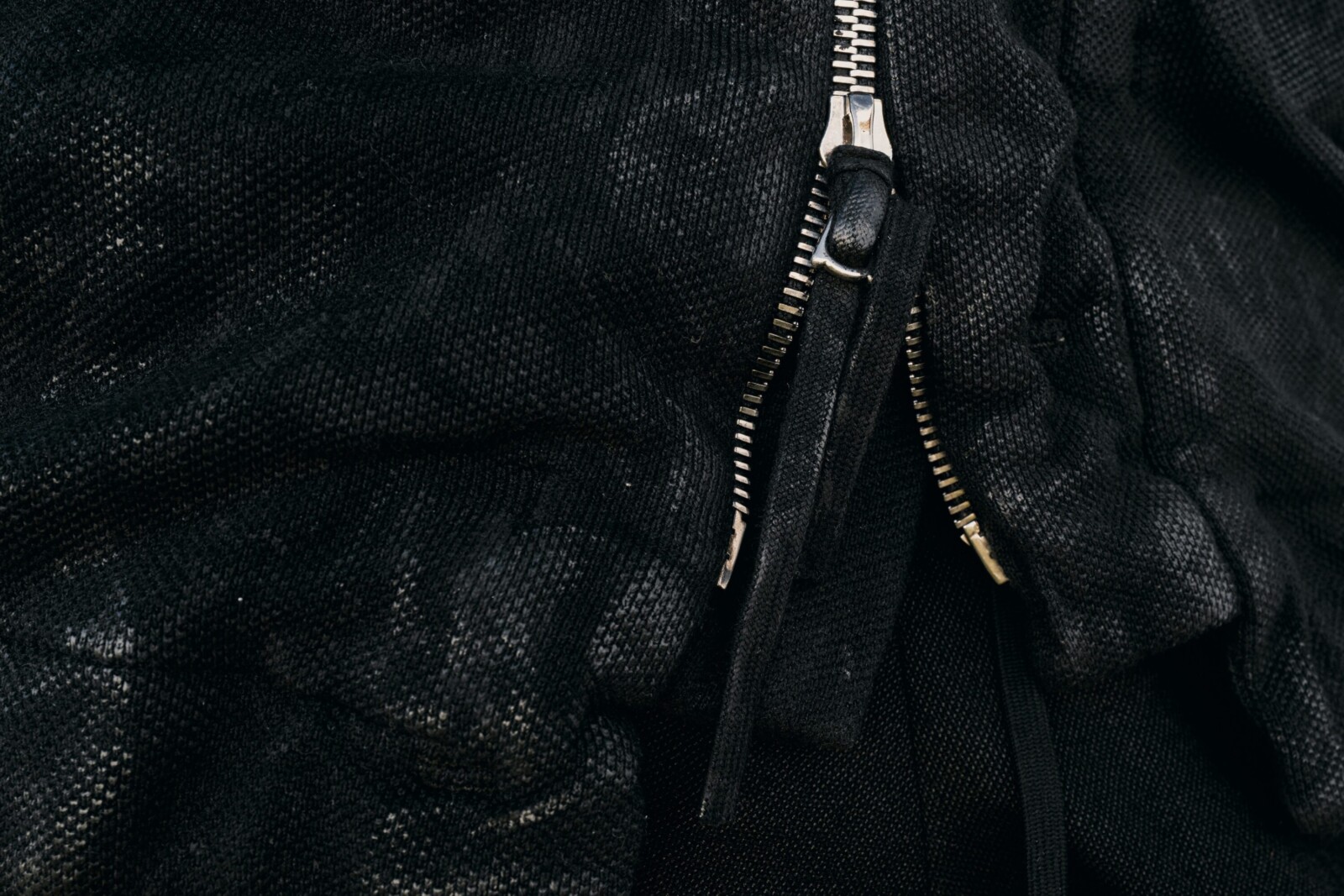
Carol Christian Poell and Fashion as Material Experiment
Commercial fashion manufactures seductive illusions; Carol Christian Poell performs an autopsy on matter. Where luxury conglomerates churn out delicate seasonal merchandise, the Linz-born artisan treats cloth and hide as clinical specimens subjected to chemical trauma, mechanical torture, and anatomical coercion. His garments do not flatter passive posture; they enforce an unforgiving, armored silhouette through scorched horsehide, titanium-jointed hinges, and high-tension Scarstitch seams that pierce the body like surgical sutures. Alongside vanguard artisans documented across our archives—from Maurizio Amadei and Maurizio Altieri to Boris Bidjan Saberi and Rick Owens—Poell stripped tailoring of decorative bourgeois vanity. Through the curated Carol Christian Poell archive, we dissect an uncompromising material laboratory: pioneering whole-garment object dyeing (tinto in capo), formulating glassy translucent leather, casting self-eroding drip-rubber soles, and executing radical public presentations that permanently ruptured industry complacency.
Fashion demands decorative submission; Carol Christian Poell engineers biological armor.
Modern luxury trades in polite complacence. It sells featherweight cashmere sweaters, immaculate calfskin clutches, and pre-packaged lifestyle fantasies calibrated for frictionless consumption. Carol Christian Poell operates at the exact opposite pole: friction, trauma, and structural resistance. In his Milanese workshop, garments do not surrender softly to the contours of the wearer. They fight back. Tailored jackets arrive as stiff, scorched carapaces that demand weeks of physical combat before yielding to an elbow joint or shoulder blade.
His aesthetic belongs to forensic science rather than runway glamour. Poell constructs silhouettes that dictate posture with surgical severity. Trousers twist aggressively along the outer leg seams, pulling raw horsehide across the kneecap in high-tension diagonals. Sleeves hook forward at rigid angles, fitted with internal titanium bone plates and cast-metal joint articulators that lock the arm in predatory readiness. There is no decorative flattery here. The human body becomes an armature for heavy, object-dyed leathers, rusted iron hardware, and chemical washes that leave hides looking exhumed from an industrial burn site.
This uncompromising practice forged darkwear’s most obsessive subcultural devotion. Collectors do not treat Poell’s garments as disposable seasonal attire; they approach them as sacred biological artifacts. Every crease in a scarred cordovan jacket documents physical struggle. Pain becomes proof of authenticity.
From Linz tanneries to Milanese isolation: The Austrian lineage of Carol Christian Poell
Understanding Carol Christian Poell requires confronting the wet, chemical reality of animal processing. Born in Linz, Austria, in 1966, Poell spent his childhood inside his family’s industrial leather tannery. The environment was visceral and unforgiving. He spent his youth among towering wooden drums, sulfurous chromium salts, and soaking pits filled with raw animal pelts. Where other designers studied museum paintings or cinema, Poell learned hide chemistry. Flesh was not an abstract concept; it was a heavy, dripping membrane requiring caustic preservation.
To master garment structure, Poell relocated to Vienna, enrolling in classical men’s tailoring at the prestigious Michelbeuern School. He absorbed the rigorous geometry of bespoke construction: hand-padded chest canvases, basted lapels, and razor-sharp sleeve pitch adjustments. Yet bespoke conservatism bored him. Seeking to fuse industrial chemistry with anatomical architecture, Poell moved to Milan in 1989 to study fashion design at Domus Academy. In 1995, he joined forces with business partner Sergio Simone to launch his label, C.C.P.
Poell built his Milanese headquarters as a fortified redoubt. He banned backstage runway photographers, refused personal interviews, and omitted his face from brand documentation. While contemporary designers chased social prestige, Poell isolated himself inside his Navigli studio, converting traditional tailoring into an experimental science that permanently altered the Italian artisanal fashion movement.
The crucible of object-dyeing: Tinto in capo and forced structural collapse
Standard garment production follows a linear path: dye the yardage, cut the pattern pieces, sew the seams, and press the finished product. Poell subverted this protocol through extreme tinto in capo (object dyeing). He tailored fully finished garments from raw, undyed crust leather—assembling heavy horsehide, Goodyear-welted soles, cotton linings, and metal hardware before introducing a drop of pigment.
Only then did the torture begin. Poell submerged the fully realized garments into scalding, pressurized chemical dye baths.
Immersion triggered violent material warfare. Because leather, cotton thread, and metal react to hot chemical baths at wildly different rates, the garments contorted under internal tension. Horsehide contracted by up to twenty percent, crushing the seams and warping the torso out of alignment. Heavy cotton linings twisted diagonally, forcing the jacket to grip the wearer’s ribcage in an asymmetrical clutch. Metal zippers oxidized into chalky, pitted tracks that resisted movement. The garment emerged from the vat battered, scorched, and puckered, bearing the physical evidence of chemical trauma.
These pieces—including the monolithic high-neck leather jacket and seamless one-piece derby explored in our study of artisanal leather languages—look less like luxury apparel than geological specimens recovered from a volcanic blast. They demand an arduous, weeks-long physical break-in, slowly molding to the wearer’s body through body heat and sweat.
Surgical tailoring and Dead-End construction: The anatomical armature
Classifying Carol Christian Poell as an avant-garde leather tanner misses his deepest technical mastery: surgical tailoring. His drafting rejects standard commercial blocks that hang passively from the clavicle. Instead, Poell cuts garments as rigid external armatures, forcing the wearer into an upright, predatory stance.
This anatomical violence produced his signature “Scarstitch” construction. Rather than hiding seam allowances inside clean overlocked joins, Poell punches wide perforations along panel edges and lashes them together using heavy-gauge surgical cords pulled under fierce tension. The threads bulge outward across the leather like raised keloid scars on stitched skin. The garment flaunts the structural trauma of its own assembly.
His mathematical drafting reached its pinnacle with the “Dead-End” project. Traditional suiting requires dozens of separate components—canvases, sleeve heads, side bodies, and collar stands. In the Dead-End patterns, Poell drafted an entire three-dimensional coat from a single uncut plane of hide. Without shoulder seams, side breaks, or armscyes, the single skin wraps around the body through complex origami folds and continuous mathematical darts. He pushed bodily armor further by sewing internal titanium bone plates along the spine, jointed steel hinges into the elbows, and articulated silver rings around the fingers, transforming the wearer into a biomechanical construct.
Stalactite cordwaining: Drip-rubber footwear and intentional erosion
Footwear anchors the cult status of Carol Christian Poell. In 2008, he introduced a silhouette that permanently altered artisanal cordwaining: the drip-rubber sole.
The manufacturing method turns gravity into a sculpting tool. Artisans at Poell’s atelier construct a classic Goodyear-welted derby or high-top boot from unlined horsehide or kangaroo. Once lasted and stitched, the shoe is suspended upside down by its collar and dipped directly into a bath of liquid polyurethane rubber. When lifted from the vat, viscous rubber drains downward toward the ceiling, forming heavy liquid trails. Suspended in mid-air, the rubber cures into solid, semi-translucent stalactites projecting from the sole like mineral icicles.
The visual impact is startling. The shoe appears caught in mid-melt, as though the wearer had stepped through boiling industrial tar. Yet Poell embedded intentional destruction into the design. The stalactite drips are not reinforced for longevity; they are engineered to crack, snap, and grind into powder against urban pavement. Every kilometer walked shears off rubber spikes, exposing the leather sole underneath. Movement becomes an act of deliberate wear, forcing the owner to actively participate in the garment’s physical erosion.
Urban abjection and forensic presentation: From dog kennels to the Naviglio Grande
Catwalk fashion shows operate as commercial theater. Editors sit on cushioned benches, sipping champagne while models strut down immaculate runways to pop soundtracks. Poell despised that decorative charade. He orchestrated seasonal presentations as forensic confrontations designed to trigger visceral discomfort.
For Autumn/Winter 2001–2002, Poell staged Public Display inside an active municipal dog kennel on the outskirts of Milan. Guests entered damp corridors to find tailored jackets and trousers displayed inside steel cages alongside barking, distressed stray dogs. The sensory assault shattered the fashion crowd’s polite detachment. Clothing was stripped of prestige, framed instead as caged commodities bound to animal captivity.
His conceptual masterpiece arrived in June 2003 for Spring/Summer 2004: Mainstream-Downstream. Poell invited international buyers and critics to congregate on the stone bridges of Milan’s Naviglio Grande canal. No runway had been constructed. Instead, fully dressed mannequins drifted face-up down the murky canal water, floating like drowned corpses from an industrial catastrophe. Horrified onlookers called the Carabinieri and municipal fire departments, convinced a mass drowning was underway. Poell had literalized the commodification of fashion: clothing cast into the urban sewer, drifting downstream toward oblivion.
The biological boundary: Pig intestines, human hair weaves, and translucent horsehide
Material exploration in the Poell canon routinely breaches taboos of disgust. He rejects sanitized synthetics, preferring organic matter that preserves its primal origin.
In his Spring/Summer 2004 collection, Poell wove actual human hair into stiff wool suit canvases, crafting itchy collar stands and lapels that forced the wearer into direct physical contact with another human’s biological remains. He dried pig bladders and intestines, stretching the veined membranes over lasts to form footwear panels and translucent pockets. For select capsule editions, he applied animal blood to cured hides, allowing the iron-rich stains to oxidize into deep rust-brown streaks under sunlight.
His crowning technological achievement arrived with translucent horsehide. Traditional tanning relies on heavy vegetable tannins that turn hides opaque and fibrous. Partnering with Italian tannery chemists, Poell engineered a proprietary process that bleached pigmentation and extracted cellular opacity without rupturing the collagen matrix. The leather dried as stiff, amber-tinted glass. Tailored into a jacket, the skin operates as an anatomical X-ray: chest canvassing, pocket bags, taped seams, and the wearer’s torso remain visible beneath the glassy hide.
The Safe system and radical refusal: Cult economics outside conglomerate capital
Conglomerate fashion runs on planned obsolescence. Brands churn out collections quarterly to drive stock prices and satisfy retail algorithms. Following his 2010 presentation Self-Cannibalism, Carol Christian Poell halted seasonal calendars completely. He consolidated his life’s work into the “Safe” system—a permanent, seasonless catalogue of his most demanding masterworks.
Under the Safe protocol, garments are produced strictly on demand. There are no retail sales, no seasonal discounts, and no web shops. Clients ordering a Scarstitch horsehide jacket or drip-rubber derbies through curated artisanal stockists—including Lift in Tokyo, Darklands in Berlin, or Atelier New York—surrender control of time. Production requires eight months, a year, or two years. Poell refuses to rush delivery. If an object-dyed hide warps improperly during immersion, the garment is scrapped and restarted from zero.
This refusal created unrivaled subcultural reverence. Alongside the seminal investigations of Carpe Diem, Maurizio Amadei, and Boris Bidjan Saberi, Carol Christian Poell established the outer boundary of dark avant-garde dress. His work rejects decorative flattery. It demands physical endurance, celebrates material trauma, and stands as an uncompromising monument to artisanal autonomy.
Related Brand Archives & Historical Monographs
Explore curated archival pieces and deep historical analyses across the avant-garde continuum: inspect monographs on Carol Christian Poell, Carpe Diem, Maurizio Amadei, Boris Bidjan Saberi, and Rick Owens, or examine foundational historical analyses including The Italian Artisanal Fashion Movement, Carpe Diem and the Birth of a New Artisanal Language, Dark Avant-Garde Fashion: Origins, Designers and Aesthetics, and What Is Anti-Fashion?.
References and further reading
Image credits
- The Naviglio Grande canal in Milan. Photograph by Capricornis crispus, Wikimedia Commons, CC BY-SA 4.0.
- Traditional circular tanning and dyeing vats. Photograph by Esin Üstün, Wikimedia Commons, CC BY 2.0.
- Bespoke tailor's cutting bench with forged iron shears and measuring tape. Photograph by Wolfgang Sauber, St. Fagans National History Museum, Wikimedia Commons, CC BY-SA 3.0.
- Artisan leathercraft implements and hide thickness gauge. Photograph by Scott Bauer, Agricultural Research Service, USDA, Wikimedia Commons, Public domain.