The Italian Artisanal Fashion Movement
While Paris championed haute couture spectacle and Milan commercialized glossy industrial luxury, a secretive counter-revolution erupted across Italy during the late 1990s: the Italian Artisanal Fashion Movement. Emerging from ancient provincial workshops in Perugia, Pescia, Cavarzere, and Milan, a radical brotherhood of designers and master tanners dismantled the mechanized logic of modern apparel. Anchored by Maurizio Altieri’s legendary Carpe Diem project, the multi-generational tanning mastery of Guidi, the obsessive anatomical engineering of Carol Christian Poell, the origami origami folding of Maurizio Amadei’s m.a+, and the uncompromising handmade tailor-craft of Geoffrey B. Small, this movement transformed clothing into living, biological sculpture shaped by physical labor, geological mineral baths, and relentless temporal wear.
The revolt against industrial luxury: defining the artisanal ethos
In the final decade of the twentieth century, global fashion underwent unprecedented consolidation. Transnational luxury conglomerates acquired historic European fashion houses, transforming intimate ateliers into streamlined corporate engines powered by automated assembly lines, synthetic interfacings, licensing deals, and aggressive international marketing. In Milan, “Made in Italy” was increasingly reduced to a commercial trademark—a branding veneer applied to factory-fused garments designed for rapid seasonal turnover.
Against this hyper-commercial backdrop emerged a radical counter-movement: The Italian Artisanal Fashion Movement. Rejecting runway theatrics, celebrity ambassadors, and seasonal obsolescence, a dispersed collective of autodidact designers, pattern cutters, and leather tanners retreated into historic provincial workshops across Umbria, Tuscany, Veneto, and Lombardy. Their goal was nothing less than a philosophical insurrection against the industrial mode of production.
This movement operated on foundational tenets that fundamentally diverged from mainstream fashion:
- Primacy of the Physical Hand (Il Fatto a Mano): Garments and footwear were not produced from outsourced technical specification sheets, but cut, assembled, and finished entirely by the designer and a tight circle of master craftsmen.
- Reverence for Biological Time: Instead of presenting garments in pristine, artificial perfection, artisanal creators embraced the Japanese philosophical concept of wabi-sabi—finding sublime beauty in impermanence, decay, weathering, and asymmetry.
- Material Archeology: Sourcing antique deadstock textiles, artisanal hand-loomed wools from Biella, heavy cordovan leathers from historic Tuscan pits, and custom-forged sterling silver hardware (.925 silver), treating cloth and hide as geological media capable of absorbing human history.
- Radical Anti-Marketing: Refusing press releases, lookbooks, logo hardware, and public runway schedules, communicating solely through tactile artifacts distributed to a global network of specialized cultural curators (such as L’Éclaireur in Paris, Lift in Tokyo, and Atelier in New York).

Maurizio Altieri and the Perugia crucible: Carpe Diem and the Linea family
The philosophical epicenter of the Italian artisanal renaissance was Carpe Diem (often rendered as C-Diem), founded in 1994 by Maurizio Altieri in the ancient hill town of Perugia, Umbria. Altieri—a nomadic figure who spent ten years traveling across America, Europe, and Asia studying traditional cobbling and nomadic leather treatment—approached clothing not as fashion design, but as spiritual discipline.
Working from a secluded compound, Altieri initiated extreme material experiments that entered contemporary fashion lore. He washed finished horsehide boots in Mediterranean saltwater, baked leather jackets in stone ovens, and famously buried leather coats in the rich Umbrian earth for months at a time, allowing soil microbes and natural humidity to digest the collagen fibers, resulting in haunting, organic distress that could never be simulated by industrial tumbling machines.
Between 1999 and 2005, Altieri expanded Carpe Diem into a constellation of specialized conceptual lines known as the Linea family:
- Carpe Diem: Handcrafted footwear and leather outerwear featuring forward-curving boots, one-piece folded leather uppers, and iron-waxed vegetable horsehide.
- LMaltieri: Groundbreaking knitwear and tailoring made from antique hemp, raw cashmere, and unwashed wool, pioneering seamless construction and raw rolled edges.
- Linea: Pure architectural tailoring devoid of commercial linings, utilizing hidden hook-and-eye closures and anatomical curving seams.
- Sartoria: An ultra-exclusive bespoke service where garments were hand-stitched individually for each client, documented on woven parchment certificates signed by Altieri.
Carpe Diem disbanded in 2006, yet its dissolution seeded the entire modern artisanal landscape. The Perugia workshop functioned as an intellectual incubator whose disciples established their own iconic labels: Maurizio Amadei founded m.a+; Luca Laurini launched Label Under Construction; Simone Cecchetto created A1923 (A Diciannoveventitre); and Alessio Zero conceived Layer-0. This genealogical lineage—often termed the “Carpe Diem Diaspora”—defined 21st-century artisanal aesthetics.
The alchemy of Tuscan tanning: Guidi, horsehide, and object dyeing
The material backbone of the Italian artisanal movement was located eighty miles north of Perugia, in the Tuscan province of Pistoia. In the river valley town of Pescia, the tannery Guidi 1896—originally established by Guido Guidi, Giovanni Rosellini, and Gino Ulivo—had spent over a century perfecting slow vegetable tanning using natural tree bark extracts (mimosa, chestnut, and quebracho) steeped in historic wooden drums.
Under the stewardship of Ruggero Guidi, the tannery became the primary material laboratory for the avant-garde. While industrial fashion prioritized uniform, chrome-tanned bovine leather for its synthetic smoothness and low cost, Guidi championed dense, irregular equus hides:
- Culatta and Full-Grain Horsehide: Sourced from the rump and flank of work horses, containing variable densities of smooth shell cordovan transitioning into porous suede-like grain on a single hide.
- Donkey and Kangaroo Leathers: Highly tensile hides that allow paper-thin shaving while maintaining extraordinary tear resistance, enabling unlined boots that fold like fabric.
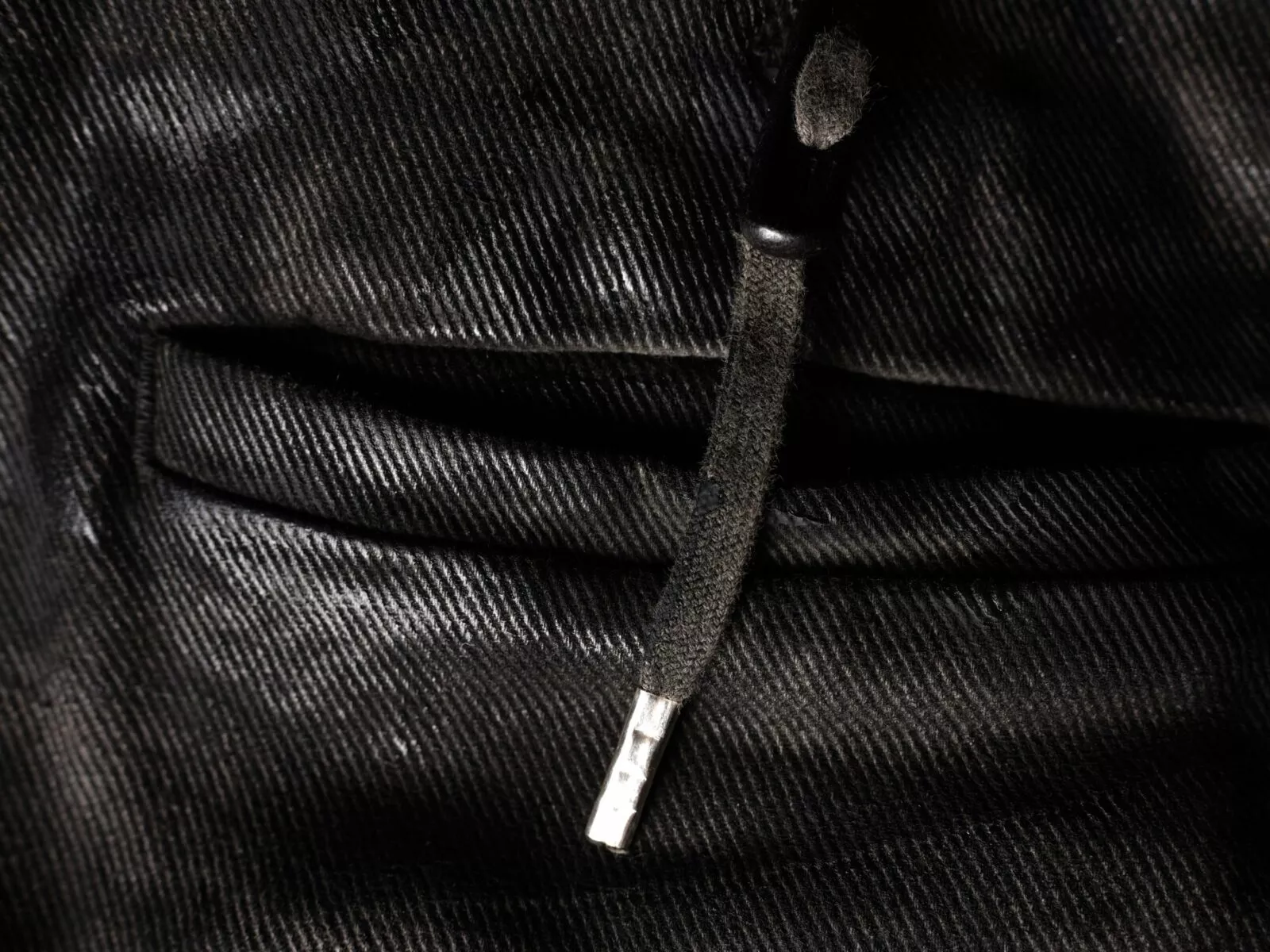
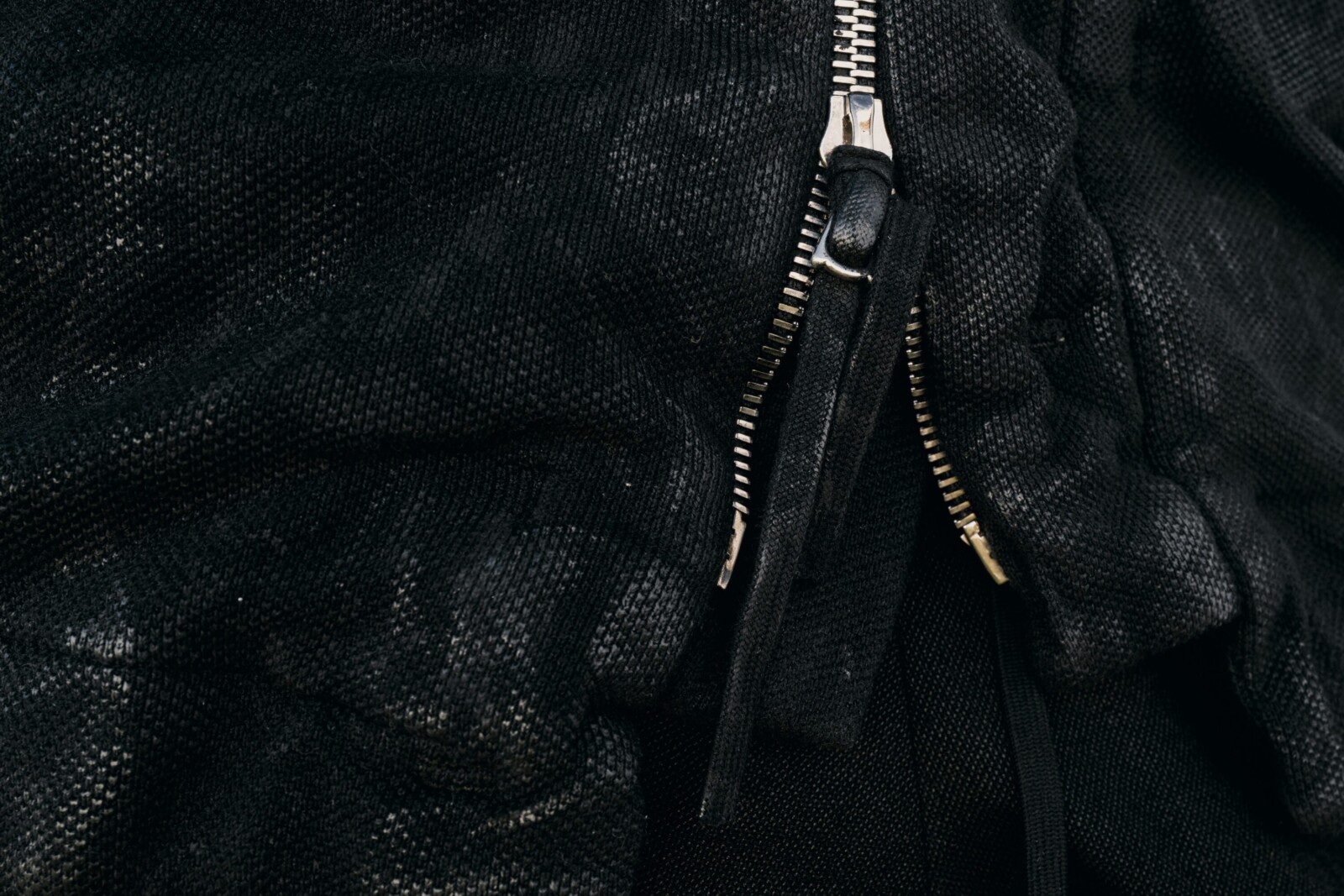
- Tinto in Capo (Object Dyeing): Instead of cutting garments from pre-dyed leather, Guidi constructed entire shoes, boots (such as the legendary Front-Zip 788Z and Derby 992), and jackets in raw, undyed vegetable-tanned crust leather. The fully assembled item was submerged into massive boiling dye drums with natural fats and tumbling stones. The intense heat and mechanical friction caused the leather, thread, and metal zippers to shrink, warp, and saturate unevenly, producing garments that emerged twisted like ancient artifacts pulled from an archaeological dig.
In 2004, Ruggero Guidi launched the independent Guidi footwear and accessories collection. By eliminating the boundary between raw material supplier and end maker, Guidi established footwear as a sculptural object that conforms intimately to the unique anatomical gait of its wearer.
Carol Christian Poell: surgical anatomy, dead-end seams, and drip rubber
While the Carpe Diem circle pursued poetic wabi-sabi, Austrian-born designer Carol Christian Poell (operating out of Milan’s Navigli district) mounted an uncompromising intellectual assault on human anatomy and tailoring construction. Trained in bespoke tailoring in Vienna and leather technology in Milan, Poell established his namesake label in 1995.
Poell’s methodology combines surgical precision with extreme conceptual brutality:
- Anatomical Articulation: Slicing pattern blocks along human musculoskeletal tendons rather than arbitrary menswear grids. His iconic “Dead-End” seams and overlocked cordovan jackets (such as the Scarstitch) utilize heavy structural topstitching that joins leather panels with surgical suture thread.
- Self-Cannibalizing and Prosthetic Materials: Poell integrated orthopedic titanium plates into leather gloves, human hair into fabric weaves, and transparent pig leather cured without pigments into translucent trench coats.
- The Drip-Rubber Sneaker: Hand-lasted kangaroo leather footwear dipped into liquid latex baths and suspended upside down while wet, allowing gravity to freeze hanging stalactites of rubber across the sole.
- Mainstream-Downstream (SS 2004): Rejecting the Milan Fashion Week calendar, Poell staged a legendary presentation in the Naviglio Grande canal, floating fully clothed mannequins face-down in the murky river water like floating corpses, confronting spectators with themes of drowning, luxury decadence, and post-human transformation.
Origami patternmaking and technical knitting: m.a+ and Label Under Construction
Two key alumni of Carpe Diem took artisanal fabrication into radical structural territories during the mid-2000s:
Maurizio Amadei (m.a+): Emerging as Altieri’s chief patternmaker, Amadei launched m.a+ in 2006. Operating from a rural mill near Rome, Amadei developed a geometric design system based on folding unbroken, continuous planes of fabric or leather—akin to sartorial origami. His iconic One-Piece Accordion Bag, spiral-seamed trousers, and hooded coats are folded from a single expansive hide or length of hand-loomed wool, secured with hand-hammered sterling silver cross (+) insignias. Amadei’s work celebrates minimal intervention: allowing the intrinsic tension of the material to support the three-dimensional form.
Luca Laurini (Label Under Construction): Son of a Tuscan knitwear factory owner, Laurini brought rigorous architectural discipline to artisanal menswear. Launching LUC in 2003, Laurini treated knitwear as engineering. He developed laser-perforated cashmere, thermo-bonded seams, reversible double-faced knits, and silk-screened carbon prints, proving that artisanal craftsmanship could embrace advanced industrial technology while maintaining absolute aesthetic purity.
Pure handmade sartoria: Geoffrey B. Small and the Veneto atelier
Operating from Cavarzere in the Veneto province, American-born master tailor Geoffrey B. Small represents the pinnacle of pure bespoke execution within the avant-garde movement. Establishing his Italian atelier in 1999 after decades of independent research, Small rejected both conglomerate luxury and factory outsourcing.
Small’s studio produces limited, numbered editions of hand-tailored garments that challenge modern industrial standards:
- Exclusive Micro-Mills: Small partners with surviving historic family mills—such as Luigi Parisotto in Sarcedo and Fratelli Piacenza in Biella—to commission custom hand-woven wools, silk-linen blends, and deadstock jacquards woven on vintage shuttle looms.
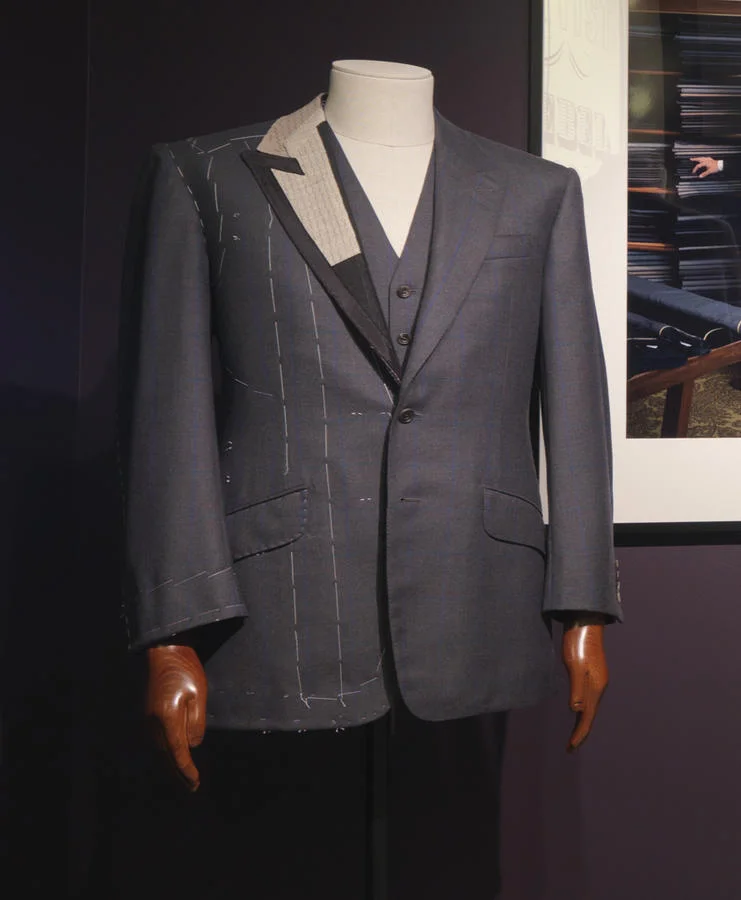
- Zero-Fusing Construction: Rejecting modern synthetic thermo-adhesives, Small constructs floating chest canvases from genuine camelhair and Irish linen, hand-padstitched over dozens of labor hours.
- Hand-Worked Details: Real horn buttons sourced from Fontana in Parma, hand-carved mother-of-pearl, and Milano hand-stitched buttonholes executed with pure Bozzolo Reale silk thread, each requiring up to thirty minutes of meticulous hand labor.
- Radical Transparency: Every garment bears a handwritten, numbered silk label documenting the artisan’s name, creation hours, fabric provenance, and edition size, embodying a radical socio-political critique of fast fashion exploitation.
The enduring legacy: artisanal independence in the digital age
In an era dominated by algorithmic trends, fast fashion duplication, and digital marketing virality, the Italian Artisanal Fashion Movement stands as an impregnable citadel of material integrity. Designers like Simone Cecchetto (A1923), Alessio Zero (Layer-0), and international kin like Boris Bidjan Saberi continue to work in symbiotic partnership with Italian tanneries and regional craft guilds.
By treating clothing as a visceral encounter between human skin, animal hide, mineral dyes, and historical time, the Italian artisanal vanguard created garments that do not deteriorate with age, but gather soul—transforming each piece into an enduring, autobiographical second skin.
References and further reading
- Yale University Press — The Craftsman
- Bloomsbury Academic — Experimental Fashion: Performance Art, Carnival and the Grotesque Body
- Guidi 1896 S.r.l. — Conceria Guidi Rosellini 1896 Historical Tanning Archive and Techniques
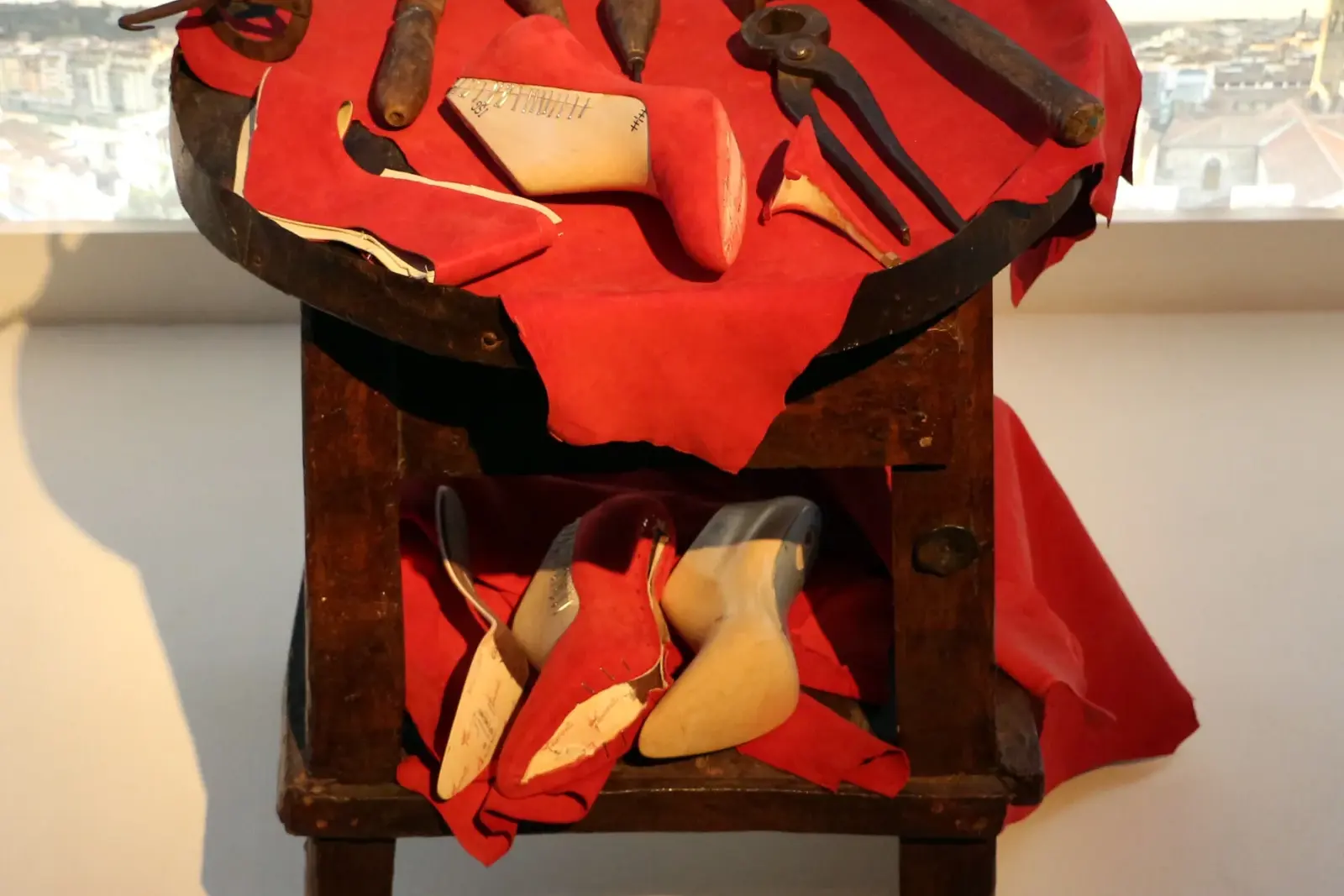
- Museo Salvatore Ferragamo — The Florentine Tradition of Hand-Crafted Cordwaining and Leather Tools
- C.C.P. S.r.l., Milan — Carol Christian Poell: Mainstream-Downstream Spring/Summer 2004
- GBS Sartoria Atelier, Cavarzere, Italy — Autobiography of a Handmade Suit: Pure Bespoke Construction in the Veneto