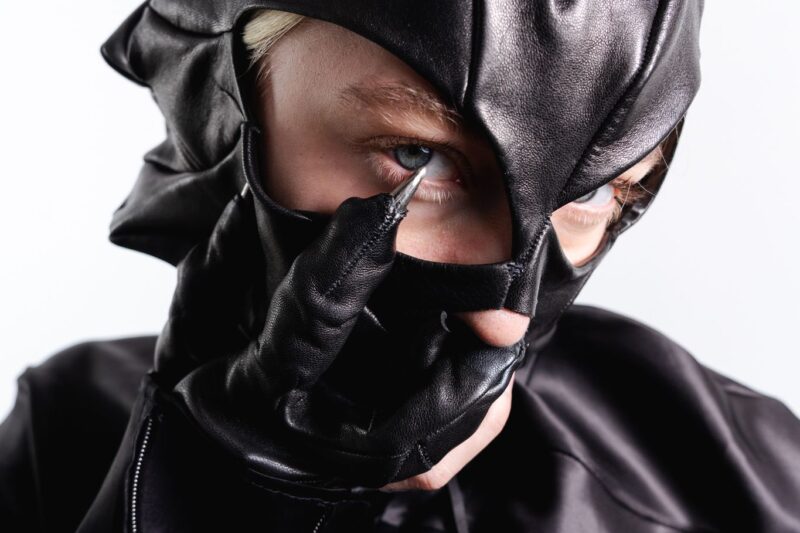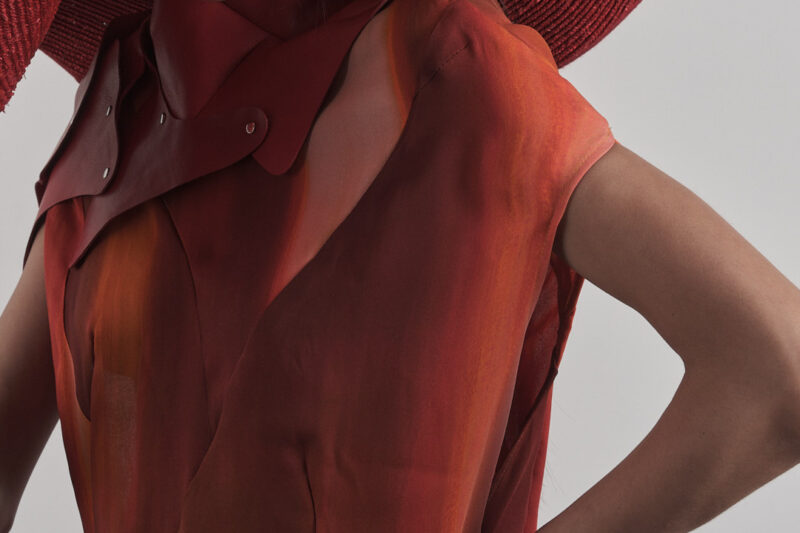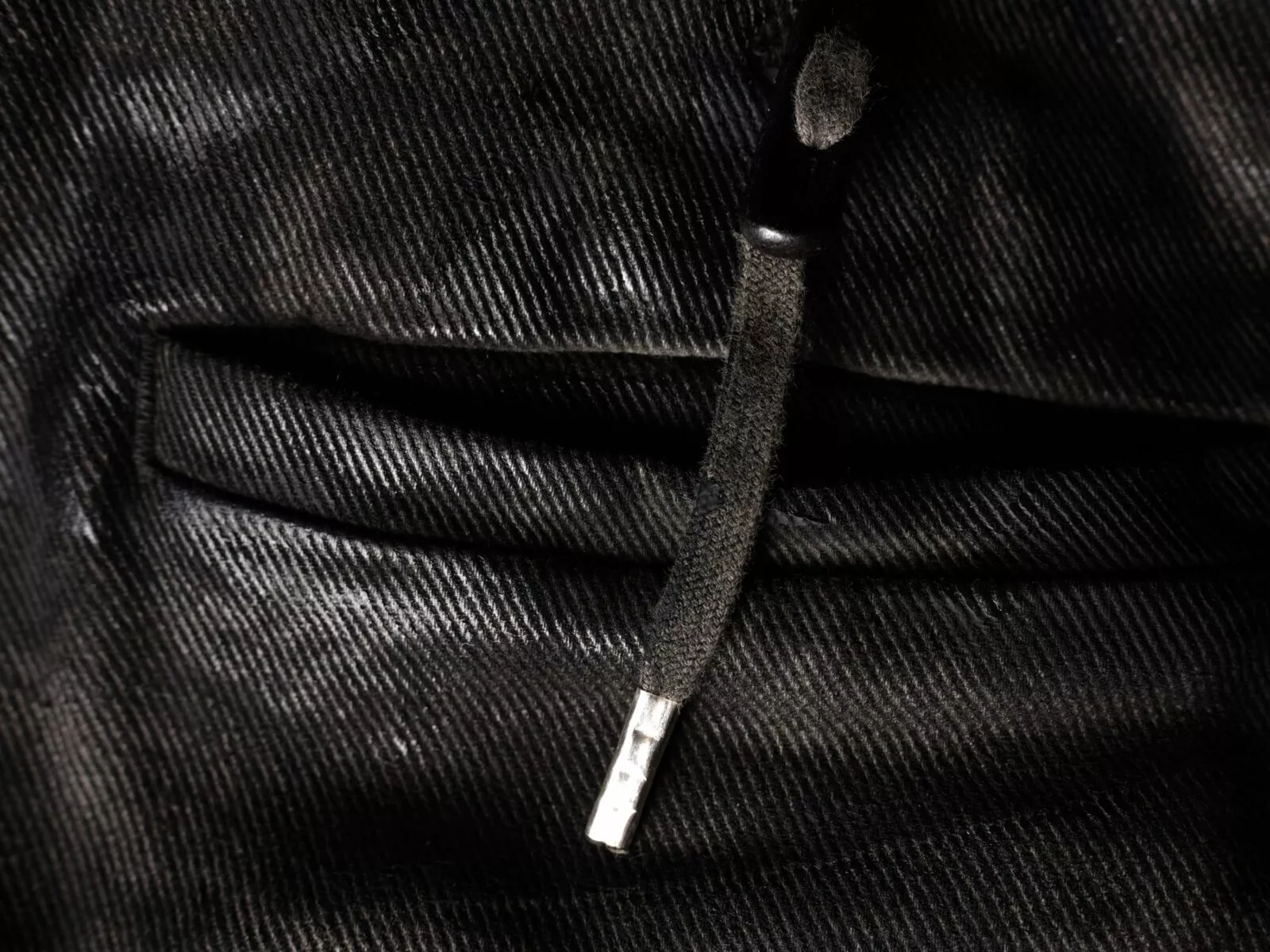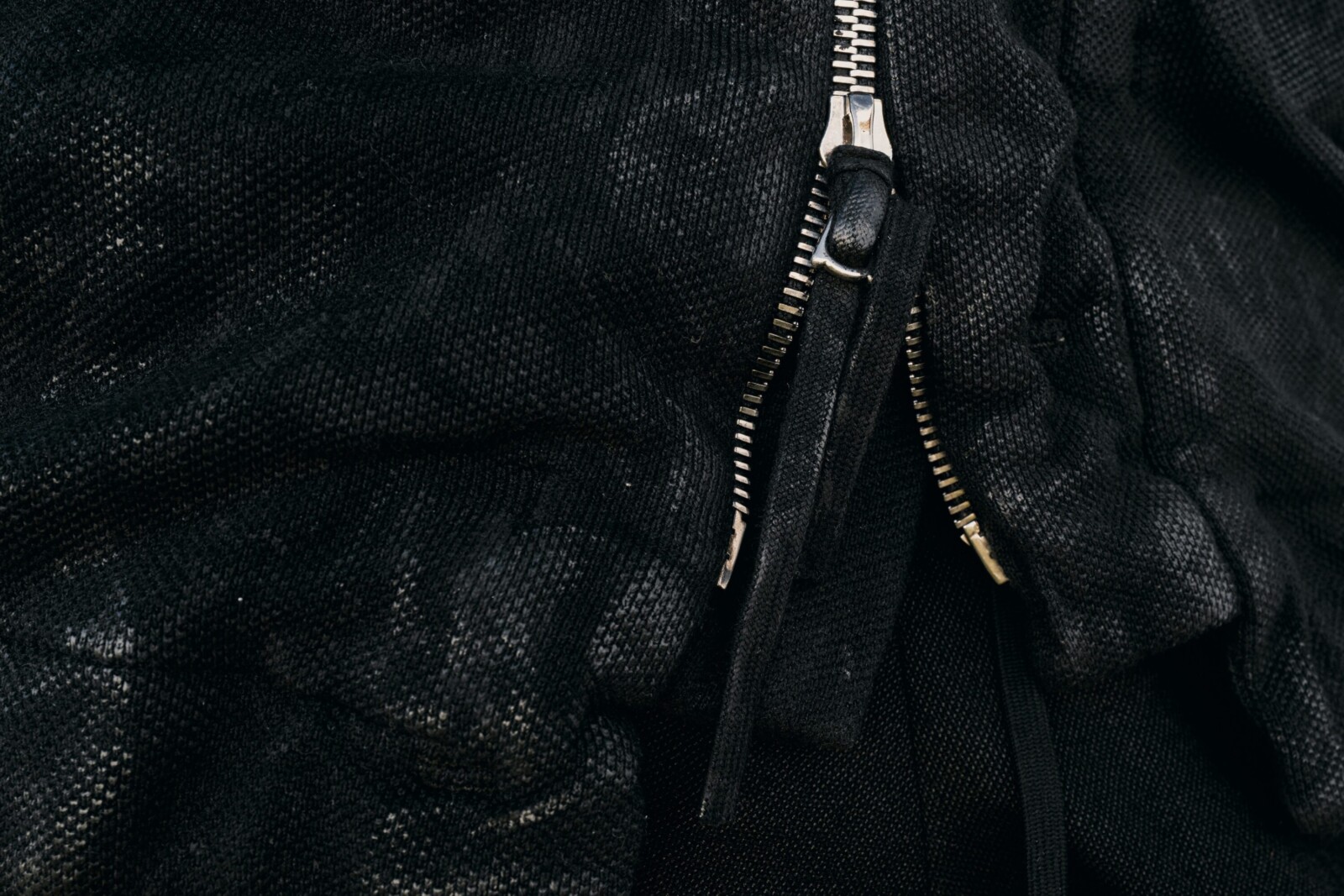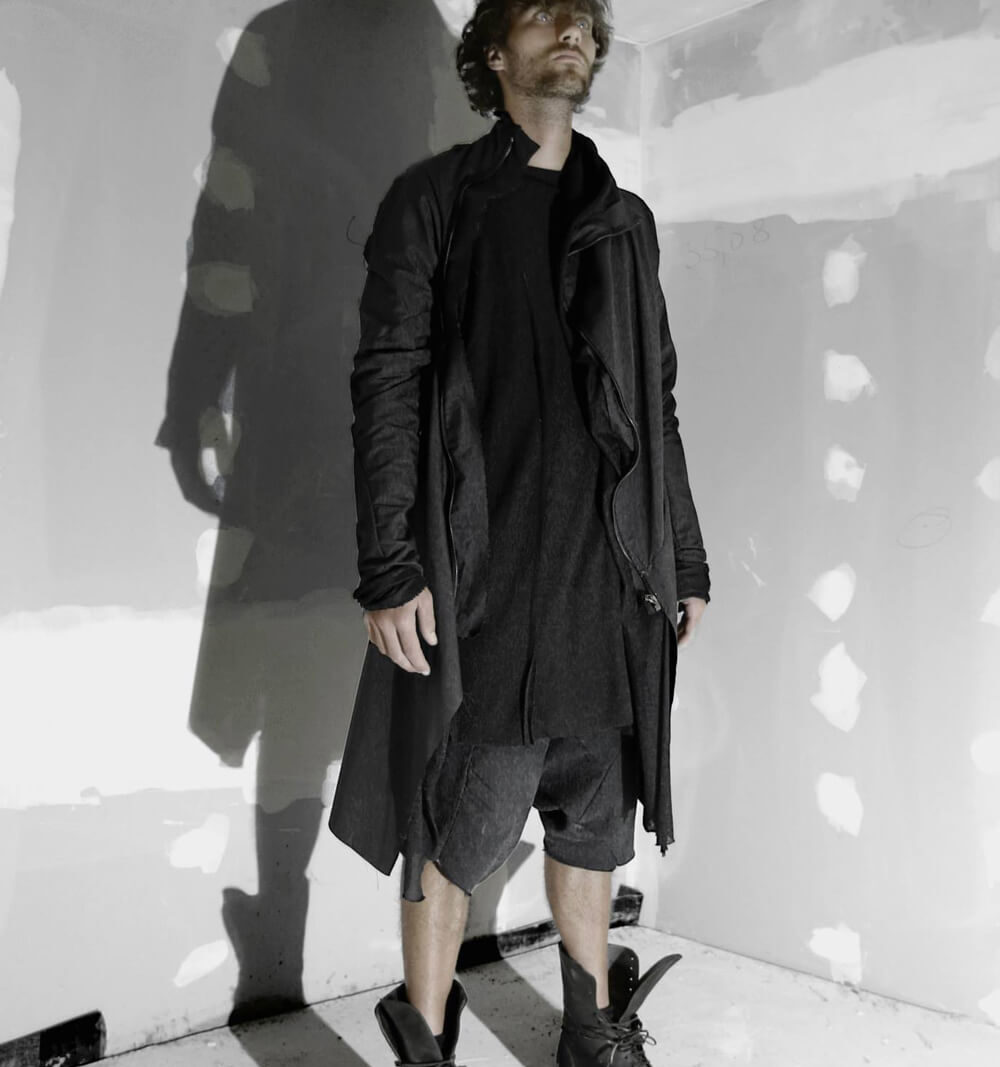
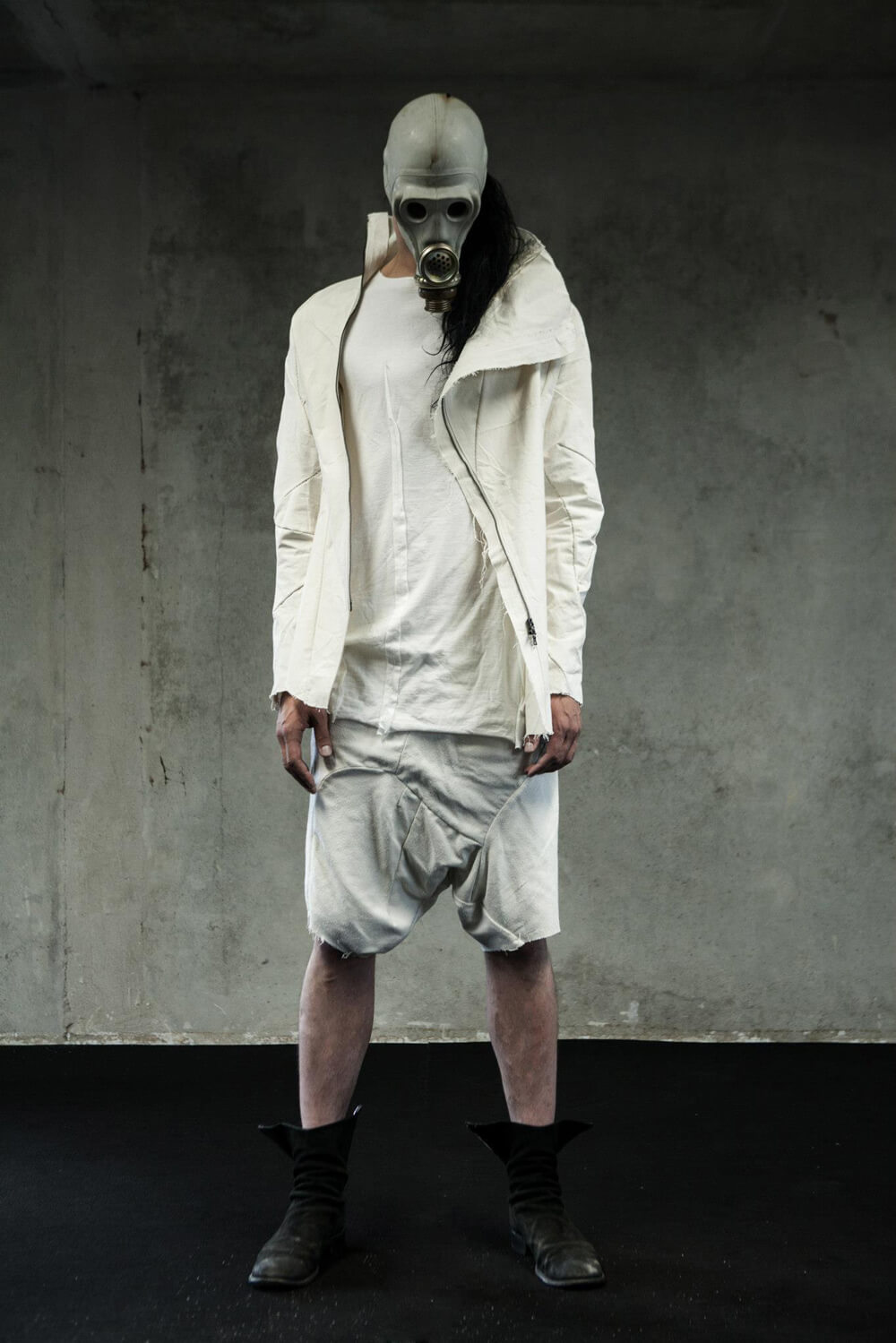
Captured by Michal Andrysiak, SS15 RIGOR stripped Leon Emanuel Blanck’s anatomical tailoring down to clinical discipline, cutting stiff twills, crisp poplins, and oiled horsehide along tensioned body vectors.
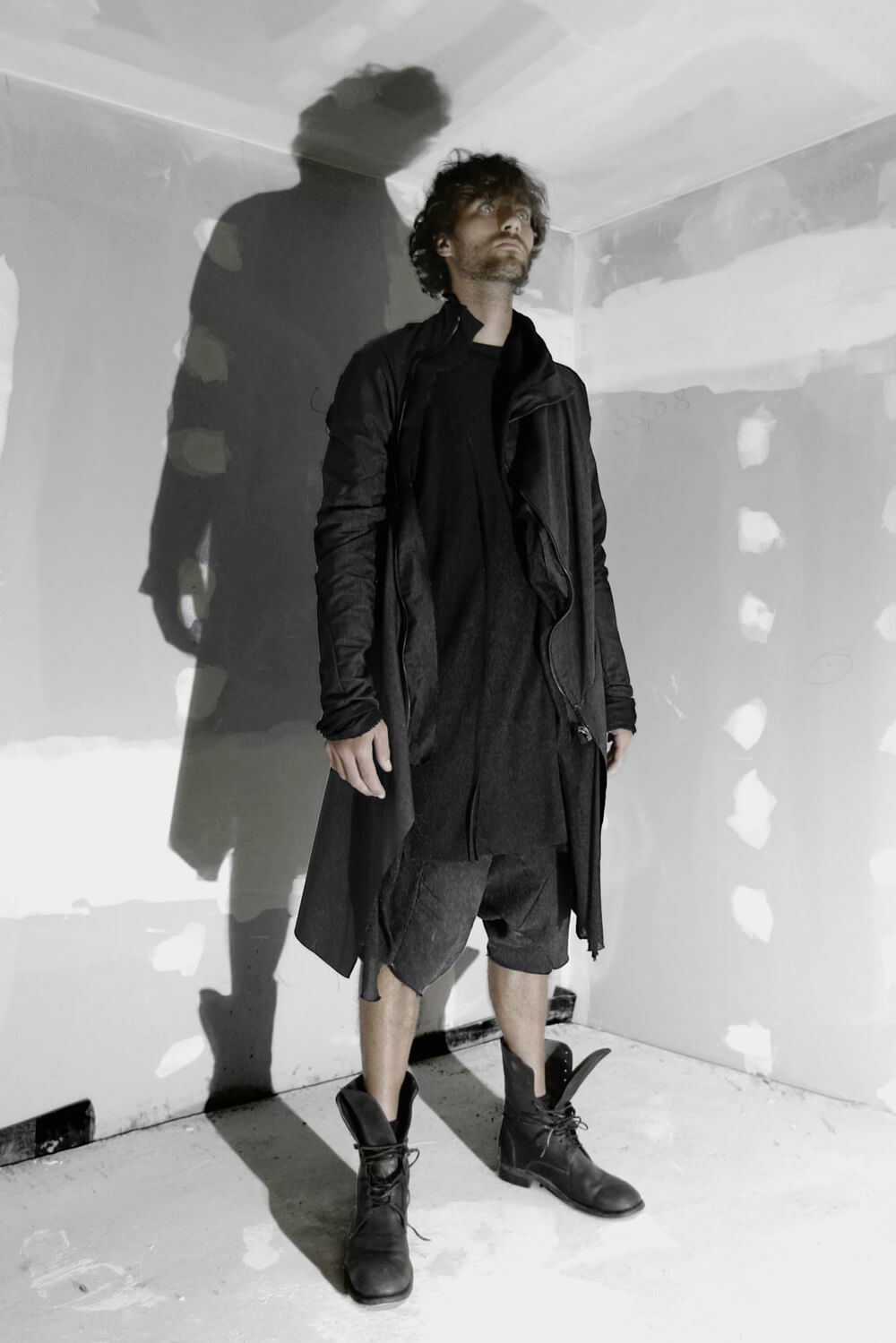
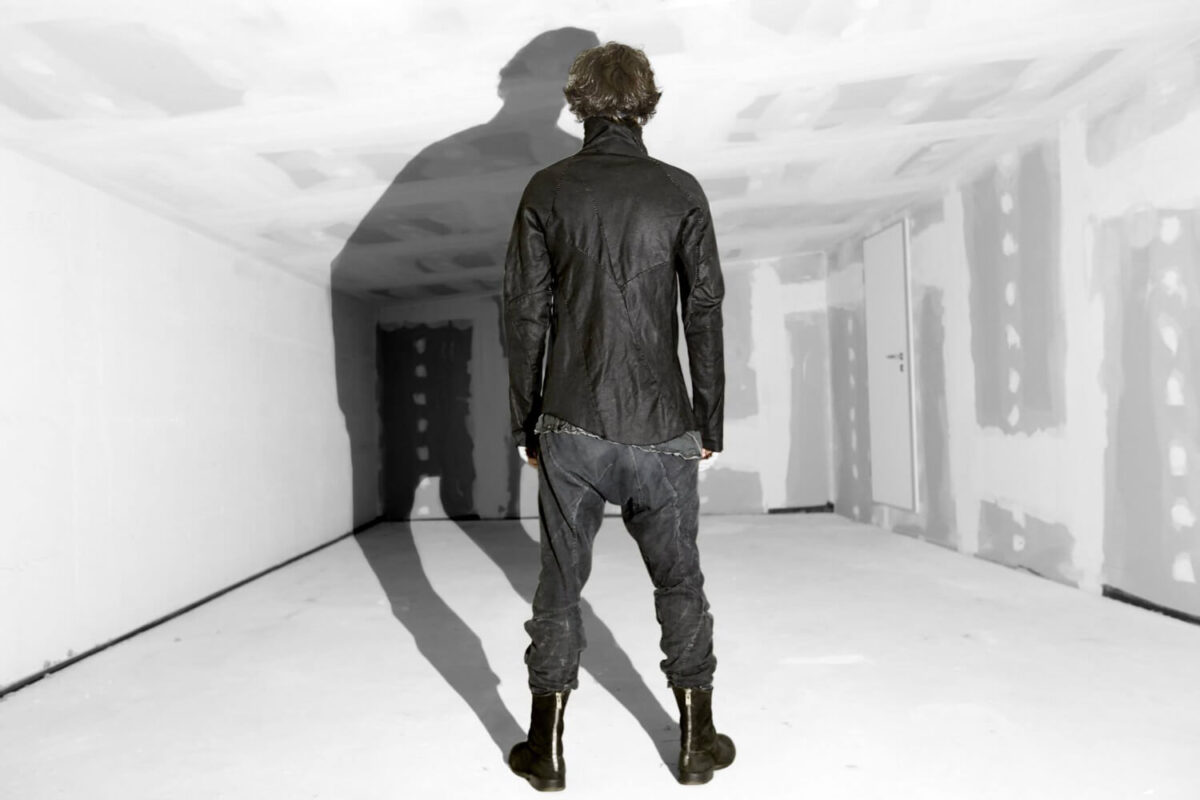
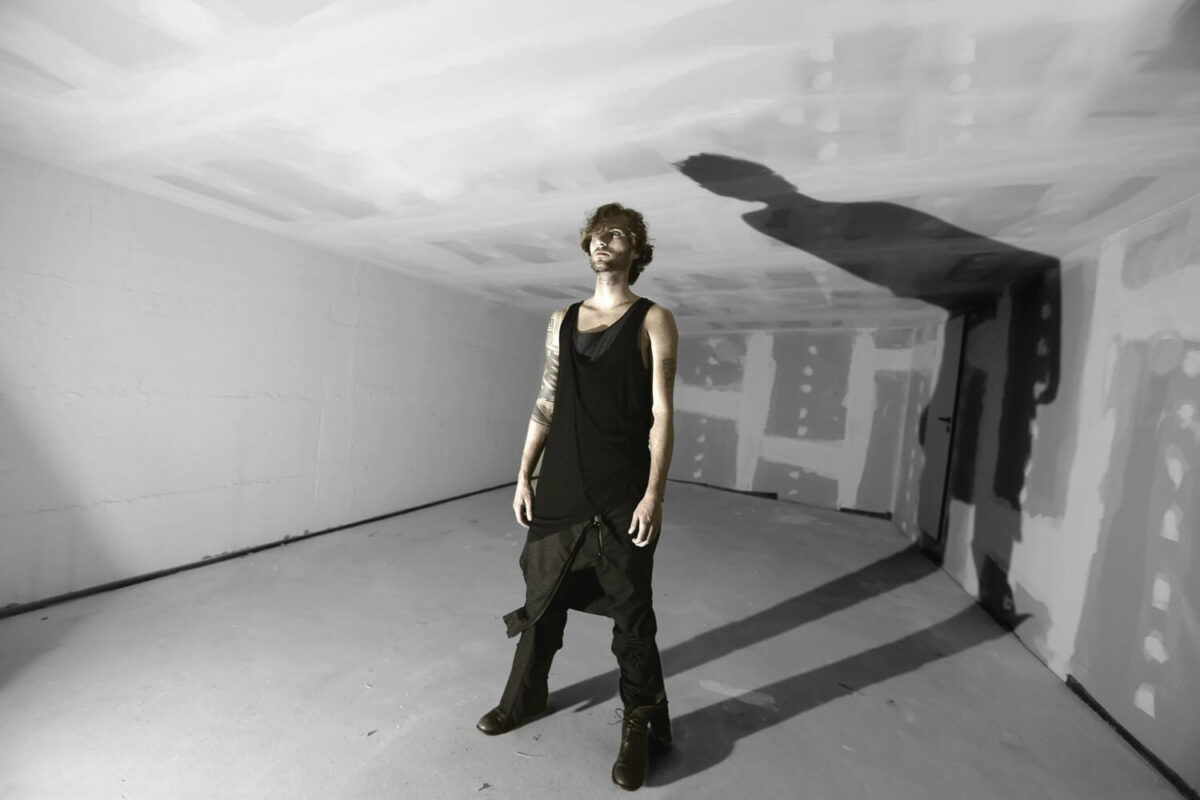
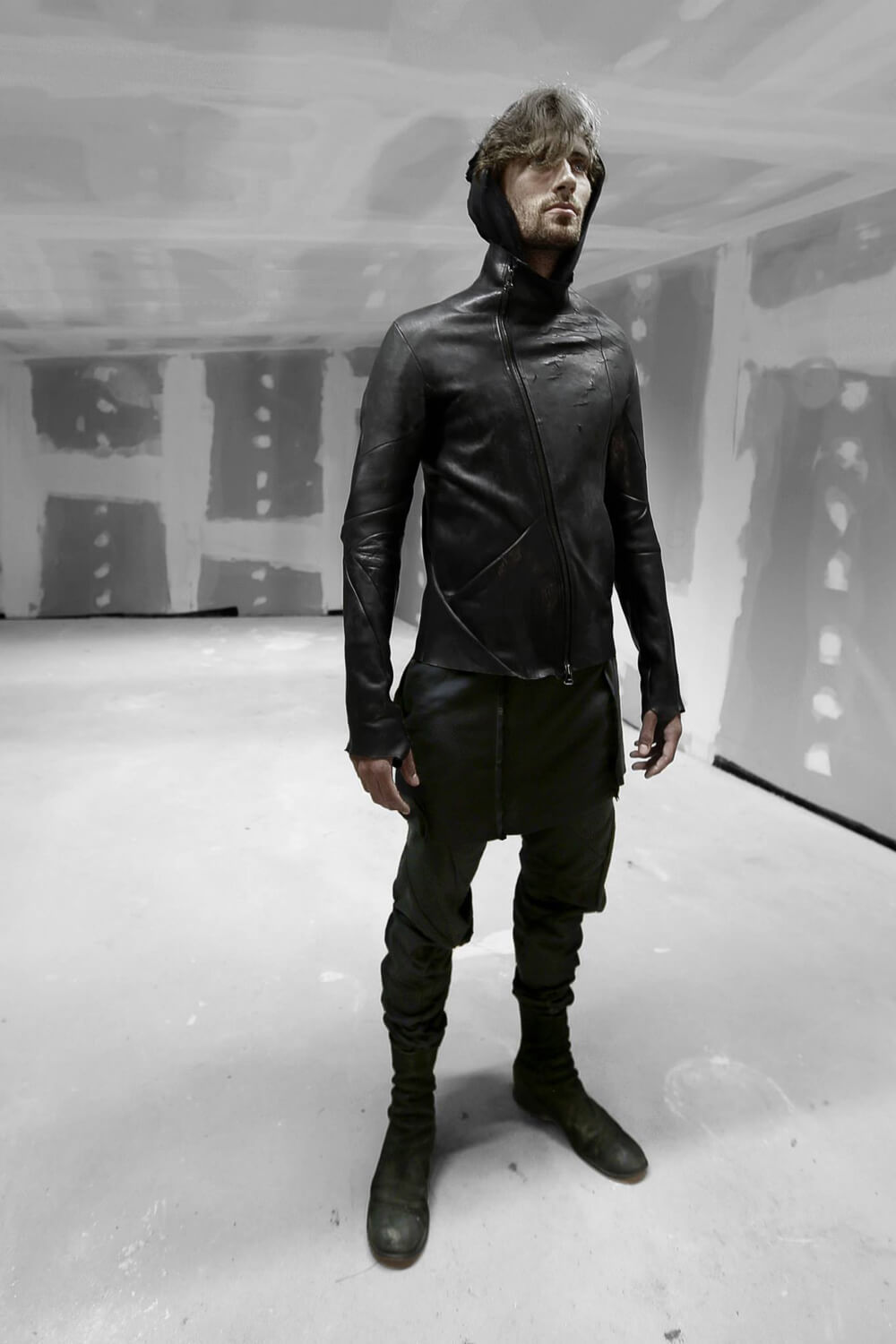
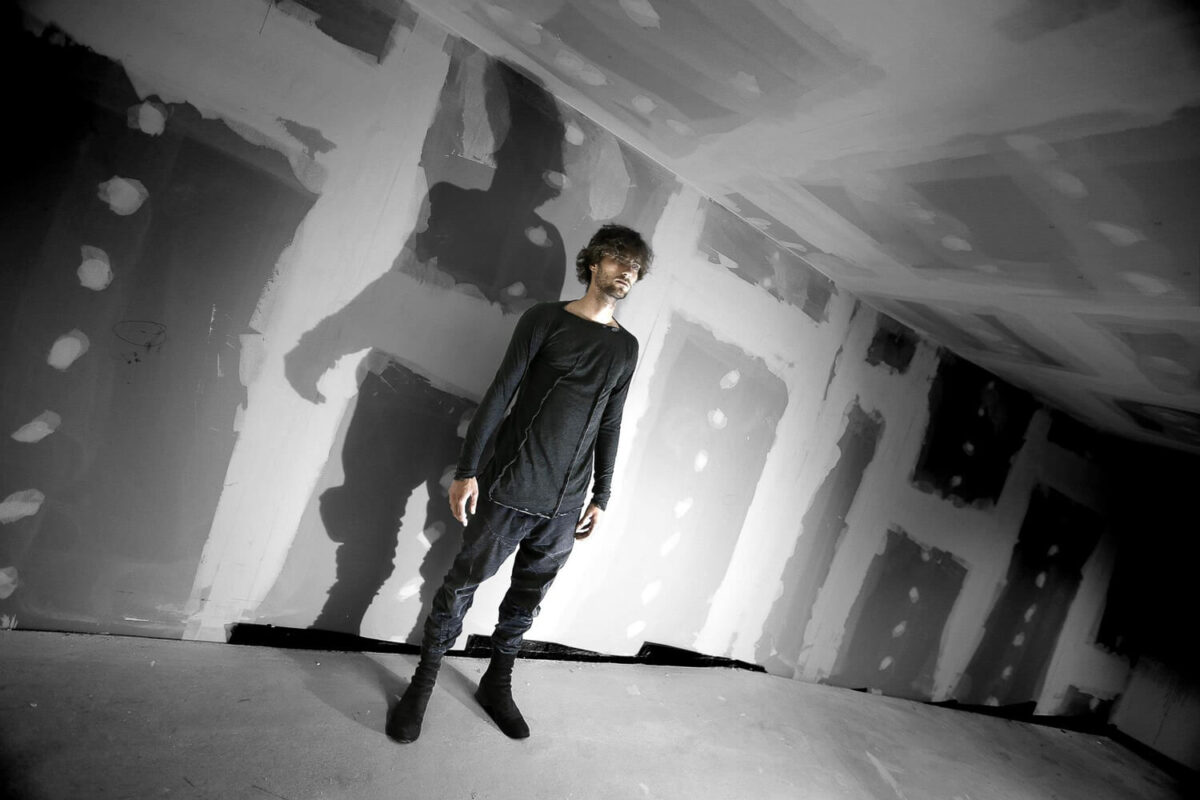
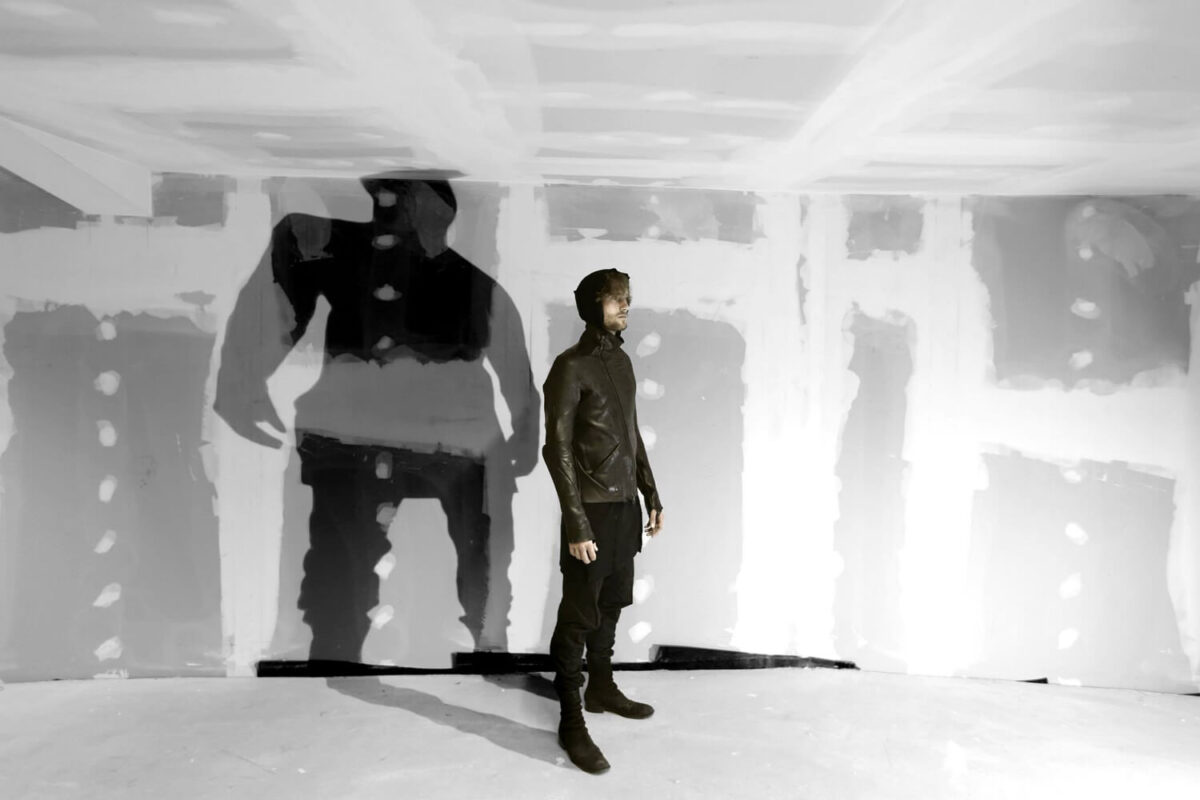
Nothing in the Spring/Summer 2015 lookbook looks finished. The walls are raw plasterboard striped with joint compound; screw holes march in pale vertical rows behind the model; hard direct flash slams an oversized shadow onto the ceiling and drywall. Positioned in Leon Emanuel Blanck’s archive between Autumn/Winter 2014/15 SUBVERSIVE and Autumn/Winter 2015/16 RIGOR MORTIS, RIGOR strips away boutique polish to put pattern construction under blunt scrutiny.
Warm-weather clothing usually forgives lazy drafting. Drop a shoulder, loosen a side seam, let lightweight cloth hang—most summer menswear survives on slack. Blanck refuses that exit. Even in sleeveless tanks and knee-length shorts, his Berlin studio holds every panel under visible tension, forcing fabric to turn, twist, and lock around the body’s joints.
Anfractuous Distortion Under Summer Weight
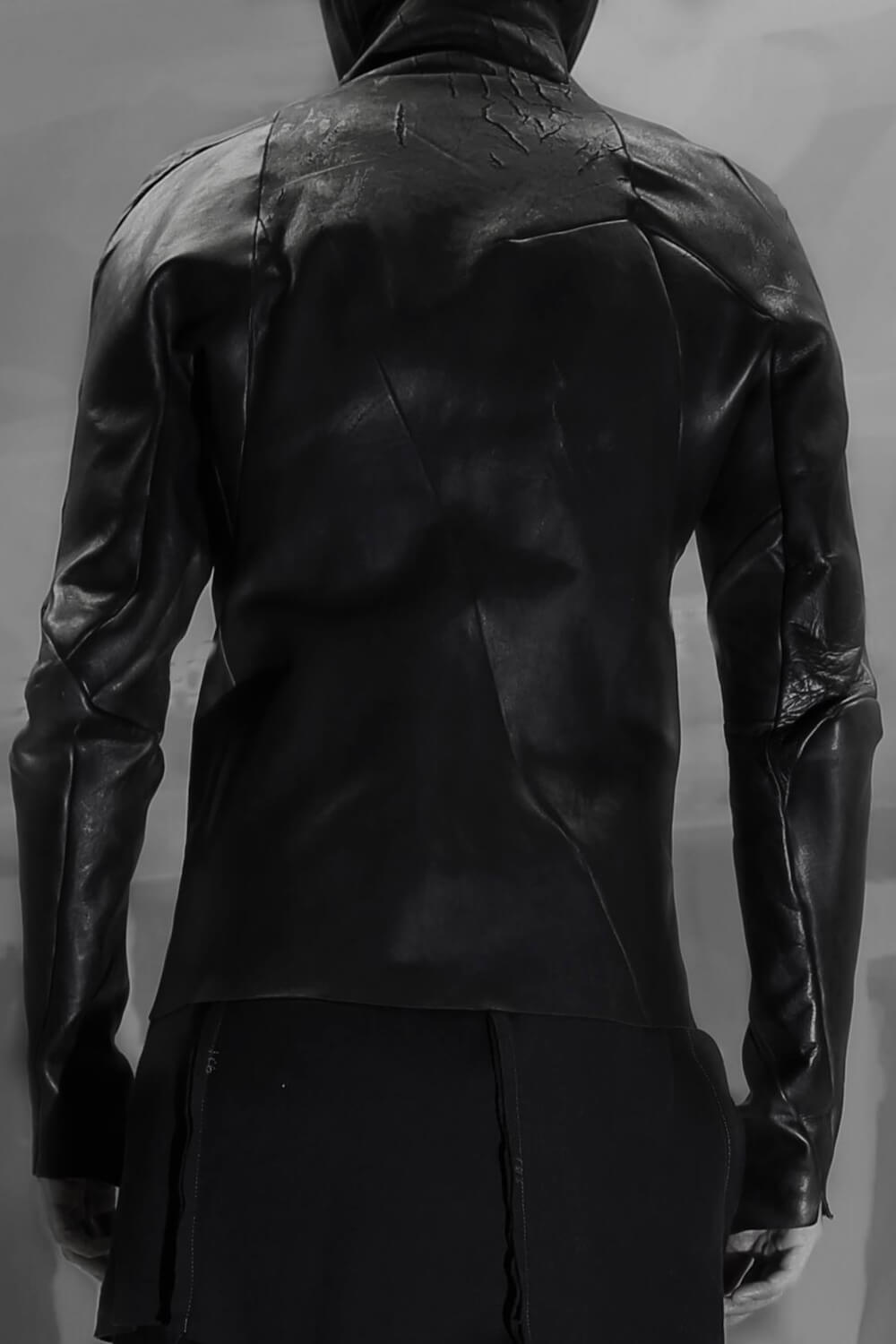
Blanck’s core method, Anfractuous Distortion, abandons conventional flat tailoring blocks in favor of asymmetrical pattern-making developed directly on the body. Panels wrap diagonally across the torso, shoulder blades, and thighs instead of meeting at predictable vertical side seams. Look at the back of the high-collar black jacket in the lookbook: heavy topstitched seams plunge in a sharp V between the scapulae, pulling the waist inward while the sleeves rotate forward.
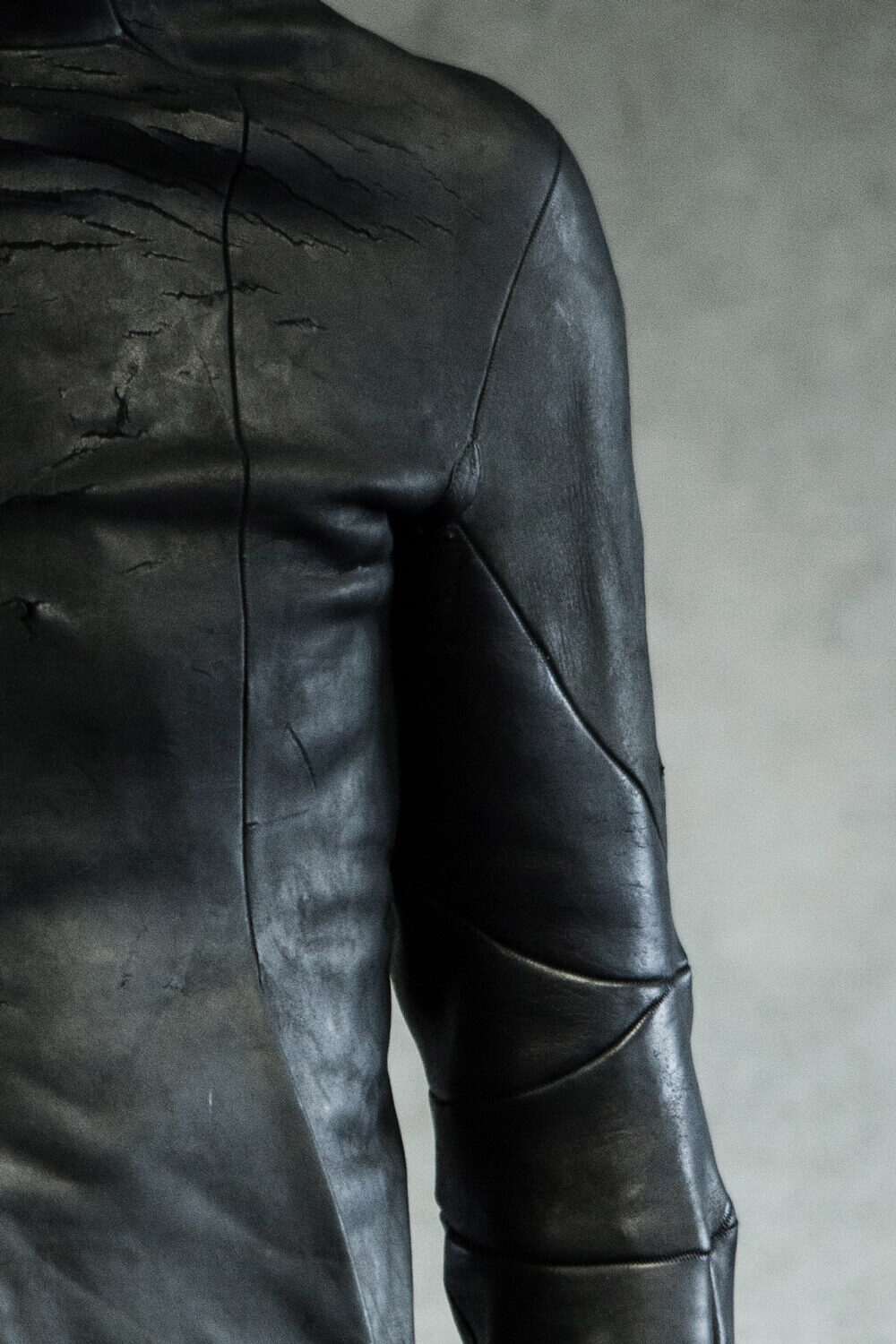
Leather carries that architecture naturally. A close frame of a black leather shoulder reveals spiral seaming twisting down the upper arm alongside fissured, scarred grain across the upper chest—surfaces that look worked hard rather than factory-buffed. Thin cloth betrays every mistake. Translating the same curved seam geometry into lighter woven cottons and jersey leaves nowhere to hide, yet the seams stay taut enough to hold stepped hems, flaring collars, and stacked knee volume without heavy winter lining.
Charcoal, Bone, and Heavy Footwear
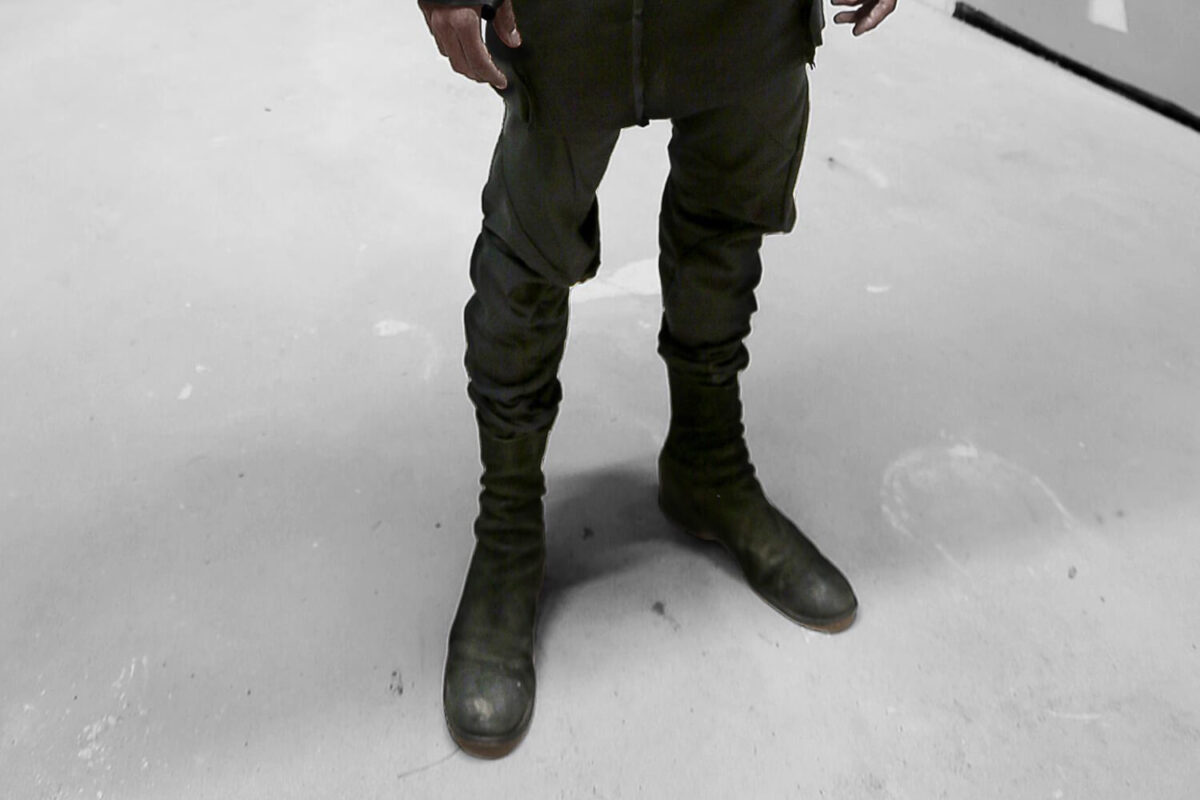
Black dominates the drywall frames, though rarely flat black. Washed charcoal coats hang open on sweeping off-center zips over thigh-length tunics, breaking up the torso before hitting drop-crotch shorts cut with curved thigh panels and raw, angled hems. Elsewhere, a draped sleeveless tank falls into zip-front trousers whose extra fabric flap swings past the hip; matte olive-charcoal legs stack tightly above scuffed, low-profile leather boots.
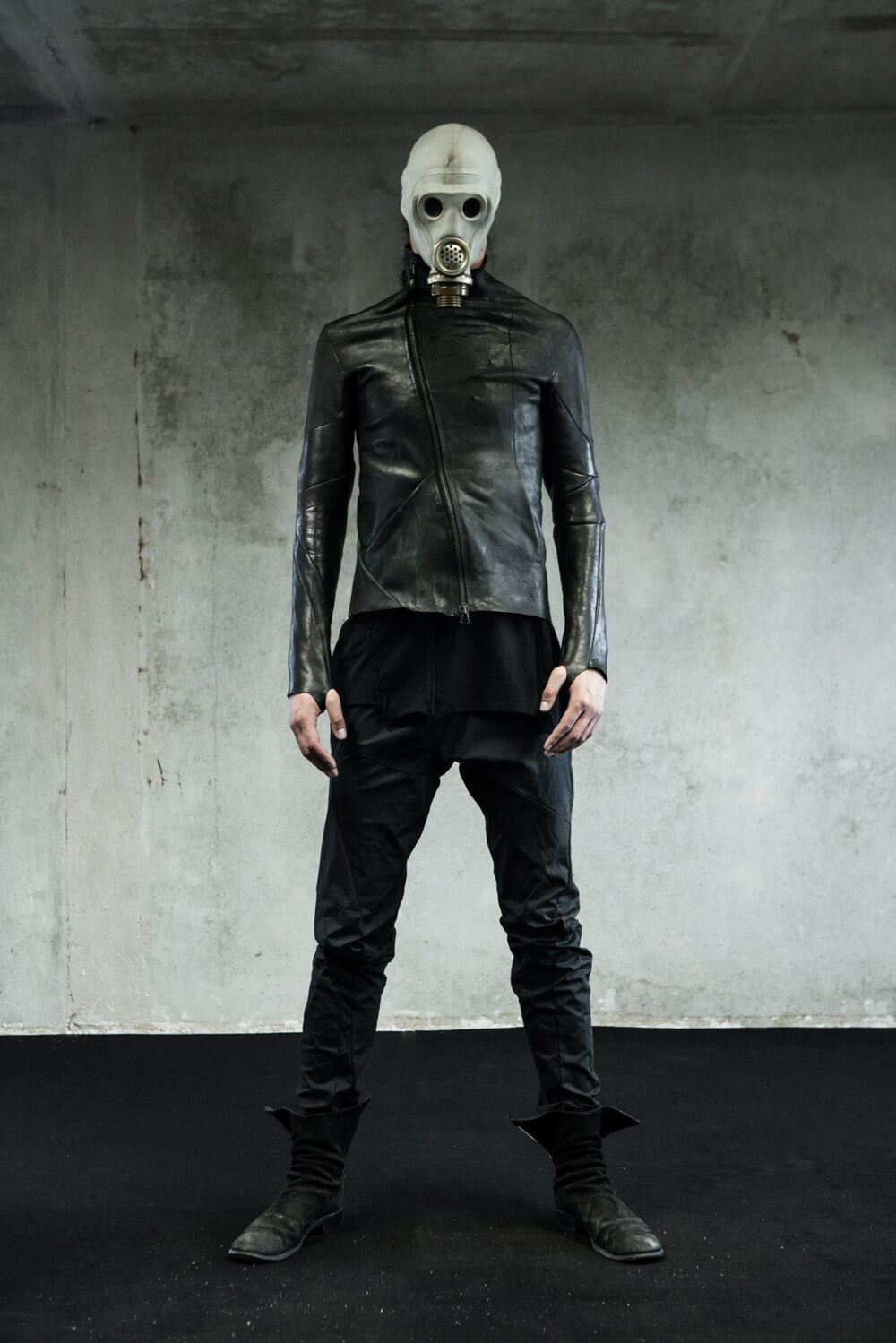
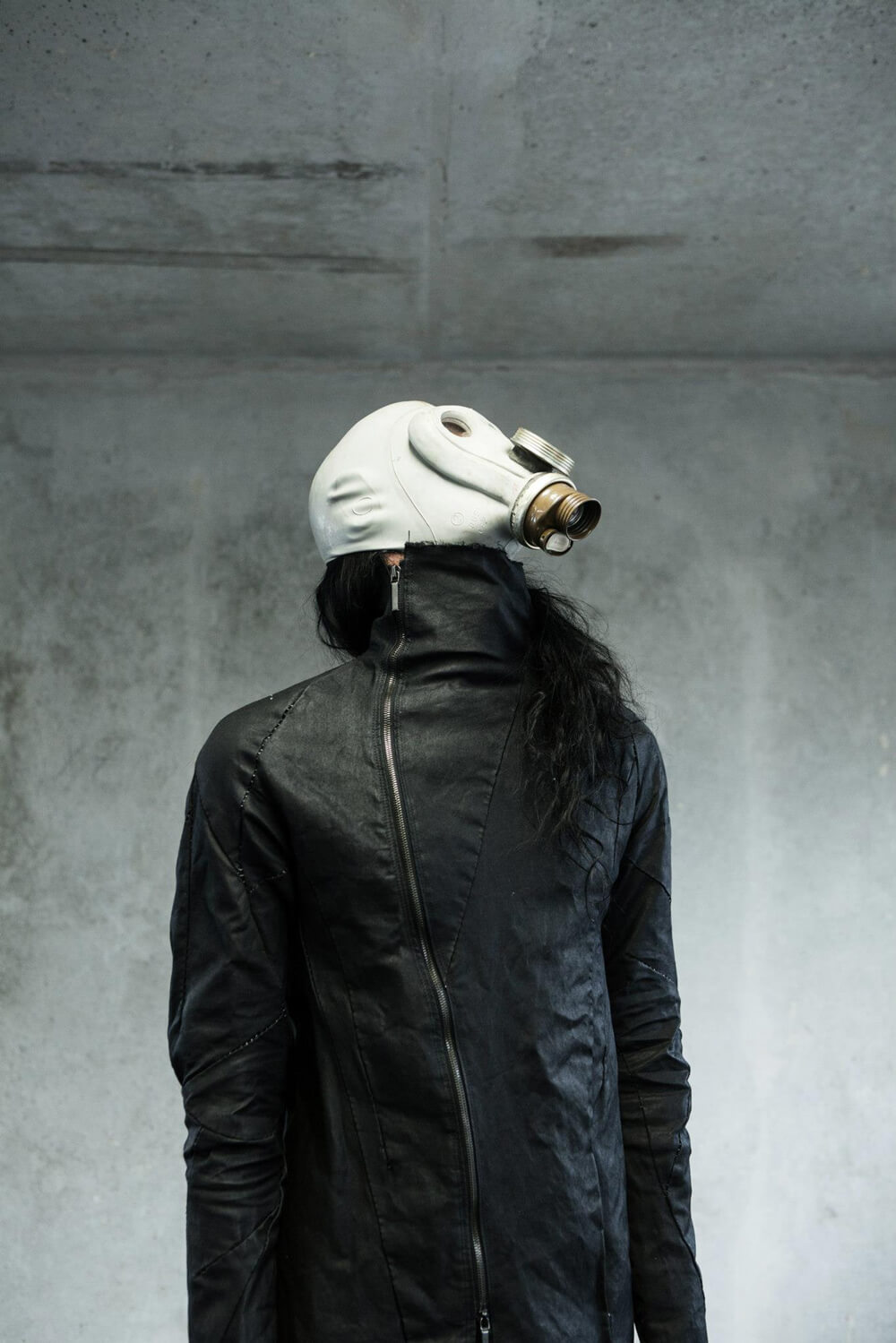
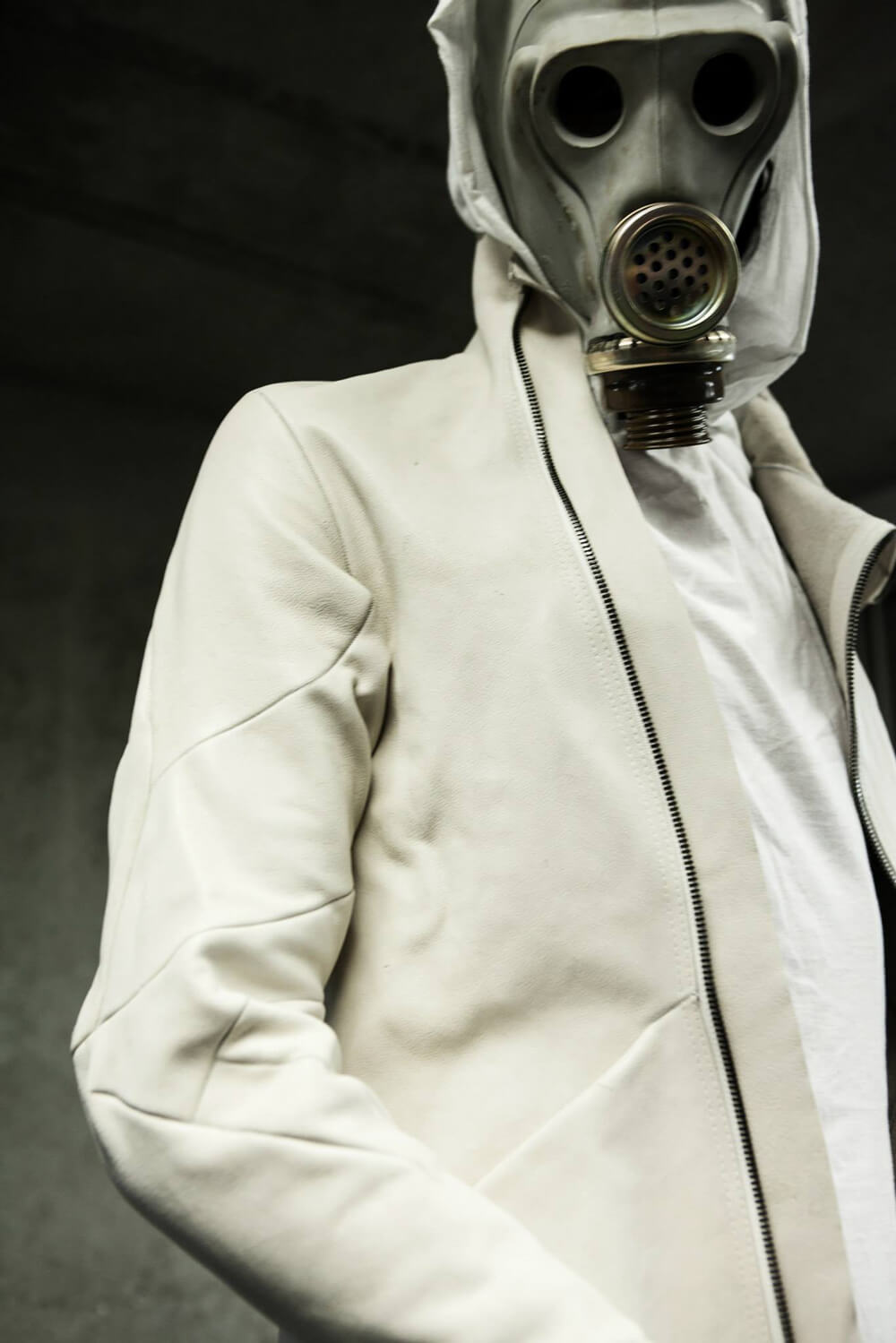
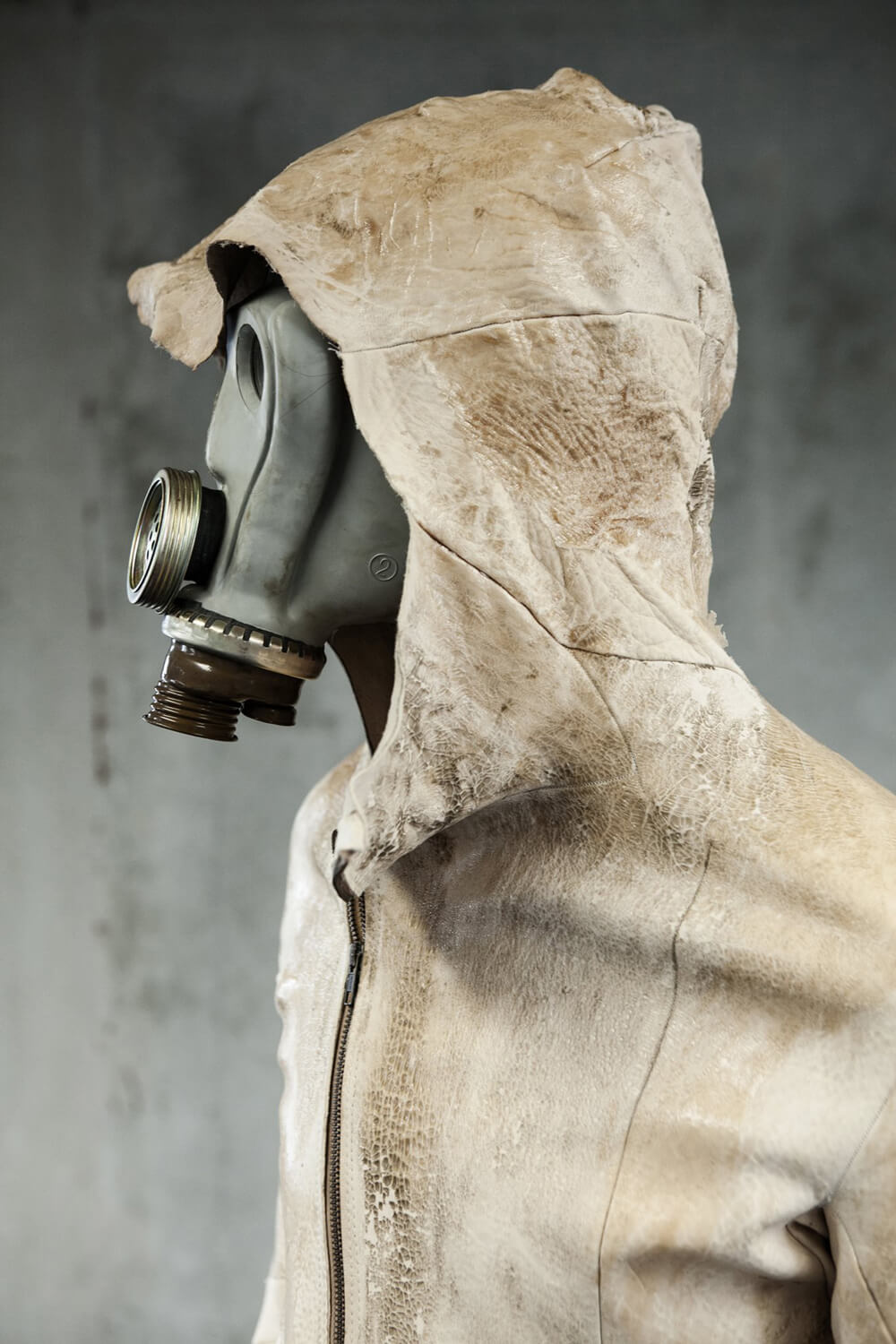
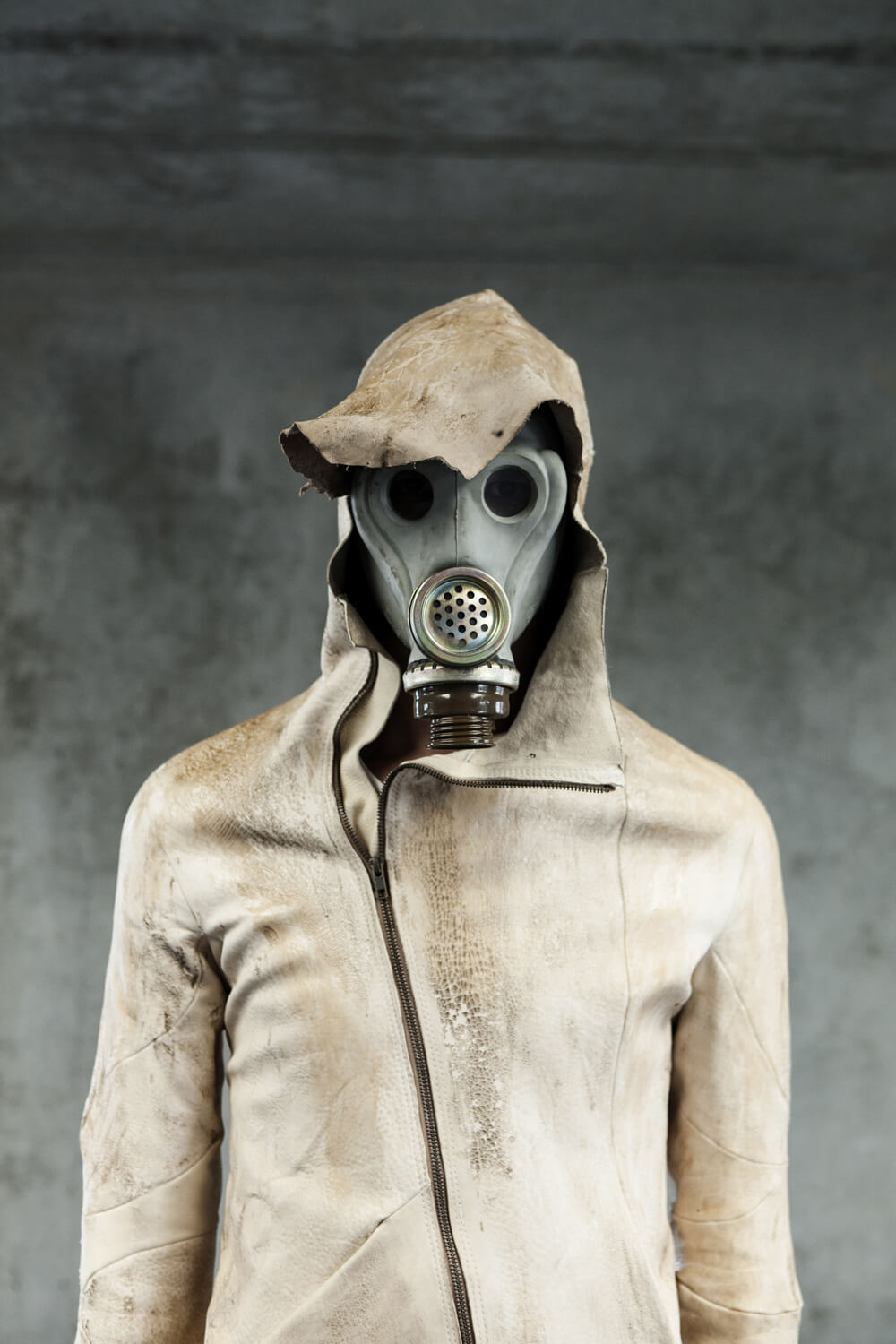
Then the palette snaps. Against raw poured concrete, Blanck shifts into bone and ecru: an off-white zip jacket with a high folded collar and frayed seams paired with curved-panel drop-crotch shorts. Another frame zooms in on a hooded cream leather piece marked with ochre patina and a jagged, raw-cut hood edge. A vintage grey rubber gas mask covers the model’s face in both concrete shots—an abrasive industrial prop that pushes the styling past quiet minimalism, even if it flirts with darkwear theatrics the garments barely need. Grounding every look, dark lace-up boots with wide open tongues and tall back-zip boots pin the center of gravity firmly to the floor.
Flash, Drywall, and the Pivot to Rigor Mortis
Shot by Berlin-based photographer Michal Andrysiak, the 15 frames reject soft gallery lighting entirely. Direct, unforgiving flash flattens the room while throwing a distorted double of each look across the taped plasterboard—turning the garment’s outline into a second, larger graphic behind the wearer. You catch every loose thread at a raw hem, every crease stacked behind a knee, every scuffed toe box.
Looking back across Blanck’s chronology, RIGOR reads as a discipline exercise right before his autumn breakout. One season later, RIGOR MORTIS (AW15/16) would introduce his self-developed stiffening resin treatment; SS15 had to earn its structure through seam tension, proportion, and raw edge finishing alone. A decade on, the clothes hold up because the cuts do the work—no gimmicks required.