Moderne Avant-Garde Mode
Moderne avant-garde mode gebruikt kleding om te testen hoe lichamen, materialen en culturele systemen nu anders begrepen kunnen worden. Het erft deconstructie, anti-mode en radicale ambacht, maar is niet beperkt tot zwarte kleding of een vaste lijst van cultontwerpers. De meest overtuigende vormen maken hedendaagse omstandigheden—technologie, klimaat, identiteit, arbeid en beeldcultuur—tot precieze beslissingen over constructie en draagbaarheid.
Wat maakt avant-garde mode modern?
“Modern” kan actueel betekenen, maar het draagt ook de geschiedenis van het modernisme: de poging om vormen adequaat te maken voor het industriële leven, nieuwe technologieën en veranderende sociale relaties. Moderne avant-garde mode beslaat beide betekenissen. Het is hedendaagse kleding die vraagt of geërfde ideeën over schoonheid, pasvorm, gender, luxe en zelfs het kledingstuk zelf nog steeds de wereld beschrijven waarin we leven.
Die vraag voorkomt dat de categorie zich tot een uiterlijk vastlegt. Zwarte asymmetrische lagen kunnen de herinnering aan Japans ontwerp, Belgische deconstructie en de donkere onafhankelijke scene met zich meedragen, maar herhaling alleen maakt ze niet avant-garde. Een vertrouwde silhouet kan commercieel effectief zijn terwijl het geen idee meer vooruit helpt. Omgekeerd kan een eenvoudig kledingstuk echt experimenteel zijn als het patroon, het materiaal of de relatie met de drager reorganiseert hoe kleding wordt gemaakt en gebruikt.
De vraag van MoMA Is mode modern? is nuttig omdat het kleding verbindt met functionaliteit, politiek, arbeid, identiteit, economie en technologie, in plaats van mode alleen als visuele vernieuwing te beschouwen. Modern avant-garde werk wordt significant wanneer verschillende van deze dimensies samenkomen in een samenhangend object.
De erfenis van de late twintigste eeuw
Hedendaagse avant-garde mode begint vanuit een al getransformeerd veld. Issey Miyake maakte textieltechniek en lichaamsbeweging onlosmakelijk met elkaar verbonden. Rei Kawakubo vestigde afwezigheid, ambiguïteit en de ruimte rond het lichaam als ontwerpmateriaal. Yohji Yamamoto toonde aan dat zwart, volume en asymmetrische tailoring bescherming en vrijheid konden bieden in plaats van alleen de drager te dramatiseren. Martin Margiela onthulde de normaal verborgen systemen van constructie, auteurschap en commerciële waarde.
De volgende generatie erfde methoden in plaats van regels. Van Hussein Chalayan kwam het kledingstuk als onderzoek naar migratie, architectuur en mechanica; van Alexander McQueen, de catwalk als een psychologisch en politiek geladen medium; van de Italiaanse ambachtelijke beweging, het idee dat verf, leer, naad en draagbaarheid ontwikkeld konden worden als een totale materiaaltalen. Deze precedenten blijven actief, maar modern werk moet meer doen dan hun herkenbare oppervlakken citeren.
Vijf talen van moderne avant-garde mode
1. Architectonisch silhouet
Het kledingstuk wordt behandeld als een structuur met zijn eigen volume in plaats van een membraan dat het lichaam volgt. Uitgebreide schouders, verplaatste armsgaten, hangende panelen, cirkelvormige snits en sculpturale leegtes veranderen de omtrek van de drager en het ritme van beweging. Het resultaat kan monumentaal of bijna onopgemerkt zijn; architectuur ligt in de organisatie van ruimte, niet alleen in grootte.
2. Materiële transformatie
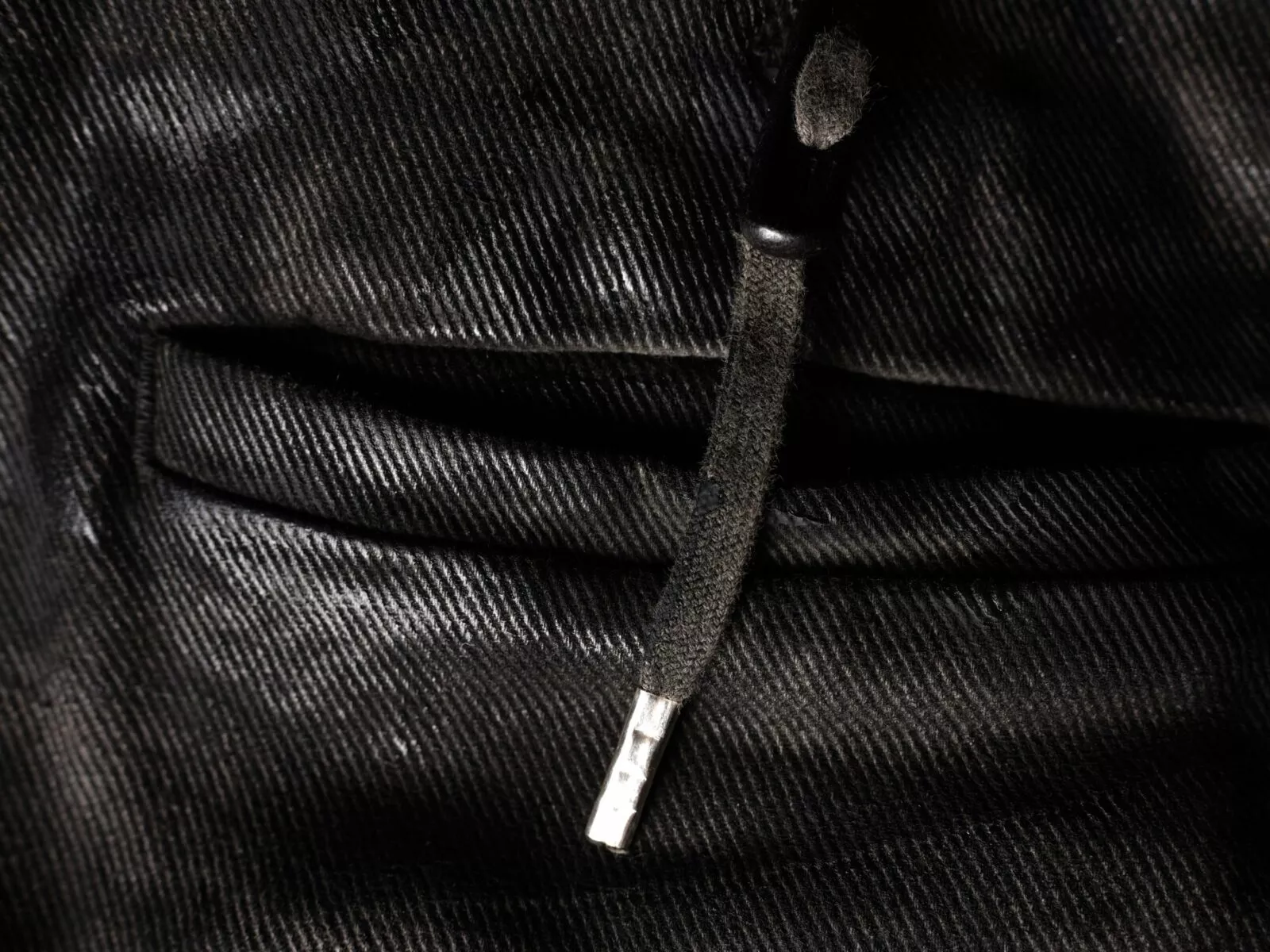
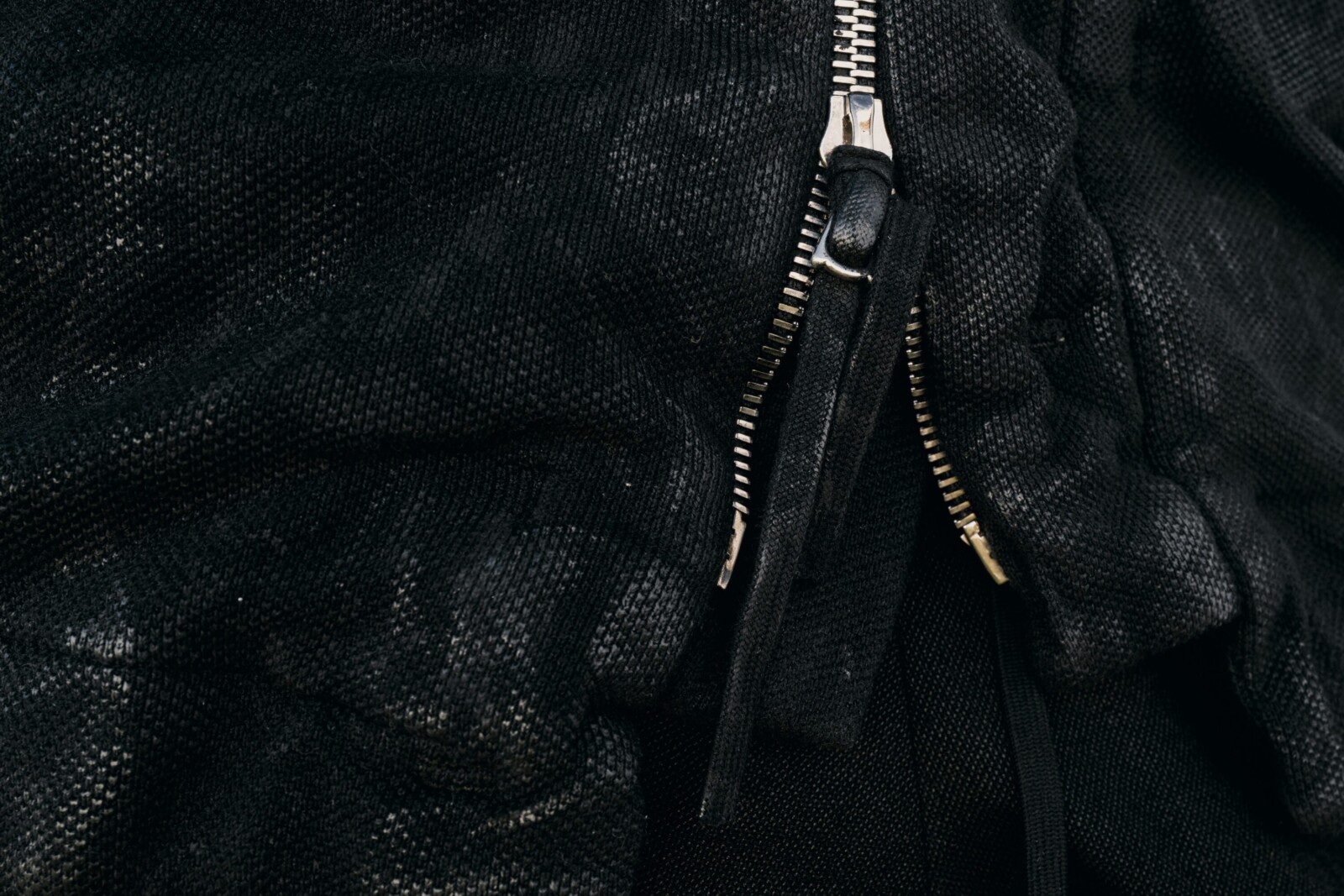
Hedendaagse ontwerpers werken na conventionele textielproductie in plaats van stof als afgewerkt te beschouwen. Voltooide kledingstukken worden geverfd, gewassen, gecoat, geoxideerd, gebonden, afgeslepen of samengeperst. Leer kan doorschijnend, stijf of opzettelijk geschonden zijn. Technische vezels kunnen organische membranen imiteren, terwijl bescheiden stof dichtheid kan verwerven door herhaalde behandeling. Proces wordt zichtbaar bewijs in plaats van een imperfectie om te verbergen.
3. Deconstructiesystemen
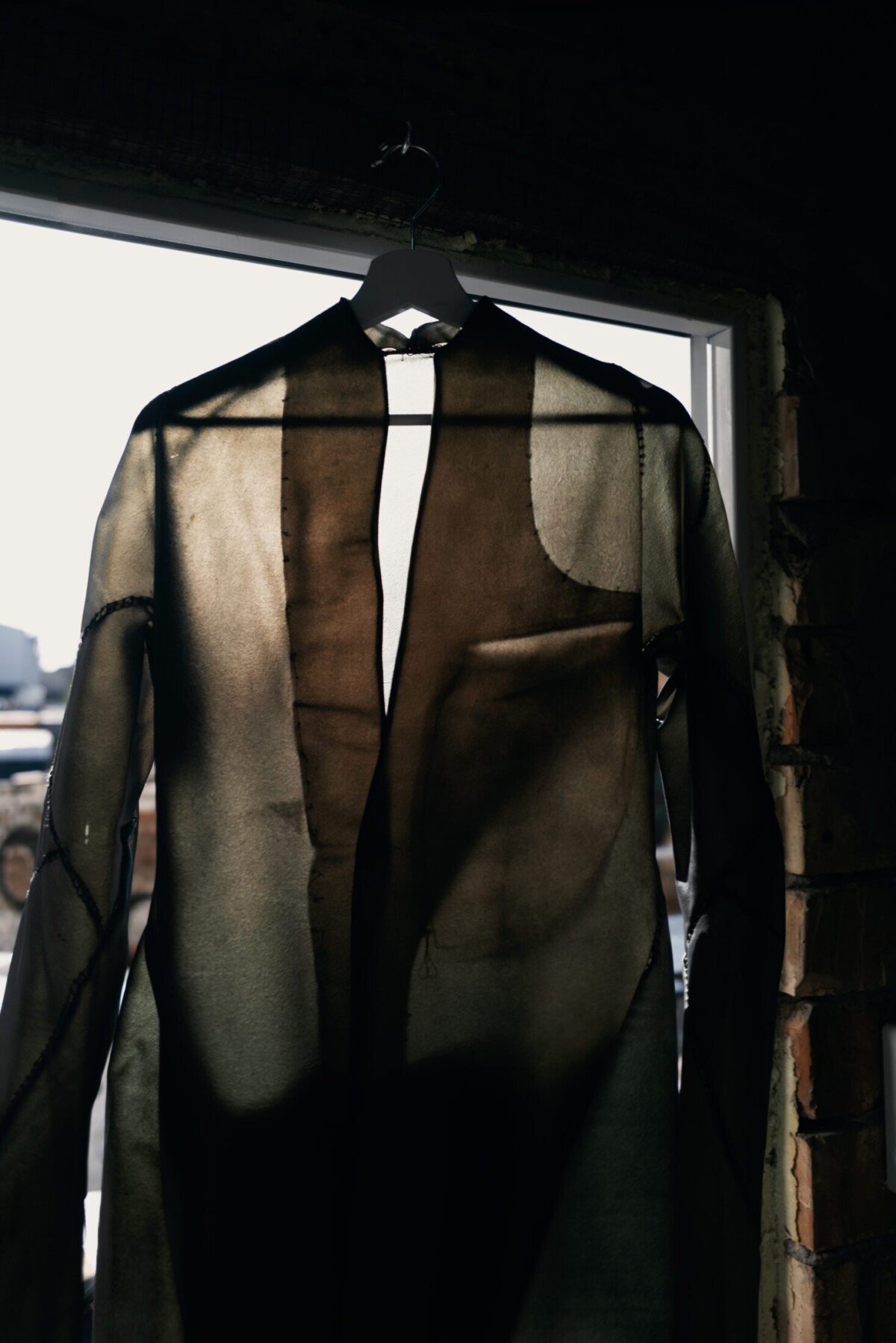
Deconstructie blijft relevant wanneer het een aanname onthult: waarom een naad op een bepaalde plek hoort, waarom een jas vooraan moet sluiten, waarom tailoring een gendergerelateerde houding encodeert, of waarom luxe nieuwheid met waarde gelijkstelt. Blootgestelde interieurs en ruwe randen zijn slechts de vocabulaire. Het intellectuele werk ligt in het tonen dat een vertrouwd kledingstuk een geconstrueerde conventie is en daarom anders geconstrueerd kan worden.
4. Transformeerbaarheid en participatie
Modulaire lagen, verstelbare volumes, omkeerbare constructie en kledingstukken die door de drager zijn gesneden herverdelen het ontwerpauthoriteit. Het A-POC-systeem van Miyake en Dai Fujiwara blijft een cruciaal precedent: een industrieel geproduceerd textiel wordt kleding door de beslissingen van de gebruiker, waardoor er weinig snijafval ontstaat. Huidige modulaire systemen breiden deze logica uit door aanpasbare maten, reparatie en meerdere draagwijzen.
5. Catwalk als argument
De moderne modeshow kan functioneren als choreografie, installatie, film of burgerlijk gebaar. De waarde is niet evenredig aan het spektakel. Een presentatie is belangrijk wanneer casting, ruimte, geluid en beweging de ideeën van de kleding verduidelijken—wanneer het publiek wordt gevraagd om macht, schoonheid of collectieve identiteit opnieuw te overwegen in plaats van alleen maar beelden voor circulatie te genereren.
Ontwerpers die het moderne veld vormgeven
De gevestigde avant-garde huizen blijven hedendaags omdat hun talen blijven veranderen. Comme des Garçons behandelt de categorie “kleding” nog steeds als instabiel. Yohji Yamamoto’s tailoring blijft de relatie tussen stof, tijd en bewegende lichamen testen. De Miyake-studio's ontwikkelen plooien en geengineerde textielen als levende systemen in plaats van erfgoedhandtekeningen.
Rick Owens: onafhankelijkheid op monumentale schaal
Rick Owens transformeerde een ondergrondse praktijk in Los Angeles in een wereldwijde maar onafhankelijke Parijse huis zonder zijn tegenstrijdigheden glad te strijken. Geavanceerde draping ontmoet gewassen leer, lichamelijke blootstelling ontmoet beschermend volume, en klassieke referenties ontmoeten clubcultuur. Het Palais Galliera beschrijft zijn werk door structurele transformatie, beweging en een uitbreidende materiaalkennis. Zijn catwalkprojecten zijn even belangrijk: casting en collectieve performance stellen herhaaldelijk de vraag welke lichamen luxe mode toestaat om krachtig te verschijnen.
Carol Christian Poell en materiële autonomie
Carol Christian Poell bezet een meer teruggetrokken positie. Zijn werk onderwerpt tailoring, schoeisel en leer aan anatomisch en chemisch onderzoek: gedraaide constructie, gearticuleerde gewrichten, objectverf, verharde oppervlakken en bewijs van biologische oorsprong. De kledingstukken kunnen weerstand bieden tegen comfort en gewone retailpresentatie. Die moeilijkheid is betekenisvol omdat het containment, behoud en de grenzen van het lichaam materieel aanwezig maakt.
Boris Bidjan Saberi en het post-industriële lichaam
Boris Bidjan Saberi verbinden ambachtelijke behandeling met een stedelijk technisch systeem. Kledingverf, dichte lagen, beperkende openingen en anatomisch gebogen patronen produceren kleding die wordt voltooid door beweging en draagbaarheid. Zijn belang ligt in het meenemen van de materiële intensiteit van de Italiaanse stroming uit de jaren '90 naar de donkere mode, schoeisel en technische samenwerking van de eenentwintigste eeuw zonder het te reduceren tot versleten decoratie.
LEON EMANUEL BLANCK en vervormde anatomie
LEON EMANUEL BLANCK benadert kledingconstructie via de anatomie van het bewegende lichaam. Zijn kenmerkende patroon-snijdmethoden verwerpen conventionele symmetrie en vertrouwde kledingarchitectuur, wat resulteert in spiraalvormige naden, verplaatste volumes en silhouetten die lijken te wikkelen rond de drager. In plaats van een conventioneel patroon te versieren, verandert Blanck de onderliggende geometrie. Het resultaat is kleding die beweging, spanning en lichamelijke asymmetrie zichtbaar maakt, en positioneert patroon snijden zelf als een avant-garde methode.
DEVOA en anatomische constructie
DEVOA plaatst de menselijke anatomie in het centrum van kledingconstructie. Patronen, naden en gearticuleerde vormen reageren op spieren, gewrichten en beweging in plaats van het lichaam als een statisch tailoringblok te beschouwen. Technische stoffen coëxisteren met natuurlijke materialen, terwijl precieze constructie vaak een spanning creëert tussen bescherming en mobiliteit. Deze anatomische benadering toont aan hoe hedendaagse avant-garde mode kan ontstaan uit het bestuderen van de mechanica van het lichaam in plaats van alleen uit visuele provocatie.
JULIUS and the evolution of Japanese darkwear
JULIUS developed a highly recognizable language from monochrome layering, elongated proportions, distressed surfaces and an interplay between narrow anatomical forms and expansive volume. Yet its importance extends beyond an all-black aesthetic. Military references, industrial environments, music and subcultural imagery are repeatedly translated into experiments with silhouette and material. In doing so, JULIUS helped define a strand of twenty-first-century Japanese avant-garde menswear in which clothing functions simultaneously as protection, abstraction and identity.
The Viridi-Anne and quiet material experimentation
The Viridi-Anne occupies a quieter territory within Japanese avant-garde fashion. Its work combines unconventional pattern construction, layering and carefully developed textiles with garments that remain closely connected to everyday movement. Treatments, irregular surfaces and subdued palettes create complexity without requiring theatrical silhouettes. This balance between experimentation and wearability offers another model for the contemporary avant-garde: radicalism expressed through construction, proportion and material detail rather than spectacle.
Junya Watanabe and engineered transformation
Junya Watanabe approaches familiar clothing as a problem of construction. Emerging from Comme des Garçons, where he began as a pattern maker, Watanabe developed a practice in which recognizable archetypes are cut apart, multiplied and rebuilt through complex pattern engineering. Workwear, denim, tailoring, military clothing and technical outerwear become starting structures rather than fixed categories. His womenswear has repeatedly pushed fabric into sculptural and geometric forms, while Junya Watanabe MAN uses collaboration to transform established garments and industrial products from within. This ability to make the ordinary structurally unfamiliar places Watanabe between the conceptual experimentation of Comme des Garçons and the increasingly technical language of contemporary menswear.
sacai and the hybrid garment
Chitose Abe’s sacai advances a different form of reconstruction through hybridization. Rather than abandoning familiar clothing, Abe combines its archetypes: a bomber can become a trench coat, knitwear can merge with shirting, and contrasting fabrics can divide a single garment into multiple identities. Pattern construction makes these combinations structural rather than simply layered or styled together. The approach turns everyday wardrobe conventions into unstable categories while preserving their functionality and recognizability. In this sense, sacai demonstrates how an avant-garde methodology can move into widely wearable contemporary fashion without surrendering experimentation.
Maison Margiela and the continuing language of deconstruction
Maison Margiela remains fundamental to modern avant-garde fashion because the methods established by Martin Margiela continue to provide a vocabulary for questioning how clothes acquire value and meaning. Deconstruction exposes linings, seams and unfinished structures; found and existing materials are repurposed; familiar garments are displaced, enlarged or reconstructed; anonymity challenges the cult of the designer; and the Artisanal practice transforms objects and discarded materials through couture-level labour. Under Glenn Martens, these codes are being treated as working methods rather than static archive signatures. Repurposing, trompe-l’œil, second-skin garments, material assemblage and altered historical silhouettes continue to investigate the boundary between clothing and object. Margiela’s contemporary relevance therefore lies not only in its enormous historical influence, but in the continued possibility of using deconstruction to make the familiar strange again.
Iris van Herpen and collaborative fabrication
Iris van Herpen builds couture through collaboration with architects, scientists, engineers and artists. Digital modeling, laser cutting and additive manufacturing coexist with patient hand assembly. Institutions including the Metropolitan Museum of Art and Palais de Tokyo emphasize the way her work joins technology to biological form. Its strongest achievement is not making dresses look futuristic; it is using unfamiliar processes to imagine another relationship between body, nature and structure.
These figures do not constitute a complete directory. They represent different models of practice: the independent house, the materially autonomous atelier, the post-industrial system and the interdisciplinary laboratory. RAW Looks’ extensive Avant-Garde Fashion Designer List remains the primary destination for individual designer profiles.
Technologie is een methode, geen esthetiek
Modern avant-garde fashion is often described through visible technology: 3D printing, responsive surfaces, robotic fabrication or garments that illuminate and move. Yet the newest machine does not automatically produce the newest thought. Technology becomes important when it changes structure, authorship, production or use.
Van Herpen’s laser-sintered Skeleton dress, for example, could be built as a continuous rigid form without conventional seams. The Met’s conservation research reveals the other side of that innovation: experimental polyamide ages differently from established textiles, leaving museums to develop new methods for its care. A technical breakthrough creates a preservation problem. That full material lifecycle belongs to the design.
Modern practice also complicates the opposition between machine and hand. Computational models require testing, finishing and embodied knowledge; hand-dyed garments depend on chemistry and controlled production; traditional pleating can be reorganized through industrial engineering. The relevant distinction is not craft versus technology but passive convention versus active inquiry.
Digital images and physical clothes
Fashion is now encountered first through a screen more often than through cloth. Collections are compressed into frontal runway photographs, short video fragments and resale listings. This circulation gives independent designers global reach, but it favors immediately legible signatures. Extreme proportions and unusual surfaces survive the feed; subtle pattern logic and tactile intelligence often disappear.
A serious understanding of modern avant-garde fashion therefore returns to the object. How is weight distributed? What happens when the wearer sits, walks or fastens the garment? Does a material treatment improve with age, or is deterioration merely staged? The physical answers separate design systems from image systems.
Gender, bodies and the politics of form
Avant-garde fashion has long used androgyny, concealment and distortion to resist idealized anatomy. Contemporary practice widens that inquiry through nonbinary wardrobes, adaptive construction, broader casting and garments whose meaning changes across bodies. Oversized clothing can loosen the demand to display a conventionally sexed silhouette; exposure can be used as vulnerability, confrontation or self-possession.
But visual transgression does not guarantee structural inclusion. A runway may celebrate difference while sizing, pricing and retail availability remain narrow. The modern avant-garde must be evaluated across the complete system: who is imagined by the pattern, who can purchase and maintain the garment, who performs the labor, and who is permitted authorship.
Duurzaamheid en het probleem van eindeloze vernieuwing
The avant-garde’s traditional demand for constant newness now collides with ecological limits. Experimental materials may reduce waste or avoid animal inputs, but they may also rely on fossil-derived polymers, intensive energy or processes that cannot be repaired. “Innovation” is incomplete without evidence about sourcing, manufacture, durability and disposal.
Some of the most radical contemporary decisions are therefore quiet: producing slowly, maintaining an independent scale, designing for repair, reusing existing garments, preserving specialist workshops or allowing one pattern system to evolve over many seasons. These practices resist the fashion calendar’s requirement that value expire quickly.
Archival culture contributes another contradiction. Collecting older Margiela, Comme des Garçons, Helmut Lang, Carpe Diem or Poell preserves construction knowledge and extends a garment’s life. At the same time, online attention can turn historically specific work into speculative commodity and flatten it into searchable signatures. Responsible collecting studies provenance, condition and context rather than treating age alone as importance.
How to recognize meaningful modern avant-garde fashion
Price, rarity and visual strangeness are unreliable measures. A more useful reading begins with five questions:
- What convention is being questioned? The answer should be more precise than “normal clothes.”
- Does construction carry the idea? Silhouette, seam, material and fastening should do conceptual work.
- What happens on a moving body? Fashion is not complete as a still image.
- Is the process responsible for its consequences? Labor, durability and material impact belong to evaluation.
- Does the work develop over time? A coherent practice deepens its questions instead of changing costume every season.
Darkwear, techwear, conceptual couture, artisanal fashion and experimental tailoring can all overlap with the avant-garde, but none is automatically identical to it. Darkwear describes a visual and cultural field; techwear often prioritizes performance and utility; couture identifies a system of exceptional custom production. Avant-garde describes a critical position inside or against those systems.
Contemporary relevance
Modern avant-garde fashion matters because everyday dress is never neutral. Clothing organizes gender, movement, labor, status and our relationship with materials. Experimental garments make those structures visible. Their ideas often travel outward: asymmetry becomes ordinary, unisex sizing expands, repair becomes desirable, technical fabrics enter daily wardrobes and formerly unacceptable bodies acquire public presence.
The task is not to predict which strange silhouette will become mainstream. It is to preserve fashion as a field capable of difficult questions and sensuous material answers. Read What Is Avant-Garde Fashion? for the foundational definition, The History of Avant-Garde Fashion for the longer lineage, and Een Complete Tijdlijn van Avant-Garde Mode for its key chronological turning points.
References and further reading
- The Museum of Modern Art — Items: Is Fashion Modern?
- The Museum of Modern Art — Announcing Items: Is Fashion Modern?
- The Museum of Modern Art — A-POC Queen Textile, 1997
- The Metropolitan Museum of Art — Rei Kawakubo/Comme des Garçons: Art of the In-Between
- Palais Galliera — Rick Owens: Temple of Love
- National Gallery of Victoria — Carol Christian Poell — Artist and Collection Record
- Boris Bidjan Saberi — Boris Bidjan Saberi
- Design Museum — Hussein Chalayan
- Royal Ontario Museum — Iris van Herpen: Transforming Fashion
- Palais de Tokyo — Iris van Herpen
- The Metropolitan Museum of Art — (Im)mortal Fashion: Iris van Herpen’s Skeleton Dress
- Museum of Fine Arts Boston — #techstyle
- Iris van Herpen — Inside the Atelier — Sensory Seas