0
Leon Emanuel Blanck 2025春夏系列 Hybrido - The Architect 可穿戴雕塑
当代先锋派

现代前卫时尚

发布 9 月 10, 2026 Last reviewed 9 月 6, 2026

现代先锋时尚利用服装来测试身体、材料和文化系统现在可能被理解的不同方式。. 它继承了解构、反时尚和激进工艺,但并不局限于黑色服装或固定的崇拜设计师名单。它最有说服力的形式将当代条件——技术、气候、身份、劳动和图像文化——转化为关于构造和穿着的精确决策。.

什么让先锋时尚变得现代?

“现代”可以意味着当前,但它也承载着现代主义的历史:试图使形式适应工业生活、新技术和变化的社会关系。现代先锋时尚占据了这两种含义。它是当代服装,询问继承的美、合身、性别、奢华甚至服装本身的观念是否仍然描述我们所生活的世界。.

这个问题阻止了这一类别固化为一种外观。黑色不对称层次可能承载着日本设计、比利时解构和黑暗独立场景的记忆,但单靠重复并不能使它们成为先锋。一个熟悉的轮廓可以在商业上有效,但不再推动一个理念。相反,如果一件普通的服装其图案、材料系统或与穿着者的关系重新组织了服装的制作和使用方式,那么它可能是真正的实验性。.

MoMA的问题 时尚现代吗? 是有帮助的,因为它将服装与功能、政治、劳动、身份、经济和技术联系起来,而不是仅仅将时尚视为视觉新奇。当这些维度在一个连贯的物体中相遇时,现代先锋作品便变得重要。.

20世纪末的遗产

当代先锋时尚始于一个已经转变的领域。. Issey Miyake 使纺织工程和身体运动不可分割。川久保玲将缺席、模糊和身体周围的空间确立为设计材料。山本耀司展示了黑色、体积和不对称剪裁可以提供保护和自由,而不仅仅是戏剧化穿着者。. 马丁·马吉拉 揭示了通常被隐藏的构造、作者身份和商业价值的系统。.

下一代继承了方法而不是规则。侯赛因·查拉扬带来了作为对迁移、建筑和机械的研究的服装;亚历山大·麦昆则将T台视为一个心理和政治充满张力的媒介;意大利手工艺运动则提出了染料、皮革、缝合和穿着可以作为一种完整的材料语言进行发展。这些先例仍然活跃,但现代作品必须做的不仅仅是引用它们可识别的表面。.

现代先锋时尚的五种语言

1. 建筑轮廓

服装被视为一种具有自身体积的结构,而不是跟随身体的膜。扩展的肩膀、偏移的袖孔、悬挂的面板、圆形切口和雕塑般的空隙改变了穿着者的轮廓和运动的节奏。结果可能是宏伟的或几乎不可察觉的;建筑在于空间的组织,而不仅仅是大小。.

2. 材料转化

当代设计师在传统纺织生产之后工作,而不是将面料视为成品。完成的服装被染色、洗涤、涂层、氧化、粘合、磨损或压缩。皮革可能是半透明的、坚硬的或故意留下伤痕的。技术纤维可能模仿有机膜,而普通布料可以通过反复处理获得密度。过程成为可见的证据,而不是需要隐藏的缺陷。.
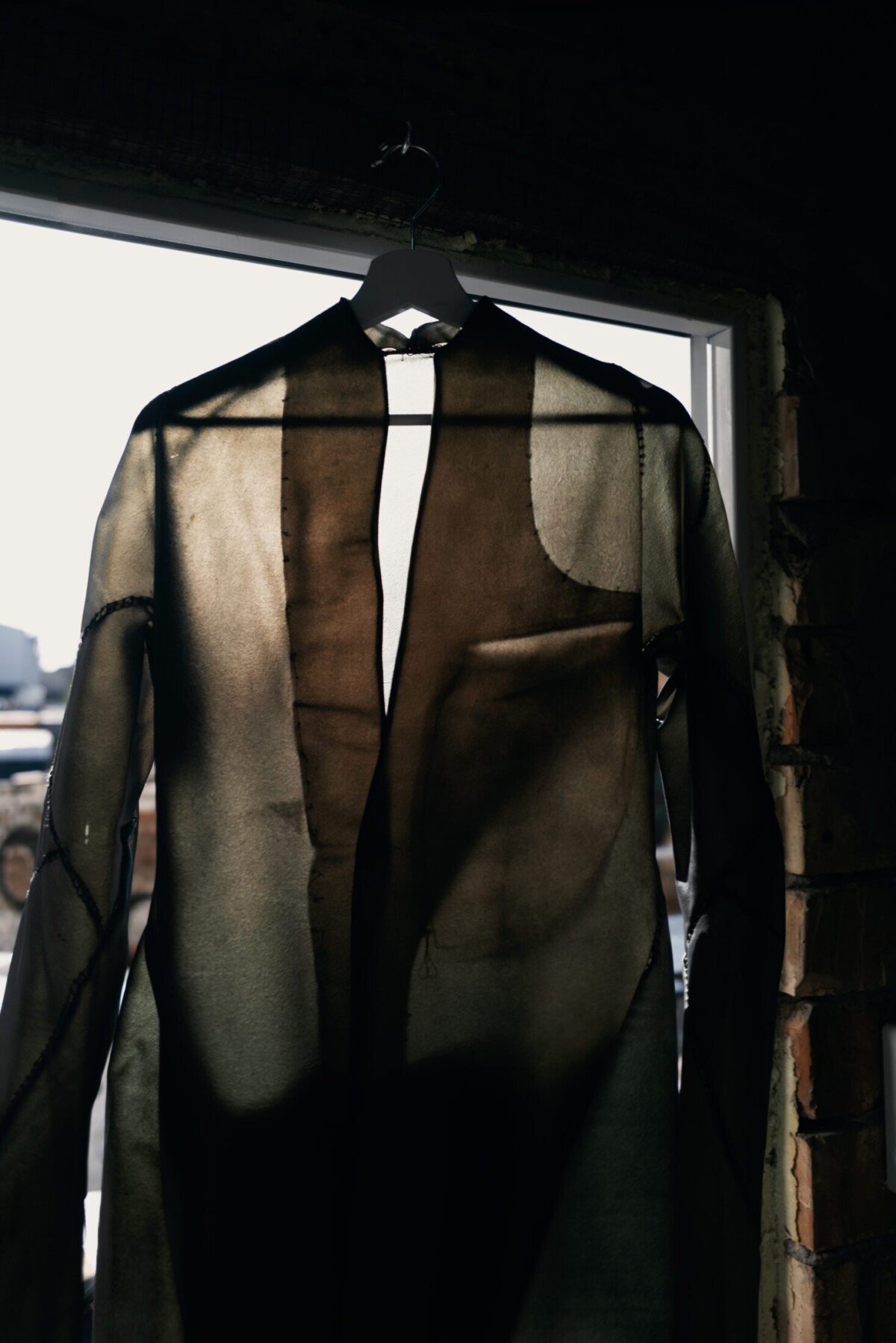
莱昂·埃曼纽尔·布兰克,半透明皮革夹克

3. 解构系统

当解构揭示一个假设时,它仍然相关:为什么缝合要在一个地方,为什么夹克必须在前面闭合,为什么剪裁编码了性别姿态,或者为什么奢华将新颖性与价值等同。暴露的内部和原始边缘只是词汇。智力工作在于展示一个熟悉的服装是一个构建的约定,因此可以以其他方式构建。.

4. 可转变性和参与

模块化层、可调体积、可逆构造和由穿着者剪裁的服装重新分配设计权威。三宅一生和大藤原的A-POC系统仍然是一个重要的先例:一种工业生产的纺织品通过用户的决策变成服装,产生很少的切割废料。当前的模块化系统通过可调尺寸、修复和多种穿着方式扩展了这一逻辑。.

5. T台作为论证

现代时装秀可以作为编舞、装置、电影或公民姿态运作。它的价值与视觉效果并不成正比。当选角、空间、声音和运动阐明服装的理念时,展示才重要——当观众被要求重新考虑权力、美或集体身份,而不仅仅是生成流通的图像。.

塑造现代领域的设计师

已建立的先锋品牌仍然是当代的,因为它们的语言继续变化。. Comme des Garçons 仍然将“服装”这一类别视为不稳定。. Yohji Yamamoto’的剪裁继续测试面料、时间和移动身体之间的关系。 三宅工作室 将褶皱和工程纺织品发展为活的系统,而不是遗产标志。.

瑞克·欧文斯:在宏伟规模上的独立性

Rick Owens 将洛杉矶地下实践转变为一个全球但独立的巴黎品牌,而不抹去其矛盾。复杂的垂坠与洗过的皮革相遇,身体的暴露与保护的体积相遇,古典参考与俱乐部文化相遇。巴黎时装博物馆通过结构转变、运动和扩展的材料词汇描述了他的作品。他的T台项目同样重要:选角和集体表演反复质疑奢侈时尚允许哪些身体显得强大。.

卡罗尔·克里斯蒂安·波尔和材料自主性

Carol Christian Poell 占据了一个更为隐蔽的位置。他的作品将剪裁、鞋类和皮革置于解剖学和化学的研究之下:旋转构造、关节活动、物体染色、硬化表面和生物起源的证据。这些服装可能会让人感到抵触舒适和普通零售展示。这种困难是有意义的,因为它使得限制、保存和身体的界限在物质上显现。.

博里斯·比贾·萨贝里和后工业身体

Boris Bidjan Saberi 将手工处理与城市技术系统连接起来。服装染色、密集分层、限制开口和解剖曲线图案产生了通过运动和穿着完成的衣服。他的重要性在于将1990年代意大利潮流的材料强度带入21世纪的黑暗服装、鞋类和技术合作,而不将其简化为破旧的装饰。.

莱昂·埃曼纽尔·布兰克和扭曲的解剖

LEON EMANUEL BLANCK 通过移动身体的解剖学来接近服装构造。他独特的图案剪裁方法拒绝传统的对称性和熟悉的服装建筑,产生螺旋缝合、偏移体积和看似缠绕穿着者的轮廓。布兰克并不是在装饰一个传统的图案,而是改变其基础几何。结果是使运动、张力和身体的不对称可见的服装,将图案剪裁本身定位为一种先锋方法。.

DEVOA和解剖构造

DEVOA 将人类解剖学置于服装构造的中心。图案、缝合和关节形式响应肌肉、关节和运动,而不是将身体视为静态的剪裁块。技术面料与自然材料共存,而精确的构造往往在保护和移动之间产生张力。这种解剖学的方法展示了当代先锋时尚如何可以通过研究身体的机械而不是仅仅通过视觉挑衅而出现。.

JULIUS和日本黑暗服装的演变

Julius developed a highly recognizable language from monochrome layering, elongated proportions, distressed surfaces and an interplay between narrow anatomical forms and expansive volume. Yet its importance extends beyond an all-black aesthetic. Military references, industrial environments, music and subcultural imagery are repeatedly translated into experiments with silhouette and material. In doing so, JULIUS helped define a strand of twenty-first-century Japanese avant-garde menswear in which clothing functions simultaneously as protection, abstraction and identity.

The Viridi-Anne and quiet material experimentation

The Viridi-Anne occupies a quieter territory within Japanese avant-garde fashion. Its work combines unconventional pattern construction, layering and carefully developed textiles with garments that remain closely connected to everyday movement. Treatments, irregular surfaces and subdued palettes create complexity without requiring theatrical silhouettes. This balance between experimentation and wearability offers another model for the contemporary avant-garde: radicalism expressed through construction, proportion and material detail rather than spectacle.

Junya Watanabe and engineered transformation

Junya Watanabe approaches familiar clothing as a problem of construction. Emerging from Comme des Garçons, where he began as a pattern maker, Watanabe developed a practice in which recognizable archetypes are cut apart, multiplied and rebuilt through complex pattern engineering. Workwear, denim, tailoring, military clothing and technical outerwear become starting structures rather than fixed categories. His womenswear has repeatedly pushed fabric into sculptural and geometric forms, while Junya Watanabe MAN uses collaboration to transform established garments and industrial products from within. This ability to make the ordinary structurally unfamiliar places Watanabe between the conceptual experimentation of Comme des Garçons and the increasingly technical language of contemporary menswear.

sacai and the hybrid garment

Chitose Abe’s sacai advances a different form of reconstruction through hybridization. Rather than abandoning familiar clothing, Abe combines its archetypes: a bomber can become a trench coat, knitwear can merge with shirting, and contrasting fabrics can divide a single garment into multiple identities. Pattern construction makes these combinations structural rather than simply layered or styled together. The approach turns everyday wardrobe conventions into unstable categories while preserving their functionality and recognizability. In this sense, sacai demonstrates how an avant-garde methodology can move into widely wearable contemporary fashion without surrendering experimentation.

Maison Margiela and the continuing language of deconstruction

Maison Margiela remains fundamental to modern avant-garde fashion because the methods established by Martin Margiela continue to provide a vocabulary for questioning how clothes acquire value and meaning. Deconstruction exposes linings, seams and unfinished structures; found and existing materials are repurposed; familiar garments are displaced, enlarged or reconstructed; anonymity challenges the cult of the designer; and the Artisanal practice transforms objects and discarded materials through couture-level labour. Under Glenn Martens, these codes are being treated as working methods rather than static archive signatures. Repurposing, trompe-l’œil, second-skin garments, material assemblage and altered historical silhouettes continue to investigate the boundary between clothing and object. Margiela’s contemporary relevance therefore lies not only in its enormous historical influence, but in the continued possibility of using deconstruction to make the familiar strange again.

Iris van Herpen and collaborative fabrication

Iris van Herpen builds couture through collaboration with architects, scientists, engineers and artists. Digital modeling, laser cutting and additive manufacturing coexist with patient hand assembly. Institutions including the Metropolitan Museum of Art and Palais de Tokyo emphasize the way her work joins technology to biological form. Its strongest achievement is not making dresses look futuristic; it is using unfamiliar processes to imagine another relationship between body, nature and structure.

These figures do not constitute a complete directory. They represent different models of practice: the independent house, the materially autonomous atelier, the post-industrial system and the interdisciplinary laboratory. RAW Looks’ extensive Avant-Garde Fashion Designer List remains the primary destination for individual designer profiles.

技术是一种方法,而不是一种美学

Modern avant-garde fashion is often described through visible technology: 3D printing, responsive surfaces, robotic fabrication or garments that illuminate and move. Yet the newest machine does not automatically produce the newest thought. Technology becomes important when it changes structure, authorship, production or use.

Van Herpen’s laser-sintered Skeleton dress, for example, could be built as a continuous rigid form without conventional seams. The Met’s conservation research reveals the other side of that innovation: experimental polyamide ages differently from established textiles, leaving museums to develop new methods for its care. A technical breakthrough creates a preservation problem. That full material lifecycle belongs to the design.

Modern practice also complicates the opposition between machine and hand. Computational models require testing, finishing and embodied knowledge; hand-dyed garments depend on chemistry and controlled production; traditional pleating can be reorganized through industrial engineering. The relevant distinction is not craft versus technology but passive convention versus active inquiry.

Digital images and physical clothes

Fashion is now encountered first through a screen more often than through cloth. Collections are compressed into frontal runway photographs, short video fragments and resale listings. This circulation gives independent designers global reach, but it favors immediately legible signatures. Extreme proportions and unusual surfaces survive the feed; subtle pattern logic and tactile intelligence often disappear.

A serious understanding of modern avant-garde fashion therefore returns to the object. How is weight distributed? What happens when the wearer sits, walks or fastens the garment? Does a material treatment improve with age, or is deterioration merely staged? The physical answers separate design systems from image systems.

Gender, bodies and the politics of form

Avant-garde fashion has long used androgyny, concealment and distortion to resist idealized anatomy. Contemporary practice widens that inquiry through nonbinary wardrobes, adaptive construction, broader casting and garments whose meaning changes across bodies. Oversized clothing can loosen the demand to display a conventionally sexed silhouette; exposure can be used as vulnerability, confrontation or self-possession.

But visual transgression does not guarantee structural inclusion. A runway may celebrate difference while sizing, pricing and retail availability remain narrow. The modern avant-garde must be evaluated across the complete system: who is imagined by the pattern, who can purchase and maintain the garment, who performs the labor, and who is permitted authorship.

可持续性与无尽新奇的问题

The avant-garde’s traditional demand for constant newness now collides with ecological limits. Experimental materials may reduce waste or avoid animal inputs, but they may also rely on fossil-derived polymers, intensive energy or processes that cannot be repaired. “Innovation” is incomplete without evidence about sourcing, manufacture, durability and disposal.

Some of the most radical contemporary decisions are therefore quiet: producing slowly, maintaining an independent scale, designing for repair, reusing existing garments, preserving specialist workshops or allowing one pattern system to evolve over many seasons. These practices resist the fashion calendar’s requirement that value expire quickly.

Archival culture contributes another contradiction. Collecting older Margiela, Comme des Garçons, Helmut Lang, Carpe Diem or Poell preserves construction knowledge and extends a garment’s life. At the same time, online attention can turn historically specific work into speculative commodity and flatten it into searchable signatures. Responsible collecting studies provenance, condition and context rather than treating age alone as importance.

How to recognize meaningful modern avant-garde fashion

Price, rarity and visual strangeness are unreliable measures. A more useful reading begins with five questions:

  • What convention is being questioned? The answer should be more precise than “normal clothes.”
  • Does construction carry the idea? Silhouette, seam, material and fastening should do conceptual work.
  • What happens on a moving body? Fashion is not complete as a still image.
  • Is the process responsible for its consequences? Labor, durability and material impact belong to evaluation.
  • Does the work develop over time? A coherent practice deepens its questions instead of changing costume every season.

Darkwear, techwear, conceptual couture, artisanal fashion and experimental tailoring can all overlap with the avant-garde, but none is automatically identical to it. Darkwear describes a visual and cultural field; techwear often prioritizes performance and utility; couture identifies a system of exceptional custom production. Avant-garde describes a critical position inside or against those systems.

Contemporary relevance

Modern avant-garde fashion matters because everyday dress is never neutral. Clothing organizes gender, movement, labor, status and our relationship with materials. Experimental garments make those structures visible. Their ideas often travel outward: asymmetry becomes ordinary, unisex sizing expands, repair becomes desirable, technical fabrics enter daily wardrobes and formerly unacceptable bodies acquire public presence.

The task is not to predict which strange silhouette will become mainstream. It is to preserve fashion as a field capable of difficult questions and sensuous material answers. Read What Is Avant-Garde Fashion? for the foundational definition, 先锋时尚的历史 for the longer lineage, and 一份完整的先锋时尚时间线 for its key chronological turning points.

References and further reading

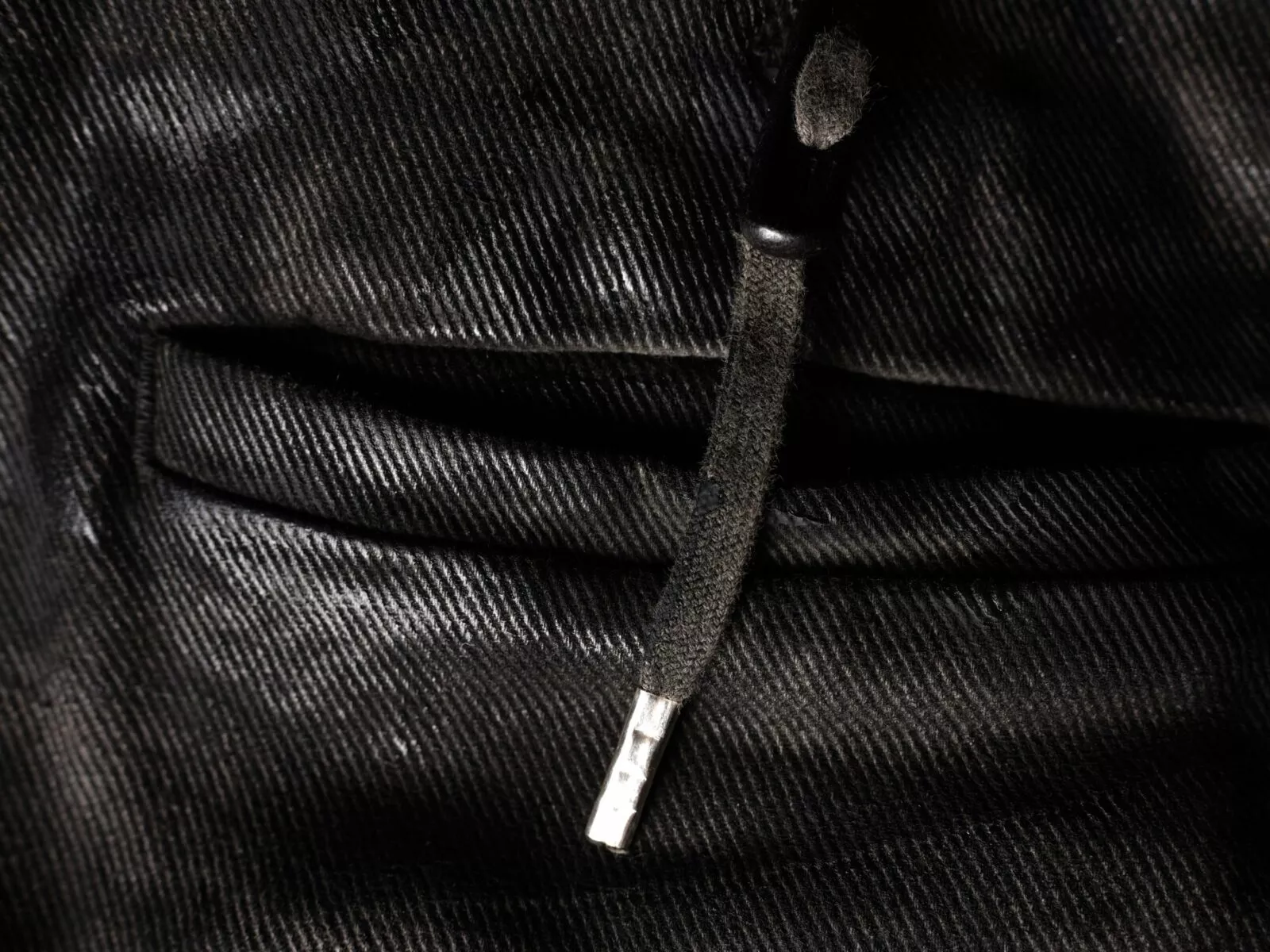
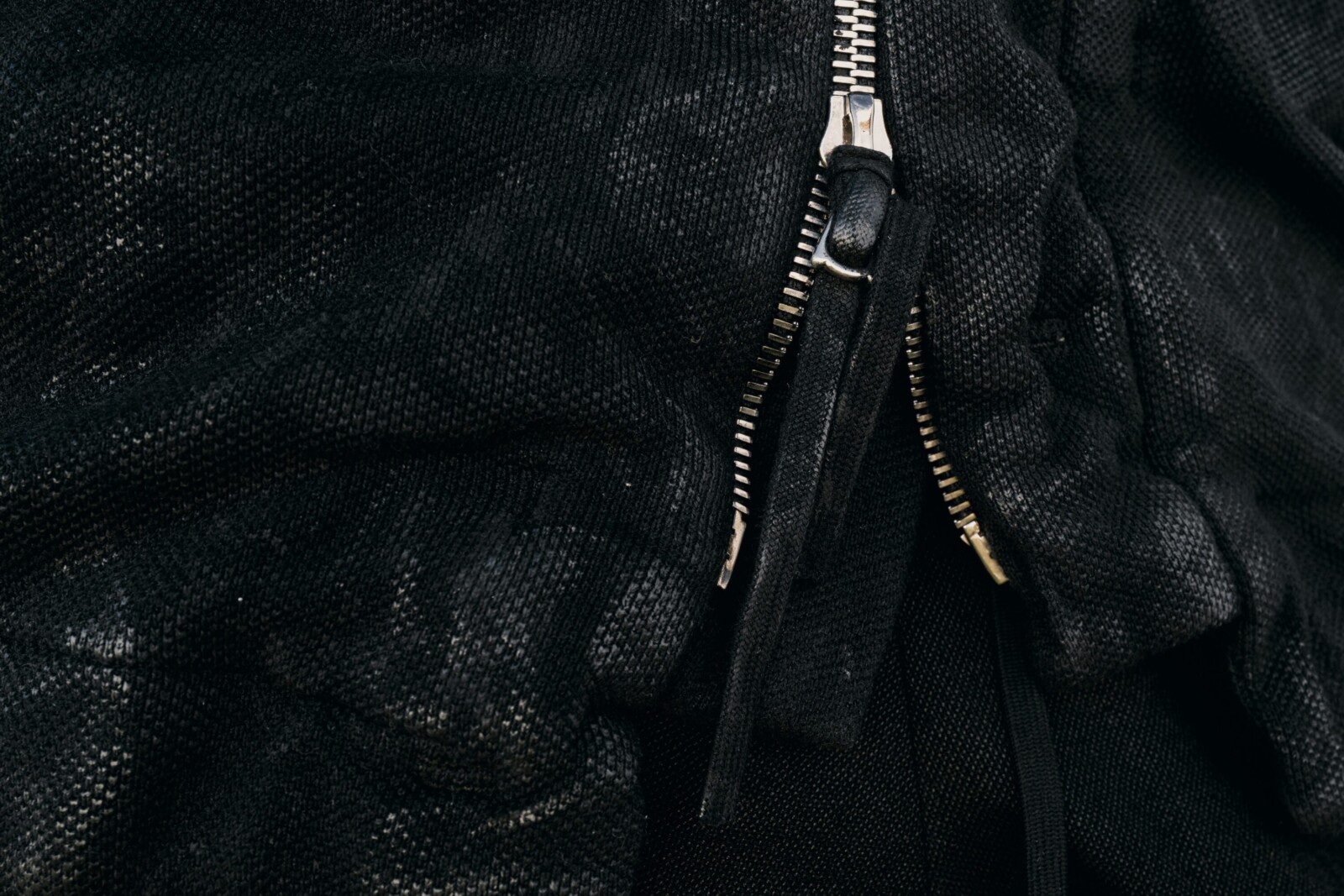
Boris Bidjan Saberi P23 裤子 P34 涂层蜡质细节

注册 - 享受我们的福利

  • 保存你喜欢的品牌和店铺
  • 获取你喜欢品牌的新款和独家产品通知
  • 专享优惠券码和折扣

加入我们

订阅我们的独家邮件列表,接收通知 当我们推出新品牌或店铺时获取信息,当我们 发布新的精选产品时, 并接收 独家促销优惠,直接发送到你的邮箱。

品牌

    门店

      文章

        产品

          精选产品

            知识库

              Boris Bidjan Saberi P23 裤子 P34 涂层蜡质细节

              注册 - 享受我们的福利

              • 保存你喜欢的品牌和店铺
              • 获取你喜欢品牌的新款和独家产品通知
              • 专享优惠券码和折扣