Moda Avanguardista Moderna
Modern avant-garde fashion uses clothing to test how bodies, materials and cultural systems might be understood differently now. It inherits deconstruction, anti-fashion and radical craft, but it is not confined to black clothing or a fixed roster of cult designers. Its most convincing forms turn contemporary conditions—technology, climate, identity, labor and image culture—into precise decisions about construction and wear.
What makes avant-garde fashion modern?
“Modern” can mean current, but it also carries the history of modernism: the attempt to make forms adequate to industrial life, new technologies and changing social relationships. Modern avant-garde fashion occupies both meanings. It is contemporary clothing that asks whether inherited ideas of beauty, fit, gender, luxury and even the garment itself still describe the world in which we live.
That question prevents the category from settling into a look. Black asymmetrical layers may carry the memory of Japanese design, Belgian deconstruction and the dark independent scene, yet repetition alone does not make them avant-garde. A familiar silhouette can be commercially effective while no longer advancing an idea. Conversely, a plain garment may be genuinely experimental if its pattern, material system or relationship with the wearer reorganizes how clothing is made and used.
MoMA’s question Is Fashion Modern? is helpful because it connects clothing to functionality, politics, labor, identity, economics and technology rather than treating fashion only as visual novelty. Modern avant-garde work becomes significant when several of these dimensions meet in a coherent object.
The inheritance of the late twentieth century
Contemporary avant-garde fashion begins from an already transformed field. Issey Miyake made textile engineering and bodily movement inseparable. Rei Kawakubo established absence, ambiguity and the space around the body as design material. Yohji Yamamoto demonstrated that black, volume and asymmetrical tailoring could offer protection and freedom rather than simply dramatize the wearer. Martin Margiela exposed the normally concealed systems of construction, authorship and commercial value.
The next generation inherited methods rather than rules. From Hussein Chalayan came the garment as research into migration, architecture and mechanics; from Alexander McQueen, the runway as a psychologically and politically charged medium; from the Italian artisanal movement, the idea that dye, leather, seam and wear could be developed as a total material language. These precedents remain active, but modern work must do more than quote their recognizable surfaces.
Five languages of modern avant-garde fashion
1. Architectural silhouette
The garment is treated as a structure with its own volume rather than a membrane following the body. Extended shoulders, displaced armholes, suspended panels, circular cuts and sculpted voids change the wearer’s outline and the rhythm of movement. The result may be monumental or almost imperceptible; architecture lies in the organization of space, not simply in size.
2. Material transformation
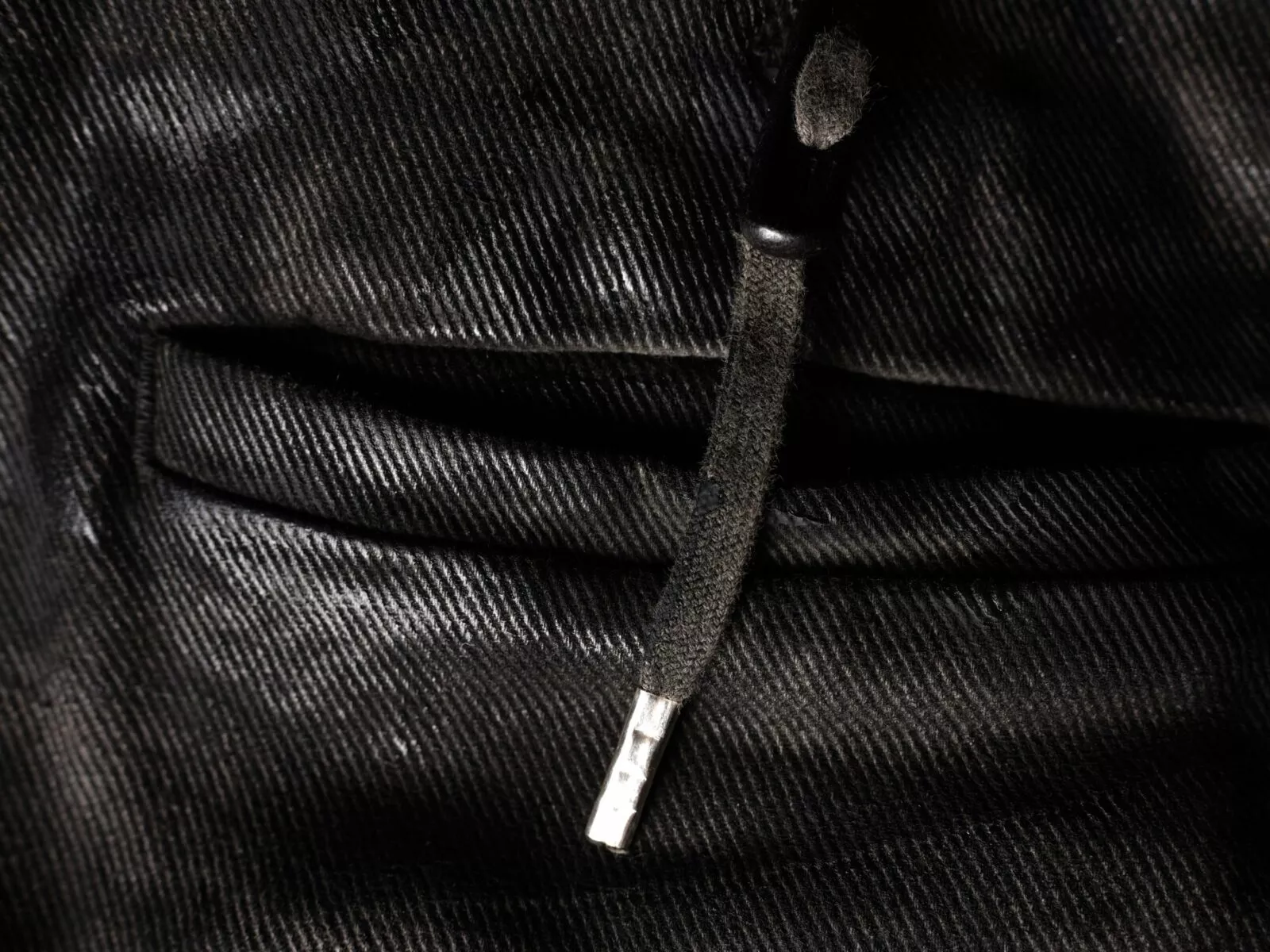
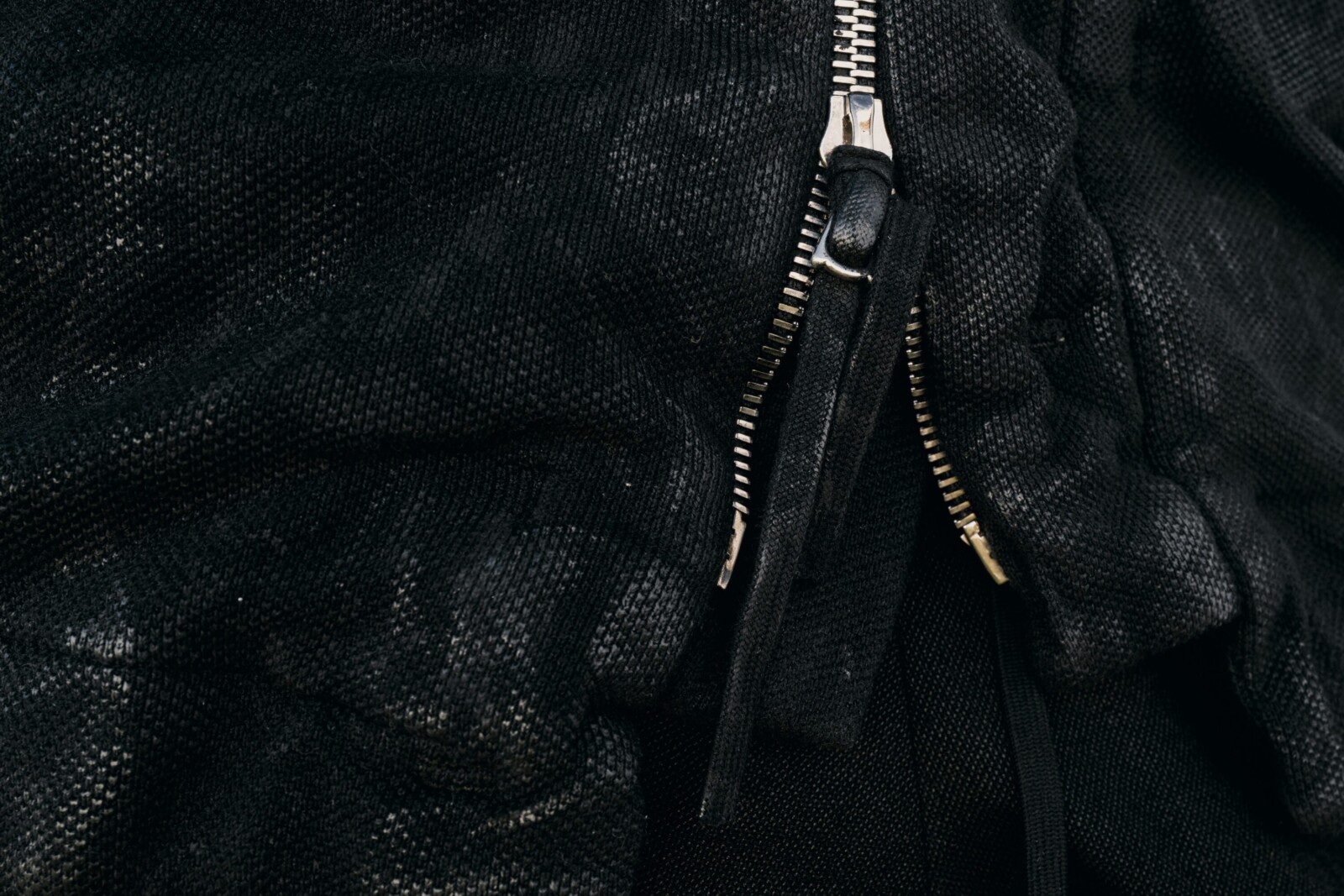
Contemporary designers work after conventional textile production rather than accepting fabric as finished. Completed garments are dyed, washed, coated, oxidized, bonded, abraded or compressed. Leather may be translucent, rigid or deliberately scarred. Technical fibers may imitate organic membranes, while humble cloth can acquire density through repeated treatment. Process becomes visible evidence rather than an imperfection to conceal.
3. Deconstructed systems
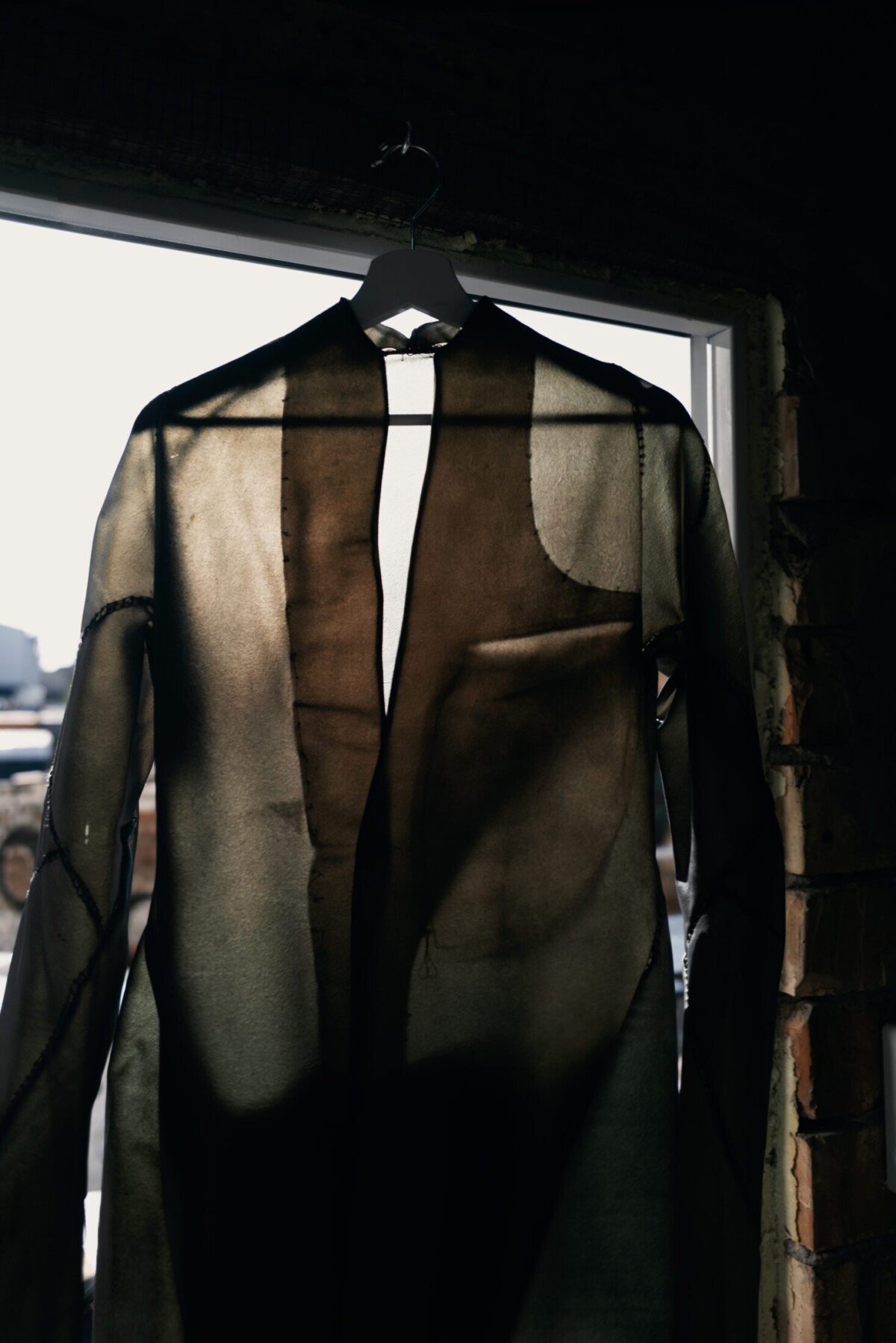
Deconstruction remains relevant when it reveals an assumption: why a seam belongs in one place, why a jacket must close in front, why tailoring encodes a gendered posture, or why luxury equates newness with value. Exposed interiors and raw edges are only the vocabulary. The intellectual work lies in showing that a familiar garment is a constructed convention and can therefore be constructed otherwise.
4. Transformability and participation
Modular layers, adjustable volumes, reversible construction and garments cut by the wearer redistribute design authority. Miyake and Dai Fujiwara’s A-POC system remains a crucial precedent: an industrially produced textile becomes clothing through the user’s decisions, producing little cutting waste. Current modular systems extend this logic through adaptable sizing, repair and multiple modes of wear.
5. Runway as an argument
The modern fashion show can operate as choreography, installation, film or civic gesture. Its value is not proportional to spectacle. A presentation matters when casting, space, sound and movement clarify the clothes’ ideas—when the audience is asked to reconsider power, beauty or collective identity rather than merely generate images for circulation.
Designers shaping the modern field
The established avant-garde houses remain contemporary because their languages continue to change. Comme des Garçons still treats the category “clothes” as unstable. Yohji Yamamoto’s tailoring continues to test the relationship between fabric, time and moving bodies. The Miyake studios develop pleating and engineered textiles as living systems rather than heritage signatures.
Rick Owens: independence at monumental scale
Rick Owens converted an underground Los Angeles practice into a global yet independent Paris house without smoothing away its contradictions. Sophisticated draping meets washed leather, bodily exposure meets protective volume, and classical references meet club culture. The Palais Galliera describes his work through structural transformation, movement and an expanding material vocabulary. His runway projects are equally important: casting and collective performance repeatedly question which bodies luxury fashion permits to appear powerful.
Carol Christian Poell and material autonomy
Carol Christian Poell occupies a more withdrawn position. His work subjects tailoring, footwear and leather to anatomical and chemical investigation: rotated construction, articulated joints, object dyeing, hardened surfaces and evidence of biological origin. The garments can feel resistant to comfort and ordinary retail display. That difficulty is meaningful because it makes containment, preservation and the body’s limits materially present.
Boris Bidjan Saberi and the post-industrial body
Boris Bidjan Saberi connects artisanal treatment with an urban technical system. Garment dyeing, dense layering, restrictive openings and anatomically curved patterns produce clothes completed by movement and wear. His importance lies in carrying the material intensity of the 1990s Italian current into twenty-first-century darkwear, footwear and technical collaboration without reducing it to distressed decoration.
LEON EMANUEL BLANCK and distorted anatomy
LEON EMANUEL BLANCK approaches garment construction through the anatomy of the moving body. His distinctive pattern-cutting methods reject conventional symmetry and familiar garment architecture, producing spiralling seams, displaced volumes and silhouettes that appear to wrap themselves around the wearer. Rather than decorating a conventional pattern, Blanck alters its underlying geometry. The result is clothing that makes movement, tension and bodily asymmetry visible, positioning pattern cutting itself as an avant-garde method.
DEVOA and anatomical construction
DEVOA places human anatomy at the centre of garment construction. Patterns, seams and articulated forms respond to muscles, joints and movement rather than treating the body as a static tailoring block. Technical fabrics coexist with natural materials, while precise construction often creates a tension between protection and mobility. This anatomical approach demonstrates how contemporary avant-garde fashion can emerge from studying the mechanics of the body rather than from visual provocation alone.
JULIUS and the evolution of Japanese darkwear
JULIUS developed a highly recognizable language from monochrome layering, elongated proportions, distressed surfaces and an interplay between narrow anatomical forms and expansive volume. Yet its importance extends beyond an all-black aesthetic. Military references, industrial environments, music and subcultural imagery are repeatedly translated into experiments with silhouette and material. In doing so, JULIUS helped define a strand of twenty-first-century Japanese avant-garde menswear in which clothing functions simultaneously as protection, abstraction and identity.
The Viridi-Anne and quiet material experimentation
The Viridi-Anne occupies a quieter territory within Japanese avant-garde fashion. Its work combines unconventional pattern construction, layering and carefully developed textiles with garments that remain closely connected to everyday movement. Treatments, irregular surfaces and subdued palettes create complexity without requiring theatrical silhouettes. This balance between experimentation and wearability offers another model for the contemporary avant-garde: radicalism expressed through construction, proportion and material detail rather than spectacle.
Junya Watanabe and engineered transformation
Junya Watanabe approaches familiar clothing as a problem of construction. Emerging from Comme des Garçons, where he began as a pattern maker, Watanabe developed a practice in which recognizable archetypes are cut apart, multiplied and rebuilt through complex pattern engineering. Workwear, denim, tailoring, military clothing and technical outerwear become starting structures rather than fixed categories. His womenswear has repeatedly pushed fabric into sculptural and geometric forms, while Junya Watanabe MAN uses collaboration to transform established garments and industrial products from within. This ability to make the ordinary structurally unfamiliar places Watanabe between the conceptual experimentation of Comme des Garçons and the increasingly technical language of contemporary menswear.
sacai and the hybrid garment
Chitose Abe’s sacai advances a different form of reconstruction through hybridization. Rather than abandoning familiar clothing, Abe combines its archetypes: a bomber can become a trench coat, knitwear can merge with shirting, and contrasting fabrics can divide a single garment into multiple identities. Pattern construction makes these combinations structural rather than simply layered or styled together. The approach turns everyday wardrobe conventions into unstable categories while preserving their functionality and recognizability. In this sense, sacai demonstrates how an avant-garde methodology can move into widely wearable contemporary fashion without surrendering experimentation.
Maison Margiela and the continuing language of deconstruction
Maison Margiela remains fundamental to modern avant-garde fashion because the methods established by Martin Margiela continue to provide a vocabulary for questioning how clothes acquire value and meaning. Deconstruction exposes linings, seams and unfinished structures; found and existing materials are repurposed; familiar garments are displaced, enlarged or reconstructed; anonymity challenges the cult of the designer; and the Artisanal practice transforms objects and discarded materials through couture-level labour. Under Glenn Martens, these codes are being treated as working methods rather than static archive signatures. Repurposing, trompe-l’œil, second-skin garments, material assemblage and altered historical silhouettes continue to investigate the boundary between clothing and object. Margiela’s contemporary relevance therefore lies not only in its enormous historical influence, but in the continued possibility of using deconstruction to make the familiar strange again.
Iris van Herpen and collaborative fabrication
Iris van Herpen builds couture through collaboration with architects, scientists, engineers and artists. Digital modeling, laser cutting and additive manufacturing coexist with patient hand assembly. Institutions including the Metropolitan Museum of Art and Palais de Tokyo emphasize the way her work joins technology to biological form. Its strongest achievement is not making dresses look futuristic; it is using unfamiliar processes to imagine another relationship between body, nature and structure.
These figures do not constitute a complete directory. They represent different models of practice: the independent house, the materially autonomous atelier, the post-industrial system and the interdisciplinary laboratory. RAW Looks’ extensive Avant-Garde Fashion Designer List remains the primary destination for individual designer profiles.
Technology is a method, not an aesthetic
Modern avant-garde fashion is often described through visible technology: 3D printing, responsive surfaces, robotic fabrication or garments that illuminate and move. Yet the newest machine does not automatically produce the newest thought. Technology becomes important when it changes structure, authorship, production or use.
Van Herpen’s laser-sintered Skeleton dress, for example, could be built as a continuous rigid form without conventional seams. The Met’s conservation research reveals the other side of that innovation: experimental polyamide ages differently from established textiles, leaving museums to develop new methods for its care. A technical breakthrough creates a preservation problem. That full material lifecycle belongs to the design.
Modern practice also complicates the opposition between machine and hand. Computational models require testing, finishing and embodied knowledge; hand-dyed garments depend on chemistry and controlled production; traditional pleating can be reorganized through industrial engineering. The relevant distinction is not craft versus technology but passive convention versus active inquiry.
Digital images and physical clothes
Fashion is now encountered first through a screen more often than through cloth. Collections are compressed into frontal runway photographs, short video fragments and resale listings. This circulation gives independent designers global reach, but it favors immediately legible signatures. Extreme proportions and unusual surfaces survive the feed; subtle pattern logic and tactile intelligence often disappear.
A serious understanding of modern avant-garde fashion therefore returns to the object. How is weight distributed? What happens when the wearer sits, walks or fastens the garment? Does a material treatment improve with age, or is deterioration merely staged? The physical answers separate design systems from image systems.
Gender, bodies and the politics of form
Avant-garde fashion has long used androgyny, concealment and distortion to resist idealized anatomy. Contemporary practice widens that inquiry through nonbinary wardrobes, adaptive construction, broader casting and garments whose meaning changes across bodies. Oversized clothing can loosen the demand to display a conventionally sexed silhouette; exposure can be used as vulnerability, confrontation or self-possession.
But visual transgression does not guarantee structural inclusion. A runway may celebrate difference while sizing, pricing and retail availability remain narrow. The modern avant-garde must be evaluated across the complete system: who is imagined by the pattern, who can purchase and maintain the garment, who performs the labor, and who is permitted authorship.
Sustainability and the problem of endless novelty
The avant-garde’s traditional demand for constant newness now collides with ecological limits. Experimental materials may reduce waste or avoid animal inputs, but they may also rely on fossil-derived polymers, intensive energy or processes that cannot be repaired. “Innovation” is incomplete without evidence about sourcing, manufacture, durability and disposal.
Some of the most radical contemporary decisions are therefore quiet: producing slowly, maintaining an independent scale, designing for repair, reusing existing garments, preserving specialist workshops or allowing one pattern system to evolve over many seasons. These practices resist the fashion calendar’s requirement that value expire quickly.
Archival culture contributes another contradiction. Collecting older Margiela, Comme des Garçons, Helmut Lang, Carpe Diem or Poell preserves construction knowledge and extends a garment’s life. At the same time, online attention can turn historically specific work into speculative commodity and flatten it into searchable signatures. Responsible collecting studies provenance, condition and context rather than treating age alone as importance.
How to recognize meaningful modern avant-garde fashion
Price, rarity and visual strangeness are unreliable measures. A more useful reading begins with five questions:
- What convention is being questioned? The answer should be more precise than “normal clothes.”
- Does construction carry the idea? Silhouette, seam, material and fastening should do conceptual work.
- What happens on a moving body? Fashion is not complete as a still image.
- Is the process responsible for its consequences? Labor, durability and material impact belong to evaluation.
- Does the work develop over time? A coherent practice deepens its questions instead of changing costume every season.
Darkwear, techwear, conceptual couture, artisanal fashion and experimental tailoring can all overlap with the avant-garde, but none is automatically identical to it. Darkwear describes a visual and cultural field; techwear often prioritizes performance and utility; couture identifies a system of exceptional custom production. Avant-garde describes a critical position inside or against those systems.
Contemporary relevance
Modern avant-garde fashion matters because everyday dress is never neutral. Clothing organizes gender, movement, labor, status and our relationship with materials. Experimental garments make those structures visible. Their ideas often travel outward: asymmetry becomes ordinary, unisex sizing expands, repair becomes desirable, technical fabrics enter daily wardrobes and formerly unacceptable bodies acquire public presence.
The task is not to predict which strange silhouette will become mainstream. It is to preserve fashion as a field capable of difficult questions and sensuous material answers. Read What Is Avant-Garde Fashion? for the foundational definition, La Storia della Moda Avanguardista for the longer lineage, and Una completa cronologia della moda avanguardista for its key chronological turning points.
References and further reading
- The Museum of Modern Art — Items: Is Fashion Modern?
- The Museum of Modern Art — Announcing Items: Is Fashion Modern?
- The Museum of Modern Art — A-POC Queen Textile, 1997
- The Metropolitan Museum of Art — Rei Kawakubo/Comme des Garçons: Art of the In-Between
- Palais Galliera — Rick Owens: Temple of Love
- National Gallery of Victoria — Carol Christian Poell — Artist and Collection Record
- Boris Bidjan Saberi — Boris Bidjan Saberi
- Design Museum — Hussein Chalayan
- Royal Ontario Museum — Iris van Herpen: Transforming Fashion
- Palais de Tokyo — Iris van Herpen
- The Metropolitan Museum of Art — (Im)mortal Fashion: Iris van Herpen’s Skeleton Dress
- Museum of Fine Arts Boston — #techstyle
- Iris van Herpen — Inside the Atelier — Sensory Seas