Style de mode avant-gardiste : caractéristiques et exemples
Avant-garde fashion style is recognized less by a fixed uniform than by the way a garment questions familiar ideas about proportion, construction, beauty and the body. Its most persuasive examples turn an idea into material form: volume creates distance around the figure, seams reveal how clothing is made, or a textile changes the wearer’s movement. Black is common, but it is a tool rather than a rule.
What defines avant-garde fashion style?
Avant-garde fashion is often described through a handful of visible codes—black, asymmetry, draping, oversized tailoring—but those codes are consequences rather than a definition. The style begins with a proposition. A designer might ask whether a coat must follow the shoulders, whether a dress must flatter an idealized figure, whether the normally hidden lining can become the exterior, or whether a garment can change as its wearer moves. Cut, cloth and presentation give that question a physical answer.
This distinction matters because an unconventional outfit is not automatically avant-garde. Novelty can be decorative, while avant-garde work alters how clothing is understood. In its 2017 Rei Kawakubo exhibition, The Metropolitan Museum of Art organized Comme des Garçons around unresolved pairings—fashion and anti-fashion, object and subject, clothes and “not clothes.” That language captures a central characteristic of the field: it works between established categories and makes their limits visible.
Silhouette, volume and proportion
The silhouette is the first and most legible field of experimentation. Conventional Western tailoring tends to clarify the body: shoulders, waist, chest and hips are organized into a recognizable outline. Avant-garde design may exaggerate that outline, detach cloth from it or suppress it altogether. Dropped shoulders blur the boundary between torso and sleeve; elongated fronts move the apparent centre of gravity; cocoon forms create protective space around the body; asymmetric panels make the outline change from every viewpoint.
Volume is not synonymous with simply choosing a larger size. It is engineered through pattern pieces, internal supports, pleats, gussets, gathers and the direction of the grain. Rei Kawakubo’s work repeatedly treats space between skin and fabric as an active material. In Body Meets Dress—Dress Meets Body (spring/summer 1997), padding displaced familiar anatomical curves rather than merely enlarging them.
Yohji Yamamoto uses a different vocabulary: generous black tailoring that allows air and motion to complete the silhouette. Issey Miyake’s pleats contract when still and expand in movement, so the final form belongs partly to the wearer.
Construction as a visible language
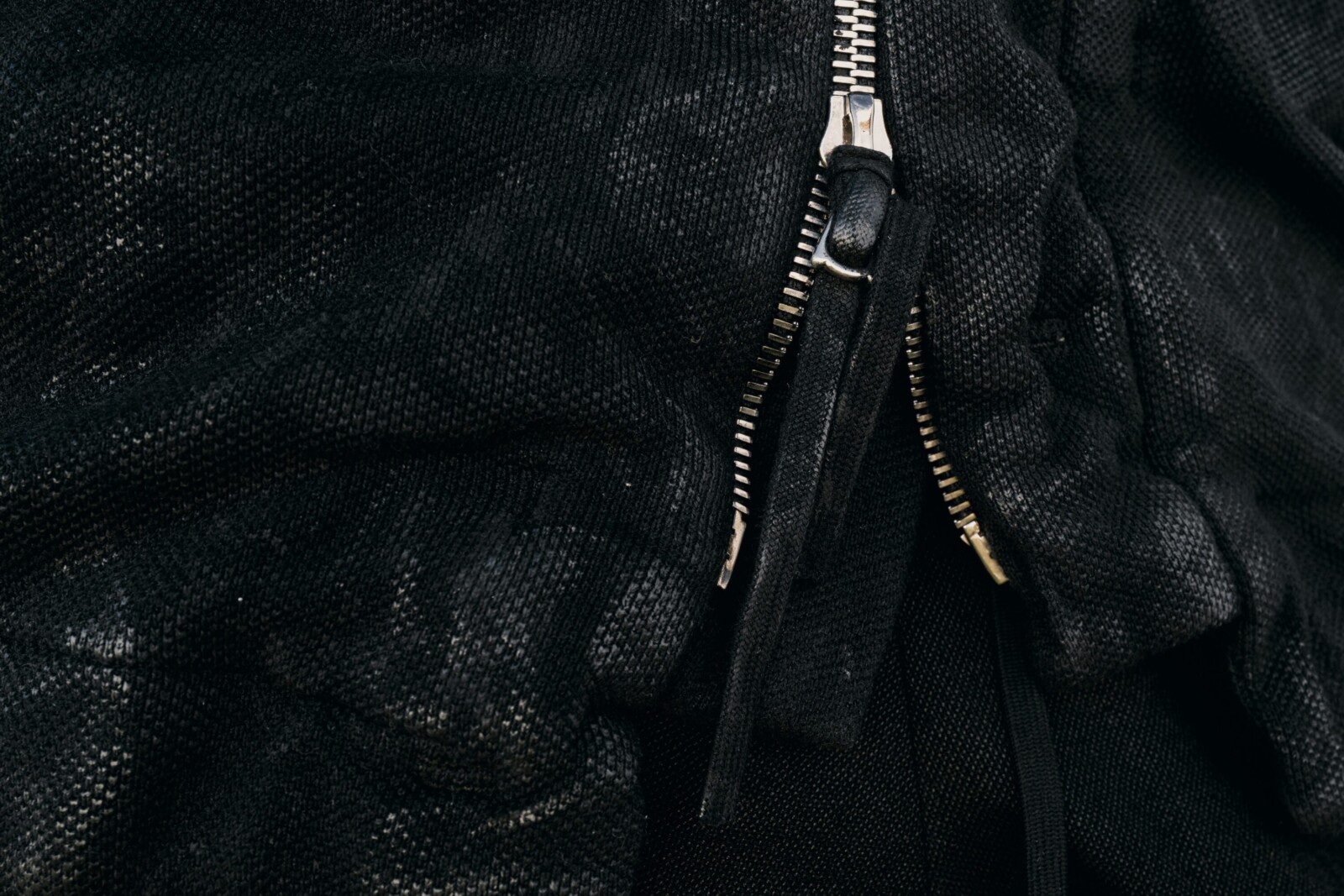
In conventional clothing, technical labor is frequently concealed. Seam allowances, canvas, interfacing, darts and temporary markings sit inside a polished shell. Avant-garde designers often reverse that hierarchy. Exposed seams, external darts, hanging threads, raw hems, displaced fastenings and visible linings allow the wearer to read the garment’s assembly. These details can look unfinished, yet the strongest examples require exact control: a raw edge must fall correctly, an asymmetric closure must balance weight, and a reversed jacket must still move as clothing.
Martin Margiela made this analytical approach central to his practice. MoMu describes how the maison revealed linings, seams, overlock stitches and shoulder pads, exposing what fashion ordinarily hides. Reconstruction extended the argument. Vintage gloves could become a top; an enlarged pattern could estrange a familiar archetype; traces of age and previous use could remain visible instead of being corrected. The result was not destruction for spectacle but a close reading of authorship, labor, value and fashion’s dependence on continual novelty.
Other recurring methods include modular panels, detachable elements, unfinished-to-finished transitions, off-grain cutting and garments that permit multiple configurations. Deconstruction can therefore be quiet. A seemingly restrained coat may be avant-garde because its sleeve rotates around the arm, its closure reorganizes the front plane, or its internal structure has been deliberately removed.
Material, texture and surface
Avant-garde fashion makes material behavior visible. Washed wool collapses differently from crisp felt; bias-cut jersey lengthens under its own weight; horsehide records creases and abrasion; translucent organza layers color without adding visual mass. Designers choose cloth not only for appearance but for what it permits the garment to do.
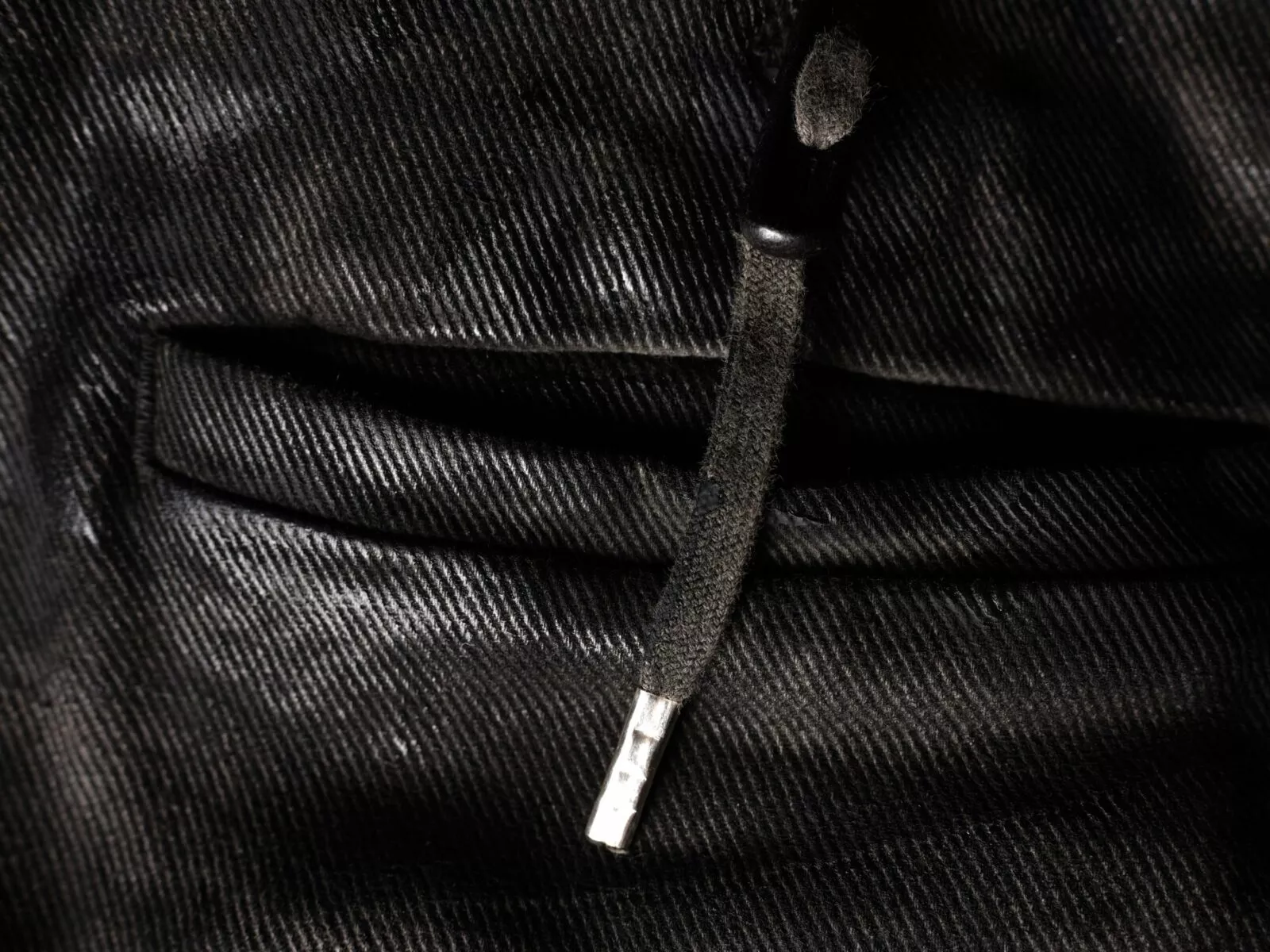
Texture is especially important in monochrome clothing, where light rather than hue separates one plane from another. Matte wool absorbs it, polished leather returns it, coated cotton creates a mineral sheen, and sheer fabric lets darkness accumulate through overlapping layers. Treatments such as garment dyeing, object dyeing, waxing, distressing and hand painting make surface inseparable from construction. Irregularity may be deliberately retained: oxidation, scars, uneven pigment and raw edges register time, touch and manufacture.
Technical innovation can be equally radical. Miyake’s research into permanent pleating joined sculptural rhythm with washability and freedom of movement. Hussein Chalayan has used engineered transformation to connect clothing with furniture, architecture and migration. Iris van Herpen’s collaborations with scientists, architects and digital fabricators treat couture as a testing ground for structures that conventional cloth and pattern cutting cannot produce. What unites these approaches is not a preference for natural or synthetic matter, but material used as an argument.
Colour, black and controlled contrast
Black became one of the most recognizable languages of avant-garde fashion during the Japanese intervention in Paris in the early 1980s. It reduced distraction, amplified silhouette and texture, and rejected the period’s expectations of polished glamour. The Met connects Kawakubo’s principally black palette with mu, or emptiness, while the V&A describes Yohji Yamamoto’s sustained challenge to conventional clothing through an unmistakably personal avant-garde practice.
Yet black is neither compulsory nor neutral. Kawakubo has used saturated red, tartan, florals and synthetic color; Issey Miyake developed chromatic pleats with optical intensity; Walter Van Beirendonck made confrontation vivid rather than shadowed. A monochrome palette can clarify construction, but color can perform the same critical work by disturbing associations of taste, gender, class or historical period. The practical question is not “Is it black?” but “What is the color doing?”
Movement, the body and gender
Because clothing is completed by a body, avant-garde style often changes the relationship between anatomy and dress. A garment can protect, expose, impede, extend or visually replace the figure. Some works operate almost as objects around the body; others become meaningful only through walking, folding and repeated wear. This is why a still image can misrepresent experimental clothing: the apparent excess of a wide trouser may resolve into precise rhythm when the wearer moves.
Altered proportion also unsettles gendered conventions. Straight, elongated tailoring may refuse a conventionally emphasized waist; skirts can be approached as spatial forms rather than gender markers; soft drape can coexist with heavy boots and industrial hardware. Androgyny in this context is not a single “unisex” silhouette. It is a wider freedom to assemble signs that mainstream dress has assigned to masculinity or femininity.
Wearability remains part of the intellectual problem. A runway object may intentionally resist ordinary movement, but much avant-garde fashion becomes radical through use: a coat offering room rather than display, a pleated garment adapting to different bodies, or a handmade leather piece recording the life of its wearer. Comfort and provocation are not opposites.
Important designers and what their clothes demonstrate
No designer represents the entire field. The following examples show how similar visual characteristics can arise from very different ideas:
- Rei Kawakubo / Comme des Garçons uses imbalance, absence, padding and sculptural volume to question the accepted boundary between body and garment. Her work demonstrates that a silhouette can function as philosophical inquiry rather than decoration.
- Yohji Yamamoto builds freedom through drape, asymmetry and generous tailoring. Black clarifies the relationship between fabric and motion, while apparent incompletion preserves space for the wearer.
- Issey Miyake joins industrial research and everyday function. Permanent pleats, one-piece concepts and lightweight structures show that technological innovation can produce garments that are both visually radical and exceptionally practical.
- Martin Margiela / Maison Margiela exposes construction, enlarges archetypal patterns and recovers used materials. The familiar garment becomes evidence of its own manufacture and history.
- Hussein Chalayan treats clothing as a mobile architecture. Transforming dresses and objects connect fashion to displacement, memory and technology.
- Iris van Herpen uses couture craft alongside digital fabrication to build biomorphic structures around the body, expanding the material and technical vocabulary available to dress.
- Rick Owens translates elongated proportion, ritualistic volume and materially forceful leatherwork into an enduring contemporary wardrobe rather than a sequence of isolated experiments.
These practices prove why a checklist can only go so far. Yamamoto’s soft, mobile coat and Van Herpen’s rigid printed structure may look unrelated, yet both reconsider how space is built around a living body. Margiela’s exposed seam and Miyake’s precisely engineered pleat are equally different, yet each makes process integral to appearance.
How to recognize substance over styling
Ask what changes when the striking surface details are removed. Does the pattern alter balance or movement? Does the material carry meaning beyond luxury? Is there a coherent relationship between the designer’s idea, the garment’s construction and its presentation? Can the piece be understood from several angles, or does it exist only as an arresting front-facing image?
Avant-garde fashion does not need to be obscure, expensive or difficult to wear. It does, however, need internal logic. Random asymmetry, gratuitous distressing or a monochrome palette can imitate the appearance of experimentation without accepting its discipline. The difference is resolution: every unusual decision should contribute to the proposition.
From runway concept to an everyday wardrobe
The clearest way to wear avant-garde fashion is to begin with proportion rather than costume. One structurally distinct piece—a long jacket, curved trouser, asymmetric knit or articulated shoe—can reorganize an otherwise restrained outfit. Repetition then creates coherence: related volumes, a controlled palette, and materials whose surfaces develop together over time.
Fit should be judged according to the garment’s intention. Dropped shoulders and extended hems are not errors when the pattern is designed around them; equally, buying conventional clothing several sizes too large does not reproduce an engineered oversized silhouette. Movement, pocket placement, sleeve rotation and the position of closures reveal whether volume has been considered.
Material care is part of the aesthetic. Avoid automatically pressing away deliberate creases, trimming designed raw edges or treating every surface variation as damage. Read the maker’s instructions, especially for object-dyed pieces, bonded fabrics, treated leather and permanent pleats. A garment intended to record wear should age, but that process is different from neglect.
Contemporary relevance
Many once-radical ideas now circulate throughout mainstream fashion: exposed seams, oversized tailoring, gender-fluid styling, recycled garments and digitally generated forms. Their visibility does not make the avant-garde obsolete. It reveals how experimental work expands the available language of dress before that language is normalized by industry.
The more useful distinction today is between an aesthetic quotation and a genuinely investigative practice. A designer working at the frontier may address new conditions—material scarcity, adaptive bodies, algorithmic design, regional craft or repair—without resembling the black deconstruction associated with the 1980s and 1990s. Avant-garde style remains alive when clothing does more than announce difference: it gives a difficult idea exact form.
For the broader definition and historical framework, read What Is Avant-Garde Fashion?. Further Knowledge Base essays will examine deconstruction, anti-fashion, material techniques and individual designers without replacing RAW Looks’ primary designer and brand directory.
References and further reading
- The Metropolitan Museum of Art — Rei Kawakubo/Comme des Garçons: Art of the In-Between — Exhibition Galleries
- Victoria and Albert Museum — Yohji Yamamoto: Poet of Black
- MoMu Fashion Museum Antwerp — Martin Margiela — Collection Story
- MoMu Fashion Museum Antwerp — Margiela, the Hermès Years
- The Metropolitan Museum of Art — Pleats Please ensemble, ca. 1994
- Victoria and Albert Museum — Yohji Yamamoto — Exhibition Press Release