0
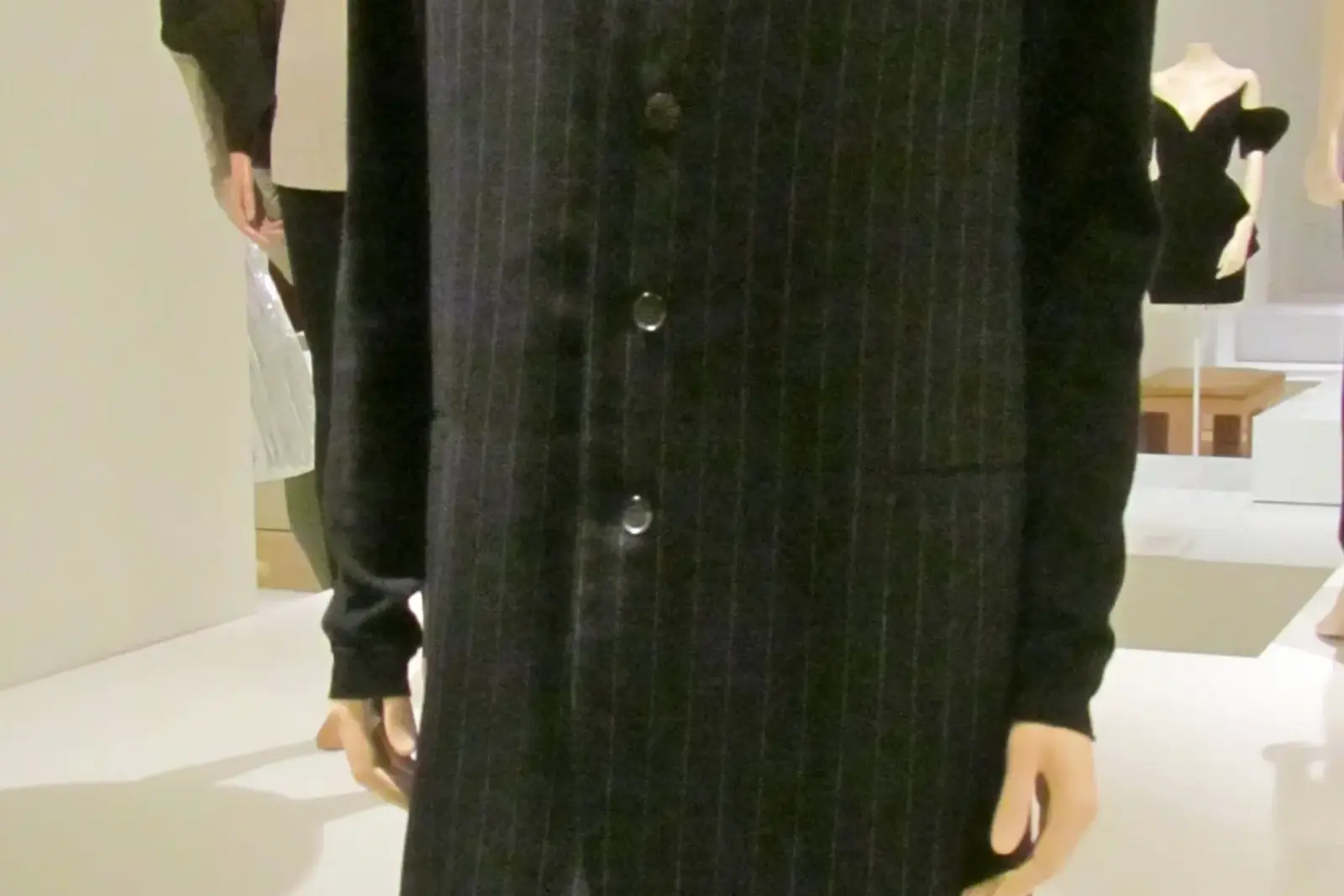
山本耀司1990年左右的羊毛西装,展示在模特上,展现出超大比例、深色剪裁和流畅轮廓
Yohji Yamamoto, Oversized Wool Suit, circa 1990. Photograph by ellenm1, Wikimedia Commons, CC BY 2.0. By severing men’s tailoring from tight-fitting bourgeois conventions and enveloping the body in voluminous, matte-black wool, Yamamoto formulated an anti-fashion uniform of existential protection and timeless physical grace.
动作

反时尚是什么?

发布 9 月 18, 2026 最后审查 9 月 21, 2026

Anti-fashion is not the absence of dress; it is an active, dialectical refusal of fashion’s economic acceleration, decorative superficiality, and normative body ideals. Coined across sociological theory, subcultural revolt, and radical design movements, the term identifies practices that resist the seasonal obsolescence dictated by global capital. From the monastic black drapery of early 1980s Rei Kawakubo and Yohji Yamamoto to the unpolished archival subversions of Maison Margiela and the systemic environmental indictments of Li Edelkoort’s 2015 manifesto, anti-fashion dismantles the industry’s central illusion: that a garment’s value expires when the calendar turns.

Theoretical foundations: defining anti-fashion against the fashion system

In mainstream discourse, “fashion” is frequently conflated with clothing. Yet as sociologist Georg Simmel observed in his 1904 essay 时尚, the fashion mechanism is fundamentally a social engine of continuous novelty, class emulation, and planned obsolescence. Fashion exists only through perpetual motion: an aesthetic innovation is introduced by an elite, imitated by the masses, drained of its exclusivity, and abandoned in favor of a new cycle. To participate in the fashion system is to accept that garments possess an artificial expiration date dictated not by physical wear, but by collective psychological fatigue.

反时尚 arises as the conscious ideological, aesthetic, and material negation of this mechanism. As cultural theorist Elizabeth Wilson articulated in Adorned in Dreams (1985), anti-fashion denotes forms of dress that deliberately reject fashion’s core mandate of seasonal change. It operates on two distinct but intersecting planes:

  • Static or Traditional Anti-Fashion: Garments anchored in ritual, folk tradition, religious order, or occupational utility (e.g., Amish plain dress, naval pea coats, Bavarian Trachten, denim overalls). These forms evolve glacially, valuing longevity, functional purpose, and communal continuity over stylistic novelty.
  • Oppositional or Conceptual Anti-Fashion: Deliberate sartorial resistance engineered within modernity. Here, dress is mobilized as a critical weapon to challenge consumer capitalism, bourgeois standards of bodily attractiveness, gender performativity, and commercial exploitation.

Far from being an act of indifference, conceptual anti-fashion requires an acute awareness of fashion’s visual syntax. It does not ignore fashion’s rules; it systematically violates them to make the hidden assumptions of the clothing industry visible.

Subcultural refusal: street subversion, workwear, and uniform stability

Before anti-fashion emerged on international runways, it functioned as the primary semiotic currency of countercultural youth movements. Cultural theorist Ted Polhemus, author of Streetstyle, documented how marginalized groups systematically hijacked utilitarian garments to communicate social defiance.

In 1950s America, motorcycle gangs and rockabillies adopted the surplus Schott Perfecto leather biker jacket and unwashed denim work trousers—garments originally engineered for blue-collar labor and physical hazard—transforming them into symbols of outlaw delinquency. Two decades later, as explored in 朋克、DIY与时尚规范的破坏, British youth radicalized this refusal by slashing thrifted tailoring, joining rips with safety pins, and wearing bin liners to physically enact disgust with capitalist consumerism.

These subcultural uniforms were anti-fashion because they rejected the luxury salon’s seasonal turnover. A punk jacket or a biker’s leather developed authentic cultural capital only through repeated wear, abrasion, grease, and personal modification. Time, rather than disposable novelty, became the measure of value.

Yohji Yamamoto wool suit circa 1990 displayed on a mannequin showcasing oversized proportions, dark tailoring, and fluid silhouette
Yohji Yamamoto, Oversized Wool Suit, circa 1990. Photograph by ellenm1, Wikimedia Commons, CC BY 2.0. By severing men’s tailoring from tight-fitting bourgeois conventions and enveloping the body in voluminous, matte-black wool, Yamamoto formulated an anti-fashion uniform of existential protection and timeless physical grace.

1981: The Japanese rupture and the “post-Hiroshima” aesthetic shock

In April 1981, anti-fashion transitioned from subcultural resistance into an earthquake at the center of international haute couture. When Japanese designers Rei Kawakubo (of Comme des Garçons) and Yohji Yamamoto presented their debut collections in Paris, Western critics were bewildered and repulsed. The Parisian fashion press, accustomed to the hyper-sexualized, brightly colored, heavily shoulder-padded glamour of Thierry Mugler and Claude Montana, derided the Japanese presentations as “the Hiroshima look,” “post-holocaust chic,” and “bag lady fashion.”

Kawakubo and Yamamoto staged a total anti-fashion revolt across three primary fronts:

  • The Abolition of the Eurocentric Body: Western couture had historically used boning, darting, and padding to emphasize the hourglass female silhouette—pinched waists, lifted busts, and exposed cleavage. Kawakubo and Yamamoto completely abolished this anatomical display. Their garments hung loosely from the shoulders, creating massive volumes of asymmetric fabric that floated around the body, obscuring its curves and establishing a profound space (the Japanese concept of ma) between the cloth and the flesh.
  • The Monochromatic Imperative: In place of seasonal color trends, they worked almost exclusively in black, charcoal, and distressed indigo. Black was treated not as absence, but as a rich material spectrum of texture, light absorption, and existential protection. As Yamamoto famously declared: “Black is modest and arrogant at the same time. Black is lazy and easy—but mysterious. But above all black says this: I don’t bother you—don’t bother me.”
  • The Poetics of Damage: Rather than smooth, immaculate silks, garments featured deliberate moth-like perforations, frayed hems, unfinished edges, boiled wools, and twisted seams. Kawakubo loosened the tension screws on industrial knitting machines, forcing them to produce irregular, dropped-stitch sweaters that celebrated the Japanese philosophy of wabi-sabi—the beauty of imperfection, asymmetry, and impermanence.

By forcing the fashion capital to confront garments that resembled mourning shrouds and workwear, Kawakubo and Yamamoto permanently proved that clothing could prioritize philosophical inquiry and wearer autonomy over decorative flirtation.

Installation view of Rei Kawakubo / Comme des Garçons Art of the In-Between exhibition at The Metropolitan Museum of Art
Installation view of "Rei Kawakubo / Comme des Garçons: Art of the In-Between" at The Metropolitan Museum of Art, New York (2017). Photograph by Rhododendrites, Wikimedia Commons, CC BY-SA 4.0. Kawakubo’s work interrogated the dichotomy of Fashion/Anti-Fashion, treating garments as autonomous sculptural interrogations of volume, absence, and flesh.

Belgian deconstruction and 1990s minimalism: Margiela and Lang

The shockwaves of the Japanese revolution were absorbed and radicalized by the generation of designers who emerged in the late 1980s and 1990s, particularly the Royal Academy of Fine Arts Antwerp graduates and Austrian minimalist 海尔穆特·朗.

At the apex of this second anti-fashion wave stood Maison Margiela, founded in 1988 by Martin Margiela and Jenny Meirens. Margiela turned anti-fashion into a total institutional critique:

  • Anonymity against Celebrity: Margiela refused personal photographs, conducted interviews via fax using the collective pronoun “we,” and cloaked runway models’ faces in gauze hoods or paint splatters to force audiences to look at the clothes rather than the celebrity support.
  • The Blank White Label: In an industry obsessed with logomania and luxury branding, Margiela introduced a blank rectangular white cloth label tacked to the garment by four simple white corner stitches, designed to be snipped off by the wearer.
  • The Artisanal Line and Upcycling: Decades before “sustainability” became a corporate marketing buzzword, Margiela’s 工艺 collections deconstructed flea-market garments, second-hand military socks, ski gloves, and shattered flea-market crockery into one-of-a-kind couture assemblages.
  • Preservation through the Replica Line: In 1994, Margiela launched the Replica series: identical, stitch-for-stitch reproductions of vintage workwear, army boots, and Austrian dance dresses, complete with tags documenting the garment’s original provenance, geographical origin, and date. By re-releasing existing historical designs unchanged, Margiela explicitly questioned the runway’s fetish for artificial novelty.

Simultaneously, 海尔穆特·朗 stripped 1990s fashion down to its bare industrial bones. By pairing pristine tailored wool overcoats with paint-splattered work trousers, ballistic nylon bondage straps, and rubber-coated cottons, Lang injected the functionality of Austrian workwear directly into the luxury lexicon, establishing a cool, clinical anti-fashion minimalism that rejected decorative excess.

The systemic critique: Li Edelkoort’s manifesto and ecological anti-fashion

In 2015, the definition of anti-fashion underwent another historic expansion with the publication of trend forecaster Li Edelkoort’s famous manifesto, 反时尚:下一个十年的宣言. Edelkoort’s thesis was devastating: the traditional fashion system had become obsolete, corrupt, and dead.

Edelkoort argued that modern fashion had abandoned its original cultural mission of interpreting society. Instead, the combination of fast-fashion conglomerates, hyper-accelerated supply chains, cut-throat offshore manufacturing, and social-media consumerism had turned clothing into a disposable commodity divorced from textile craft, humane labor, and ecological sustainability. She called for an era of anti-fashion that would dismantle this machinery in favor of a circular, material-driven “economy of clothes.”

Today, ecological anti-fashion is represented by designers who deliberately withdraw from the seasonal runway circus. Designers like Elena Dawson, Geoffrey B. Small, 保罗·哈登John Alexander Skelton operate on anti-industrial principles: producing micro-batches in independent ateliers, sourcing antique deadstock textiles, utilizing botanical hand-dyes, and crafting garments intended to be mended, inherited, and worn for decades.

Anti-fashion versus avant-garde: nuance, paradox, and modern artisanal survival

While the terms 反时尚avant-garde fashion are frequently used interchangeably, they denote distinct critical postures that often exist in productive tension:

Dimension Anti-Fashion Avant-Garde Fashion
Primary Target The fashion cycle, seasonal obsolescence, marketing spectacles, and commercial velocity. Aesthetic boundaries, conventional silhouettes, material thresholds, and bodily forms.
Methodology Reduction, refusal, continuous uniform wearing, archival replication, raw utility, and repair. Rupture, structural experimentation, architectural volume, technological innovation, and conceptual provocation.
Temporal Stance Static, cyclical, or timeless; garments age alongside the wearer over decades. Futuristic or frontier-oriented; pushing forward into unmapped aesthetic territories.
Inherent Paradox The “Anti-Fashion Paradox”: by defying fashion, radical garments often become the next major trend. Assimilation: experimental prototypes are inevitably diluted and absorbed into commercial mass fashion.

This dynamic reveals the central philosophical paradox of anti-fashion: nothing enters fashion faster than anti-fashion. The moment a designer creates a garment that defies commercial vanity—whether it is an unhemmed trench coat, a distressed combat boot, or an oversized black wool coat—the commercial apparatus rushes to commodify that refusal into a marketable consumer style.

Yet for the masters of contemporary artisanal fashion—such as Carol Christian Poell, Boris Bidjan Saberi, Maurizio Altieri (Carpe Diem), and Ann Demeulemeester—anti-fashion remains an indispensable philosophical compass. By designing clothing that values somatic experience over trend cycles, artisanal craftsmanship over factory exploitation, and honest material decay over superficial sheen, anti-fashion preserves dress as one of the most profound, intimate arts of human existence.

To trace the technical evolution of garment dismantling, explore our next essay on 时尚中的解构. For broader chronological movements, revisit 朋克、DIY与时尚规范的破坏 and the foundational essay 开始,以获得精确的定义,然后使用.

参考资料和进一步阅读

图片来源

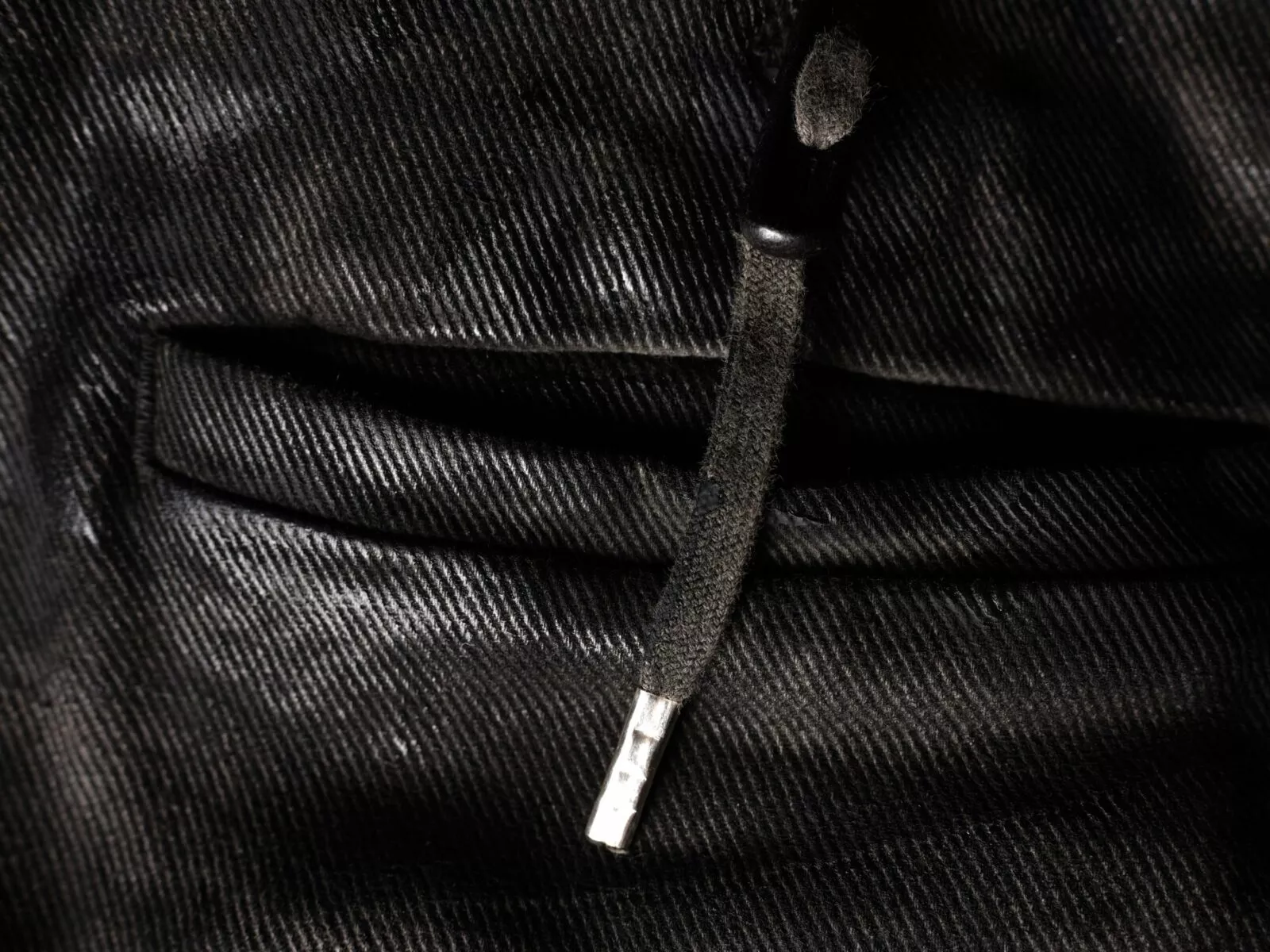
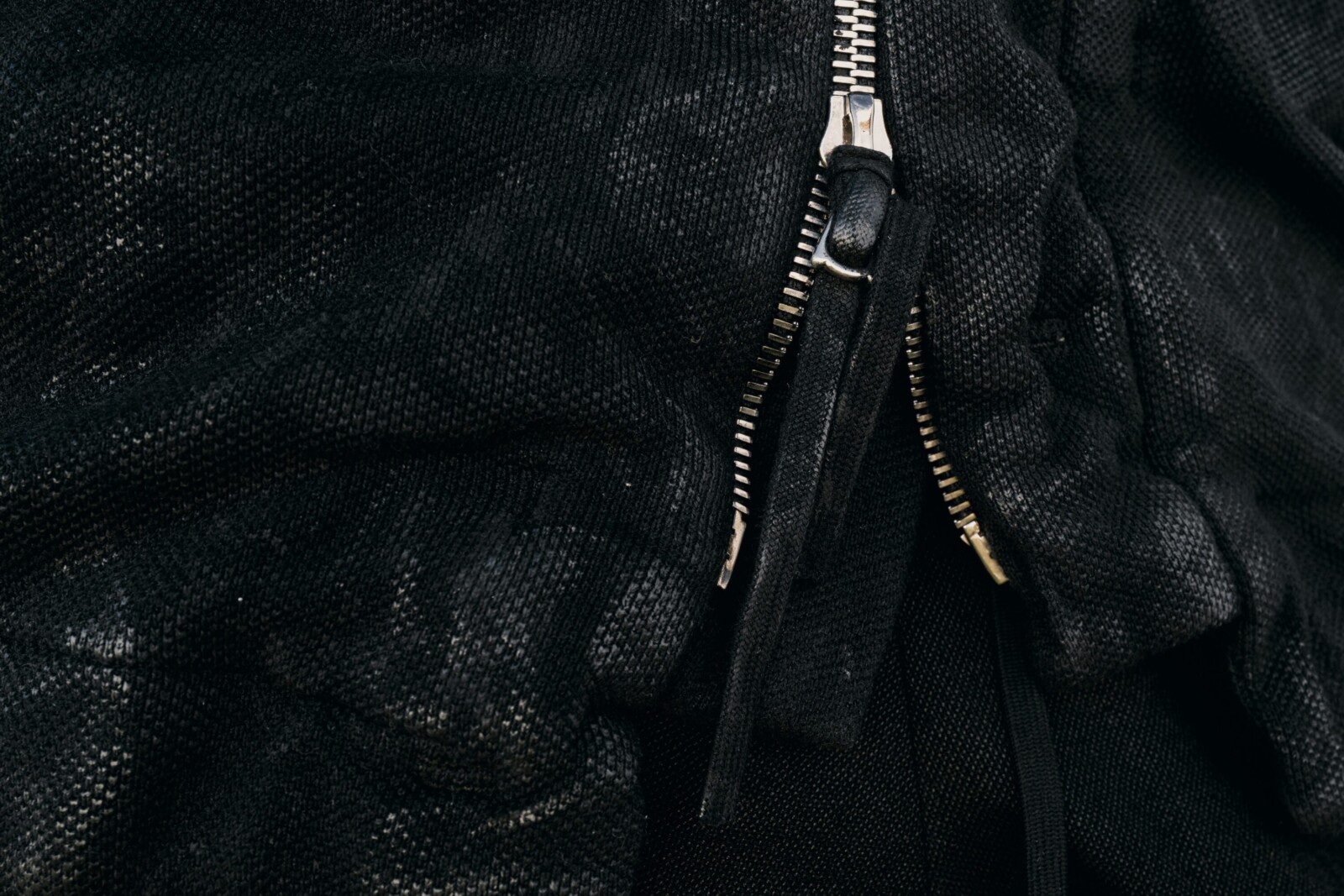
Boris Bidjan Saberi P23 裤子 P34 涂层蜡质细节

注册 - 享受我们的福利

  • 保存你喜欢的品牌和店铺
  • 获取你喜欢品牌的新款和独家产品通知
  • 专享优惠券码和折扣

加入我们

订阅我们的独家邮件列表,接收通知 当我们推出新品牌或店铺时获取信息,当我们 发布新的精选产品时, 并接收 独家促销优惠,直接发送到你的邮箱。

品牌

    门店

      文章

        产品

          精选产品

            知识库

              Boris Bidjan Saberi P23 裤子 P34 涂层蜡质细节

              注册 - 享受我们的福利

              • 保存你喜欢的品牌和店铺
              • 获取你喜欢品牌的新款和独家产品通知
              • 专享优惠券码和折扣