Nowoczesna Moda Awangardowa
Nowoczesna awangardowa moda wykorzystuje odzież do testowania, jak ciała, materiały i systemy kulturowe mogą być teraz rozumiane inaczej. Dziedziczy dekonstrukcję, antymodę i radykalne rzemiosło, ale nie ogranicza się do czarnej odzieży ani stałej listy kultowych projektantów. Jej najbardziej przekonujące formy przekształcają współczesne warunki—technologię, klimat, tożsamość, pracę i kulturę obrazu—w precyzyjne decyzje dotyczące konstrukcji i noszenia.
Co sprawia, że awangardowa moda jest nowoczesna?
“Nowoczesny” może oznaczać aktualny, ale niesie też historię modernizmu: próbę dostosowania form do życia przemysłowego, nowych technologii i zmieniających się relacji społecznych. Nowoczesna awangardowa moda zajmuje oba znaczenia. To współczesna odzież, która pyta, czy dziedziczone idee piękna, dopasowania, płci, luksusu, a nawet sama odzież nadal opisują świat, w którym żyjemy.
To pytanie uniemożliwia zakotwiczenie kategorii w jednym wyglądzie. Czarne asymetryczne warstwy mogą nosić pamięć japońskiego designu, belgijskiej dekonstrukcji i mrocznej niezależnej sceny, ale sama powtarzalność nie czyni ich awangardowymi. Znana sylwetka może być komercyjnie skuteczna, podczas gdy przestaje rozwijać jakąś ideę. Z drugiej strony, prosta odzież może być naprawdę eksperymentalna, jeśli jej wzór, system materiałowy lub relacja z noszącym reorganizuje sposób, w jaki odzież jest produkowana i używana.
Pytanie MoMA Czy moda jest nowoczesna? jest pomocne, ponieważ łączy odzież z funkcjonalnością, polityką, pracą, tożsamością, ekonomią i technologią, zamiast traktować modę tylko jako wizualną nowość. Nowoczesna awangardowa praca staje się znacząca, gdy kilka z tych wymiarów spotyka się w spójnym obiekcie.
Dziedzictwo późnego XX wieku
Współczesna awangardowa moda zaczyna od już przekształconej dziedziny. Issey Miyake uczyniła inżynierię tekstylną i ruch ciała nierozłącznymi. Rei Kawakubo ustanowiła nieobecność, niejednoznaczność i przestrzeń wokół ciała jako materiał projektowy. Yohji Yamamoto pokazał, że czarna, objętościowa i asymetryczna krawiectwo mogą oferować ochronę i wolność, a nie tylko dramatyzować noszącego. Martin Margiela ujawniał normalnie ukryte systemy konstrukcji, autorstwa i wartości komercyjnej.
Następne pokolenie dziedziczyło metody, a nie zasady. Od Husseina Chalayana pochodzi odzież jako badanie migracji, architektury i mechaniki; od Alexandra McQueena, wybieg jako medium psychologicznie i politycznie naładowane; od włoskiego ruchu rzemieślniczego, idea, że barwnik, skóra, szew i noszenie mogą być rozwijane jako całkowity język materiałowy. Te precedensy pozostają aktywne, ale nowoczesna praca musi robić więcej niż tylko cytować ich rozpoznawalne powierzchnie.
Pięć języków nowoczesnej awangardowej mody
1. Architektoniczna sylwetka
Odzież traktowana jest jako struktura z własną objętością, a nie jako błona podążająca za ciałem. Rozszerzone ramiona, przesunięte otwory na ręce, zawieszone panele, okrągłe cięcia i rzeźbione puste miejsca zmieniają kontur noszącego i rytm ruchu. Efekt może być monumentalny lub prawie niedostrzegalny; architektura leży w organizacji przestrzeni, a nie tylko w rozmiarze.
2. Przemiana materiału
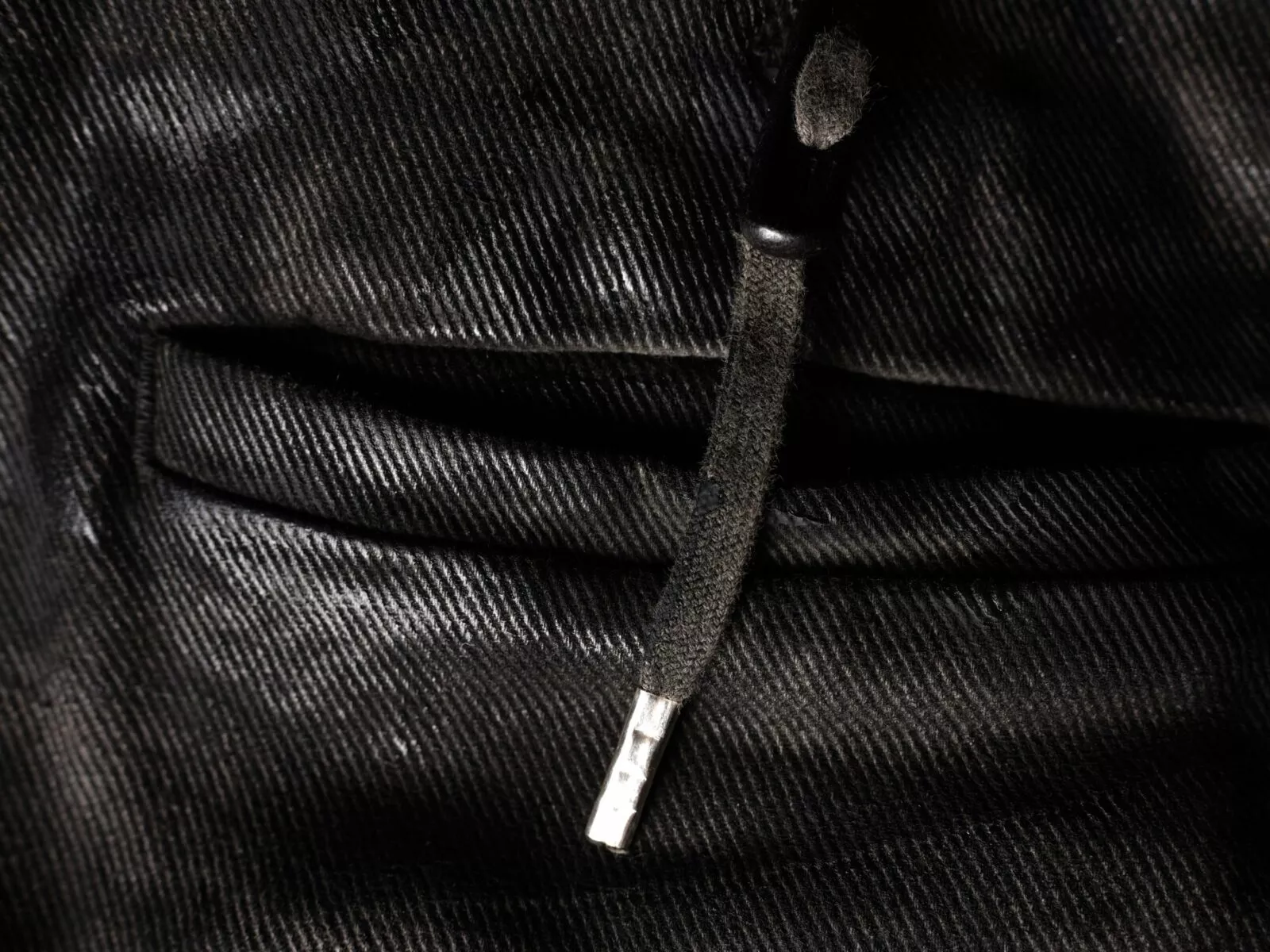
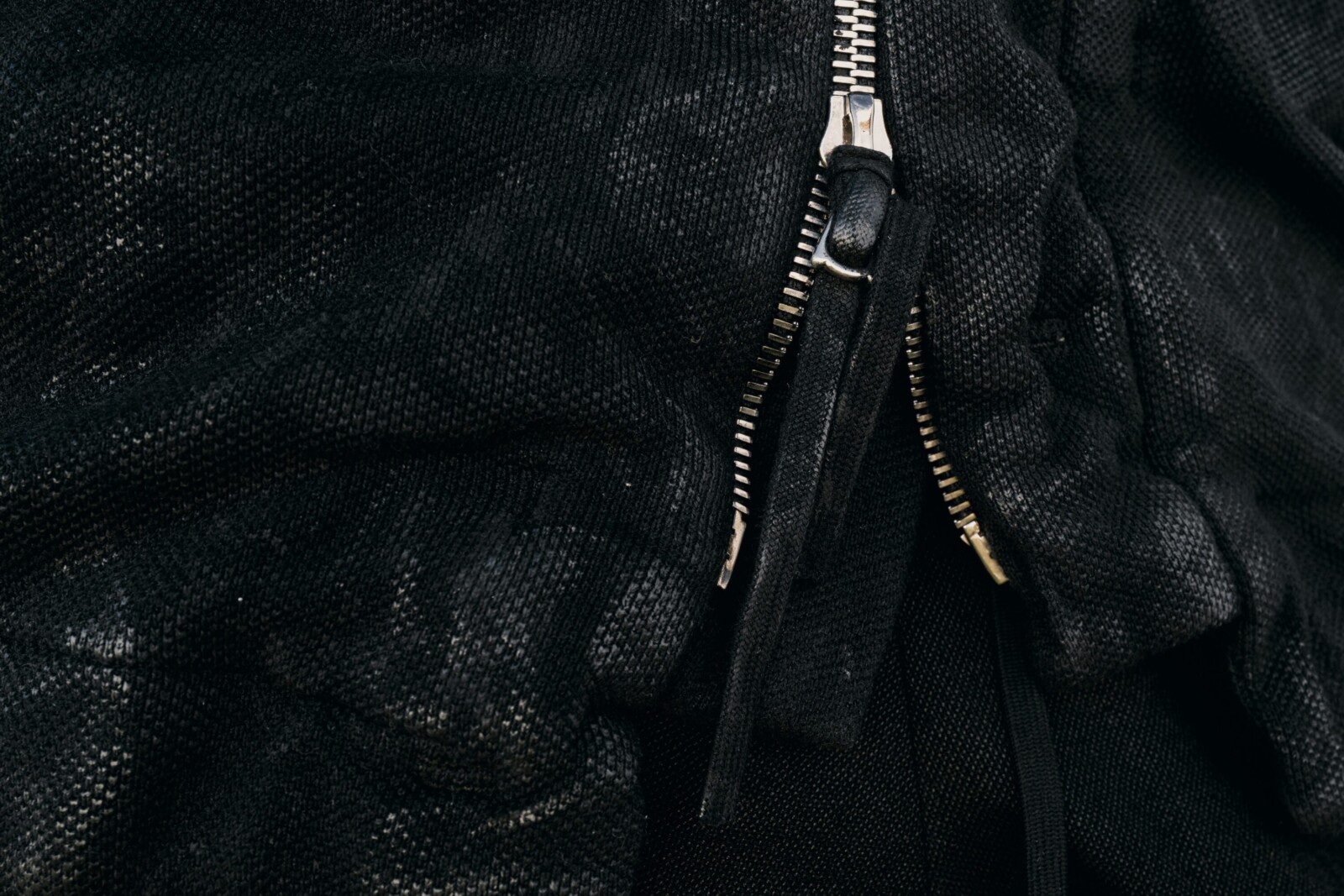
Współcześni projektanci pracują po konwencjonalnej produkcji tekstylnej, a nie akceptują tkaniny jako gotowej. Ukończone ubrania są barwione, prane, pokrywane, utleniane, łączone, szlifowane lub sprasowane. Skóra może być przezroczysta, sztywna lub celowo zniszczona. Włókna techniczne mogą naśladować organiczne błony, podczas gdy skromna tkanina może zyskiwać gęstość poprzez powtarzane traktowanie. Proces staje się widocznym dowodem, a nie niedoskonałością do ukrycia.
3. Dekonstrukcyjne systemy
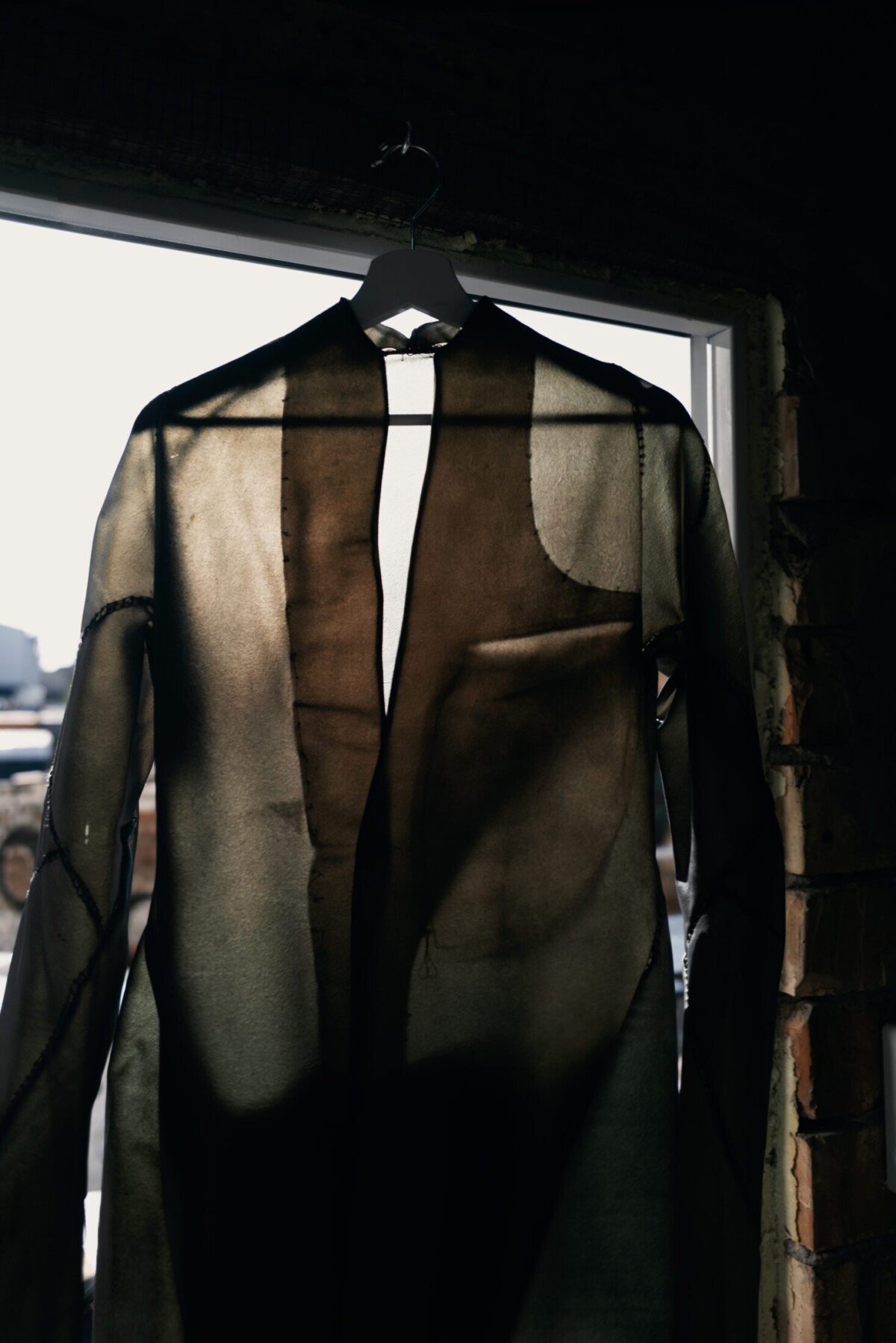
Dekonstrukcja pozostaje aktualna, gdy ujawnia założenie: dlaczego szew należy w jednym miejscu, dlaczego kurtka musi się zapiąć z przodu, dlaczego krawiectwo koduje płciową postawę, czy dlaczego luksus równa się nowości z wartością. Odkryte wnętrza i surowe krawędzie to tylko słownictwo. Praca intelektualna polega na pokazaniu, że znana odzież jest skonstruowaną konwencją i dlatego może być skonstruowana inaczej.
4. Transformowalność i uczestnictwo
Modularne warstwy, regulowane objętości, odwracalna konstrukcja i odzież cięta przez noszącego redistribuują władzę projektową. System A-POC Miyake i Dai Fujiwary pozostaje kluczowym precedensem: tekstylia produkowane przemysłowo stają się odzieżą poprzez decyzje użytkownika, produkując niewielkie odpady cięcia. Obecne systemy modularne rozszerzają tę logikę poprzez elastyczne rozmiary, naprawy i wiele trybów noszenia.
5. Wybieg jako argument
Nowoczesny pokaz mody może działać jako choreografia, instalacja, film lub gest obywatelski. Jego wartość nie jest proporcjonalna do spektaklu. Prezentacja ma znaczenie, gdy casting, przestrzeń, dźwięk i ruch wyjaśniają idee ubrań—gdy publiczność jest proszona o przemyślenie władzy, piękna lub zbiorowej tożsamości, a nie tylko o generowanie obrazów do obiegu.
Projektanci kształtujący nowoczesną dziedzinę
Ugruntowane domy awangardowe pozostają współczesne, ponieważ ich języki wciąż się zmieniają. Comme des Garçons wciąż traktuje kategorię “odzież” jako niestabilną. Yohji Yamamoto’krawiectwo wciąż testuje związek między tkaniną, czasem a poruszającymi się ciałami. Studia Miyake rozwijają plisowanie i inżynierię tekstylną jako żywe systemy, a nie dziedziczne podpisy.
Rick Owens: niezależność w monumentalnej skali
Rick Owens przekształcił podziemną praktykę w Los Angeles w globalny, ale niezależny dom w Paryżu, nie wygładzając jego sprzeczności. Wyrafinowane drapowanie spotyka prane skóry, ekspozycja ciała spotyka ochronną objętość, a klasyczne odniesienia spotykają kulturę klubową. Palais Galliera opisuje jego pracę poprzez transformację strukturalną, ruch i rozwijający się słownik materiałowy. Jego projekty na wybiegu są równie ważne: casting i zbiorowe wystąpienia wielokrotnie kwestionują, które ciała moda luksusowa pozwala na pojawienie się jako potężne.
Carol Christian Poell i autonomia materiałowa
Carol Christian Poell zajmuje bardziej wycofaną pozycję. Jego praca poddaje krawiectwo, obuwie i skórę anatomicznym i chemicznym badaniom: obróbka rotacyjna, stawowe połączenia, barwienie obiektów, utwardzone powierzchnie i dowody pochodzenia biologicznego. Ubrania mogą wydawać się oporne na komfort i zwykłą ekspozycję detaliczną. Ta trudność ma znaczenie, ponieważ czyni ograniczenie, zachowanie i granice ciała materialnie obecnymi.
Boris Bidjan Saberi i postindustrialne ciało
Boris Bidjan Saberi łączy rzemieślnicze traktowanie z miejskim systemem technicznym. Barwienie odzieży, gęste warstwy, ograniczone otwory i anatomicznie zakrzywione wzory produkują ubrania uzupełnione przez ruch i noszenie. Jego znaczenie polega na przenoszeniu materialnej intensywności włoskiego nurtu lat 90. do mrocznej odzieży XXI wieku, obuwia i technicznej współpracy, nie redukując jej do zniszczonej dekoracji.
LEON EMANUEL BLANCK i zniekształcona anatomia
LEON EMANUEL BLANCK podchodzi do konstrukcji odzieży przez anatomię poruszającego się ciała. Jego charakterystyczne metody cięcia wzorów odrzucają konwencjonalną symetrię i znaną architekturę odzieży, produkując spiralne szwy, przesunięte objętości i sylwetki, które wydają się owijać wokół noszącego. Zamiast dekorować konwencjonalny wzór, Blanck zmienia jego podstawową geometrię. Efektem jest odzież, która czyni ruch, napięcie i asymetrię ciała widocznymi, umiejscawiając samo cięcie wzorów jako awangardową metodę.
DEVOA i konstrukcja anatomiczna
DEVOA stawia ludzką anatomię w centrum konstrukcji odzieży. Wzory, szwy i artykułowane formy odpowiadają mięśniom, stawom i ruchowi, a nie traktują ciała jako statycznego bloku krawieckiego. Tkaniny techniczne współistnieją z naturalnymi materiałami, podczas gdy precyzyjna konstrukcja często tworzy napięcie między ochroną a mobilnością. To anatomiczne podejście pokazuje, jak współczesna awangardowa moda może powstać z badania mechaniki ciała, a nie tylko z wizualnej prowokacji.
JULIUS i ewolucja japońskiej mrocznej odzieży
JULIUS developed a highly recognizable language from monochrome layering, elongated proportions, distressed surfaces and an interplay between narrow anatomical forms and expansive volume. Yet its importance extends beyond an all-black aesthetic. Military references, industrial environments, music and subcultural imagery are repeatedly translated into experiments with silhouette and material. In doing so, JULIUS helped define a strand of twenty-first-century Japanese avant-garde menswear in which clothing functions simultaneously as protection, abstraction and identity.
The Viridi-Anne and quiet material experimentation
The Viridi-Anne occupies a quieter territory within Japanese avant-garde fashion. Its work combines unconventional pattern construction, layering and carefully developed textiles with garments that remain closely connected to everyday movement. Treatments, irregular surfaces and subdued palettes create complexity without requiring theatrical silhouettes. This balance between experimentation and wearability offers another model for the contemporary avant-garde: radicalism expressed through construction, proportion and material detail rather than spectacle.
Junya Watanabe and engineered transformation
Junya Watanabe approaches familiar clothing as a problem of construction. Emerging from Comme des Garçons, where he began as a pattern maker, Watanabe developed a practice in which recognizable archetypes are cut apart, multiplied and rebuilt through complex pattern engineering. Workwear, denim, tailoring, military clothing and technical outerwear become starting structures rather than fixed categories. His womenswear has repeatedly pushed fabric into sculptural and geometric forms, while Junya Watanabe MAN uses collaboration to transform established garments and industrial products from within. This ability to make the ordinary structurally unfamiliar places Watanabe between the conceptual experimentation of Comme des Garçons and the increasingly technical language of contemporary menswear.
sacai and the hybrid garment
Chitose Abe’s sacai advances a different form of reconstruction through hybridization. Rather than abandoning familiar clothing, Abe combines its archetypes: a bomber can become a trench coat, knitwear can merge with shirting, and contrasting fabrics can divide a single garment into multiple identities. Pattern construction makes these combinations structural rather than simply layered or styled together. The approach turns everyday wardrobe conventions into unstable categories while preserving their functionality and recognizability. In this sense, sacai demonstrates how an avant-garde methodology can move into widely wearable contemporary fashion without surrendering experimentation.
Maison Margiela and the continuing language of deconstruction
Maison Margiela remains fundamental to modern avant-garde fashion because the methods established by Martin Margiela continue to provide a vocabulary for questioning how clothes acquire value and meaning. Deconstruction exposes linings, seams and unfinished structures; found and existing materials are repurposed; familiar garments are displaced, enlarged or reconstructed; anonymity challenges the cult of the designer; and the Artisanal practice transforms objects and discarded materials through couture-level labour. Under Glenn Martens, these codes are being treated as working methods rather than static archive signatures. Repurposing, trompe-l’œil, second-skin garments, material assemblage and altered historical silhouettes continue to investigate the boundary between clothing and object. Margiela’s contemporary relevance therefore lies not only in its enormous historical influence, but in the continued possibility of using deconstruction to make the familiar strange again.
Iris van Herpen and collaborative fabrication
Iris van Herpen builds couture through collaboration with architects, scientists, engineers and artists. Digital modeling, laser cutting and additive manufacturing coexist with patient hand assembly. Institutions including the Metropolitan Museum of Art and Palais de Tokyo emphasize the way her work joins technology to biological form. Its strongest achievement is not making dresses look futuristic; it is using unfamiliar processes to imagine another relationship between body, nature and structure.
These figures do not constitute a complete directory. They represent different models of practice: the independent house, the materially autonomous atelier, the post-industrial system and the interdisciplinary laboratory. RAW Looks’ extensive Avant-Garde Fashion Designer List remains the primary destination for individual designer profiles.
Technologia to metoda, a nie estetyka
Modern avant-garde fashion is often described through visible technology: 3D printing, responsive surfaces, robotic fabrication or garments that illuminate and move. Yet the newest machine does not automatically produce the newest thought. Technology becomes important when it changes structure, authorship, production or use.
Van Herpen’s laser-sintered Skeleton dress, for example, could be built as a continuous rigid form without conventional seams. The Met’s conservation research reveals the other side of that innovation: experimental polyamide ages differently from established textiles, leaving museums to develop new methods for its care. A technical breakthrough creates a preservation problem. That full material lifecycle belongs to the design.
Modern practice also complicates the opposition between machine and hand. Computational models require testing, finishing and embodied knowledge; hand-dyed garments depend on chemistry and controlled production; traditional pleating can be reorganized through industrial engineering. The relevant distinction is not craft versus technology but passive convention versus active inquiry.
Digital images and physical clothes
Fashion is now encountered first through a screen more often than through cloth. Collections are compressed into frontal runway photographs, short video fragments and resale listings. This circulation gives independent designers global reach, but it favors immediately legible signatures. Extreme proportions and unusual surfaces survive the feed; subtle pattern logic and tactile intelligence often disappear.
A serious understanding of modern avant-garde fashion therefore returns to the object. How is weight distributed? What happens when the wearer sits, walks or fastens the garment? Does a material treatment improve with age, or is deterioration merely staged? The physical answers separate design systems from image systems.
Gender, bodies and the politics of form
Avant-garde fashion has long used androgyny, concealment and distortion to resist idealized anatomy. Contemporary practice widens that inquiry through nonbinary wardrobes, adaptive construction, broader casting and garments whose meaning changes across bodies. Oversized clothing can loosen the demand to display a conventionally sexed silhouette; exposure can be used as vulnerability, confrontation or self-possession.
But visual transgression does not guarantee structural inclusion. A runway may celebrate difference while sizing, pricing and retail availability remain narrow. The modern avant-garde must be evaluated across the complete system: who is imagined by the pattern, who can purchase and maintain the garment, who performs the labor, and who is permitted authorship.
Zrównoważony rozwój i problem niekończącej się nowości
The avant-garde’s traditional demand for constant newness now collides with ecological limits. Experimental materials may reduce waste or avoid animal inputs, but they may also rely on fossil-derived polymers, intensive energy or processes that cannot be repaired. “Innovation” is incomplete without evidence about sourcing, manufacture, durability and disposal.
Some of the most radical contemporary decisions are therefore quiet: producing slowly, maintaining an independent scale, designing for repair, reusing existing garments, preserving specialist workshops or allowing one pattern system to evolve over many seasons. These practices resist the fashion calendar’s requirement that value expire quickly.
Archival culture contributes another contradiction. Collecting older Margiela, Comme des Garçons, Helmut Lang, Carpe Diem or Poell preserves construction knowledge and extends a garment’s life. At the same time, online attention can turn historically specific work into speculative commodity and flatten it into searchable signatures. Responsible collecting studies provenance, condition and context rather than treating age alone as importance.
How to recognize meaningful modern avant-garde fashion
Price, rarity and visual strangeness are unreliable measures. A more useful reading begins with five questions:
- What convention is being questioned? The answer should be more precise than “normal clothes.”
- Does construction carry the idea? Silhouette, seam, material and fastening should do conceptual work.
- What happens on a moving body? Fashion is not complete as a still image.
- Is the process responsible for its consequences? Labor, durability and material impact belong to evaluation.
- Does the work develop over time? A coherent practice deepens its questions instead of changing costume every season.
Darkwear, techwear, conceptual couture, artisanal fashion and experimental tailoring can all overlap with the avant-garde, but none is automatically identical to it. Darkwear describes a visual and cultural field; techwear often prioritizes performance and utility; couture identifies a system of exceptional custom production. Avant-garde describes a critical position inside or against those systems.
Contemporary relevance
Modern avant-garde fashion matters because everyday dress is never neutral. Clothing organizes gender, movement, labor, status and our relationship with materials. Experimental garments make those structures visible. Their ideas often travel outward: asymmetry becomes ordinary, unisex sizing expands, repair becomes desirable, technical fabrics enter daily wardrobes and formerly unacceptable bodies acquire public presence.
The task is not to predict which strange silhouette will become mainstream. It is to preserve fashion as a field capable of difficult questions and sensuous material answers. Read What Is Avant-Garde Fashion? for the foundational definition, Historia mody awangardowej for the longer lineage, and Kompletny Harmonogram Mody Awangardowej for its key chronological turning points.
References and further reading
- The Museum of Modern Art — Items: Is Fashion Modern?
- The Museum of Modern Art — Announcing Items: Is Fashion Modern?
- The Museum of Modern Art — A-POC Queen Textile, 1997
- The Metropolitan Museum of Art — Rei Kawakubo/Comme des Garçons: Art of the In-Between
- Palais Galliera — Rick Owens: Temple of Love
- National Gallery of Victoria — Carol Christian Poell — Artist and Collection Record
- Boris Bidjan Saberi — Boris Bidjan Saberi
- Design Museum — Hussein Chalayan
- Royal Ontario Museum — Iris van Herpen: Transforming Fashion
- Palais de Tokyo — Iris van Herpen
- The Metropolitan Museum of Art — (Im)mortal Fashion: Iris van Herpen’s Skeleton Dress
- Museum of Fine Arts Boston — #techstyle
- Iris van Herpen — Inside the Atelier — Sensory Seas