Ann Demeulemeester and Poetic Tailoring
Tailoring without authoritarianism; Ann Demeulemeester cut garments for poets, not boardrooms. While twentieth-century Western tailoring served as an instrument of social discipline—rigid chest canvases, armored shoulder padding, and symmetrical buttoning designed to project bourgeois dominance—Demeulemeester treated the jacket as a living, supple skin. Emerging from the Flemish flatlands and graduating in 1981 from the Royal Academy of Fine Arts Antwerp, she was hailed as a key voice of the Antwerp Six alongside peers explored in our monograph on the Antwerp Six and the rise of Belgian fashion en Dries Van Noten. With her husband and artistic collaborator Patrick Robyn, Ann Demeulemeester forged an aesthetic system rooted in poetic tension: stark monochrome palettes, fluid bias cuts, interior cotton tape harnesses, trailing cords, and pigeon feather talismans. Much like contemporaries Yohji Yamamoto en Rei Kawakubo, she dismantled decorative conventions to construct an androgynous romantic armor that moves with the wearer rather than forcing the body into obedience.
Tailoring without authoritarianism; Ann Demeulemeester cut garments for poets, not boardrooms.
Power dressing in the late twentieth century operated on brute force. Shoulders jutted outward on rigid pads of dense polyurethane; lapels snapped sharp as razor edges; waistlines cinched under boned corsetry to signal ruthless corporate executive posture. Clothes enforced behavioral obedience. Ann Demeulemeester looked at that armored posture and rejected every inch of its posturing.
She did not seek authority. She sought cadence. Born in Kortrijk and educated in Bruges, she grew up watching the low Flemish sky press against damp brick walls, absorbing a world shaped by melancholy stone, raw linen fields, and monastic quiet. Her work answered a singular question: how does a tailored garment maintain architectural precision while surrendering entirely to human movement?
The answer lay in dissolving the internal scaffolding that had governed European tailoring since the nineteenth century. Out went the glued fusibles, the stiff horsehair chest canvases, and the suffocating silk linings that locked shoulders in place. In their stead, Demeulemeester introduced bias cuts, asymmetrical horn buttons, raw hem ribbons, and gravity-fed drapes. A Demeulemeester jacket does not stand at attention; it leans forward into the wind, wrapping the chest in an unforced, androgynous shelter.
The Flanders rebellion: Mary Prijot, the Antwerp Six, and the refusal of bourgeois polish
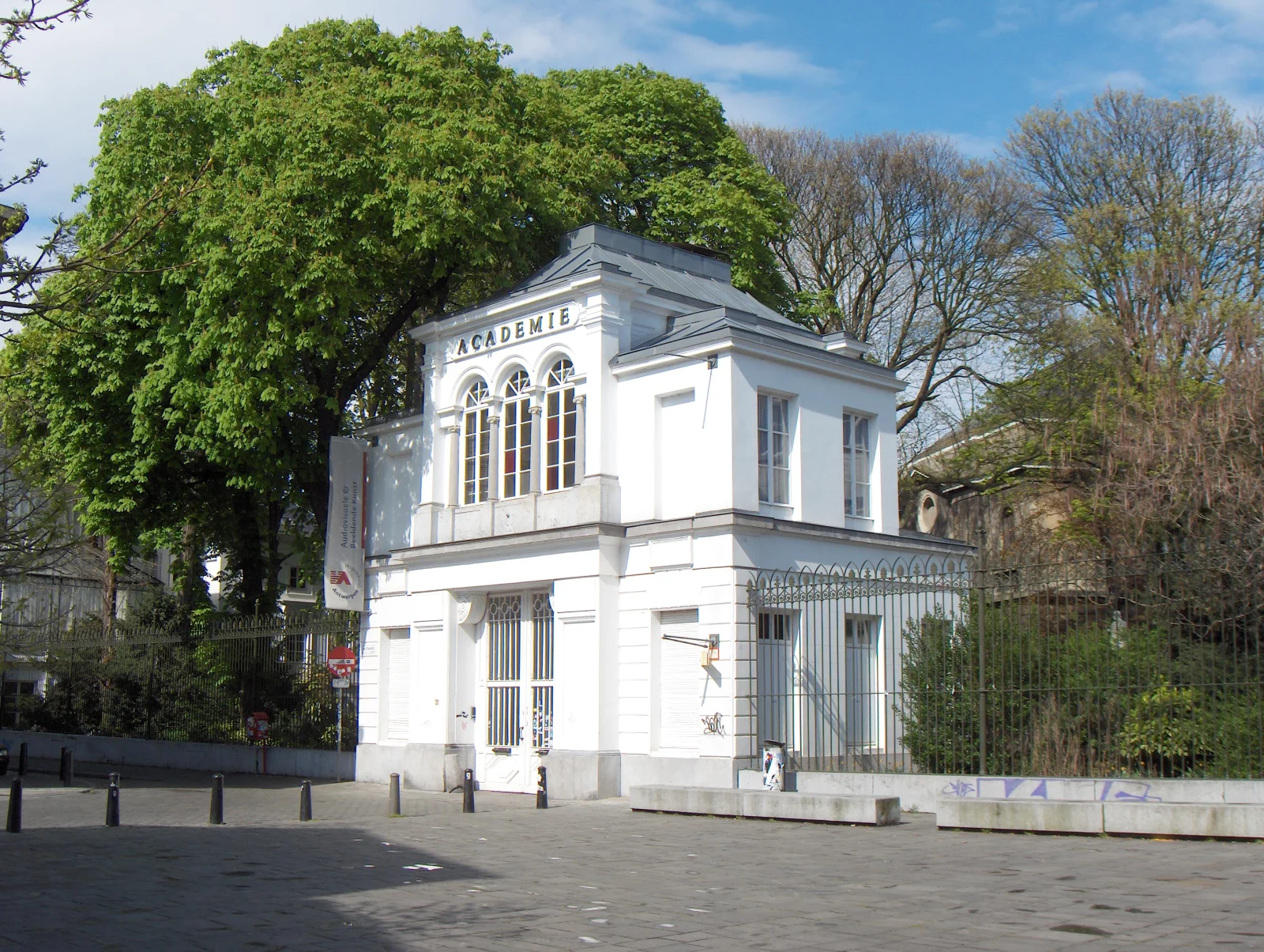
Belgium in the late 1970s was an industrial backwater for designer fashion, known for manufacturing high-quality textiles for foreign fashion houses rather than originating its own aesthetic visions. Within the Fashion Department of the Koninklijke Academie voor Schone Kunsten Antwerpen, founded in 1963, department head Mary Prijot presided with tyrannical discipline. Prijot was a conservative devotee of Coco Chanel and Cristóbal Balenciaga. She demanded immaculately set pencil skirts, neat chignons, and classical Parisian salon proportions. Ballpoint pens and modern felt-tip markers were strictly prohibited in her studio; students were forced to render every sketch using traditional graphite.
Demeulemeester arrived at the academy in 1978, clashing quietly but persistently with Prijot’s dogmatic vision. Her peers formed the radical core that would shake European fashion: Dries Van Noten, Dirk Bikkembergs, Walter Van Beirendonck, Dirk Van Saene, and Marina Yee. Martin Margiela worked alongside them in adjacent studios, graduating one year ahead. Where Prijot demanded pristine bourgeois decorum, Demeulemeester scrutinized the anatomy of street kids, British post-punk youths, and the raw brushstrokes of Dutch and Flemish portrait masters.
Graduating in 1981, she was awarded the inaugural Gouden Spoel (Golden Spindle) award in 1982—a government initiative designed to stimulate the Belgian textile industry. Commercial ready-to-wear manufacturers immediately sought her services, but she found subcontracting spiritually deadening. In 1985, working from their private home in Antwerp with her husband, photographer Patrick Robyn, she founded her independent company, BVBA 32. Robyn became her creative alter ego, designing store interiors, constructing runway light rigs, and capturing the label’s visual imagery with ascetic clarity.
In March 1986, the six graduates pooled their modest savings, rented an unheated van, and drove to the British Designer Show at Olympia in London. Lacking the funds for a proper runway slot, they set up a rudimentary collective stall near the venue’s rear staircase. British and American buyers, exhausted by London’s neon theatricality and Milanese gloss, were arrested by their work. The English press, unable to pronounce their Dutch surnames, coined the collective moniker: the Antwerp Six. Among them, Demeulemeester stood apart for her relentless monochrome rigor and deconstructed sartorial discipline.
The Boulevard du Temple debut: October 1992 and the architecture of the unbuttoned jacket
London provided the initial spark, but Paris remained the supreme arbiter of high fashion. For six years, Demeulemeester presented small showroom selections in Parisian hotel suites, refusing to rush into the theatrical circus of the official calendar. She insisted that her garments be technically resolved before facing international scrutiny. That breakthrough arrived in October 1992 for the Spring/Summer 1993 season.
She chose an art gallery on Boulevard du Temple in Paris. The staging rejected every hallmark of 1990s supermodel pageantry. There was no raised podium, no flashing strobes, and no celebrity front row. Models walked directly on raw wooden floorboards under harsh, unvarnished white light, accompanied by the distorted feedback of live electric guitars. They wore flat boots, unstyled hair, and negligible makeup. The industry sat transfixed.
What stepped onto the floorboards was a complete vocabulary of deconstructed tailoring. Demeulemeester showed jackets cut from dry, unwashed wool gabardine and crumpled poplin. Lapels were split or cut away entirely. Trousers were suspended low on the hipbones by thin leather laces, puddling slightly over leather soles without the stiff creasing of bespoke tradition. Crucially, the jackets were never closed squarely: they fastened off-center with single horn buttons or hung open, anchored to the torso by interior cotton tape harnesses that allowed the outer panels to flap freely in the draft.
International fashion critics recognized that Demeulemeester had accomplished something rare: she made tailoring sensual without making it sexually overt. This was not the predatory power silhouette of Gianni Versace, nor was it the sterile minimalism emerging on Madison Avenue. It was an intellectual, introspective romanticism that treated garments as extensions of the soul. As explored in our historical surveys on deconstructie in mode en what is anti-fashion, Demeulemeester provided proof that anti-bourgeois deconstruction could yield impeccably wearable garments.
The Patti Smith symbiosis: Horses, androgynous armor, and the white poplin shirt
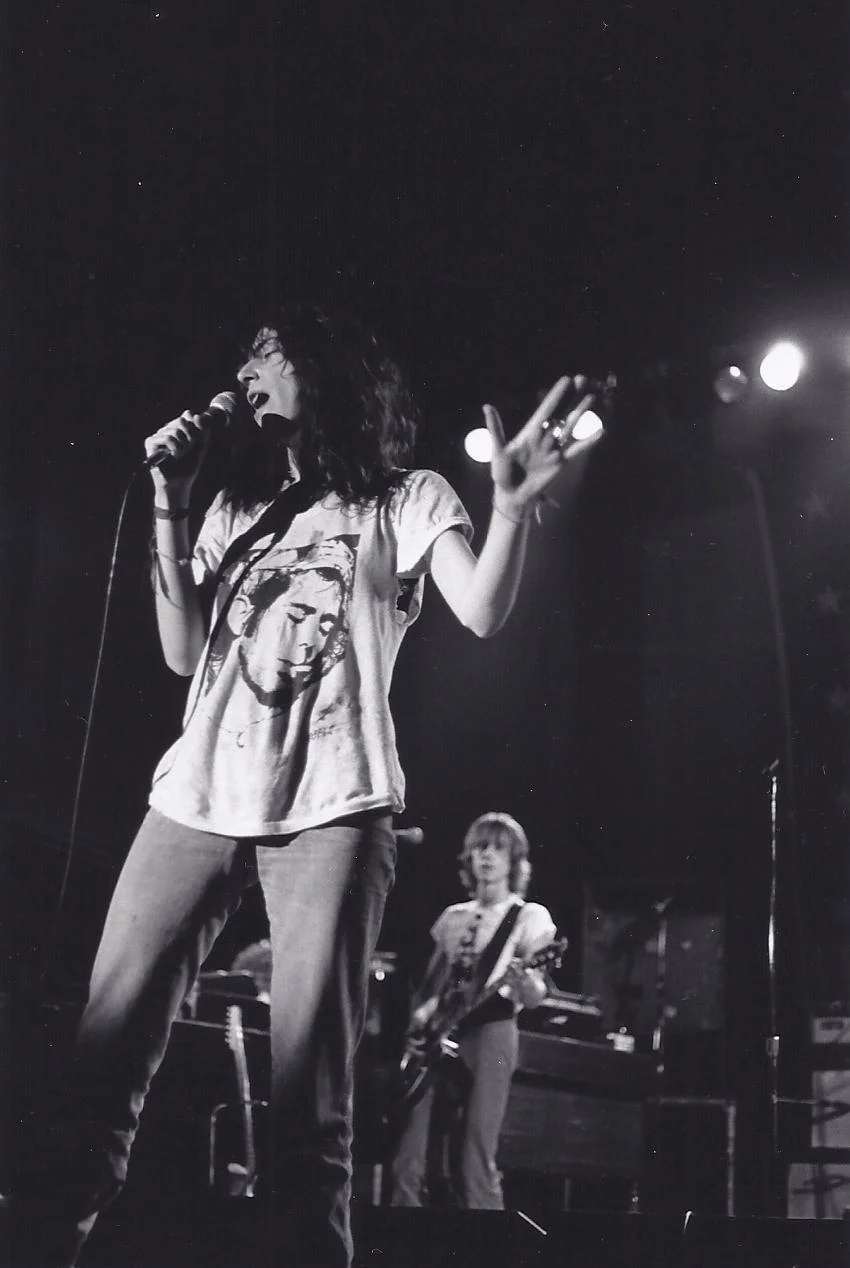
Fashion designers habitually harvest pop cultural figures as fleeting seasonal mood boards. Demeulemeester did something different: she established an unbroken, lifelong dialogue with a single artist who became her spiritual mirror. That figure was the poet, singer, and visual artist Patti Smith.
The fixation originated in the mid-1970s when Demeulemeester first saw Robert Mapplethorpe’s stark monochrome cover photograph for Smith’s 1975 debut album, Horses. Smith stood bathed in flat afternoon light, wearing a rumpled, unbuttoned white men’s dress shirt, a dark jacket slung casually over one shoulder, and a thin black ribbon knotted loosely around her collar. There was no coquettish posturing. Smith looked directly into the lens with fierce, unadorned androgynous authority. For Demeulemeester, that photograph was a revelation: it proved that a white shirt and a black jacket could express pure existential freedom.
The dialogue remained purely internal until the mid-1990s, when Demeulemeester sent Smith a package containing several tailored jackets and white shirts, accompanied by a modest handwritten note. The garments fit Smith as if molded directly to her spine. A profound artistic kinship ignited. Smith began wearing Demeulemeester exclusively, both on stage and in private life, describing the clothes as “armor for a traveling poet.” When Smith was inducted into the Rock and Roll Hall of Fame in 2007, she wore Demeulemeester’s tailored coat, waistcoat, and boots.
Their collaboration deepened into direct creative co-authorship. Smith provided spoken-word recordings and acoustic tracks for Demeulemeester’s runway presentations in Paris. In the Spring/Summer 2000 collection—titled *Woolgatherer*—Demeulemeester hand-printed fragments of Smith’s poetry and handwriting directly onto trailing silk ribbons and sheer cotton gauze tops. Garment and lyric became indivisible. Smith represented the living embodiment of Demeulemeester’s woman: intellectual, fiercely independent, unconcerned with conventional glamour, yet deeply, passionately romantic.
Anatomy of the harness: Silk ribbons, internal cotton tapes, and kinetic gravity
Demeulemeester’s tailoring looks effortless because its interior mechanics are engineered with microscopic precision. Cutters unpicking one of her archival jackets discover an intricate system of tension lines and countervailing weights that hold the garment in dynamic balance against the human torso.
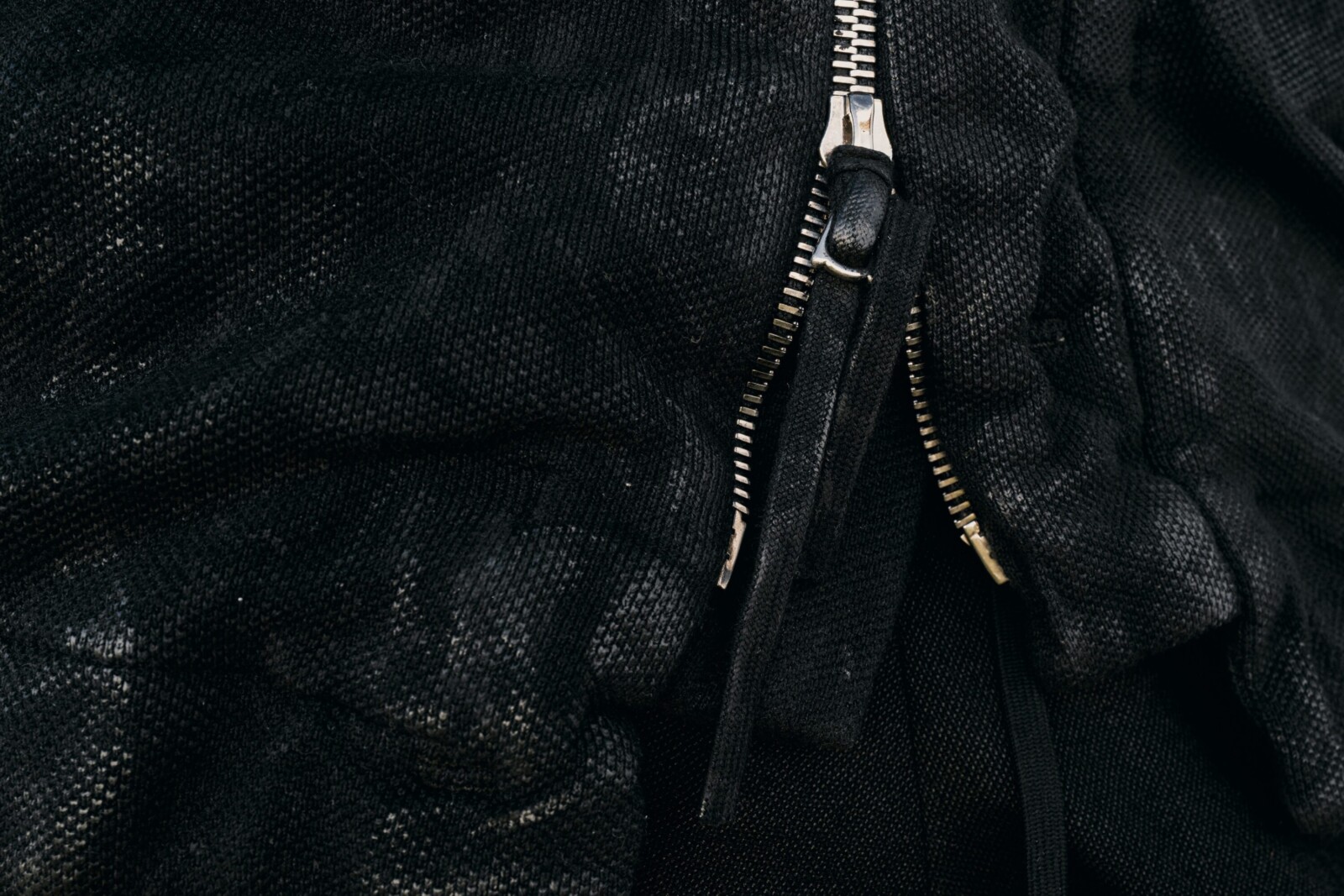
The foundational component of this system is the internal harness. Sewn into the armscye seams and spine of her unlined jackets are pairs of narrow, woven black cotton tapes. The wearer slips their arms through these tapes before donning the sleeves, or ties them across the sternum. This structural anchor allows the jacket’s exterior front panels to fall away from the chest entirely without the garment slipping off the shoulders. The coat floats behind the walking figure like a dark sail, grounded at the collarbone while the torso remains open to the breeze.
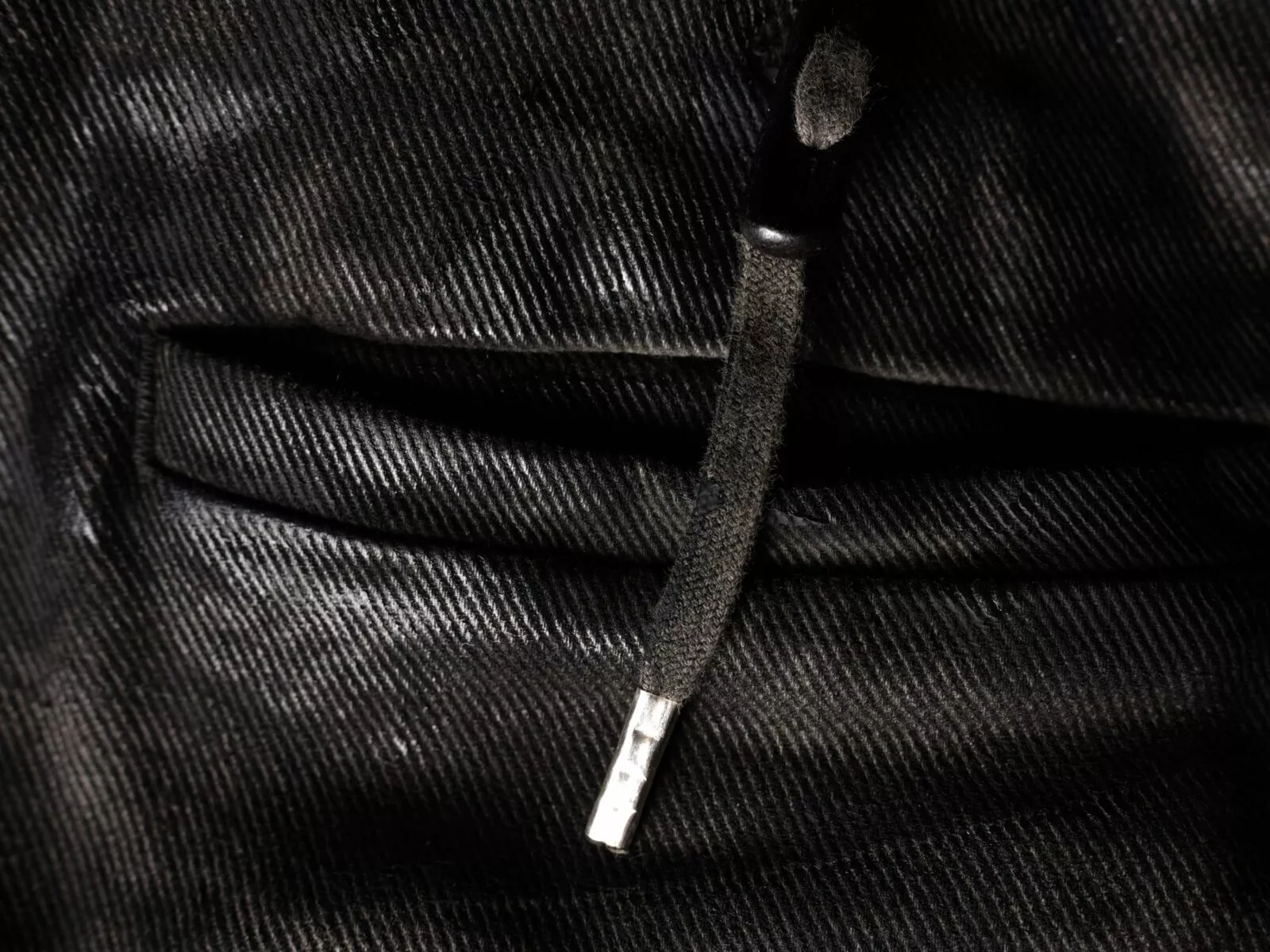
Ribbons and cords perform an equally crucial mechanical role. Demeulemeester despised decorative trim that served no functional purpose. In her atelier, every ribbon had a job to do. Trailing silk twill cords threaded through nickel grommets permitted the wearer to cinch a waist, pull up an asymmetric hemline, or bind a sleeve cuff around the wrist. The garment was never static; it offered a kit of parts that could be re-engineered daily by whoever put it on.
Materiality reinforced this structural dialogue. Demeulemeester rejected slick, synthetic fabrics in favor of tactile textiles with natural tooth and weight. She worked extensively with family-owned mills in Biella, Italy, developing custom blends of dry wool gabardine, unwashed heavy linen, slubbed silk noil, and dense cotton poplin. These fabrics were selected specifically because they memorized the wearer’s posture over time. Wrinkles were not faults to be pressed away with an iron; they were honest records of lived experience.
Menswear as romantic continuum: The 1996 debut and the deconstructed frock coat
By the mid-1990s, male admirers were routinely purchasing Demeulemeester’s womenswear in larger sizes, drawn to its austere cut and lack of decorative frivolity. Recognizing this natural affinity, she launched her inaugural standalone menswear collection in 1996 for the Autumn/Winter 1996–1997 season. The presentation dismantled the rigid boundary between male and female wardrobes without succumbing to cartoonish gender parody.
She did not design menswear as an aggressive marketing extension; she treated it as a direct mirror of her womenswear universe. Her men walked in the same bias-cut waistcoats, the same crisp white poplin shirts, and the same floor-skimming coats. The silhouette was long, lean, and poetic, drawing inspiration from nineteenth-century dandies, Romantic poets such as Lord Byron and John Keats, and late-twentieth-century rock icons like Nick Cave and Tom Verlaine.
Her key contribution to menswear was the reinvention of the historical frock coat. In Demeulemeester’s hands, the stuffy Victorian relic was stripped of its stiff buckram lining, heavy shoulder pads, and formal velvet collar. She cut the garment in lightweight unlined wool, dropped the button stance to the lower ribs, and elongated the tails so they billowed behind the stride. Layered over an asymmetrical bias waistcoat and trousers tucked into knee-high leather boots, the look evoked an urban warrior who had stepped out of an archival lithograph into the modern metropolis.
Her menswear introduced a tender vulnerability into masculine dressing that stood in stark contrast to the hyper-masculine athletic luxury dominating 1990s runways. It proved that a man could dress with dramatic theatricality while maintaining an aura of quiet, understated intellectual discipline.
The pigeon feather and the equestrian boot: Talismans of freedom versus runway excess
In an industry obsessed with gilded hardware, stamped monogram canvas, and seasonal status symbols, Demeulemeester anchored her brand identity to the humblest organic material imaginable: the molted feather of a street pigeon.
The pigeon feather necklace, introduced in the late 1990s, became the brand’s most recognizable talisman. Captured in sterling silver caps and suspended from leather cords or pinned to lapels, the feather was not an expensive luxury exotic. Demeulemeester chose the pigeon specifically because it was a common, neglected urban bird that belonged to everyone. To her, the feather symbolized humility, resilience, and unencumbered flight. She wore one pinned to her own lapel at every runway bow. When customers purchased her signature pieces, a genuine pigeon feather talisman was often tucked inside the inner breast pocket—a quiet reminder that true freedom requires very little luggage.
If the feather provided spiritual lightness, her footwear anchored the silhouette firmly to the earth. The Demeulemeester lace-up boot, developed in collaboration with Belgian master cobbler Patrick Robyn, became an archival legend. Cut from heavy, oiled black calfskin with thick leather soles, these boots drew inspiration from nineteenth-century equestrian riding gear and military combat spats. They featured dense front lacing with twenty or more eyelets, reinforced heel counters, and protective spat flaps that folded over the vamp.
These were boots designed for walking miles through rain-swept cobblestone streets. They gave the wearer a grounded, purposeful gait that counterbalanced the fragile, fluttering silk cords and transparent gauzes of her upper garments. Together, the pigeon feather and the combat boot encapsulated Demeulemeester’s dialectic: heaven above, earth below, and an unshakeable human center.
The handwritten farewell: Independence, corporate resistance, and the Antonioli archive
Throughout the 1990s and 2000s, European luxury underwent violent financial consolidation. Conglomerates like LVMH and the Gucci Group (now Kering) swept across Paris and Milan, acquiring independent heritage ateliers, installing rotating creative directors, and turning historic brands into global accessories corporations. Offers arrived on Demeulemeester’s desk in Antwerp with regularity. She rejected every single one.
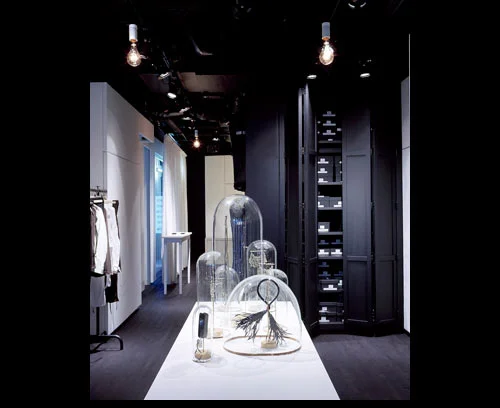
She refused to subordinate her creative output to quarterly financial spreadsheets, licensing contracts, or mass-produced fragrance campaigns. Her company, BVBA 32, remained entirely independent, managed by Demeulemeester and Robyn alongside a trusted circle of Flemish patternmakers and Italian craftspeople. Production runs remained limited; retail expansion was deliberate and slow, focused on atmospheric flagship stores like the one designed by Korean architect Minsuk Cho in Aoyama, Tokyo, and her primary boutique on Leopold de Waelplaats in Antwerp.
On November 20, 2013, having built an uncompromised body of work spanning nearly three decades, Demeulemeester shocked the fashion world by announcing her retirement. Characteristically, there was no slick corporate press release or PR campaign. Instead, she distributed a simple, handwritten letter faxed and emailed to friends, press, and stockists. In clear, looping cursive, she wrote:
“A new age is coming both to my personal life and the brand… I feel it’s time to separate our paths. Ann Demeulemeester is an adult brand now, with its own DNA and its own codes. It will continue to grow without me.”
She walked away at the absolute height of her powers, turning her attention to porcelain ceramics, glassmaking, and furniture design with Belgian manufacturer Serax. Her atelier in Antwerp continued for several seasons under her design team until 2020, when Italian retail visionary Claudio Antonioli—co-founder of the New Guards Group—purchased the brand. Antonioli, a lifelong admirer of Demeulemeester who had been her first Italian wholesale stockist in the early 1990s, treated the label not as a corporate cash cow, but as a cultural sacred trust. He reopened the historic Antwerp flagship, restored the brand’s original fabric suppliers, and preserved Demeulemeester’s archival patterns, demonstrating that poetic tailoring remains a vital, living language in European fashion.
Related Brand Archives & Historical Monographs
Explore curated archival pieces and deep historical analyses across the avant-garde continuum: browse the curated Ann Demeulemeester brand archive, examine our monographs on Dries Van Noten, Yohji Yamamoto, en Comme des Garçons, or study foundational historical analyses including De Antwerpse Zes en de Opkomst van de Belgische Mode, Belgische Deconstructie Na de Antwerp Six, Deconstructie in de Mode, en Wat is anti-mode?.
Referenties en verdere lectuur
- Wikimedia Foundation — Ann Demeulemeester: Biography, Design Philosophy, and Brand History
- Wikimedia Foundation — The Antwerp Six: Belgian Avant-Garde Fashion Collective
- Wikimedia Foundation — Patti Smith: Poetry, Visual Arts, and Collaborative Aesthetics
- Wikimedia Foundation — Royal Academy of Fine Arts Antwerp: Fashion Department History
- Wikimedia Foundation — Horses (Album): Mapplethorpe Photography and Visual Legacy
- ModeMuseum Province of Antwerp — ModeMuseum Antwerpen (MoMu): Belgian Fashion Design Archives
- Fashion Channel Archive — Ann Demeulemeester Autumn/Winter 1997-1998 Paris Collection
Afbeelding credits
- The Ann Demeulemeester flagship boutique in Aoyama, Tokyo. Photograph by Wikisepia, Wikimedia Commons, CC BY-SA 3.0.
- The entrance pavilion of the Royal Academy of Fine Arts Antwerp on Mutsaardstraat, designed by Pierre Bourla. Photograph by Friedrich Tellberg, Wikimedia Commons, CC BY-SA 3.0.
- Patti Smith performing at Cornell University in 1978. Photograph by Vistawhite, Wikimedia Commons, CC BY-SA 3.0.