Come vestirsi in stile avant-garde
Vestirsi avanguardista significa costruire una relazione intenzionale tra abbigliamento e corpo piuttosto che assemblare un'uniforme di pezzi insoliti. Inizia con silhouette, proporzione e movimento; aggiungi contrasto di materiali e dettagli solo quando rafforzano quella struttura. L'armadio più convincente sembra personale, indossabile e coerente—non come un'imitazione di una passerella o una collezione di segnali costosi.
Lo stile avanguardista inizia con un punto di vista
Non esiste un armadio avanguardista obbligatorio. Il nero non è obbligatorio; l'asimmetria non è un distintivo di appartenenza; un indumento difficile non è automaticamente intelligente. Storicamente, i designer avanguardisti hanno sfidato le relazioni accettate tra corpo, bellezza, genere, produzione e comportamento sociale. Vestirsi da quella tradizione significa fare scelte altrettanto deliberate su scala quotidiana.
Il tuo punto di vista potrebbe dare priorità a volume protettivo, riduzione severa, stratificazione fragile, costruzione visibile o abbigliamento alterato dall'usura. Scegli un'idea centrale prima di scegliere i pezzi individuali. Questo produce coerenza e impedisce che l'outfit diventi un insieme di effetti non correlati.
1. Inizia con la silhouette
La silhouette è la prima informazione che un outfit comunica. Prima di esaminare etichette o dettagli, nota il confine formato dal corpo e dai vestiti insieme. Cade verticalmente, si allarga alla spalla, si curva lontano dal torso, si restringe verso la caviglia o crea spazio attraverso un cavallo abbassato e una cucitura spostata?
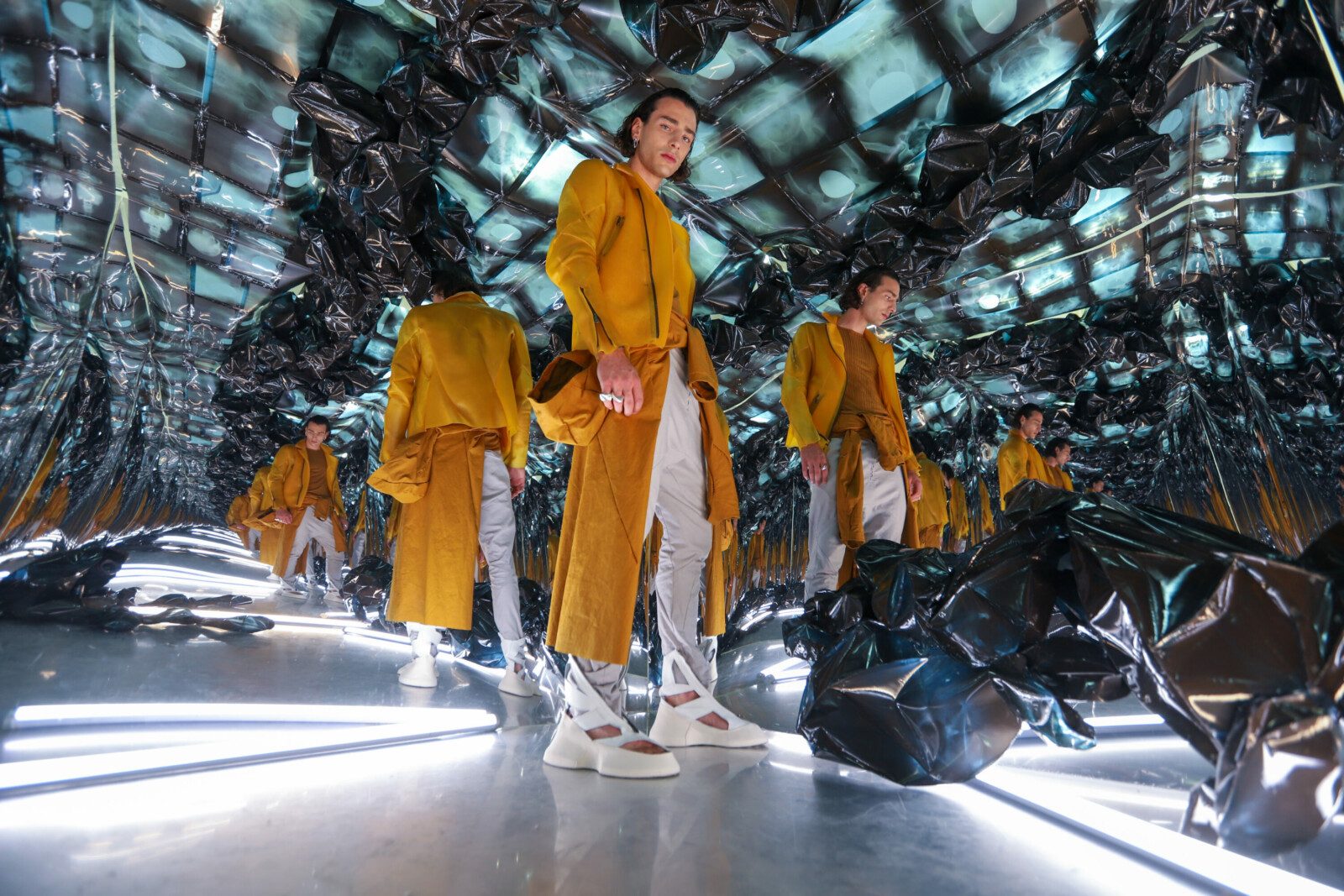
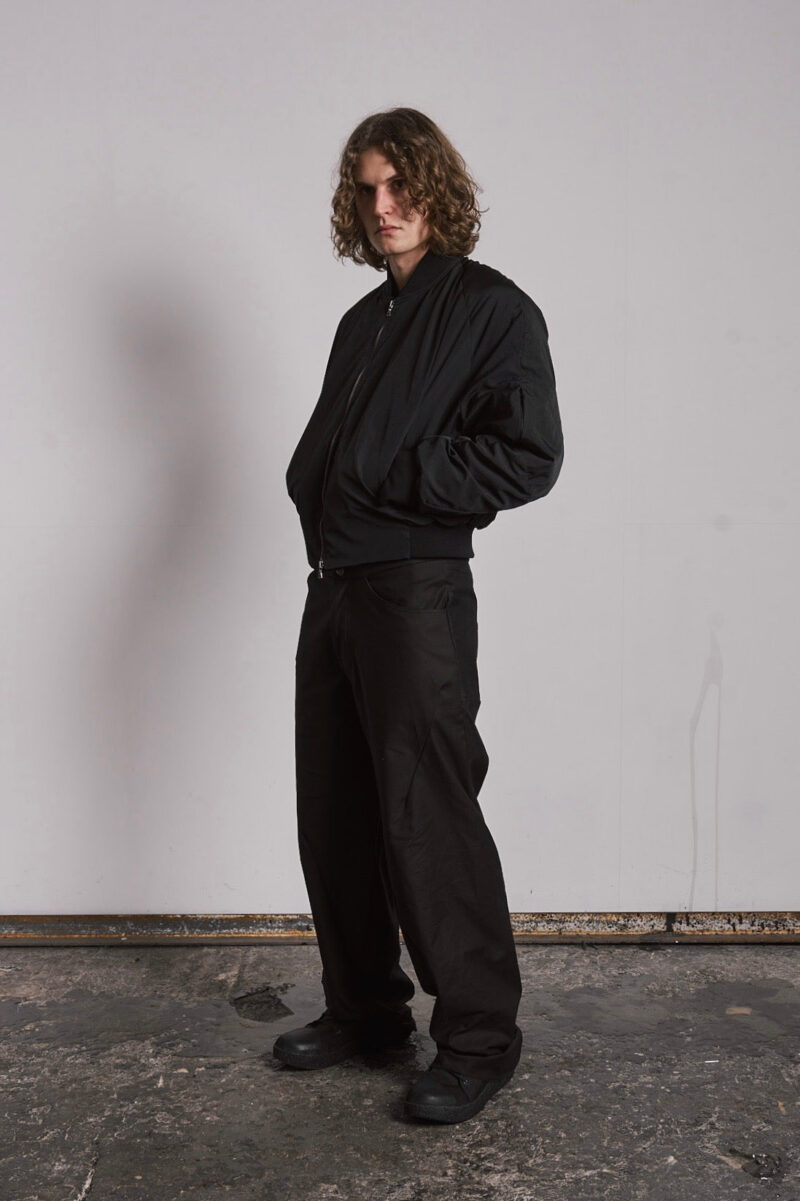
Scegli una silhouette primaria e lascia che il resto dell'outfit la supporti. Un lungo strato esterno può funzionare con volume controllato sotto. Una giacca architettonica corta può stare sopra uno strato interno più lungo e pantaloni larghi. Un top oversize diventa più chiaro quando la parte inferiore ripete il suo volume o lo contrae deliberatamente. L'obiettivo non è un “equilibrio” universale, ma una relazione leggibile.
La vestibilità non è la stessa di una convenzionale lusinga
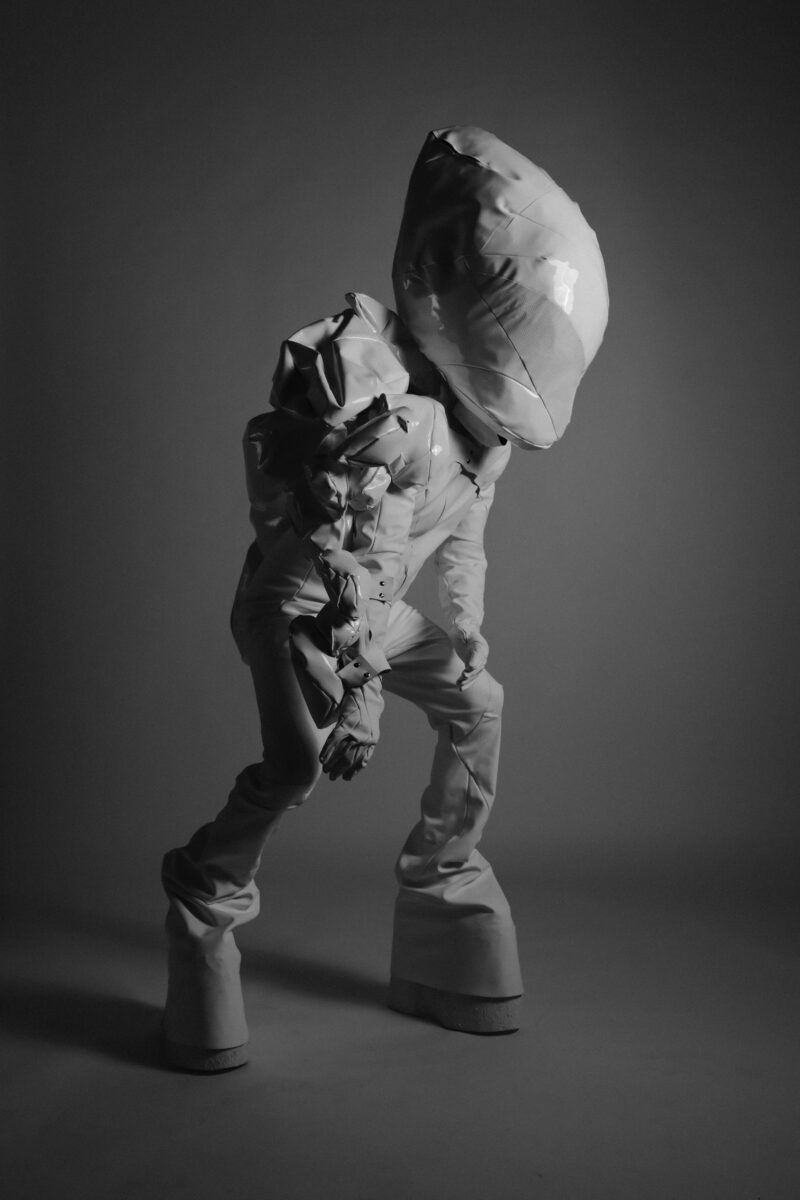
I vestiti avanguardisti possono nascondere la vita, estendere la spalla o staccare il tessuto dal corpo. Devono comunque adattarsi dove la loro struttura dipende dal contatto: scollatura, giromanica, polso, fianchi, calzature e punti di sospensione. I vestiti oversize che sono semplicemente diversi numeri più grandi spesso collassano nei posti sbagliati. Il volume costruito per uno scopo ha cuciture, peso e equilibrio controllati.
2. Controlla la proporzione e il peso visivo
La proporzione riguarda le lunghezze e le divisioni all'interno della silhouette. Una giacca che termina molto sotto il fianco cambia la posizione apparente delle gambe. Pantaloni accorciati espongono un intervallo stretto sopra calzature sostanziali. Una manica allungata rallenta la mano. Questi spostamenti sono efficaci perché alterano misure corporee familiari.
Lavora con un significativo spostamento all'inizio. Estendi lo strato esterno, accorcia i pantaloni, alza il colletto o esagera la larghezza—non tutte e quattro automaticamente. Poi guarda il peso visivo. Pelle densa, lana pesante e stivali sostanziali attirano l'occhio verso il basso; tessuti chiari o traslucidi sembrano galleggiare. L'outfit diventa coerente quando quei pesi sembrano distribuiti intenzionalmente.
Prova i vestiti in movimento
Cammina, siediti, allunga e usa le scale. Uno specchio statico può nascondere una cattiva articolazione e rivelare solo l'angolo più fotogenico. Issey Miyake’I vestiti di ’ dimostrano quanto radicalmente il tessuto possa cambiare attraverso il movimento; Yohji Yamamoto’La sartoria di ’ acquista significato mentre l'aria entra nello spazio tra tessuto e corpo. L'abbigliamento avanguardista quotidiano dovrebbe rimanere vivo al di fuori della fotografia.
3. Costruisci una palette invece di ricorrere al nero
Il nero è utile perché chiarisce il contorno, unifica materiali vari e consente differenze sottili nella superficie di diventare visibili. Porta anche storie di lutto, ribellione, abbigliamento intellettuale, punk e anti-moda giapponese. Ma indossare il nero non rende un outfit avanguardista, e evitare il colore può diventare una convenzione non esaminata di per sé.
Una palette contenuta può includere carbone, inchiostro, polvere, marrone-nero, grigio ossidato, osso e toni minerali sbiaditi. Differenze di temperatura e riflettività impediscono ai vestiti monocromatici di diventare piatti. Il colore può anche essere strutturale: una fodera vermiglia rivelata solo in movimento, un volume cobalto contro il nero, o diverse sfumature in conflitto trattate con la stessa intensità.
Se stai iniziando, scegli due colori di base correlati e un'interruzione controllata. La ripetizione in diversi outfit farà sentire la palette come un linguaggio personale piuttosto che un costume a tema.
4. Lascia che la texture e la costruzione portino il dettaglio
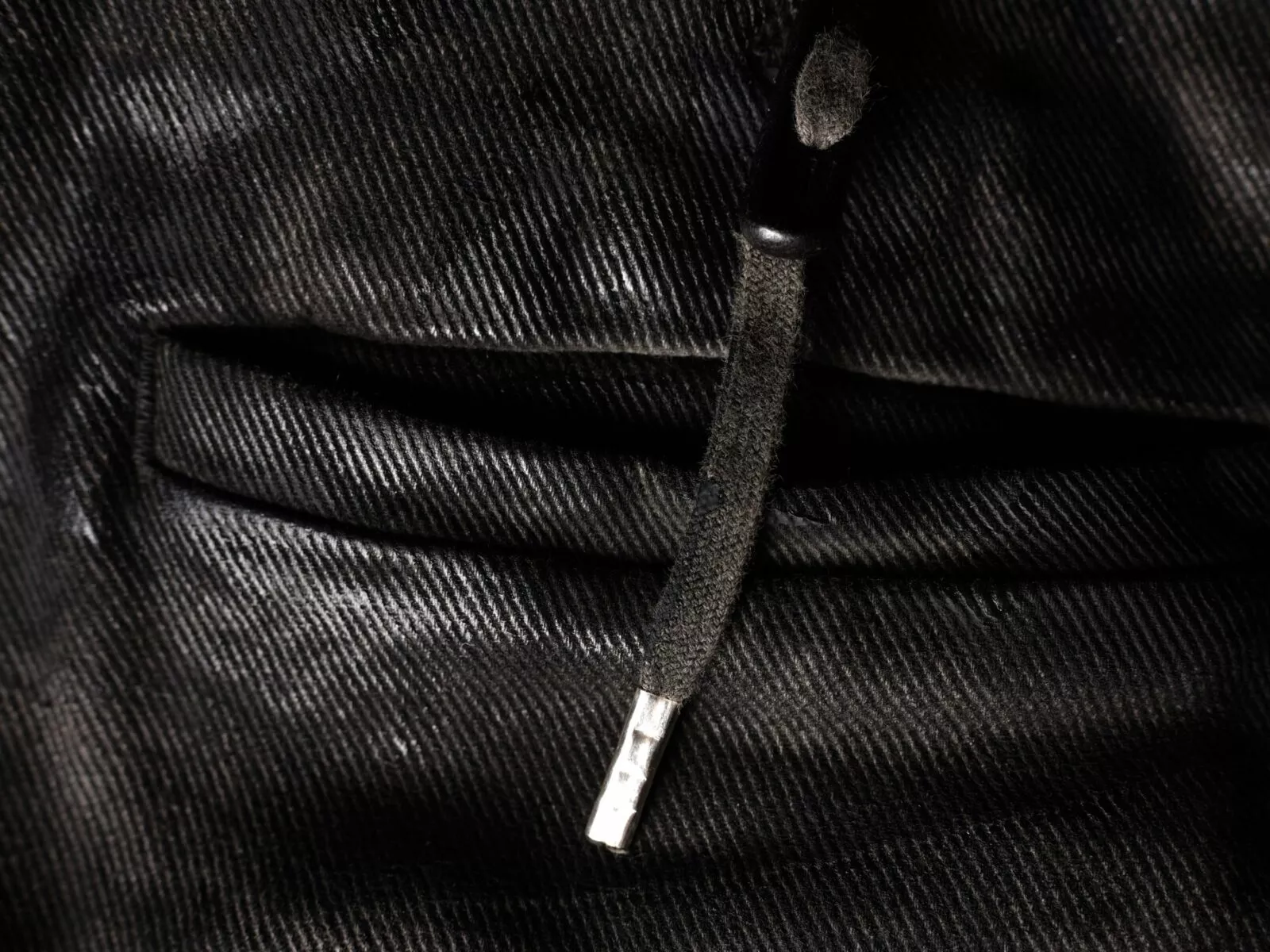
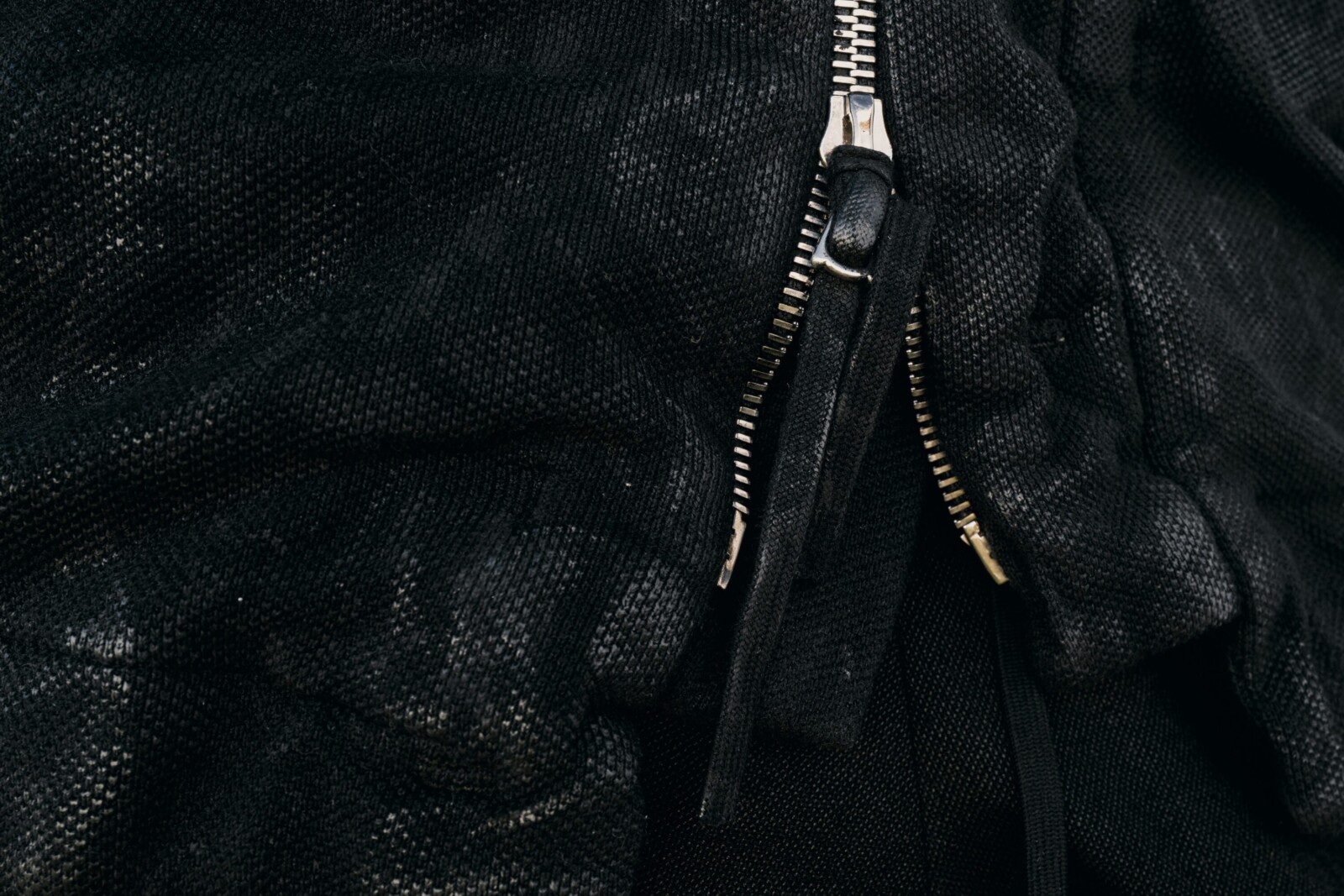
I vestiti avanguardisti più coinvolgenti premiano la prossimità. La lana lavata assorbe la luce in modo diverso rispetto al cotone compatto; le cuciture tinto-oggetto trattengono variazioni di tono; la pelle segnata registra tensione; la rete traslucida cambia tutto ciò che si trova sotto di essa. Queste relazioni materiali possono creare profondità senza stampe, loghi o hardware eccessivo.
Combina texture con comportamenti diversi piuttosto che semplicemente con apparenze diverse. Metti un guscio rigido sopra uno strato morbido, un tessuto tessuto secco accanto a pelle lucida, o un fine maglione sotto una giacca a taglio grezzo. Due materiali pesantemente danneggiati insieme possono competere, mentre una superficie alterata circondata da tessuti più tranquilli diventa leggibile.
Leggi il capo dall'interno
Rivolta i vestiti al rovescio. Segui le cuciture e esamina dove il peso è supportato. La de-costruzione nella moda non è semplicemente cuciture esposte; è un'inchiesta sul perché un indumento sia assemblato in un modo familiare. Una chiusura spostata, una gamba ruotata o un dart esterno dovrebbero cambiare funzione, movimento o significato. Quando la costruzione non ha conseguenze al di là della decorazione, invecchierà rapidamente.
5. Sovrapponi con uno scopo
Sovrapporre crea profondità, volume regolabile e un senso che l'armadio sia un sistema. Inizia con tre ruoli:
- Fondazione: lo strato che tocca il corpo e stabilisce comfort, linea e temperatura.
- Transizione: una camicia, maglione, gilet o pannello drappeggiato che cambia lunghezza, trasparenza o texture.
- Struttura: la giacca, cappotto o volume esterno che definisce la silhouette.
Each layer should remain visible or affect the shape. If an intermediate garment disappears completely and adds only bulk, remove it. Vary hems and openings so the eye can understand how the outfit is constructed. Repeating every irregular hem at the same interval creates noise; one long line beside one decisive interruption feels stronger.
Use asymmetry as tension
Asymmetry works when it produces direction: a diagonal closure draws the torso across, a panel weights one side, or an uneven hem responds to movement. Randomly adding asymmetrical items can cancel their effect. Give the outfit one dominant directional gesture and quieter supporting lines.
6. Radica la silhouette con le calzature
Footwear determines how the entire structure meets the ground. A heavy boot gives authority to wide trousers and long coats; a narrow shoe can sharpen an otherwise oversized silhouette; an anatomical or low-profile form preserves the sense of uninterrupted fabric. Choose shoes by their mass, shaft height and toe shape before considering decorative detail.
Avoid assuming that avant-garde footwear must be extreme. The strongest choice may be a severe, beautifully proportioned boot that can be repaired. If the clothing already carries multiple technical treatments, quieter footwear gives the eye somewhere to rest.
Accessories should modify the system
A bag can extend the architecture of an outfit, a belt can redirect volume, and jewelry can introduce a different material scale. Treat accessories as functional punctuation. One substantial object is often more effective than many symbols associated with an imagined “avant-garde” identity.
Utility should be real. A harness without a structural or carrying purpose, excessive straps, or tactical components detached from use can read as costume. Function and poetry can coexist, but the object should be honest about which one leads.
7. Build an avant-garde wardrobe gradually
Start from clothes you already wear repeatedly. Identify their useful qualities—perhaps a high rise, generous shoulder, long line or preference for dry natural fibers—then intensify one quality rather than replacing your identity wholesale.
- Choose a foundation uniform. Establish reliable trousers, a knit or shirt, and footwear with compatible proportions.
- Add one structural outer layer. A coat or jacket has the greatest influence on silhouette and can reorganize familiar basics.
- Introduce material contrast. Add one garment whose texture or construction changes the depth of the outfit.
- Refine through alteration. Hem length, sleeve position and trouser break often matter more than acquiring another piece.
- Observe wear. Keep what becomes more expressive through movement and time; release what performs only for the mirror.
This method is intentionally slower than shopping for a complete look. It allows clothes from different periods, price levels and designers to become one personal system. The RAW Looks brand directory can support designer research, but the wardrobe should never function as a directory worn at once.
Formule pratiche per outfit avanguardisti
Quiet architectural
Start with wide straight trousers and a fitted or compact foundation layer. Add a jacket with one displaced closure or controlled extended shoulder, then use narrow footwear. Keep the palette close so the construction remains the focus.
Protective volume
Combine a long soft coat with a high-neck layer and trousers that taper toward substantial boots. Let the outer garment create space around the torso while the lower leg provides a point of control.
Material contrast
Use a washed or raw-edged outer layer over smooth jersey, then introduce one polished leather element. Maintain a conventional silhouette so the surfaces can carry the experimentation.
Light and sculptural
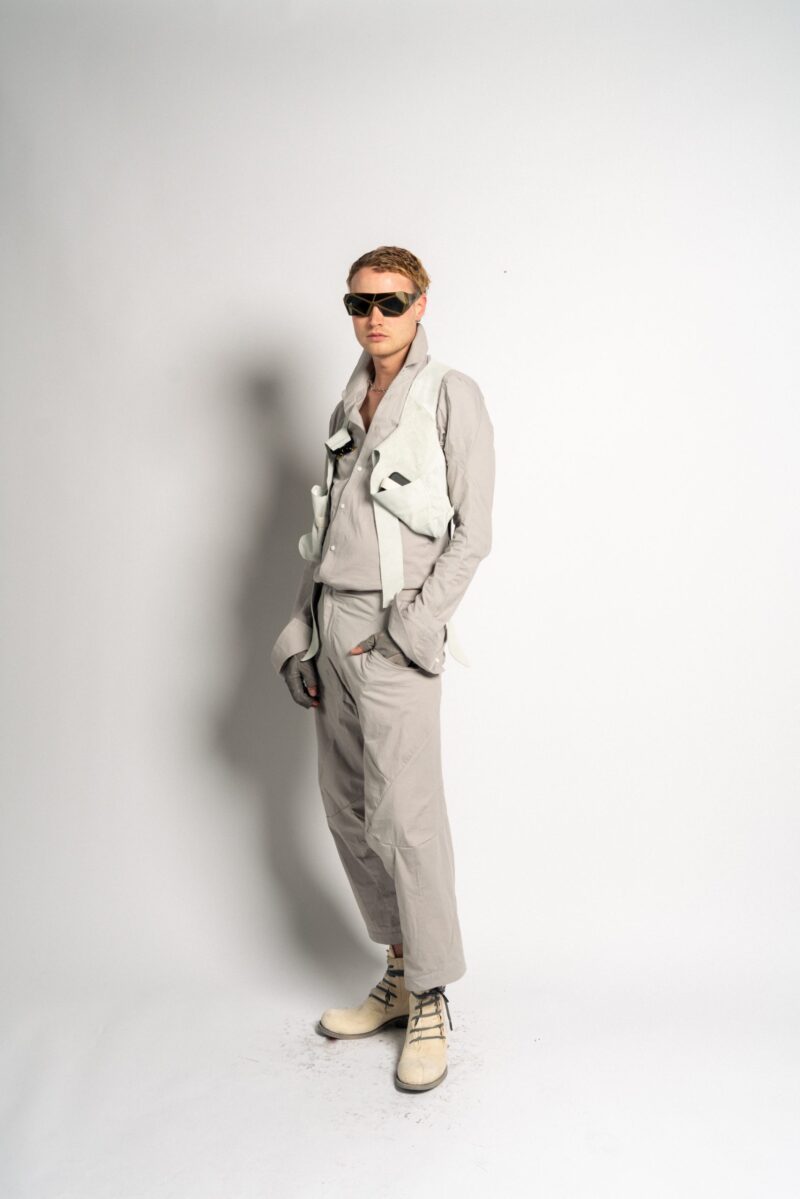
Choose pale tones, an asymmetric shirt or tunic and a wider trouser in a fabric that moves. Ground the outfit with matte footwear. Avant-garde dressing need not depend on darkness; volume and construction remain fully visible in ivory, stone and desaturated color.
Everyday reduced
Wear a familiar shirt, knit or T-shirt with trousers whose pattern changes the hip or leg line, plus one strong coat. This is often the most sustainable formula because it concentrates investment and care in the garments doing structural work.
Errori comuni
Copying a complete designer look
A runway look expresses one collection’s argument. Reproducing it exactly may demonstrate knowledge but leaves little room for the wearer. Borrow a principle—proportion, layering, restraint—and translate it through your own body and daily life.
Confusing complexity with intention
More layers, straps, distressed surfaces and unusual accessories do not automatically create depth. Remove one element at a time. If the central silhouette becomes clearer, the removed piece was probably competing rather than contributing.
Ignoring comfort and context
Discomfort can be conceptually meaningful on a runway, but daily clothing must allow work, travel and weather. Adapt the language instead of suffering for it. A garment that prevents ordinary movement without a considered reason reduces the wearer to a display support.
Buying novelty without learning the material
Experimental coatings, delicate knits and treated leather may demand specific care. Understand how an object will age before buying it. Patina can be beautiful; preventable damage is different. Repairability and frequency of wear are part of good avant-garde judgment.
Dress from understanding, not uniform
Avant-garde style becomes convincing when the wearer can explain the outfit materially rather than recite its labels. The coat changes the body’s boundary; the trouser redirects proportion; the shoe controls weight; the fabric records time. Every choice participates in one idea.
Begin with What Is Avant-Garde Fashion? for the underlying definition. Stile di moda Avanguardista: Caratteristiche ed Esempi explains the visual vocabulary in greater depth, while Moda Avanguardista Moderna places today’s wardrobes within their cultural and material context.
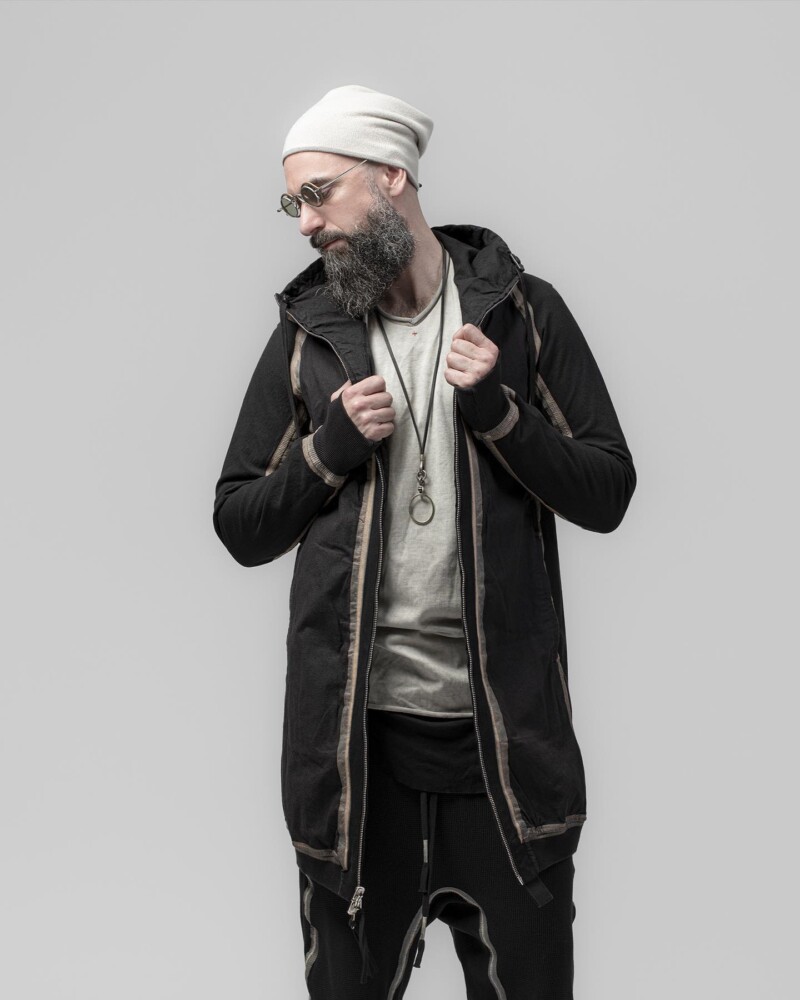
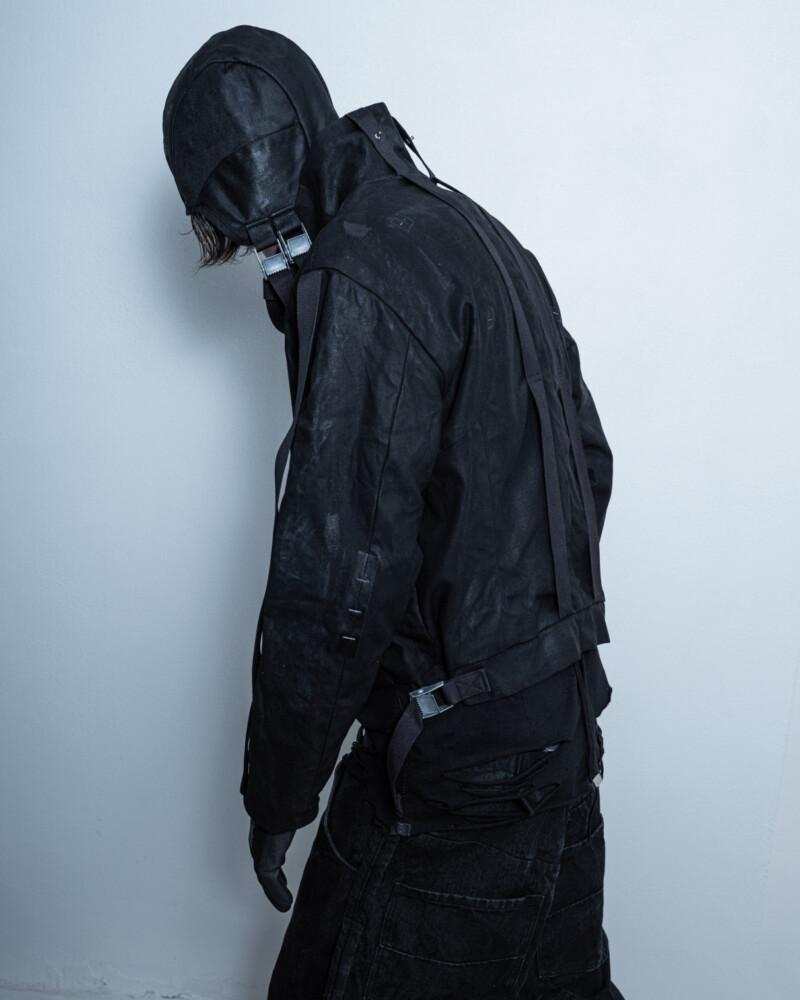
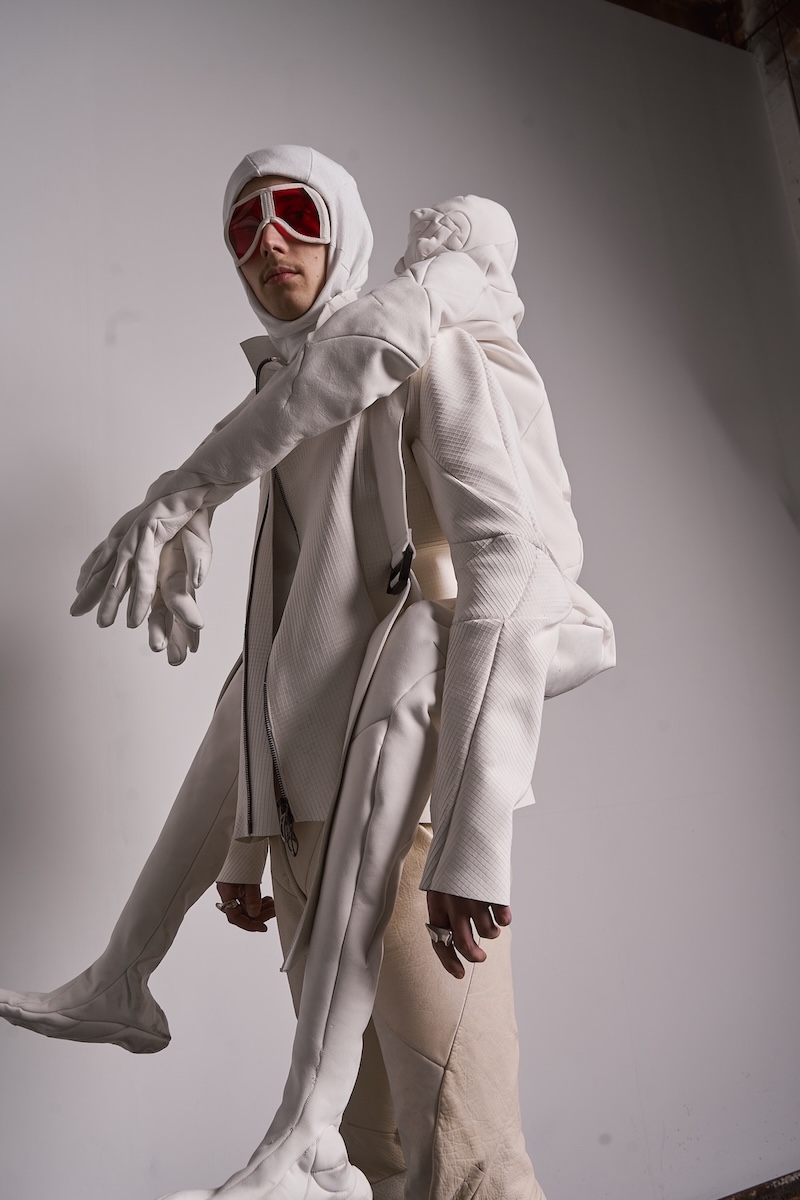
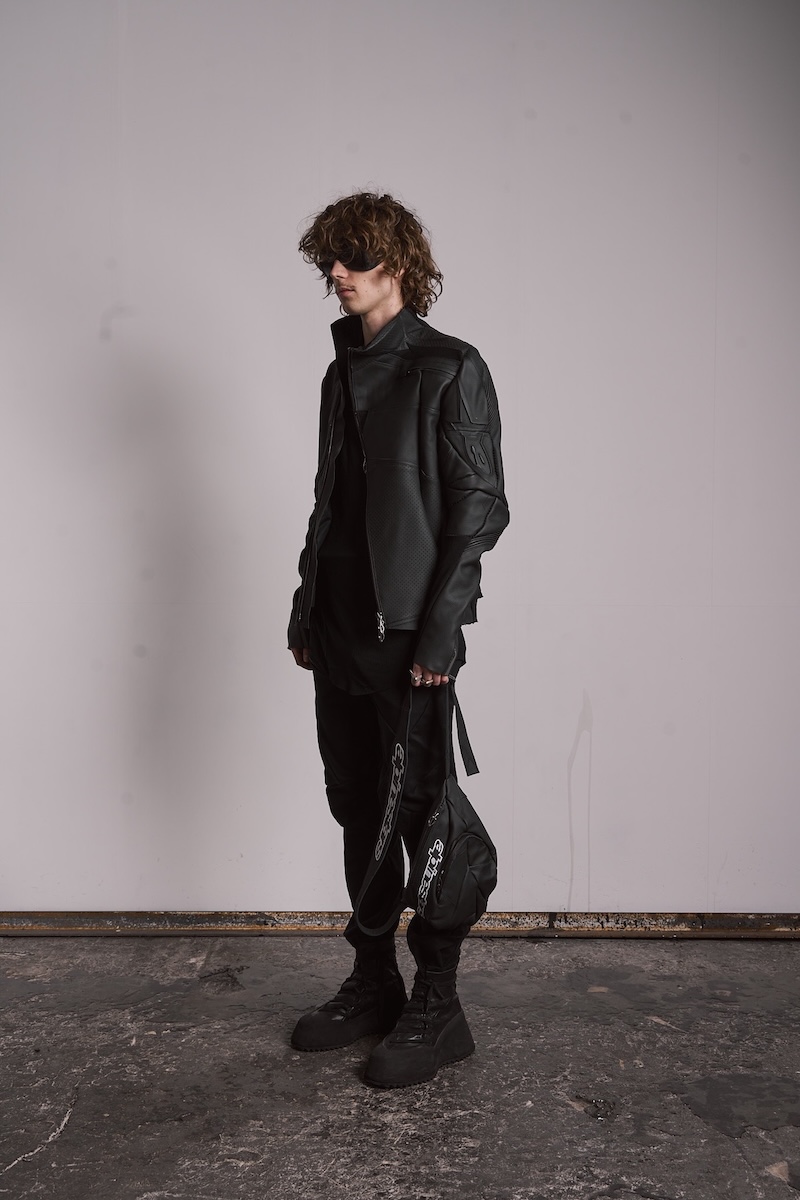
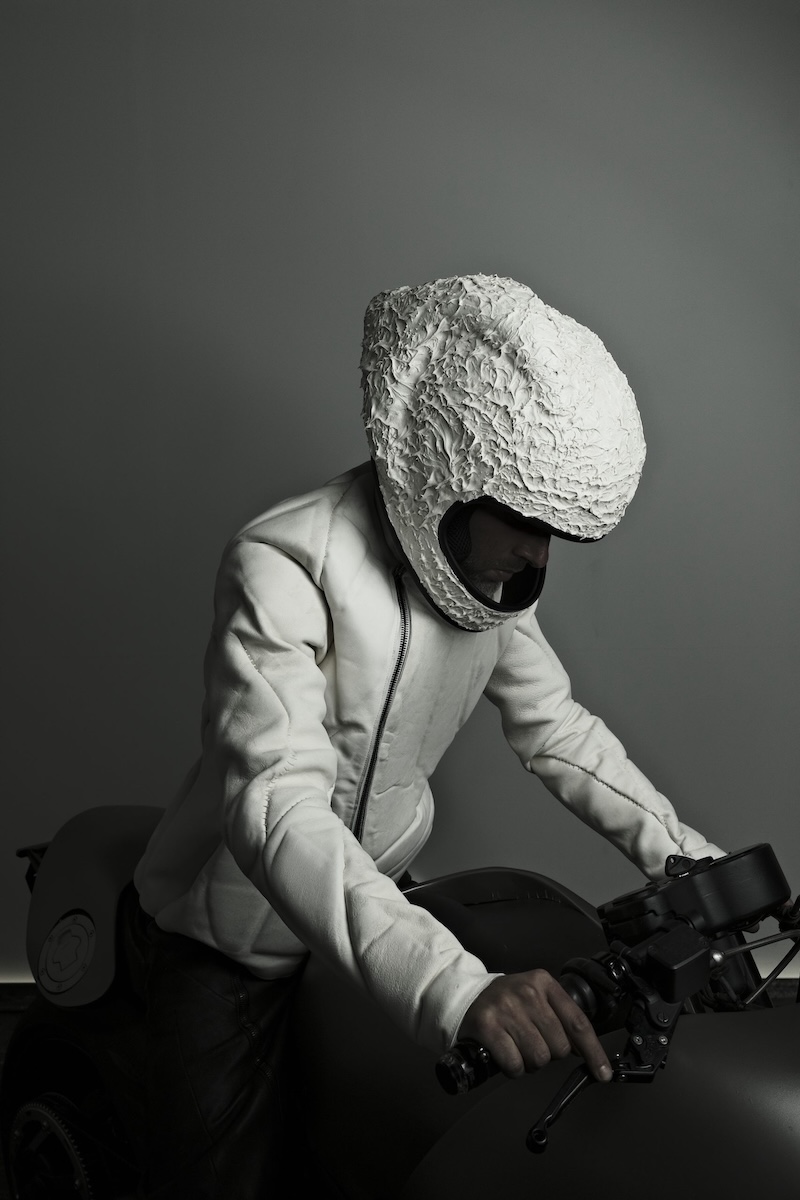
Scopri look di moda avanguardista contemporanea
Explore styles and outfits from international Avant-Garde Fashion Designers and the global Avant-Garde Fashion Community.



Sfilate di moda avanguardista
Get inspired by fashion presentations from some of the world’s leading Avant-Garde Fashion Designers.
References and further reading
- The Metropolitan Museum of Art — Rei Kawakubo/Comme des Garçons: Art of the In-Between
- The Metropolitan Museum of Art — Dress, Comme des Garçons, Spring/Summer 1997
- Victoria and Albert Museum — Yohji Yamamoto: Poet of Black
- Victoria and Albert Museum — Yohji Yamamoto Exhibition Press Release
- The Museum of Modern Art — A-POC Queen Textile, 1997
- The Museum of Modern Art — Structure and Surface: Contemporary Japanese Textiles
- The Metropolitan Museum of Art — Wabi Sabi — Rei Kawakubo Dress, 1983
- The Museum of Modern Art — Announcing Items: Is Fashion Modern?