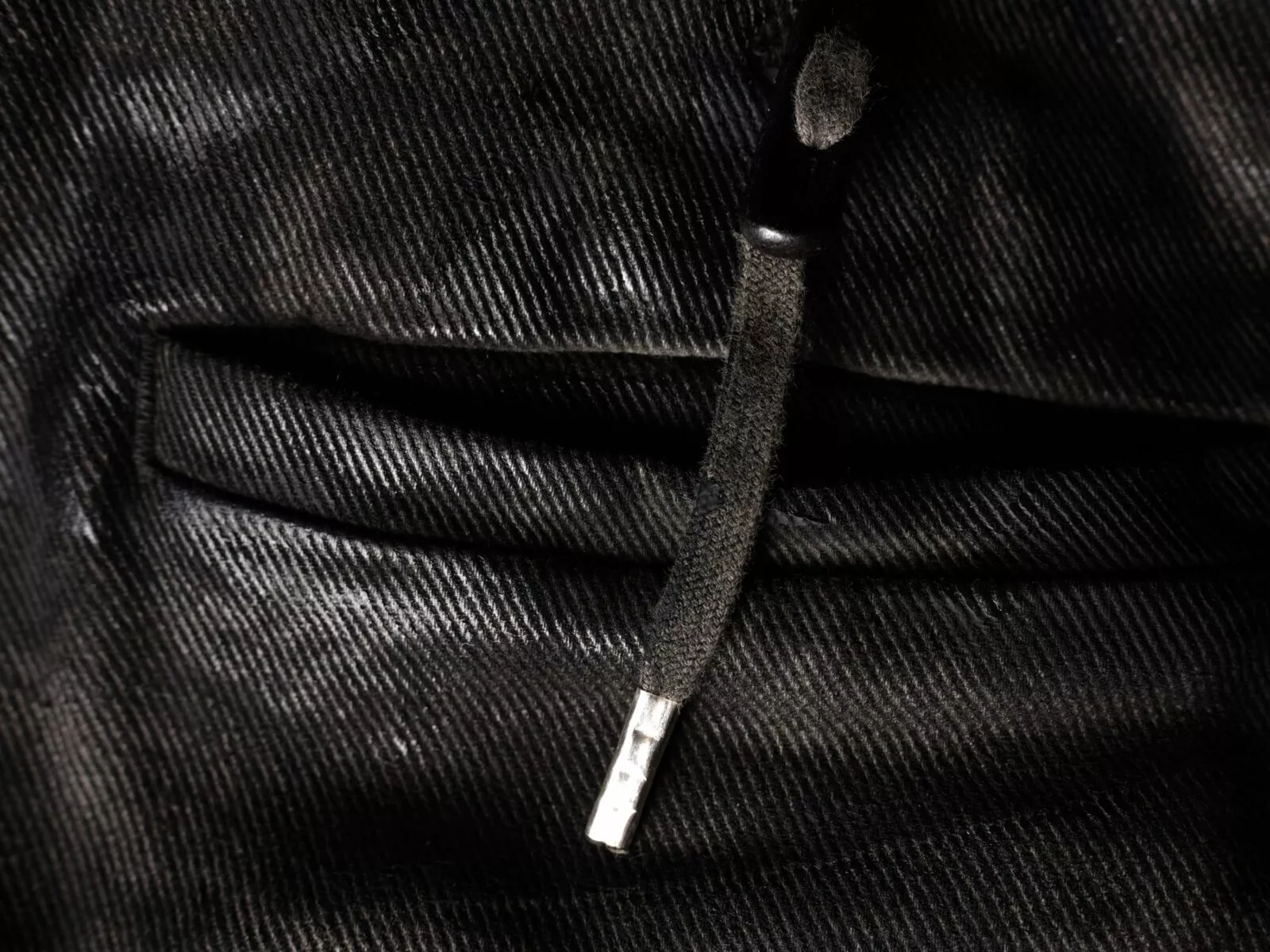
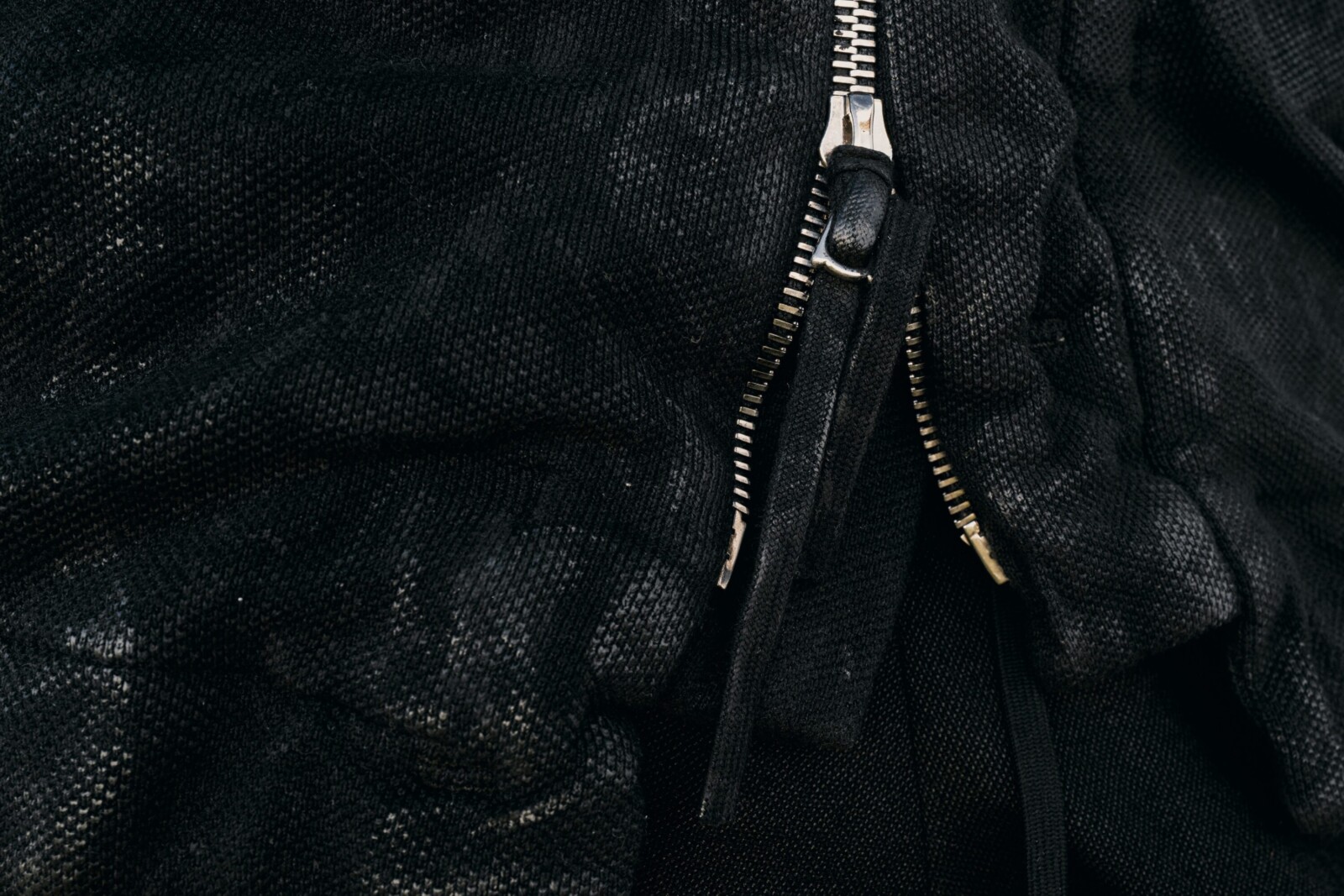
Rick Owens and the Evolution of Contemporary Dark Fashion
Mainstream luxury peddles fragile prestige; Rick Owens constructs armor. Where European heritage houses rely on seasonal gilding and bourgeois vanity, the California-born designer cuts directly into anatomical tension—draping blistered lambskin, raw-hem silk jerseys, and floor-grazing cottons into severe, protective shells. His silhouette does not flatter polite proportions; it dismantles them through drop-crotch pod shorts, elongated torsos, and monolithic shark-tooth footwear that recalibrate posture entirely. Alongside contemporaries documented across our archives—from Ann Demeulemeester e Helmut Lang to Martin Margiela e Rei Kawakubo—Owens stripped fashion of decorative frivolity. Through the curated Rick Owens archive, we trace an unapologetic aesthetic machine: deconstructing illicit Hollywood patternmaking, perfecting cold-dyed leathers, unleashing step-dance runway rituals, and commanding an autonomous Italian manufacturing fortress built entirely without corporate conglomerate capital.
Fashion houses sell decorative illusion; Rick Owens engineers physical shelter.
Runway fashion routinely demands physical submission. It cinches ribs, restricts movement with fragile silks, and charges five-figure sums for bourgeois ornamentation. Rick Owens rejected that decorative vanity from his earliest Los Angeles collections. He treats the human frame as a kinetic sculpture requiring defense. Garments drape not to accentuate aristocratic posture, but to shield the wearer against external turbulence.
His silhouette reverses established menswear proportions. Elongated torso jersey tanks hang past the groin, while drop-crotch pod shorts and cropped flight jackets compress the upper body and ground the legs. Trousers pool aggressively over thick, vulcanized shark-tooth soles. Washed horsehides, blistered lambskin, and heavy dense-cotton fleece collide against gossamer silk-rib knit tanks that contour the torso like smoke. The effect feels both archaic and post-industrial.
Discipline anchors the entire project. Owens lives his aesthetic without compromise, sporting the same uniform of drop-waist shorts, sleeveless modal tanks, and heavy boots while adhering to rigorous daily physical training. Darkness here is not theatrical goth escapism. It functions as an ascetic sanctuary where volume, texture, and structural severity replace seasonal commercial noise.

The Hollywood boulevard chrysalis: Pattern piracy, Michèle Lamy, and glunge origins
Before Paris ateliers recognized his name, Rick Owens survived in the cutthroat underbelly of Los Angeles manufacturing. Raised in Porterville under strict Catholic discipline, he fled to Southern California in the early 1980s. Two years at Otis College of Art and Design soured him on theoretical art discourse. He wanted tangible technical skill. He enrolled in an intensive patternmaking program at Los Angeles Trade-Technical College, acquiring razor-sharp drafting speed.
That technical precision found immediate work in illicit sweatshops clustered along Hollywood Boulevard. Owens spent years performing commercial garment piracy—deconstructing department-store designer pieces seam by seam, flattening their curves onto tagboard, and drafting rapid knock-off patterns for cheap retail chains. It was dirty, grueling work. Yet it provided an intimate education in garment grain lines, tension points, and material stress. He learned how to twist a dart, bias-cut a panel, and manipulate leather so it clung to muscle without tearing.
Everything crystallized in 1990 upon meeting French restaurateur, artist, and creative catalyst Michèle Lamy. Hired as a patternmaker for Lamy’s label, Owens encountered a symbiotic collaborator and life partner. Encouraged by Lamy, he established his eponymous imprint in 1994, distributing washed leathers and raw silk jersey pieces through Charles Gallay’s visionary West Hollywood boutique.
Owens labeled this hybrid aesthetic “glunge”—a collision between Hollywood noir glamour and Pacific Northwest grunge. He crossed the fluid bias-cut draping of 1930s couturiere Madeleine Vionnet with the raw grease, ripped denim, and distressed biker leathers of underground rock clubs. Instead of stiff museum tailoring, he enzyme-washed and tumble-dried leather skins into crinkled, salt-stained carapaces that hugged the body like ancient armor.
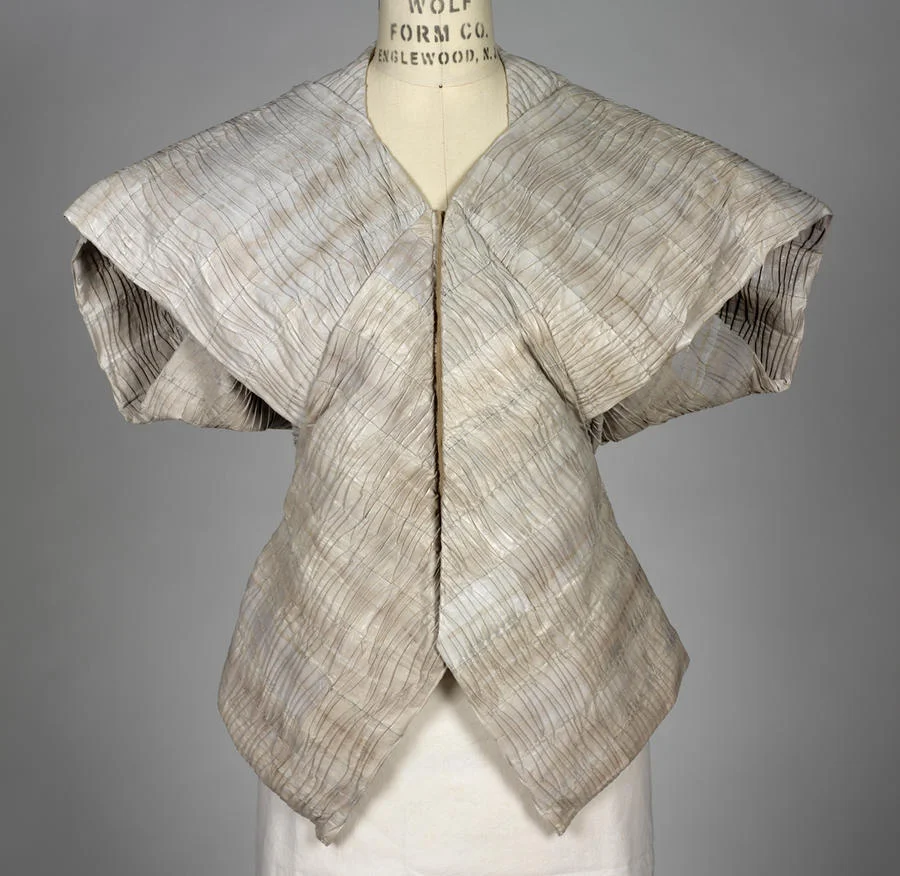
Anatomy of the silhouette: Blistered lambskin, ribbed sleeves, and pod shorts
International attention ignited in 2001 when Corinne Day photographed Kate Moss for French Vogue wearing Owens’s raw-edged distressed leather jacket. The image caused immediate commotion across luxury fashion circles. Here was leather stripped of heavy hardware and motorcycle clichés, treated instead like supple parchment. Backed by American Vogue, Owens received the Consiglio dei Designer di Moda d'America (CFDA) Perry Ellis Award in 2002. By 2003, Owens and Lamy had relocated permanently to Paris.
At the center of his tactile revolution stood radical hide manipulation. Working with specialist Italian tanneries, Owens pioneered blistered lambskin, washed kangaroo, and oiled calfskin. Skins underwent brutal tumbling, mineral-wax applications, and heat shrinkage. The leather developed dry, crackled surface grain resembling cooled basalt or desiccated parchment.
His engineering solved a stubborn structural flaw in leather tailoring. In classic models like the Stooges biker, the high-neck Intarsia, and the multi-pocket Bauhaus, Owens inserted long, continuous ribbed-wool knit panels along the inner sleeve seams. The knit panel stretches dynamically, locking the sleeves to the arm like a second skin while preventing the jacket hem from riding up when the wearer reaches forward. Comfort meets aerodynamic tension.
Below the waist, Owens shattered orthodox menswear proportions. He debuted the Pod shorts—heavy drop-crotch shorts cut with dropped, curved inseams that fall near the knee. Styled over cropped knit leggings and elongated double-layer silk-jersey tanks draping past the hips, the silhouette established the definitive darkwear proportion: a compressed, voluminous center of gravity supported by towering, sculptural footwear.
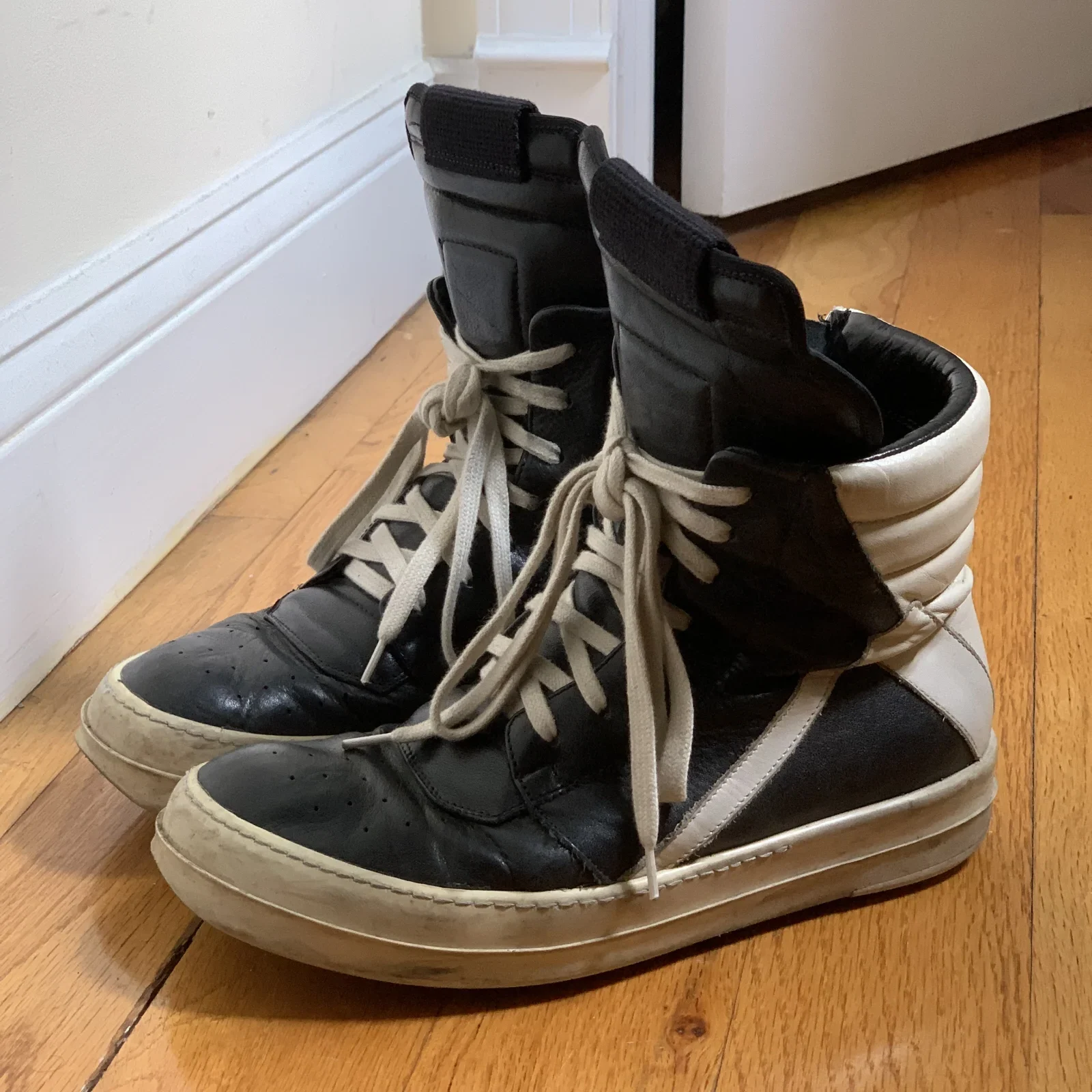
Monolithic footwear: The Dunk, Geobasket, Ramones, and Kiss heels
Footwear functions as structural ballast in the Owens universe. Standard luxury footwear looks ridiculous underneath drop-crotch pods and sweeping coats; narrow shoes cause elongated hemlines to look top-heavy and frail. Owens grasped that radical silhouette distortion demands massive physical grounding at the pavement.
In his Autumn/Winter 2006 collection, Dustulator, Owens revealed the sneaker that permanently altered dark street-level dress: the “Dunk”. Padded like hockey armor, the high-top featured an exaggerated tongue, an inner ankle zip for swift entry, and an oblique leather side swoop referencing collegiate basketball footwear. In 2008, athletic titan Nike issued a cease-and-desist notification regarding the side swoop. Owens complied immediately, redesigning the overlay into an aggressive triangular leather chevron. The Geobasket was born.
The Geobasket became the ultimate darkwear signifier. Mounted upon a dense shark-tooth rubber sole with perimeter welt stitching and extra-long milk-toned laces wrapped around the ankle, the silhouette possessed architectural permanence. Owens expanded this heavy vocabulary with the Ramones—a bulbous, vulcanized calfskin toe-cap revision of the classic Converse sneaker—and the brutalist Tractor boot fitted with deep, lugged translucent treads.
He pushed the envelope further for Autumn/Winter 2019 with the Kiss boot. Standing atop a 125-millimeter bevelled acrylic block heel and armored with a titanium-finish metal grill across the square toe, the boot referenced 1970s glam-rock extravagance and Kiss bassist Gene Simmons. Worn by men and women down the runway, the Kiss boot inverted traditional gendered footwear codes into an imposing display of vertical power.
Runway as primal ritual: Vicious step dancers, Sphinx cutouts, and Cyclops human backpacks
Traditional Parisian fashion shows function as sanitized sales pitches. Models drift down carpeted runways with detached expressions, presenting garments designed to photograph politely for commercial buyers. Owens dismantled that formula entirely, transforming his seasonal runway shows into visceral physical rituals.
His Spring/Summer 2014 women’s presentation, Vicious, remains one of the most explosive disruptions in fashion history. Owens cast zero professional runway models. Instead, he flew forty step dancers from historically Black American sorority teams—including the Washington Divas, Soul Steppers, and Zeta Phi Beta—to Paris. Clad in black and bone tunic dresses, leather wrist guards, and Geobasket sneakers, the women stomped down the stone stairs of the Palais de Tokyo in militaristic formation. They growled, slapped their chests, and pounded their soles against the concrete in thunderous unison. The presentation obliterated delicate European beauty tropes with ferocious, joyful physical dominance.
Two seasons later, with Autumn/Winter 2015 Sphinx, Owens sparked widespread shock across international press outlets. Menswear tunics featured low circular apertures cut directly over unclad genitalia. Tabloids screamed scandal, but Owens defended the choice as a matter of classical simplicity: the male body had been pathologized and muffled by centuries of conservative suit tailoring. Exposing it was a gesture of raw vulnerability.
His performance apex arrived with Spring/Summer 2016 Cyclops. Models strode through the courtyard carrying fellow models strapped to their chests and backs in heavy leather cargo harnesses. Inverted bodies dangled with limbs hooked across shoulders and faces resting against torsos. It was an uncomfortable, deeply touching spectacle of physical burden and endurance. Clothes ceased to be mere consumer goods; they formed the structural webbing binding two bodies in mutual survival.
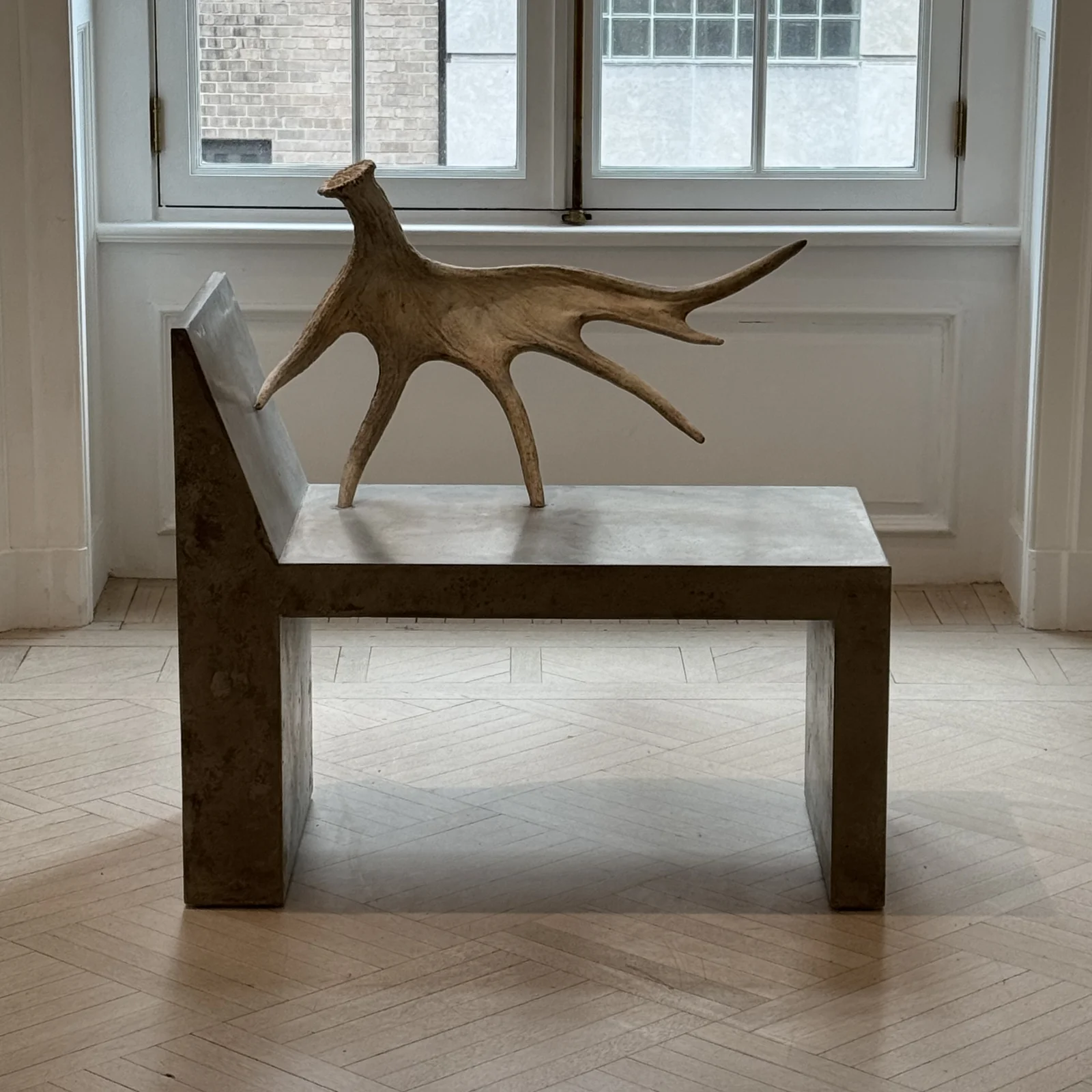
Brutalist monumentalism: Petrified wood, alabaster, moose antlers, and Palais de Tokyo spectacles
Textiles could not contain Owens’s spatial hunger. In 2007, dissatisfied with flimsy contemporary interior furniture, he started constructing bespoke furnishings for his residence at Place du Palais-Bourbon in Paris. Guided by Michèle Lamy’s eye for raw materiality, the workshop began collaborating with master French stonemasons and bronzeworkers to execute pieces possessing immense geological density.
Modern industrial laminates and plywood found no place here. Owens turned to primal materials: millions-of-years-old black petrified wood, hand-carved blocks of crystalline white alabaster, 500,000-year-old Irish bog oak, raw concrete slabs, cast bronze, and shed moose antlers. Designs like the Tomb chair e il Curial chair appear less like domestic seats than sacrificial altars excavated from a forgotten Neolithic civilization. They are punishingly heavy, cold to the touch, and designed to endure centuries.
This architectural scale carried over into his runway spectacles at the Palais de Tokyo. Owens claimed the massive 1937 Art Deco museum complex as his outdoor amphitheater. Audiences circled the vast reflecting pool while cranes dropped explosive water geysers into the air, smoke machines unleashed towering black clouds over the Seine, and massive steel pylons blazed with roaring fires. Clothing, furniture, and brutalist architecture resolved into a single ritualistic environment.
The sovereign citadel: Concordia factory, Michèle Lamy, and Owenscorp independence
Fashion houses almost invariably surrender to conglomerate conglomerates like LVMH or Kering once international scale beckons. Owens achieved the rarest outcome in luxury commerce: complete operational and financial sovereignty. Owenscorp remains privately held. No corporate boards, venture funds, or brand managers dictate his creative output.
The foundation of this independence traces back to 2001, when Italian manufacturing veterans Luca Ruggeri and Elsa Lanzo traveled to Los Angeles. Recognizing his vision, they partnered with him to tap into Olmar and Mirta—a specialized manufacturing facility located in Concordia sulla Secchia, Italy. Owens subsequently acquired an equity stake in the facility, rooting his supply chain in Italian artisanal craftsmanship.
This direct ownership provides peerless agility. When Owens conceives a new drape or an experimental leather treatment on a Monday, patternmakers and machinists at Concordia begin assembling samples within forty-eight hours. He operates without the suffocating market testing and merchandising decks that stifle corporate fashion brands.
Michèle Lamy remains the vital anchor of this private citadel. With her tattooed hands, gold-capped smile, and sharp cultural instinct, Lamy orchestrates furniture fabrication, culinary spaces, and collaborative projects. Together, they established a disciplined economic flywheel: consistent sales of high-margin Geobasket sneakers, seasonal leathers, and the DRKSHDW denim diffusion line supply the capital needed to mount uncompromising runway performances without external debt.
The dark avant-garde continuum: Gothic lineage, protection, and modern permanence
Rick Owens occupies an unmistakable position in avant-garde dress. He absorbed the deconstructive rigor of Maison Margiela, the black poetry of Yohji Yamamoto, and the utilitarian edge of Helmut Lang, infusing them with American subcultural defiance, bodily discipline, and brutalist architecture.
His work established the foundation for contemporary darkwear. From underground clubs in Berlin to backstreets in Shibuya, followers wear his drop-crotch pods, washed hides, and shark-tooth platforms as defensive armor against corporate consumerism. Wearing Owens signals membership in a subcultural collective that values physical resilience, creative eccentricity, and uncompromising personal expression.
By treating fashion as permanent sculpture rather than disposable seasonal trend, Rick Owens proved that an independent auteur can conquer global luxury on his own terms. His universe offers what modern commercial culture so often strips away: physical dignity, radical freedom, and genuine sanctuary in the dark.
Related Brand Archives & Historical Monographs
Explore curated archival pieces and deep historical analyses across the avant-garde continuum: inspect monographs on Rick Owens, Ann Demeulemeester, Helmut Lang, Maison Margiela, e Comme des Garçons, or examine foundational historical analyses including Moda Dark Avant-Garde: Origini, Designer e Estetiche, Darkwear e la scena avanguardista degli anni 2000, De-costruzione nella Moda, Che cos'è l'anti-moda?, e Dalla subcultura al lusso: la moda avanguardista di oggi.
Riferimenti e letture ulteriori
- Wikimedia Foundation — Rick Owens: Biography, Brutalist Aesthetic, and Independent Fashion
- Wikimedia Foundation — Michèle Lamy: Creative Direction, Furniture Design, and Subcultural Patronage
- Wikimedia Foundation — Palais de Tokyo: Contemporary Art and Monumental Outdoor Architecture
- Wikimedia Foundation — Council of Fashion Designers of America: Perry Ellis Award and Honors
- Rick Owens YouTube Archive — Rick Owens Spring/Summer 2014 "Vicious" Runway Performance
Crediti immagine
- Rick Owens backstage at Paris Fashion Week Spring/Summer 2019. Photograph by Myles Kalus Anak Jihem, Wikimedia Commons, CC BY-SA 4.0.
- Rick Owens women's sculptural jacket, 2008. Photograph courtesy of Rhode Island School of Design Museum of Art, Wikimedia Commons, CC0.
- Rick Owens original "Dunk" high-top sneaker in black and milk leather, circa 2007. Photograph by Reddeleon, Wikimedia Commons, CC0.
- Rick Owens Tomb chair with shed moose antler. Photograph by Reddeleon, Wikimedia Commons, CC0.