Alexander McQueen e la passerella come teatro
Fashion demanded polite entertainment; Alexander McQueen summoned raw psychological catharsis. While late-twentieth-century ready-to-wear drifted into commercial sterility and salon decorum, the East London tailor seized the runway as an arena of terror, beauty, and historical confrontation. Born in Lewisham in 1969, Lee Alexander McQueen learned the uncompromising architecture of garment cutting not in academic ateliers, but through adolescent apprenticeships on Savile Row. Alongside contemporaries explored across our archives—from John Galliano e Issey Miyake a Martin Margiela e Helmut Lang—McQueen transformed the catwalk from a sales showroom into visceral performance art. Through the curated Alexander McQueen archive, we trace an extraordinary trajectory: cutting the pelvic-dipping Bumster trouser, staging the historical fury of Highland Rape, orchestrating robotic paint-spraying baptisms, and engineering the digital amphibious mutations of Plato’s Atlantis.
Fashion demanded polite entertainment; Alexander McQueen summoned raw psychological catharsis.
Modern fashion shows are routinely designed to reassure. They glide forward on ambient electronic soundtracks, presenting frictionless garments intended to slip quietly into luxury department store inventories. Alexander McQueen treated that complacency with open contempt. For him, a runway was not an exhibition of seasonal commodities; it was an altar of sacrifice.
He staged spectacles that unsettled audiences to the bone. Spectators were doused in simulated rainstorms, trapped inside two-way mirror asylum wards, confronted by predatory wolves, and surrounded by wall-sized rings of blazing fire. McQueen wanted emotional extremity. He demanded that viewers leave his presentations either passionately exhilarated or physically repulsed, declaring famously that the only unforgivable crime in fashion was indifference.
Yet beneath the operatic shock lay the sharpest cutting shears in Europe. His subversion was lethal precisely because his craft was peerless. Without the structural discipline of Savile Row canvassing and 16th-century patternmaking, his radical theatrics would have collapsed into cheap pantomime. Instead, every slashed hemline and vertebrate corset stood anchored by razor-sharp tailoring logic.
The tailoring crucible: Savile Row discipline, Angels & Bermans, and Isabella Blow
Alexander McQueen did not enter fashion through privilege. Born the youngest of six children to a cab driver and a social science teacher in working-class East London, he left school at sixteen with zero formal design credentials. He walked straight onto Savile Row, securing an apprenticeship at Anderson & Sheppard. There, amidst mahogany cutting tables and steam irons, he spent two grueling years mastering the English soft-draped canvassed jacket, hand-stitching interior horsehair chest pieces, and absorbing the geometry of the anatomical pad-stitch.
He moved next to Gieves & Hawkes at No. 1 Savile Row, learning the rigid, severe shoulders of British military ceremonial uniforms. Seeking historical breadth, he joined theatrical costumiers Angels and Bermans. There, he dissected seventeenth-century court doublets, Elizabethan corsetry, and Victorian frock coats, committing antique pattern cuts to memory. After brief stints in Milan assisting Romeo Gigli and working for avant-garde tailor Koji Tatsuno, McQueen returned to London. In 1990, he approached Central Saint Martins for pattern-cutting tutor work; course director Bobby Hillson reviewed his portfolio and enrolled him directly into the Master’s degree program.
His 1992 graduation collection, titled Jack the Ripper Stalks His Victims, set his thematic obsessions in stone. Inspired by his ancestral link to a victim of the Whitechapel murders, McQueen stitched locks of human hair into the silk linings of frock coats, encasing the follicles in transparent Perspex squares. Tailoring was fused with mortal relics and forensic horror.
In the audience sat eccentric fashion editor Isabella Blow. Stunned by the razor cutting and macabre romanticism, Blow tracked McQueen down and bought the entire collection for five thousand pounds, paying him in weekly hundred-pound installments retrieved from high street bank cashpoints. Blow became his muse, patron, and herald, championing his ferocious genius to a wary global press corps.
Highland Rape and the Bumster: Anatomical disruption and historical confrontation
By 1995, McQueen was ready to ignite open institutional warfare. His Autumn/Winter 1995 collection, Highland Rape, staged in an austere warehouse in Brixton, became the most controversial fashion show of the decade. Models staggered down a runway strewn with dried bracken, their faces bruised with dark greasepaint, their bodices torn to expose bare breasts, wearing shredded Scottish tartan coats and bleeding lace petticoats.
The British fashion press erupted in moral panic. Fleet Street critics accused McQueen of misogynistic violence, alleging that he glorified the physical violation of women. The accusation completely missed the historical mark. McQueen was not dramatizing sexual assault; he was staging the eighteenth-century Highland Clearances—the brutal, systematic cleansing of Scottish clans by the British Crown following the Battle of Culloden.
The collection was a political strike by an East End tailor proud of his Scottish ancestral lineage. McQueen reclaimed clan tartans, slashing them apart to reveal the historical slaughter beneath British imperial pageantry. He turned the fashion show into a site of unresolved post-colonial trauma.
Equally disruptive was his anatomical invention: the Bumster trouser. First drafted during his 1993 Taxi Driver presentation and perfected across subsequent seasons, the Bumster featured a waistband cut shockingly low—resting barely above the coccyx. Mainstream commentators dismissed it as lewd sensationalism. McQueen countered with pure patternmaking logic: by lowering the waistline past the pelvic crest, he elongated the proportion of the lumbar spine, radically altering the visual architecture of the torso. He relocated the erotic axis of the body from the cleavage to the lower back, rewriting trousers across global streetwear for the next decade.
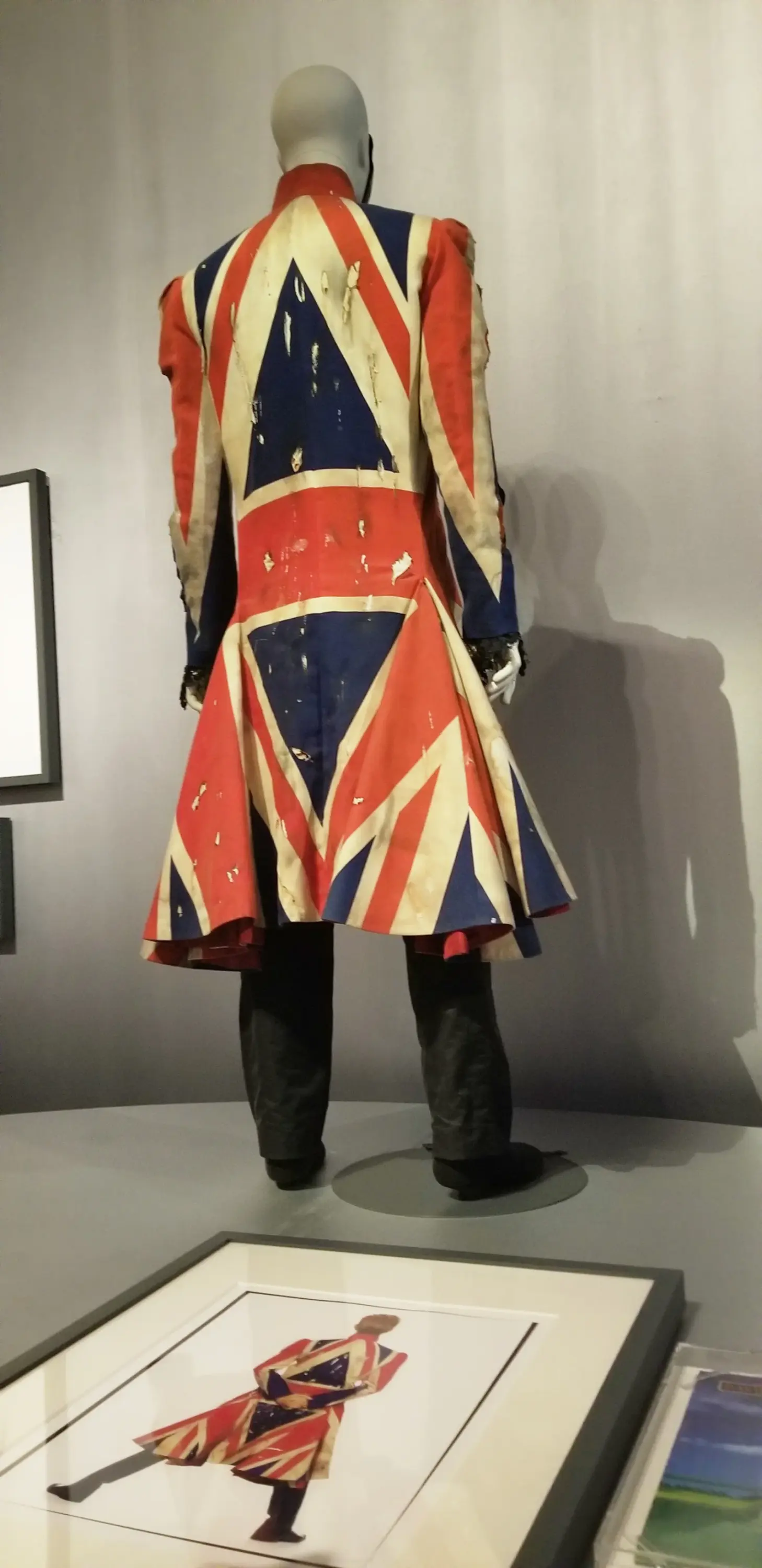
His defiant subversion captured the eye of rock icon David Bowie. In 1996, McQueen tailored a distressed Union Jack frock coat for Bowie’s Earthling album and world tour. Using impeccable Savile Row frock coat proportions, McQueen torched the hem with gas lighters and stained the fabric with cigarette ash, creating a legendary punk-aristocratic artifact.
No. 13 and the mechanical baptism: Aimee Mullins and Shalom Harlow
McQueen’s theatrical mastery reached breathtaking emotional heights with his Spring/Summer 1999 presentation, No. 13. Staged inside a cavernous, unheated former bus depot on Gatliff Road in London, the show drew inspiration from the Victorian Arts and Crafts movement, interrogating the tension between handmade artisanal craft and cold industrial automation.
The runway opened with an astonishing subversion of beauty standards. Paralympic athlete Aimee Mullins strode onto the catwalk wearing a high-collared lace dress, walking on custom-designed prosthetic boots intricately carved from solid ash wood. Decorated with relief carvings of rococo vines and cherubs, the legs did not disguise her physical difference; they celebrated it as classical sculpture. Mullins walked with regal confidence, silencing an audience unaccustomed to seeing disability presented on the high fashion runway without pity.
Then arrived the unforgettable finale. Supermodel Shalom Harlow stepped onto a circular wooden turntable embedded into the floor. She wore a strapless, pristine white multi-tiered cotton muslin dress, supported by an internal wire crinoline petticoat. On either side of the turntable sat two dormant yellow industrial KUKA robotic arms, sourced from a car manufacturing plant.
As the circular platform began to rotate, the robotic arms hummed to life. They extended their mechanical nozzles toward Harlow like predatory mechanical beasts sniffing flesh. Harlow spun like a music-box ballerina, raising her arms in terror and ecstasy. The robots discharged violent jets of black and acid-green automotive lacquer across her white muslin dress, drenching the layers in erratic, unscripted drips. When the mechanical spray ceased, Harlow stepped forward toward the audience, exhausted, defiant, and christened by the machine. The performance captured the violent vulnerability of the individual in an mechanized world.
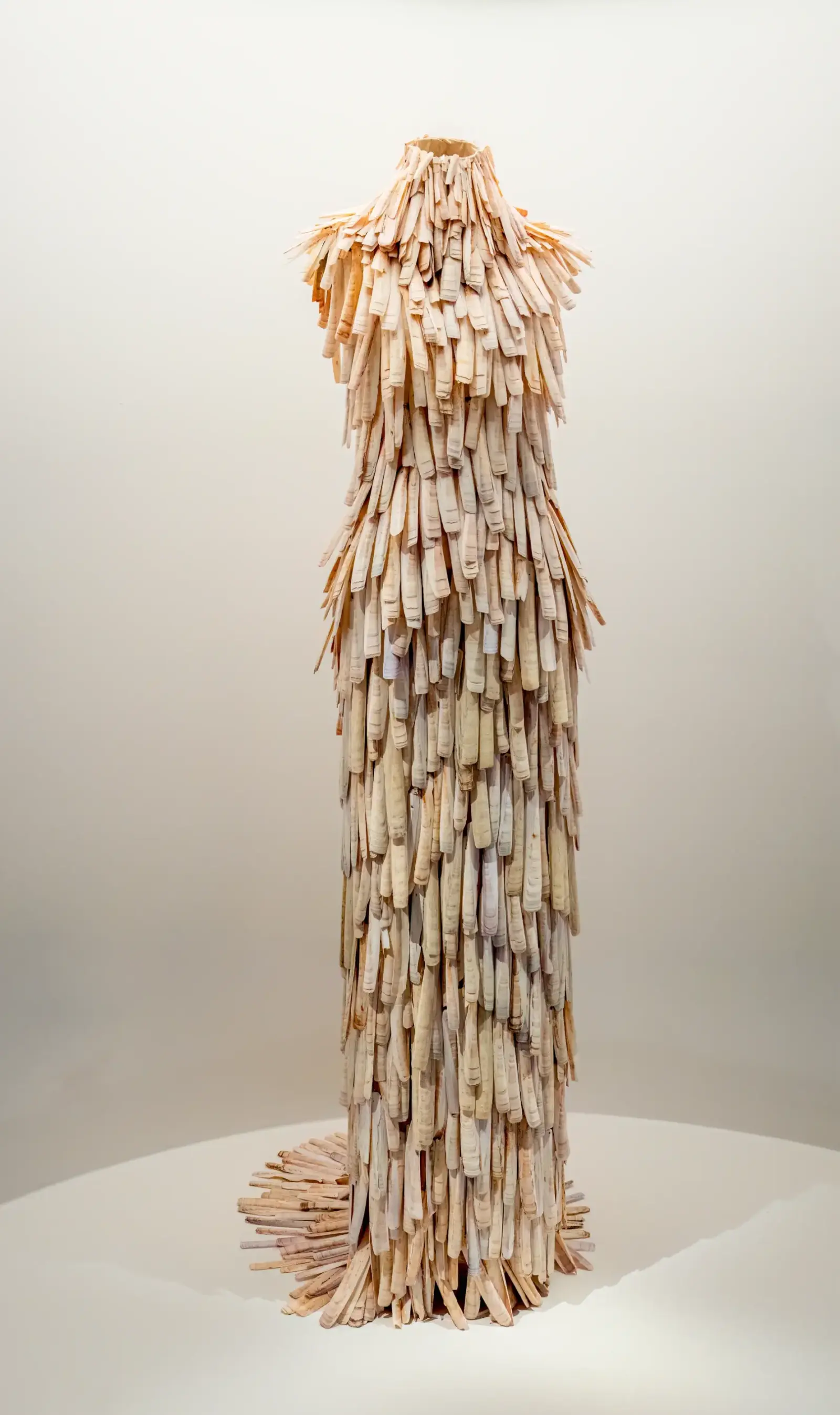
VOSS and the padded asylum: Two-way mirrors, razor clams, and Joel-Peter Witkin
In September 2000, McQueen produced what critics universally recognize as his psychological masterpiece: the Spring/Summer 2001 collection, VOSS. Held in the same London bus depot, the set confronted the audience with a massive, rectangular box constructed from two-way mirrored glass, brightly illuminated from the outside.
McQueen forced the assembled editors, buyers, and celebrities to sit in silence for over an hour, staring at their own reflections in the glass walls. By turning the audience into the exhibit, he exposed the narcissistic vanity underpinning the fashion system. When the runway lights finally shifted, illuminating the interior of the glass cube, the mirrors became transparent.
Inside sat a sterile psychiatric asylum cell with green-tiled floors and padded white walls. Models walked with frantic, agitated steps, their heads wrapped in bandages or capped by taxidermy hawk and pheasant headpieces created by milliner Philip Treacy. The clothes were astounding exercises in natural materials: jackets constructed from red and black ostrich feathers, dresses made from iridescent green beetle wings, and a monumental gown embroidered with hundreds of real razor-clam shells gathered from the beaches of Norfolk.
Yet McQueen saved his ultimate coup de théâtre for the closing seconds. At the center of the asylum sat a smaller, sealed wooden box. As the final model exited, the lights within the inner box flickered on. Suddenly, the four glass walls shattered outward, crashing onto the stage floor in violent cascades of glass shards.
Inside, reclining naked upon a chaise lounge, lay plus-size fetish writer Michelle Olley. Her face was obscured by an antique breathing mask connected to medical rubber tubing; around her body fluttered hundreds of live giant tropical moths. The tableau was a live, breathing recreation of photographer Joel-Peter Witkin’s notorious 1983 work, Sanitarium. McQueen inverted conventional luxury aesthetics: true beauty was not airbrushed perfection, but the disturbing, decaying truth of mortality.
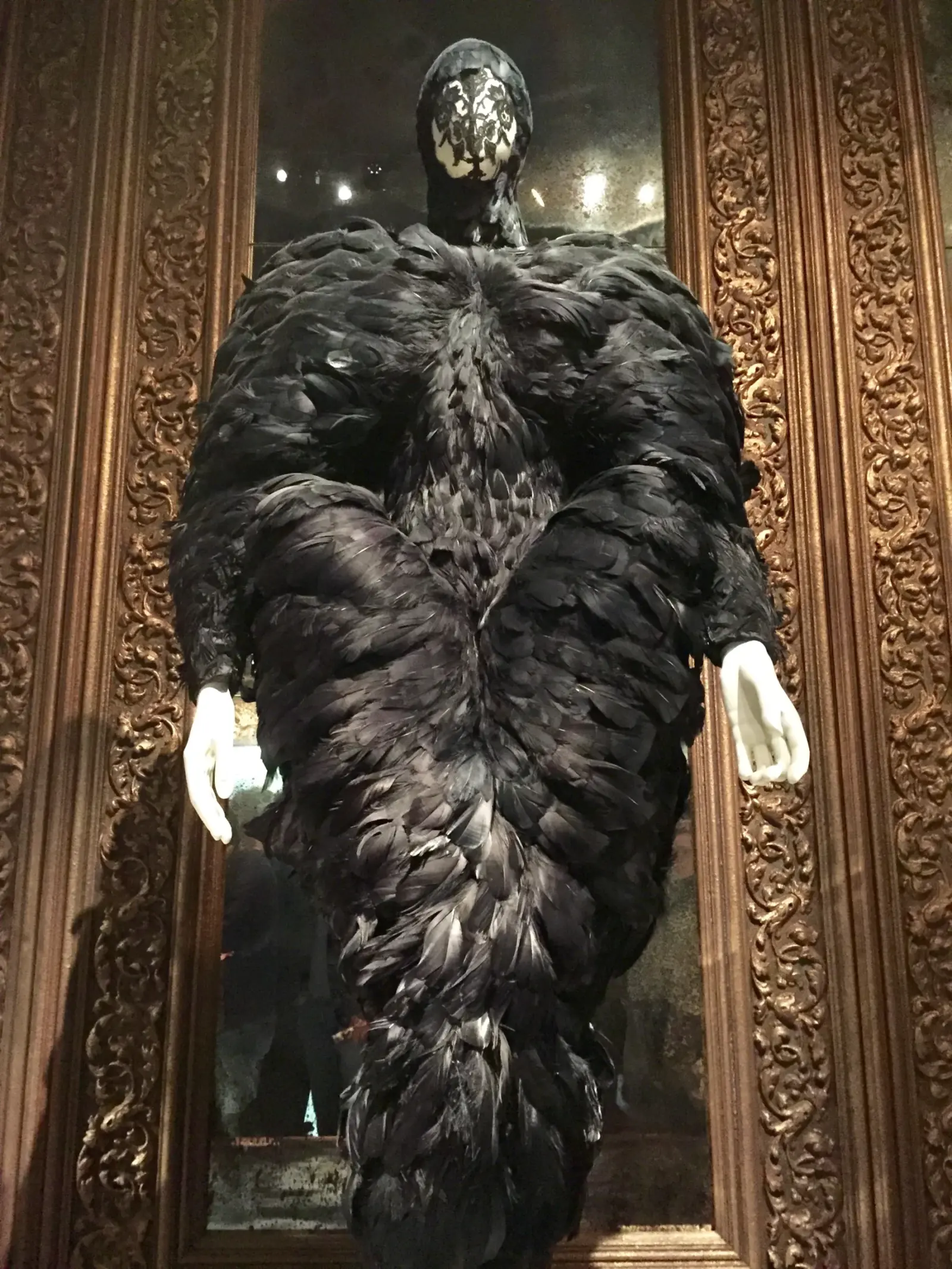
The Widows of Culloden and the alchemy of collaborators: Leane, Treacy, and Kate Moss
McQueen’s runway theatre was never a solitary undertaking. It thrived through an intimate collective of master craftsmen who matched his ferocious vision step for step. Principal among them was jeweller Shaun Leane, whom McQueen met during his student days in Hatton Garden. Leane translated McQueen’s dark romanticism into hard metal, producing structural corsets of cast aluminum that articulated the human vertebrate spine, coiled silver wire neckpieces that stretched the throat, and yokes adorned with silver thorns.
Alongside Leane stood milliner Philip Treacy, whose headdresses—antlers tangled in black lace, floating butterflies, miniature sailing ships navigating silk waves—gave McQueen’s heroines mythological stature. Complementing them was Mr. Pearl, the Parisian corsetiere who disciplined the models’ silhouettes into historic eighteen-inch tightlaced waists.
This collaborative alchemy found crystalline expression in his Autumn/Winter 2006 collection, The Widows of Culloden. Returning to Scottish history with elegiac tenderness rather than raw anger, McQueen presented jackets cut from dusky pheasant feathers, intricate Celtic lace dresses, and tailored wool coats adorned with antique clan silver.
For the finale, McQueen deployed a nineteenth-century theatrical trick known as Pepper’s Ghost. Above the dark catwalk hovered a glass pyramid. Inside the glass, an ethereal, undulating spectral form materialized: a life-sized holographic image of supermodel Kate Moss, floating in gossamer organza to the haunting violin score from Schindler’s List. Moss rippled like smoke before shrinking into a speck of light and vanishing. In an era before digital projection became ubiquitous, McQueen resurrected Victorian stagecraft to produce an unforgettable optical poem on memory and loss.
Plato’s Atlantis: Amphibious mutation, Armadillo boots, and the first digital runway
In October 2009, McQueen staged what would be his final fully realized runway collection: Spring/Summer 2010, titled Plato’s Atlantis. Inspired by Darwinian evolutionary theory and apocalyptic environmental change, the collection imagined a future in which melting polar ice caps submerged the continents, forcing humanity to evolve back into the oceans as amphibious sea creatures.
The technical sophistication was unprecedented. Working with digital print software, McQueen engineered intricate engineered placement prints of microscopic marine organisms, snake skins, and stingray scales onto stretch silks and bonded scuba jerseys. The tailoring echoed marine biology: shoulder pads curved outward like manta ray fins; jackets tapered into vertebrae crests down the back.
Anchoring these post-human hybrids were the Armadillo boots. Hand-carved from wood and wrapped in iridescent python skin, the shoes measured ten inches in height. They curved upward from the toe like predatory lobster claws or fossilized crab shells, completely altering the model’s center of gravity and gait into an alien, biomechanical prowl. Several models famously refused to walk the runway in them, fearing broken ankles.
Equally radical was the presentation medium. Partnering with photographer Nick Knight and his platform SHOWstudio, McQueen broadcast the entire show live over the internet—the first global high-definition runway live-stream in history. Giant robotic cameras swept down the runway alongside the models, transmitting the spectacle to millions of screens simultaneously. When pop star Lady Gaga tweeted minutes before showtime that her single “Bad Romance” would premiere during the finale, millions of viewers flooded the SHOWstudio servers, crashing the stream. McQueen had broken the physical confines of the fashion tent, dragging haute couture into the digital ether.
The corporate chasm: Givenchy friction, Gucci sanctuary, and the posthumous altar
Spectacle on this scale came at an agonizing psychological and financial cost. Throughout his creative life, McQueen fought bitter campaigns against the corporate machinery of luxury conglomerates. In 1996, Bernard Arnault appointed the twenty-seven-year-old Londoner creative director of French couture house Givenchy, succeeding John Galliano. The appointment was fraught from day one.
McQueen despised the aristocratic complacency of Parisian couture ateliers, famously dismissing Givenchy’s founder in interviews and describing his first collection for the house as “crap.” Parisian critics responded with hostility, sneering at his cockney accent and working-class manners. McQueen spent five volatile years producing spectacular, defiant collections for Givenchy while feeling intellectually trapped and corporately constrained.
In December 2000, he staged a sensational corporate coup. He negotiated the sale of a fifty-one percent controlling stake in his eponymous label to the Gucci Group (later PPR, now Kering), led by Tom Ford and Domenico De Sole. The deal gave McQueen total creative control and the global manufacturing capital he desperately needed, while delivering a humiliating public snub to LVMH. Yet corporate expansion brought its own crushing demands: seasonal pre-collections, accessories lines, fragrance rollouts, and global boutique openings.
To fund his uncompromising runway theatre, the brand relied on high-margin commercial products: the ubiquitous skull-printed silk chiffon scarf—introduced in 2003 and worn by millions worldwide—and knuckle-duster clutch bags. McQueen carried the tension of this dual identity until his tragic suicide in February 2010, on the eve of his mother’s funeral.
His posthumous canonization was unprecedented. In 2011, the Costume Institute at Il Museo Metropolitano d'Arte in New York opened Savage Beauty, curated by Andrew Bolton. The exhibition drew over 660,000 visitors, with queues wrapping around Fifth Avenue in midnight viewings. When it transferred to the Museo Victoria e Alberto in London in 2015, it sold a record-breaking 493,000 tickets. Alexander McQueen proved that runway fashion, when wielded by a master tailor willing to cut into the darkest chambers of the human soul, outlasts disposable seasonal commerce to become immortal dramatic art.
Archivi di Brand Correlati & Monografie Storiche
Esplora pezzi d'archivio curati e analisi storiche approfondite attraverso il continuum dell'avanguardia: ispeziona monografie su Alexander McQueen, John Galliano, Maison Margiela, Comme des Garçons, e Helmut Lang, o esamina analisi storiche fondamentali che includono Hussein Chalayan: Moda, Tecnologia e Trasformazione, Moda Avanguardista e Techwear, De-costruzione nella Moda, Che cos'è l'anti-moda?, e Dalla subcultura al lusso: la moda avanguardista di oggi.
Riferimenti e letture ulteriori
- Wikimedia Foundation — Alexander McQueen: Biography, Theatrical Runway Design, and British Fashion
- Wikimedia Foundation — Isabella Blow: Fashion Curation, Mentorship, and Avant-Garde Patronage
- Wikimedia Foundation — Shaun Leane: Goldsmithing, Spine Corsetry, and McQueen Runway Collaborations
- Wikimedia Foundation — Philip Treacy: Haute Couture Millinery and Theatrical Headwear Design
- Metropolitan Museum of Art / V&A — Alexander McQueen: Savage Beauty Exhibition Retrospective
- YouTube Archive — Alexander McQueen Spring/Summer 1999 "No. 13" Runway Presentation
Crediti immagine
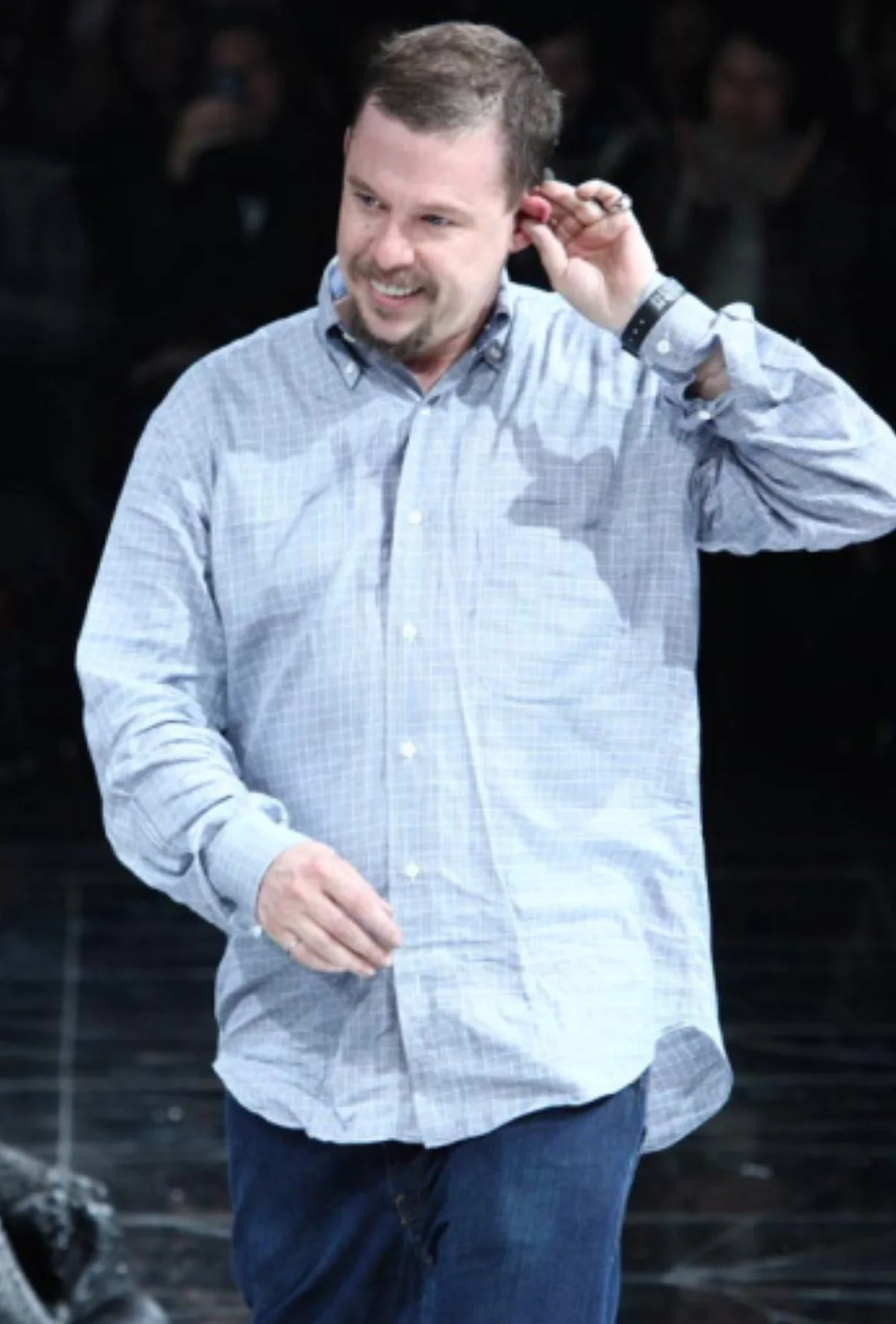
- Alexander McQueen backstage in Paris at his Autumn/Winter 2009 presentation "The Horn of Plenty". Photograph by Ed Kavishe / FashionWirePress, Wikimedia Commons, CC BY 3.0.
- Union Jack frock coat designed by Alexander McQueen for David Bowie’s 1997 album "Earthling". Photograph by Vladimir, Wikimedia Commons, CC BY-SA 2.0.
- Alexander McQueen, razor clamshell evening dress from the Spring/Summer 2001 "VOSS" collection. Photograph by Rhododendrites, Wikimedia Commons, CC BY-SA 4.0.
- Alexander McQueen, black duck feather gown from Autumn/Winter 2009 "The Horn of Plenty", exhibited at "Savage Beauty" at the V&A. Photograph by Isabell Schulz, Wikimedia Commons, CC BY-SA 2.0.