Avant-Garde Mode Glossarium
Deze avant-garde modewoordenlijst definieert de bewegingen, constructiemethoden, materialen en esthetische concepten die het vaakst worden aangetroffen in experimentele kleding. De termen zijn beknopt genoeg voor referentie maar historisch specifiek: ze leggen niet alleen uit wat een woord beschrijft, maar ook hoe het wordt gebruikt—en vaak misbruikt—binnen de mode.
Hoe je deze woordenlijst gebruikt
De taal van avant-garde mode beweegt zich tussen kunstgeschiedenis, patroonknippen, textielproductie, subcultuur en marketing. Hetzelfde woord kan in de ene context een gedefinieerde techniek aanduiden en in een andere een losse visuele associatie. “Garment-dyed”, bijvoorbeeld, beschrijft wanneer kleur aanbrengen plaatsvindt; “darkwear” beschrijft een hedendaags esthetisch veld; “deconstructie” beschrijft een kritische benadering waarvan de effecten zichtbaar kunnen zijn in de constructie.
Gebruik deze definities als startpunten in plaats van rigide categorieën. Ontwerpers werken vaak met verschillende termen, en een geïsoleerd detail definieert niet een hele praktijk. Volg de interne links voor langere geschiedenissen en techniekgidsen terwijl de Kennisbasis zich ontwikkelt.
A
Anti-mode
Een positie die dominante modewaarden afwijst of verstoort, zoals seizoensgebonden nieuwigheid, conventionele schoonheid, statusvertoon of voorgeschreven gender. Anti-mode kan ontstaan door ontwerperpraktijken, politieke kleding of subcultuur. Zodra de tekenen commercieel gewild worden, kan anti-mode in de mode worden opgenomen—een belangrijke contradictie in plaats van bewijs dat de oorspronkelijke weerstand nooit heeft bestaan.
Architectonische kleding
Kleding ontworpen door middel van volume, balans, ondersteuning en de organisatie van ruimte rond het lichaam. De term betekent niet simpelweg groot of geometrisch. Een stille Balenciaga-volume, een opgehangen paneel of een precies geplaatste leegte kan architectonisch zijn omdat de constructie controleert hoe stof ruimte bezet.
Ambachtelijke mode
Mode die de nadruk legt op kleinschalige productie, gespecialiseerde handprocessen en zichtbare materiële transformatie. Binnen het avant-garde veld is het sterk verbonden met Italiaanse praktijken uit de jaren “90 en 2000 die objectverven, anatomisch patroonknippen en behandeld leer omvatten. ”Ambachtelijk' beschrijft een methode of presentatie van maken; het is op zichzelf geen bewijs van ethisch werk of uniciteit.
Asymmetrie
Een ongelijke verdeling van lijn, volume, sluiting of detail over het lichaam. Effectieve asymmetrie produceert richting en spanning: een diagonale sluiting leidt de torso om, of een gewogen paneel verandert de beweging. Willekeurige ongelijkheid zonder structurele consequentie is decoratie in plaats van een asymmetrisch ontwerpsysteem.
B
Bias cut
Het diagonaal snijden van geweven stof over de draad, meestal op ongeveer 45 graden, zodat het anders uitrekt, valt en het lichaam volgt dan recht-grain stof. Madeleine Vionnet ontwikkelde de bias cut met uitzonderlijke nauwkeurigheid in het begin van de twintigste eeuw. Hedendaagse ontwerpers gebruiken het voor vloeibaarheid, torsie en kledingstukken die lijken te spiralen.
Lichaam-object
Een kledingstuk of vorm die een onzekere positie inneemt tussen draagbare kleding, sculptuur en lichaamsuitbreiding. De term is nuttig voor werk dat niet alleen het lichaam bedekt, maar de schijnbare anatomie ervan verandert of een onafhankelijk object eromheen creëert. Draagbaarheid kan essentieel, gedeeltelijk of opzettelijk onopgelost blijven.
Lichaamsvormgeving
Lichaamsvormgeving is een modeontwerptechniek waarbij kledingstukken of materialen direct rond de menselijke vorm worden gevormd, nauwkeurig volgend, sculpturend of opzettelijk de natuurlijke contouren van het lichaam veranderend.
C
Conceptuele mode
Mode waarin een organiserend idee net zo belangrijk is als het visuele uiterlijk. Het concept moet opereren via materiaal, snit, proces of presentatie—niet alleen via verklarende tekst. Voorbeelden zijn kledingstukken die zijn ontworpen rond migratie, anonimiteit, reproductie, verval of de instabiliteit tussen lichaam en kleding.
Constructivism
An artistic movement emerging around the Russian Revolution that sought to redirect art toward construction, production and collective life. Varvara Stepanova and Lyubov Popova applied geometric abstraction to textiles, theatre and clothing. In fashion history, Constructivism is significant for treating dress as functional organization rather than private decoration.
Couture
Custom clothing made through specialized atelier labor for an individual client. Haute couture is also a legally regulated French designation with institutional requirements; it should not be used as a synonym for any elaborate handmade garment. Avant-garde couture can use this exceptional labor to realize experimental structures and materials.
D
Darkwear
A contemporary fashion field built around dark palettes, layered or elongated silhouettes, material treatment and influences from artisanal fashion, post-punk, industrial culture and technical clothing. It is a community and market category rather than one historical school. Not all black avant-garde fashion is darkwear, and not all darkwear is conceptually avant-garde.
Deconstruction
An approach that exposes and destabilizes the assumptions through which garments acquire form and value. Linings may become exteriors, seams remain visible, standard patterns are enlarged, and prior use replaces pristine newness. The term is associated especially with Martin Margiela and late-twentieth-century Belgian fashion, but it should not be reduced to unfinished hems or treated as a simple application of philosophical deconstruction.
Distressing
Deliberately altering a material to create wear, abrasion, fading, holes, cracking or oxidation. Techniques include sanding, washing, chemical treatment, tearing and repeated mechanical action. Distressing can communicate time and vulnerability; when applied without material intelligence, it becomes a generic simulation of age.
Draping
Developing garment form by manipulating fabric directly on a body or dress form rather than beginning exclusively from a flat drafted pattern. Draping reveals how gravity, bias, weight and movement behave in three dimensions. It can produce both fluid clothing and highly controlled architectural volume.
E
Experimental fashion
Fashion developed through testing unfamiliar forms, materials, technologies or systems. Experimental describes method more precisely than historical position: a project may generate valuable research without opposing the cultural mainstream, while avant-garde implies a more critical relationship to established conventions.
Exposed seam
A seam deliberately placed on the garment’s exterior or left visible rather than concealed by conventional finishing. It can reveal assembly, create a raised line, permit fraying or challenge distinctions between inside and outside. Its meaning depends on how it changes the garment, not visibility alone.
F
Futurism
An early-twentieth-century Italian movement celebrating speed, machinery and rupture with the past. Giacomo Balla proposed dynamic, colorful and transformable clothing as part of its program. Futurism’s formal experimentation must be studied alongside its nationalism, celebration of violence and later entanglement with Fascism.
G
Garment dyeing
Coloring a garment after it has been substantially or completely assembled, rather than sewing it from previously dyed fabric. Thread, trims and fibers may absorb dye differently, creating tonal depth and softened construction. Shrinkage and component compatibility must be anticipated in the pattern and process.
Genderless clothing
Clothing presented without assignment to a conventional menswear or womenswear category. The term can signal meaningful freedom, but one nominally universal size or straight silhouette does not fit every body. Pattern range, fastening, marketing and actual availability determine whether the system is inclusive.
H
Hybrid construction
A garment combining systems normally kept separate, such as tailoring and sportswear, knitting and molding, hand stitching and additive manufacturing, or found clothing and new pattern pieces. A hybrid is strongest when the methods transform one another rather than sit together as a superficial collage.
I
Imperfection
Irregularity accepted or designed as part of an object’s value: uneven dye uptake, a visible repair, an unstable edge or variation produced by hand. Imperfection differs from poor execution because it is understood within the material and construction. It may record process, use and time rather than conceal them.
J
Japanese avant-garde
A broad historical label most often referring to the international influence of Issey Miyake, Rei Kawakubo and Yohji Yamamoto, especially after Kawakubo and Yamamoto’s 1981 Paris presentations. Their practices are distinct: textile systems, abstract form and protective tailoring cannot be collapsed into one national aesthetic. The term is useful only when it preserves those differences and avoids presenting Japanese culture as inherently mysterious.
L
Layering
Organizing multiple garments so that their lengths, transparencies, openings and volumes create one structure. Layering can adjust climate and movement while complicating the body’s outline. Effective layers remain visible or materially affect the silhouette; unnecessary layers merely add bulk.
M
Monochrome
An outfit or collection organized around one color or a narrow family of tones. Monochrome directs attention toward silhouette and texture. In black clothing, differences between matte wool, reflective leather and translucent mesh can create greater depth than several unrelated colors.
Modular garment
Clothing built from components that can be detached, repositioned or recombined. Modularity may change length, volume, function or climate response and can extend the useful life of a garment. Decorative zippers alone do not make a system modular; the transformation should be usable and structurally resolved.
O
Object dyeing
A form of post-construction dyeing in which the completed object—including fabric, seams, hardware and sometimes leather—is treated as one material event. The term is closely associated with experimental artisanal practice. Unlike ordinary piece dyeing, the process may intentionally produce complex reactions across dissimilar components.
Oversized silhouette
A silhouette designed with substantial space beyond conventional body measurements. True oversized construction is not simply a larger standard size: armholes, shoulders, balance points and fabric weight are recalculated so volume hangs intentionally. It can protect, obscure, monumentalize or free the body from prescribed contours.
P
Patina
The surface change produced through age, handling, light, oxidation and wear. In leather and metal, patina may deepen color and reveal use; in unstable coatings it may signal deterioration. Designers can anticipate patina, but authentic wear develops through the object’s material life rather than a printed imitation.
Post-industrial aesthetic
A visual and material language shaped by factories, infrastructure, urban decay, protective workwear and technological systems after heavy industry’s transformation or disappearance. In fashion it may involve muted surfaces, hardware and functional forms. It becomes meaningful when it addresses lived environments rather than using “industrial” as generic toughness.
Prosthetic silhouette
A garment that appears to extend, support, restrict or replace part of the body. Padding, rigid shells, articulated leather and external frameworks can create prosthetic relationships. The term requires care: disability and medical devices are material realities, not merely futuristic visual references.
Punk
A music-led subculture emerging in the mid-1970s whose dress used tearing, safety pins, bondage references, repurposing and confrontational graphics against social and fashion conventions. Punk style was made by wearers as well as designers. Its commercial reproduction demonstrates how quickly refusal can become commodity.
R
Raw edge
A cut fabric edge intentionally left without a conventional hem or enclosed finish. Raw edges can expose textile structure, reduce bulk or permit controlled fraying. Their stability depends on fiber and weave; an effective unfinished edge is still a technical decision.
S
Scar stitch
Visible, often irregular stitching that evokes repair, suturing or a scar across material. It may join panels, reinforce a vulnerable area or remain expressive. The term is used loosely in retail language, so construction should be examined rather than inferred from appearance.
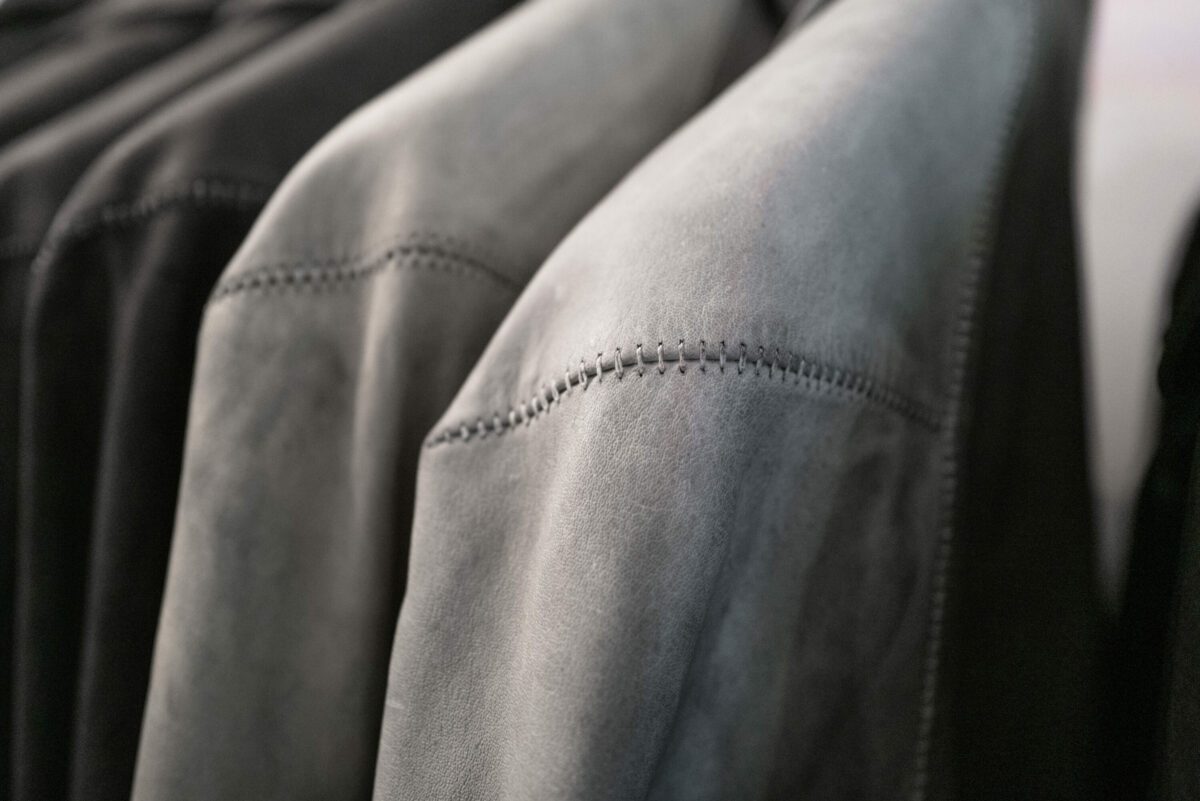
Silhouette
The overall outline made by the clothed body. Silhouette is determined by proportion, volume, fabric behavior and points of contact. It is often the clearest way to identify an avant-garde design argument before examining details.
Surrealism
A movement investigating dreams, desire, chance and the irrational. Elsa Schiaparelli translated its methods into couture through trompe-l’œil, displaced objects and collaborations with artists including Salvador Dalí and Jean Cocteau. Surrealist fashion makes familiar clothing psychologically or bodily strange.
Sustainable fashion
An umbrella term for attempts to reduce fashion’s environmental and social harm across materials, labor, manufacture, transport, use and disposal. No single fiber or technique makes a garment sustainable. Longevity, repair, production volume, working conditions and verifiable lifecycle evidence must be considered together.
T
Techwear
Clothing organized around technical performance, mobility, weather protection and carrying systems, often using advanced textiles and ergonomic patterning. Techwear can intersect with avant-garde fashion through silhouette and experimentation, but functional clothing is not inherently avant-garde and black tactical styling is not necessarily functional.
Textile innovation
The development or unconventional use of fibers, structures, finishes and production systems. Innovation may involve a new polymer or digital process, but it can also recover overlooked natural fibers or reorganize established weaving and pleating knowledge. Novelty should be evaluated alongside durability and impact.
Transformable garment
Clothing designed to change form or function through folding, fastening, inflation, mechanical movement or reconfiguration. Hussein Chalayan’s work provides celebrated conceptual examples; modular everyday garments use the same principle more quietly. The transformation should add meaning or use rather than exist as a demonstration alone.
U
Upcycling
Creating a new garment or object from existing materials or products while retaining or increasing their utility and value. In fashion, upcycling can preserve traces of previous construction and question pristine newness. It differs from recycling, which generally breaks material down into feedstock for another manufacturing cycle.
W
Wabi-sabi
A Japanese aesthetic and philosophical tradition concerned, in simplified terms, with impermanence, incompleteness and modest material beauty. Fashion writing frequently uses “wabi-sabi” too casually for anything distressed or irregular. Its application should acknowledge cultural context rather than convert a complex tradition into a surface treatment.
Wearable art
Body-related work situated between clothing and autonomous artistic practice. It may be unique, performance-based or materially experimental. Not every visually dramatic garment is wearable art, and not all wearable art is intended to function within the fashion system.
Z
Zero-waste design
A design approach intended to eliminate or radically reduce cutting waste. Methods include arranging pattern pieces so they consume the complete fabric width, knitting directly to shape, weaving garment outlines into continuous cloth or using offcuts within the product. Zero-waste cutting addresses one stage of impact, not the garment’s entire lifecycle.
Een vocabulaire voor nader onderzoek
The purpose of precise terminology is not to police taste. It is to look more closely: to distinguish a raw edge from careless damage, object dyeing from a printed effect, or architectural construction from simple volume. That precision respects the designers, makers and cultural movements from which these words emerge.
For a foundational definition, read What Is Avant-Garde Fashion?. Continue with Avant-Garde Fashion Style: Characteristics and Examples, De Geschiedenis van Avant-Garde Mode and the practical guide Hoe je Avant-Garde kunt kleden. Individual designer profiles remain organized through the RAW Looks brand directory.
References and further reading
- The Metropolitan Museum of Art — Rei Kawakubo/Comme des Garçons: Art of the In-Between
- Victoria and Albert Museum — Yohji Yamamoto: Poet of Black
- The Museum of Modern Art — A-POC Queen Textile, 1997
- The Museum of Modern Art — Revolution: Russian Avant-Garde, 1912–1930
- The Metropolitan Museum of Art — Elsa Schiaparelli (1890–1973)
- Victoria and Albert Museum — Vivienne Westwood: Punk, New Romantic and Beyond
- MoMu Fashion Museum Antwerp — Martin Margiela — Collection Story
- Victoria and Albert Museum — Madeleine Vionnet — An Introduction
- Design Museum — Hussein Chalayan
- The Museum of Modern Art — Items: Is Fashion Modern?